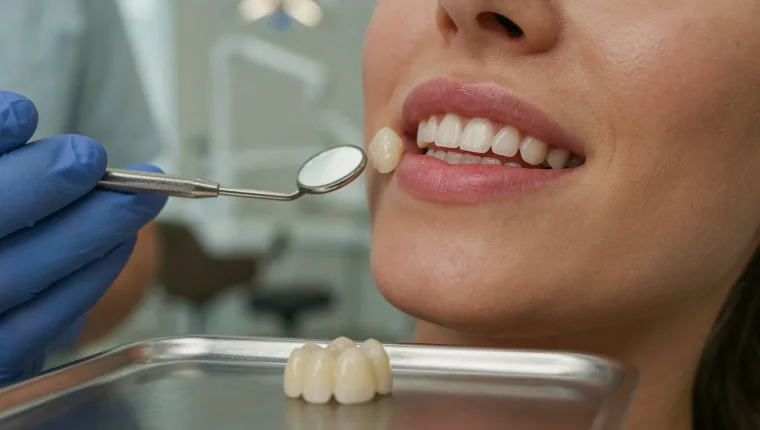
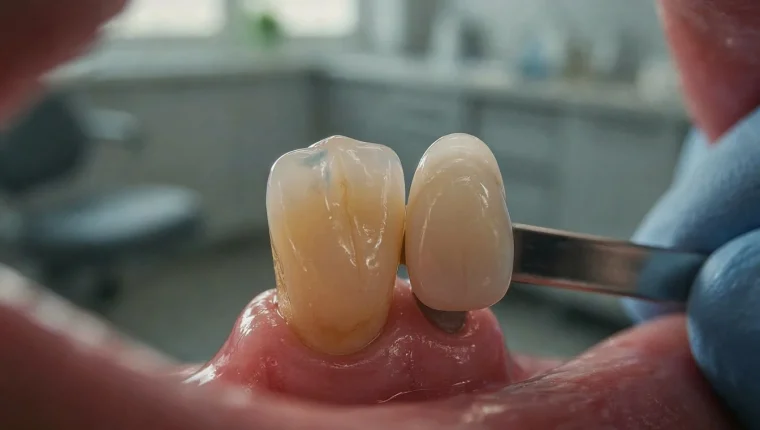
When a dentist recommends a crown, the conversation quickly narrows to one question: zirconia or porcelain? Both restore damaged teeth, are tooth-colored, and have been placed millions of times. Yet they behave differently in the mouth, affecting how a crown looks, wears, and lasts.
There is no universal winner here. The right choice depends on which tooth is being restored, how heavy your bite is, whether you grind at night, and what matters most to you — durability, natural appearance, or cost. A crown on a back molar faces forces a front tooth never sees, and a thin front crown has cosmetic demands a molar does not.
Understanding how these two materials differ in strength, aesthetics, fit, and long-term wear makes the decision far less abstract. The comparison below focuses on what actually changes the outcome, not marketing claims.
What Sets Zirconia and Porcelain Crowns Apart
At the simplest level, both crowns are caps that cover a damaged tooth, but they are built from fundamentally different materials. A zirconia crown is milled from zirconium dioxide, a white ceramic that contains no metal and is known for its high flexural strength. A porcelain crown, by contrast, is typically built from a glass-ceramic or a porcelain fused to a metal base, giving it a more layered, glass-like structure.
The core structural difference comes down to how each material handles stress. Zirconia is a single, dense block of ceramic, which makes it exceptionally resistant to cracking. Porcelain is more brittle and often relies on a metal substructure for support, which is why it behaves differently under pressure and can chip at the edges. This distinction shapes nearly every practical question that follows, from how long each crown lasts to how natural it looks on a visible tooth.
Understanding that material composition is the starting point helps you see why the two crowns are not simply interchangeable. The choice between them is really a choice between two different sets of trade-offs, and those trade-offs begin the moment the crown is made.
How Each Material Is Made and Why It Matters
Understanding how each crown is made explains a lot about why they behave so differently in your mouth. Zirconia crowns begin as a solid block of zirconium dioxide, which is scanned and shaped by a computer-controlled milling machine. This digital workflow carves the crown from a single piece of material, which is then sintered at extremely high temperatures to harden it. The result is a dense, uniform restoration with an exceptionally precise fit at the margins, where the crown meets your tooth. That precision matters because a tight seal helps keep bacteria out and reduces the chance of decay creeping underneath.
Porcelain crowns follow a different path. Traditional porcelain is built in layers over a metal or ceramic core, with a technician hand-stacking and shaping each layer before firing it in a furnace. Pressed porcelain, meanwhile, is formed from a heated ceramic ingot that is pressed into a mold. Both approaches give the technician fine control over color and translucency, allowing the crown to mimic the natural variation of a real tooth.
These two production methods quietly set up the trade-offs you will feel later. The milling and sintering process behind zirconia produces remarkable uniformity and fit, while the layered artistry of porcelain produces unmatched lifelike depth. Knowing this, the differences in strength and appearance that follow are not random — they flow directly from how each crown is built.
Strength and Durability in Daily Bite Forces

Every crown eventually faces the same test: the force of your own bite. Chewing generates repeated loads, and for people who grind or clench their teeth, those loads can spike far beyond what normal eating produces. How each material handles that pressure is where the two options genuinely diverge.
Zirconia is remarkably fracture-resistant. Its fine-grained crystalline structure deflects cracks rather than letting them spread, which is why it rarely chips or breaks even under heavy, repeated force. Porcelain, especially the layered type used for a natural look, is harder and more brittle. It can crack under concentrated pressure, particularly in thin sections or where the crown meets the underlying tooth.
Wear is the other half of the story. Porcelain tends to be gentler on the opposing tooth, while the extreme hardness of zirconia can slowly wear down the enamel it bites against. That matters most when the crown sits opposite a natural tooth rather than another restoration.
Your habits change the picture more than the material alone. Someone with bruxism — habitual grinding or clenching — puts both crowns under stress that few materials handle equally. For a heavy grinder, the tougher option usually wins on longevity, and a protective night guard becomes just as important as the crown itself. For someone with a calm bite and average chewing demands, porcelain often holds up perfectly well for years.
The deciding factor is rarely strength in isolation. It is how much force that specific tooth actually absorbs, which is why bite position matters as much as the material you choose.
Aesthetic Qualities: Translucency, Shade Matching, and Natural Look
Esthetics is where porcelain earned its reputation, and where zirconia once struggled. Traditional porcelain crowns—especially layered feldspathic and lithium disilicate designs—mimic natural enamel closely because they scatter and transmit light the way real tooth structure does. That quality, known as translucency, gives a crown lifelike depth: light enters the surface, diffuses through the layers, and returns with the subtle warmth of a natural tooth. Zirconia is opaque at its core. Early monolithic zirconia looked chalky and flat, and it rarely blended seamlessly with neighboring teeth.
That gap has narrowed. Modern translucent zirconia grades, combined with improved shading systems and layered staining techniques, now match adjacent teeth far more convincingly than the first generation did. For the majority of back teeth, most patients cannot tell the difference. Where porcelain still leads is in the front of the mouth, particularly for single visible teeth surrounded by natural ones. In those spots, the depth and color variation of layered porcelain remain hard to beat, and a skilled technician can fine-tune the shade with more precision.
Shade matching also depends less on the material itself and more on the technician and the dentist’s attention to the surrounding teeth, lighting, and your natural enamel tone. A well-matched zirconia crown can look excellent; a poorly matched porcelain crown will still stand out. The honest verdict is that the material sets a ceiling, but the craftsmanship determines where you land. For visible teeth, porcelain usually offers the higher ceiling; for everything behind your smile, modern zirconia is close enough that other factors matter more.
Biocompatibility and Gum Tissue Response Over Time
Gum tissue is a living, reactive surface, and it responds to whatever sits against it every day. With porcelain-fused-to-metal crowns, the metal collar beneath the porcelain can, over years, show as a dark line at the gum margin as tissue recedes slightly. More importantly, some patients develop a sensitivity to the base metals used in those alloys, which can present as chronic redness, swelling, or a persistent metallic taste. This is where zirconia has a genuine advantage: it is metal-free, highly biocompatible, and rarely triggers allergic or inflammatory reactions, making it a common choice for patients with known metal sensitivity.
Material alone does not determine gum health. The fit of the crown matters just as much. A poorly sealed margin traps plaque and bacteria, and the tissue will respond with inflammation regardless of whether the crown is zirconia or porcelain. Well-fitted crowns of either type, kept clean with normal brushing and flossing, tend to sit quietly against the gums for years.
So the honest answer is that zirconia offers a real edge for sensitive patients and those worried about metal exposure, while porcelain on a metal base remains perfectly serviceable for most people. Long-term gum response depends less on the label and more on precision fitting and daily care.
Cost, Insurance Coverage, and Long-Term Value
Cost is where the two materials diverge most sharply, and where the honest answer is that you rarely pay the same price for both. Porcelain crowns, particularly those layered over a metal or high-noble base, often carry a higher lab fee because of the skilled handwork involved in stacking and firing each layer. Monolithic zirconia is typically milled from a single block, which can make it less expensive to produce — but the final price you see also reflects your dentist’s technique, the lab they use, and regional rates, so the gap is not fixed. What matters more is how insurance treats the choice.
Most dental plans classify crowns as a major restorative service and cover a percentage — often around 50 percent — after any deductible, up to an annual maximum. Many plans do not distinguish between zirconia and porcelain; they reimburse based on the tooth and the procedure code, not the material. Some insurers, however, pay only for a “least expensive alternative treatment,” which can shift more of the cost onto you if you choose a premium option. It is worth asking your plan directly whether material choice affects reimbursement before you commit.
This is where long-term value reframes the whole question. A cheaper crown that fractures or wears and needs replacement in a few years can cost more overall than a pricier one that lasts. Weigh the upfront difference against your bite habits, the tooth’s location, and how long each material tends to serve — then judge the price against your own priorities rather than a single number.
Choosing the Right Crown for Front Versus Back Teeth
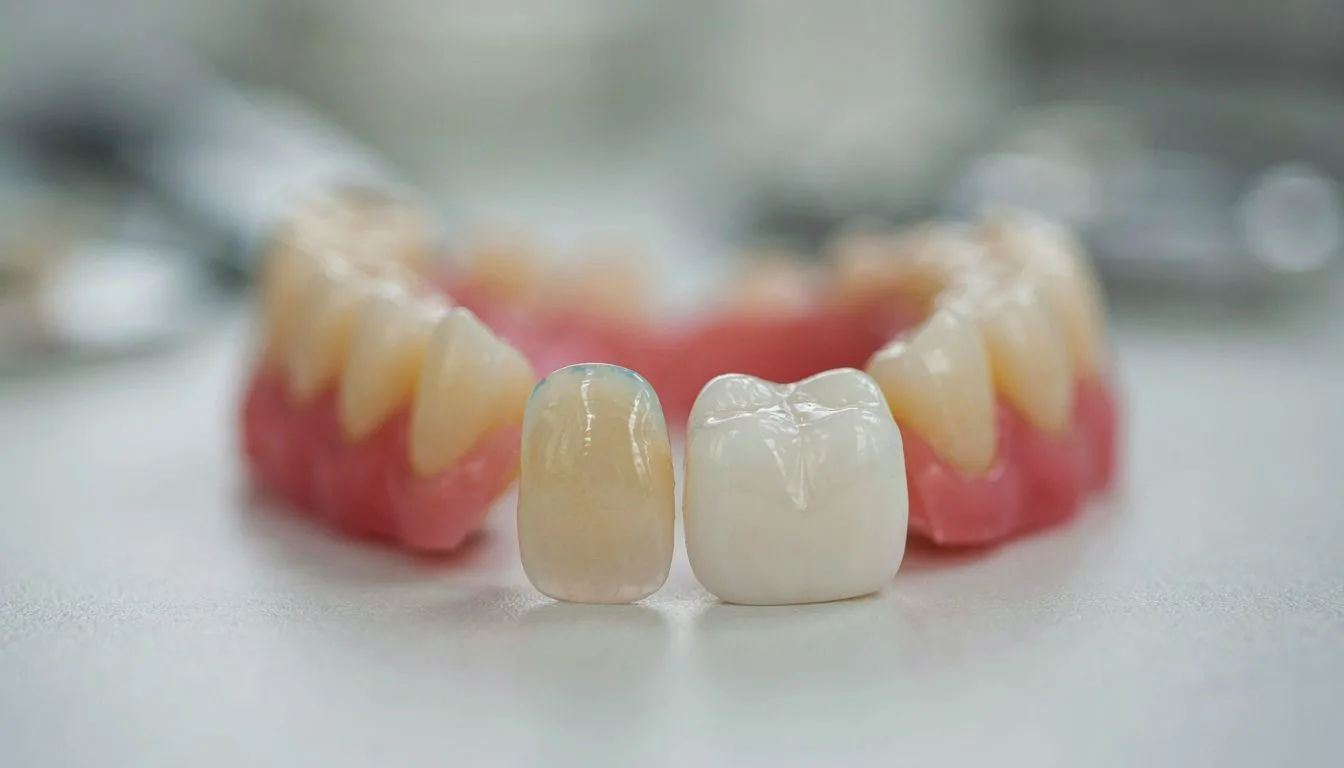
The same crown material can be a smart choice on one tooth and a compromise on another, which is why the front-versus-back question keeps coming up. Front teeth live in a different environment than back teeth: they shape your smile, they take lighter and more shearing forces, and they sit in a highly visible zone where shade and translucency are on display. Back teeth do the heavy work, absorbing vertical crushing forces and, for many people, the extra load of grinding. That difference explains the general pattern most dentists follow. For a visible front tooth, porcelain’s light transmission and shade-matching usually win, provided the bite is not unusually aggressive. For a molar or premolar, zirconia’s fracture resistance and wear over years often make it the safer bet, even if its appearance is slightly less lifelike.
These are tendencies, not rules. A patient with severe bruxism may need a strong material on a front tooth too, and a back tooth in a low-visibility spot may be fine with either option. Gum response and cost shift the balance further, since a material that irritates tissue or strains your budget is a poor fit no matter how it looks. The honest move is to bring your specific tooth, your bite habits, and your priorities to your dentist, then weigh strength, appearance, tissue response, and long-term value together before deciding.
FAQs
How do Zirconia Crowns vs Porcelain Crowns differ in durability and longevity?
Zirconia crowns are significantly stronger and more fracture-resistant than porcelain crowns, making them the better choice for back teeth where biting forces are intense; they routinely last 10 to 15 years or more with good care. Porcelain crowns, especially those fused to metal, offer excellent aesthetics but the porcelain layer can chip or crack under heavy load, so their longevity often depends more on the underlying tooth and bite than on the material itself. In short, zirconia wins on durability, while porcelain's edge is cosmetic rather than structural.
Which option looks more natural for front teeth?
For front teeth, porcelain crowns—especially layered or feldspathic porcelain—generally deliver the most natural look because their translucency and light reflection closely mimic natural enamel. Zirconia has improved significantly, and newer high-translucency grades can look quite good, but it still tends to appear slightly more opaque and less lifelike under certain lighting. For anterior teeth, many dentists now favor porcelain-fused-to-zirconia or layered zirconia to balance aesthetics with strength. If matching the subtle depth and character of your natural front teeth is the priority, porcelain usually has the edge.
Does the choice between Zirconia Crowns vs Porcelain Crowns affect gum health or wear on opposing teeth?
Yes, the material choice can influence both. Zirconia is generally considered more wear-friendly to opposing enamel than traditional feldspathic porcelain, though glazed or polished surfaces matter more than the material name itself. For gum health, well-fitted margins and proper contouring matter far more than whether the crown is zirconia or porcelain, since rough or ill-fitting edges are what typically trigger inflammation.