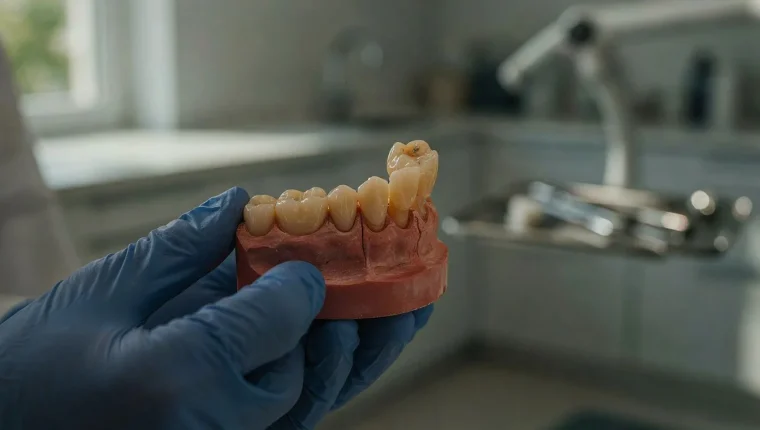
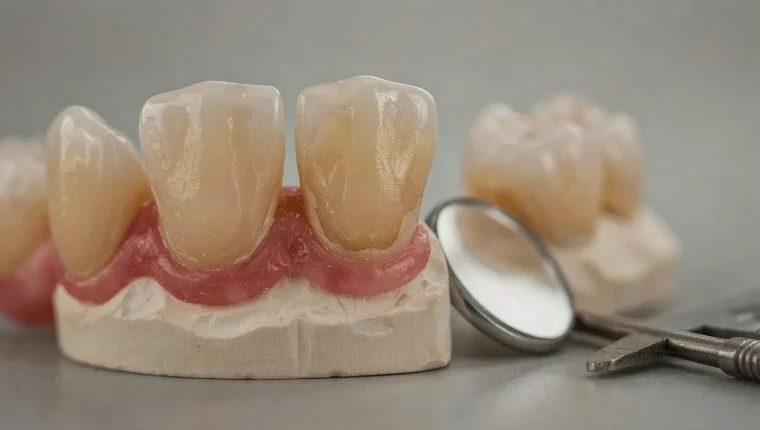
A crown that suddenly shifts when you bite down or feels like it sits on a cushion of air instead of a solid tooth gets your attention fast. That movement raises an immediate question: should you watch it for a few days or act today? Crown loosening after dental crowns is recognized and does not automatically mean the restoration failed or your dentist did something wrong. What matters now is understanding the situation correctly. This information helps you understand why a crown can lose its grip, how to distinguish ordinary settling from a genuine problem, and what to do before you see a dentist. You will know whether to call today, call this week, or watch it.
Why a Dental Crown Can Become Loose Over Time
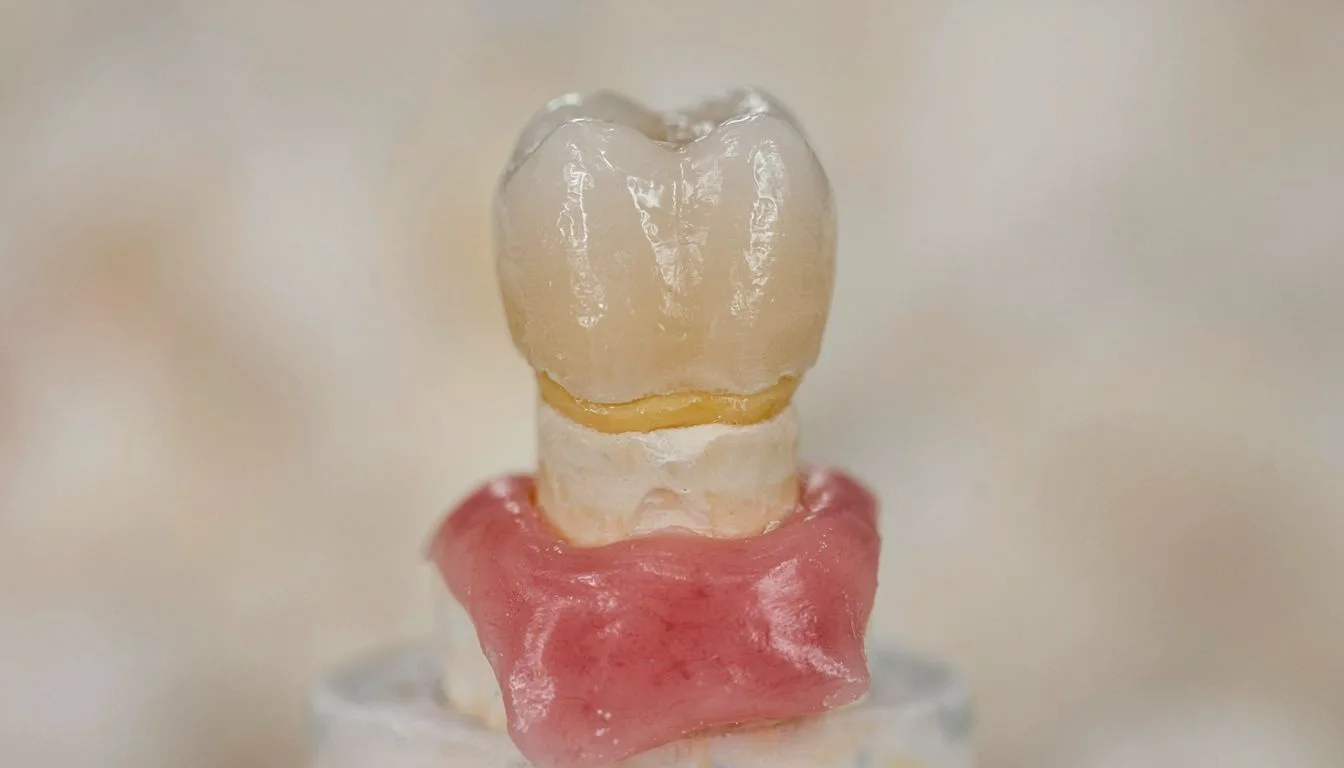
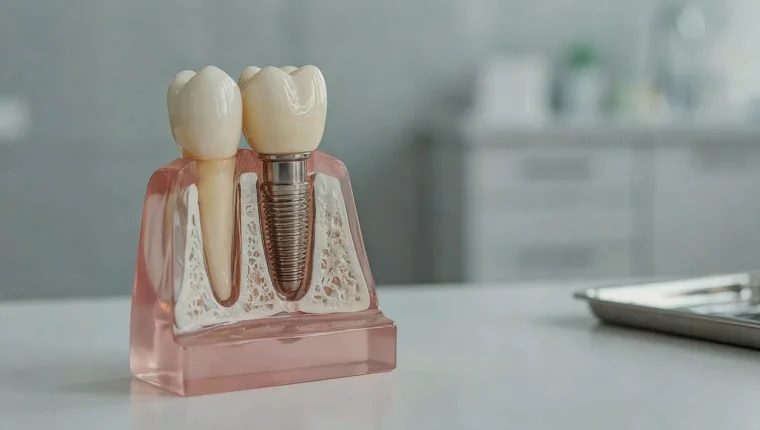
A crown stays in place through a surprisingly simple arrangement: it fits over your prepared tooth like a cap, and a thin layer of dental cement locks it to the tooth structure underneath. When that hold weakens, the cause almost always sits in one of three places.
The first is the cement bond itself. Cement can wash out, dissolve, or crack over years of chewing, grinding, and temperature changes. This is the most common reason a crown loosens gradually, and it tends to progress slowly and steadily.
The second is the tooth underneath. If decay develops at the margin where the crown meets the gum line, the tooth softens and shrinks away from the crown. A fracture in the remaining tooth structure does the same thing, often faster. These causes usually move quicker than simple cement wear.
The third is the crown itself. A crown can crack, wear through, or deform after years of load, especially in back teeth where biting forces are heaviest. Damage here can appear suddenly rather than build up.
One thing worth saying plainly: loosening is rarely something you caused. It is a mechanical and biological process that unfolds over time, and the speed at which it happens depends on which layer failed.
Signs That Your Crown Is Loosening
Most people notice a loose crown through a sensation rather than a visual clue. The first hint is often a subtle movement that wasn’t there before—a slight shift or give when you bite down, or a feeling that the crown “rocks” rather than sits solidly. Some describe it as a dull click or a faint pop during chewing, while others feel it only when they run their tongue along the edge and sense a gap that wasn’t there previously.
- A wobbly or rocking sensation when you press on the crown with your tongue or finger, suggesting it has separated from the underlying tooth.
- A change in bite where the crown feels slightly higher or lower than before, making your teeth meet differently.
- A visible gap or dark line at the gumline, which can indicate the crown has lifted away from the tooth surface.
- A faint clicking or popping sound during chewing or when you bite down, caused by the crown shifting against the tooth.
- Food catching or a strange taste around the crown, which happens when debris enters the space left by loosening.
Signs felt only while chewing—like a momentary shift or a soft thud—are easy to dismiss as imagination. Signs present at rest, such as a constant wobble or a visible gap, are harder to ignore. The tricky part is that early loosening often produces no pain, so the only cue is a change in how the crown feels. That subtle difference is worth noting, because catching it early gives you more options.
What Feels Normal Versus What Signals a Problem
The single most useful question to ask about any sensation after a crown is placed is not “does this feel strange?” but “is this changing?” Time since placement is the dividing line. In the first days and weeks, the tooth and surrounding gum are still settling, and mild awareness of the crown is expected. What matters is direction: normal adjustment feelings fade, while problem signs persist or grow.
Typical post-placement sensations tend to be vague and steady. You may notice slight pressure when biting, mild gum tenderness, or a general sense that something is “there.” These usually ease as the periodontal ligament and bite adapt. They do not sharpen, spread, or appear suddenly months later.
Warning signs behave differently. They arrive or intensify over time, and they point to a specific structure rather than a general feeling. The table below separates the two.
| Normal adjustment feeling | Warning sign of a crown problem |
|---|---|
| Mild, fading pressure on biting | Sharp or worsening pain on biting |
| Gum tenderness that settles | Swelling, bleeding, or a bad taste |
| Vague awareness of the crown | Movement, rocking, or a visible gap |
| Stable bite over time | Bite that shifts or feels higher |
| Sensations that fade | Sensations that persist or grow |
The practical rule is simple: if a sensation is fading, it is likely healing. If it is holding steady or getting worse, treat it as a signal to call your dentist rather than wait.
Risks of Waiting When a Crown Feels Unstable
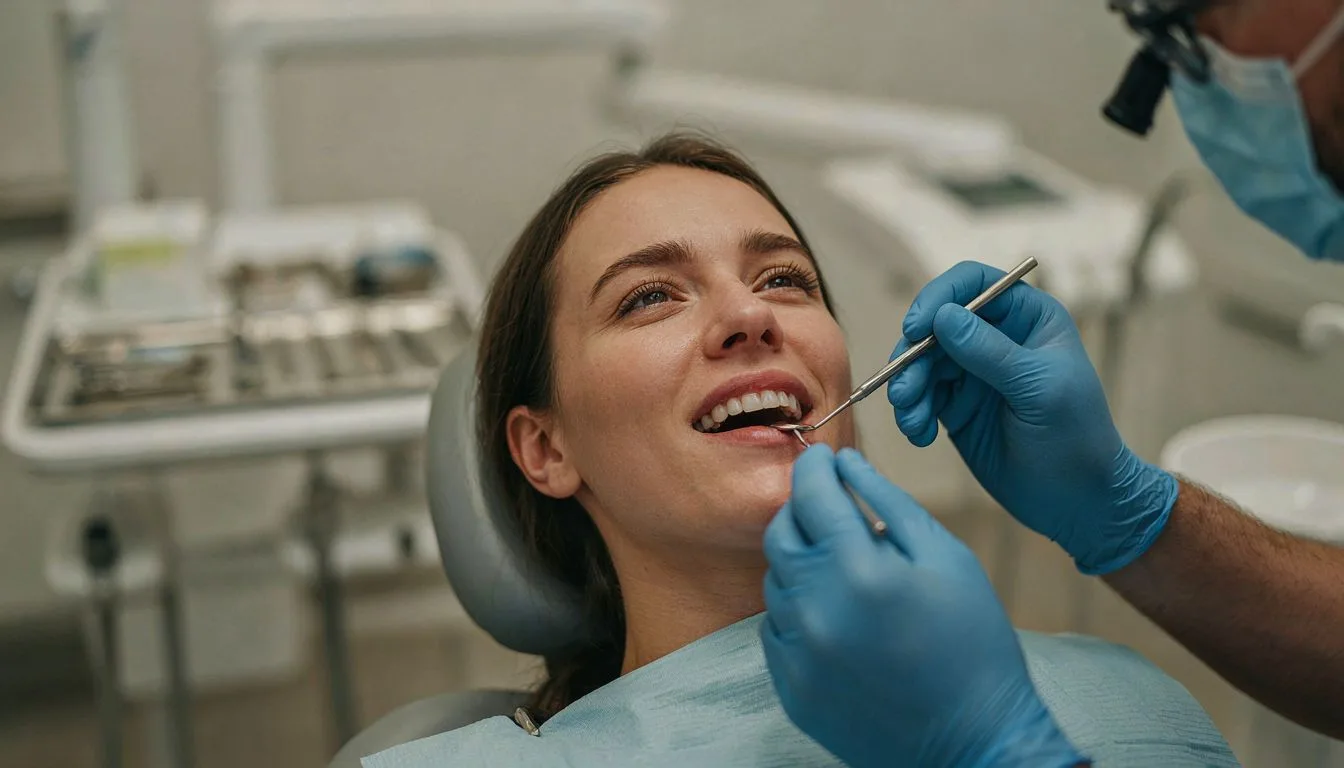
A loose crown is not a stable situation that simply stays the same. Every time it shifts, even slightly, it works against the tooth underneath. The most immediate risk is recurrent decay. Once the seal between the crown and the tooth breaks, saliva and food particles reach the underlying dentin, and bacteria follow. Because that area is hidden, decay can progress quietly until it reaches the pulp.
If the crown keeps rocking, the tooth itself can weaken. Enamel and dentin are not designed to absorb repeated lateral forces, and over time this can lead to cracks or a fracture that reaches below the gum line. At that point, the tooth may no longer be restorable, and the problem shifts from repairing a crown to losing a tooth.
The gum tissue around a moving crown also reacts. Chronic irritation causes inflammation, tenderness, and sometimes recession, which exposes more of the tooth and makes the fit worse. A bite that has been altered by a raised or tilted crown can add uneven pressure, leading to jaw discomfort or damage to the opposing tooth.
What begins as a small, fixable issue can become a larger and more expensive one. A crown that could have been re-cemented may instead need root canal treatment, a new crown, or extraction. Acting early keeps the decision in your hands.
How to Care for a Loose Crown Before Your Appointment
Between the moment you notice a loose crown and the moment you sit in the dental chair, a few small choices can protect both the crown and the tooth underneath it. The goal during this window is simple: keep the crown from shifting further, keep the exposed tooth and gum tissue clean, and avoid anything that could push bacteria deeper under the restoration or damage the crown itself. A loose crown is not an emergency in most cases, but it is a clear signal that the cement seal has failed and that the tooth is now exposed to saliva, food debris, and oral bacteria. How you handle those hours and days often determines whether the tooth stays healthy or develops decay, sensitivity, or infection before it can be re-cemented.
What you do at home matters most in these first hours and days. The single most protective habit is to treat the crown as fragile rather than trying to “fix” it yourself. Most damage during this period comes not from the loose crown itself but from well-intentioned attempts to stabilize or clean it too aggressively. The following steps cover the situations you are most likely to face and the safest response to each one.
- Leave the crown alone. Resist the urge to wiggle it, test it with your tongue, or press it firmly back into place. Repeated pressure can crack the crown or irritate the tooth and gum beneath it.
- Skip household adhesives. Denture creams, super glue, and over-the-counter fixatives are not designed for crowns and can trap bacteria, damage the crown’s fit, or make professional removal harder.
- Chew on the other side. Shift all chewing to the opposite side of your mouth and choose soft foods to reduce the load on the loose crown.
- Avoid sticky and hard foods. Caramel, taffy, chewing gum, nuts, ice, and crusty bread can grab or stress the crown and pull it further out of position.
- Keep the area clean gently. Brush around the crown with a soft brush and rinse with warm salt water, but avoid vigorous flossing that could lift the crown.
- Save the crown if it falls out. If the crown comes off completely, keep it moist and safe, and do not attempt to reinsert it yourself.
If the tooth underneath becomes sharply painful, bleeds, or the crown breaks, stop managing things at home and contact your dentist right away rather than waiting for your scheduled visit. Sharp pain, swelling, a bad taste, or a visible crack in the crown all point to problems that need same-day attention. In every other case, the routine above is enough to keep the tooth stable until your appointment, where your dentist can clean the tooth, check for decay, and re-cement or replace the crown properly.
When Crown Loosening After Dental Crowns Requires an Urgent Call
A loose crown by itself is rarely a medical emergency. Most cases can wait for the next available appointment. What changes the equation is not the movement but what comes with it. When loosening arrives alongside certain other symptoms, the situation shifts from “call soon” to “call now.”
The clearest trigger is pain. Sharp or throbbing discomfort, especially pain that wakes you at night or lingers after the crown shifts, points to nerve involvement or infection underneath. Swelling in the gum or face, a bad taste that won’t rinse away, or visible pus around the crown edge all suggest an active infection that shouldn’t sit untreated. A fever paired with any of these signs makes the call more urgent still.
Two other scenarios also demand immediate attention. If the crown comes off completely and you can’t tell whether you swallowed it or may have inhaled it, call right away — an inhaled crown is a genuine airway concern. And if the exposed tooth breaks, bleeds heavily, or causes severe pain, don’t wait.
When any of these apply, contact your dentist immediately. If the office is closed, use the after-hours line or an urgent care service rather than waiting until morning.
What to Expect During a Repair or Replacement Visit
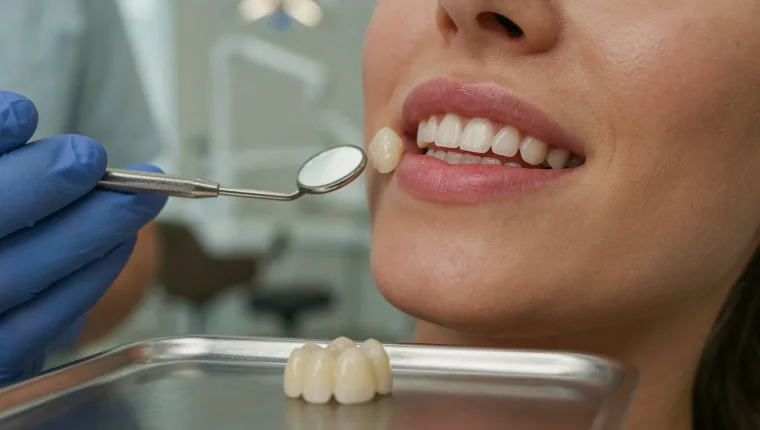
When you sit down in the chair, the dentist’s first job is not to fix anything — it is to understand what is actually happening. They will lift the edge of the crown gently, probe for movement, check whether the margin still seals against the tooth, and look at the gum tissue around it for redness, swelling, or a telltale odor. A small mirror and a light usually reveal whether the crown has simply come unglued or whether something underneath has changed. In many cases, a dental X-ray follows, because the part of the story that matters most — the health of the tooth under the crown — is invisible from the surface.
From there, the visit usually splits into one of two paths. If the crown itself is intact and the tooth beneath it is sound, the fix is straightforward: the old cement is cleaned away, the crown is checked for fit, and it is bonded back into place. This is called re-cementation, and it is often completed in a single appointment. If the crown is cracked, worn thin, or no longer fits properly, or if decay or damage has reached the tooth underneath, replacement becomes the better choice. That typically means a new impression or digital scan and a temporary crown while the new one is made.
Afterward, expect some sensitivity for a few days as the ligament around the tooth settles. A well-seated crown should feel solid, match your bite, and disappear from your awareness within a week or so. If it still feels high, loose, or tender after that window, call your dentist rather than waiting it out.
FAQs
How soon after getting dental crowns should crown loosening prompt a call to your dentist?
Call your dentist as soon as you notice any movement, because a loose crown rarely tightens back up on its own and the underlying tooth can decay or fracture while you wait. A crown that feels slightly loose but stays in place still warrants a call within a day or two, while one that has come completely off or is causing pain needs same-day attention. If you can't reach your dentist right away, keep the crown clean and avoid chewing on that side until you're seen.
Can a loose crown be re-cemented at home, or does it always require professional treatment?
You should never try to re-cement a loose crown at home with store-bought dental adhesive, because these products are temporary at best and can trap bacteria that lead to decay or infection under the crown. A loose crown almost always signals an underlying problem such as cement failure, recurrent decay, or a fractured tooth, and only a dentist can diagnose and fix the actual cause. If your crown comes off, keep it safe, avoid chewing on that side, and call your dentist promptly for professional re-cementation.
What symptoms alongside crown loosening after dental crowns suggest an urgent dental visit rather than a routine one?
If a loose crown comes with throbbing or spontaneous pain, swelling in the gums or face, a bad taste or pus, or a fever, treat it as urgent and call your dentist right away, since these point to infection or pulp damage rather than simple cement failure. A crown that has come off completely and leaves the tooth exposed, or one you might swallow or inhale, also warrants prompt attention. Sharp pain when biting, bleeding that won't stop, or a cracked or fractured tooth underneath the crown are additional reasons to seek same-day care instead of waiting for a routine appointment.