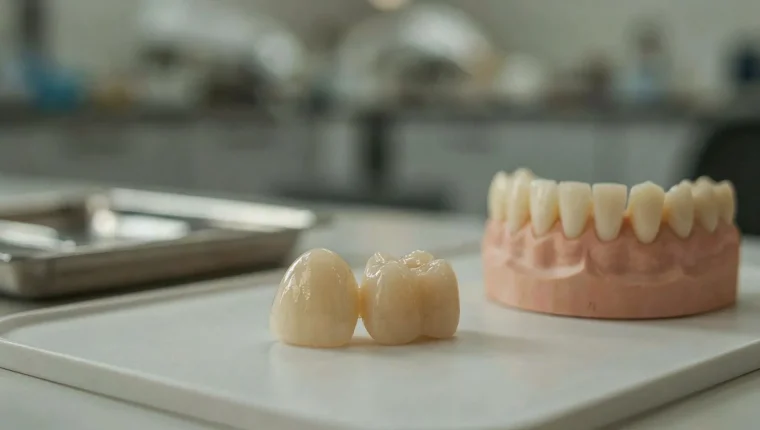
A crown can look perfect in the mirror and still feel wrong the moment you bite down. It seats cleanly on the tooth, the margins look fine, the color matches — yet something is off. One side hits first. Chewing feels uneven. A dull ache shows up by the end of the day. That gap between how a crown looks and how it functions almost always comes down to the bite. Bite alignment determines whether a crown sits on a tooth or works with the rest of your mouth. When the occlusion is off, even a well-made restoration can cause discomfort, wear, or early failure. When it is right, the crown disappears into normal function — you stop noticing it. Understanding how your bite and a crown interact is what separates a restoration that lasts from one that keeps sending you back to the chair. Patients feel this part of crown treatment most and hear least about it.
How Bite Alignment Affects the Fit and Function of Dental Crowns

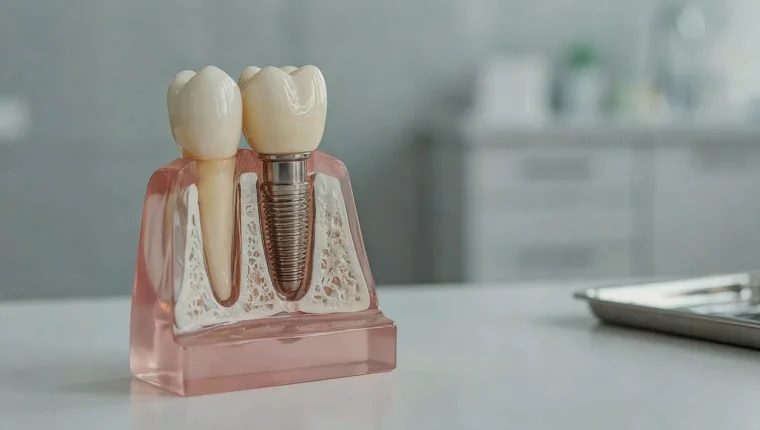
When a crown is cemented onto a prepared tooth, “fit” is often judged at the margins — the edge where crown meets gum. But a crown can sit flush at that edge and still feel wrong the moment you bite down. The reason is that fit has two layers: the crown-to-tooth interface and the crown-to-opposing-teeth relationship. The second layer is where occlusal force enters the picture.
Every time you chew, swallow, or clench, forces travel from the opposing teeth, through the crown, into the underlying tooth and its supporting bone and ligament. A well-aligned bite spreads those forces evenly across the crown surface. A misaligned one concentrates them on a single cusp or edge. That concentration is what patients often describe as a “high” spot — a crown that feels too tall even when it looks correct.
Functionally, this matters for more than comfort. Uneven loading can make chewing feel awkward on one side, nudge the jaw into a guarded position, and gradually loosen the crown’s seal. Over time, repeated off-axis pressure may also stress the tooth structure beneath the crown. Getting the bite right at placement is what allows the crown to do its job quietly, day after day.
Signs of a Misaligned Bite Before Crown Placement
The period before crown preparation is the most useful window for spotting bite problems, because once the tooth is reshaped and the crown is made, any underlying imbalance is harder to correct. Patients who arrive for treatment already aware of certain patterns tend to have a smoother fitting process. The key is knowing which everyday sensations actually point to a malocclusion rather than ordinary dental sensitivity.
Watch for these signals and mention them during your consultation:
- Uneven wear or chipping: Flattened cusps, worn edges, or small fractures on several teeth suggest that occlusal force has been concentrating in the wrong places.
- Jaw soreness or fatigue: Aching jaw muscles, especially in the morning, can indicate clenching or grinding against a bite that does not meet evenly.
- One tooth meeting first: If a single tooth contacts before the rest when you close, the new crown may inherit that premature contact.
- Loose, mobile, or drifting teeth: Movement in teeth that are otherwise healthy often reflects unbalanced biting pressure.
- Headaches or ear discomfort: Tension-type pain near the temples or ears can accompany a bite that forces the jaw into an awkward position.
None of these findings diagnoses a problem on its own, but each one gives your dentist a reason to examine the bite more closely before the crown is designed. Raising them early allows the assessment to happen while adjustments are still simple.
The Role of Occlusion in Crown Longevity and Comfort
Balanced occlusion is easiest to picture when you close your teeth together and feel many points meeting at once, with no single tooth arriving early or carrying the load alone. A crown that sits in that kind of harmony feels unremarkable in the best way — you simply forget it is there. It handles the same forces as its neighbors, so chewing feels even on both sides and no spot stays tender after meals.
When the balance is off, the crown often feels fine on the day it is placed. The problem builds quietly. A crown left slightly high absorbs far more force than the surrounding teeth, and that excess travels into the periodontal ligament, the cushion that anchors the tooth. Over months, patients notice soreness when biting, a crown that feels “proud” of the others, or sensitivity that never quite settles. The tooth underneath can also suffer: repeated heavy loading may cause the root to fracture or the supporting bone to recede.
Longevity follows the same pattern. A crown in even contact wears at a normal rate, while an overloaded one chips, loosens, or wears through opposing teeth faster than expected. Comfort and durability are not separate outcomes here — they are two faces of the same balance.
Consequences of Ignoring Bite Alignment During Crown Fitting
It is tempting to treat the appointment as finished once the cement sets and the crown feels solid under your finger. That assumption is where trouble often begins. A crown can seat perfectly on the tooth and still meet the opposing teeth incorrectly, and if that relationship is never verified, the error does not stay quiet. It shows up in the bite itself.
The first consequence is usually felt rather than seen: premature occlusal contact, where the new crown strikes before the rest of the teeth and absorbs more force than it was designed to carry. Patients describe a tooth that “hits first,” a dull ache when chewing, or sensitivity that lingers instead of settling. Because the periodontal ligament senses these loads, the tooth may feel bruised or tender for weeks.
Left unaddressed, the damage spreads. Persistent overload can chip or fracture porcelain, loosen the crown at its margin, and stress the underlying tooth or root. The opposing teeth are not spared either, since they take the brunt of the same unbalanced force. Over time the rest of the bite may shift to avoid the high spot, altering how other teeth meet.
None of this is inevitable. It is the predictable result of fitting a crown without checking the occlusion, which is why the adjustment step deserves as much attention as the cement itself.
Techniques Dentists Use to Assess and Adjust Bite Alignment
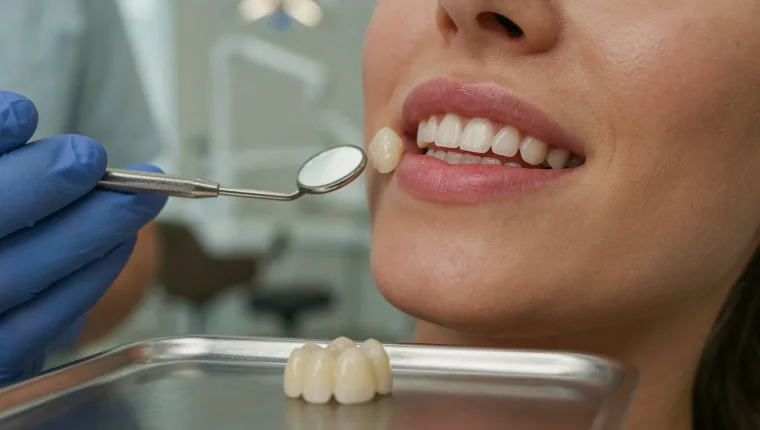
Checking a new crown’s bite is a hands-on, sensory process rather than a purely visual one. Dentists begin by asking you to close slowly and report where you feel contact first. They watch the pattern of your teeth meeting, then use articulating paper — thin, color-coated strips — to reveal exactly where the crown touches its opposing teeth. The marks left behind show high spots that need refinement.
From there, the adjustment phase is deliberately iterative. Your dentist gently reshapes the marked areas with a fine bur, then rechecks the bite with fresh paper. This cycle repeats because removing one high point can expose another, and the goal is even, simultaneous contact across all teeth. A single pass rarely achieves that balance.
What you can confirm before leaving the chair matters too. You should feel your teeth meeting evenly, without one crown hitting first or feeling “tall.” Your dentist may also check excursive movements — sliding your jaw side to side and forward — to ensure the crown doesn’t catch or drag. If something still feels off, say so; your feedback is part of the assessment.
Materials and Crown Design Choices That Support Balanced Occlusion

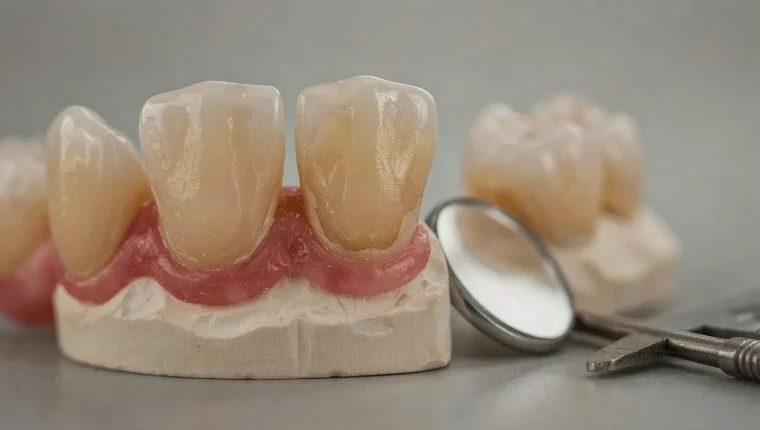
Material and design decisions for a crown are frequently driven by appearance first, but hardness, wear behavior, and shaping quietly determine how well the final bite can be balanced and maintained. A crown that looks ideal can still interfere with the opposing teeth if its surface is too hard, too flat, or shaped in a way that concentrates occlusal load instead of distributing it.
Hardness is the clearest example. A very hard restorative surface can wear down the natural tooth it meets, while a softer material may wear itself and lose the contact that keeps the bite stable. Design matters just as much: the way cusps, grooves, and contact points are shaped decides whether forces spread evenly or land on a single spot that needs repeated adjustment.
| Material / Design | Occlusal Behavior | Wear Consideration |
|---|---|---|
| Ceramic (e.g., zirconia) | Holds a precise, stable shape | Can wear opposing natural enamel if not polished and balanced |
| Metal alloy | Resists fracture under heavy force | Less aesthetic; wear is generally gentler on opposing teeth |
| Porcelain-fused-to-metal | Balances strength with a shaped surface | Porcelain can chip or wear if contacts are uneven |
| Resin / composite | Easier to adjust and reshape at fitting | Wears faster, so contacts may need monitoring over time |
The practical takeaway: the material and design should be chosen with the opposing bite in mind, not just the smile. When they are, the crown is easier to adjust at fitting and holds a balanced contact for longer.
Follow-Up Care and Long-Term Monitoring After Crown Placement
The moment a crown is cemented and the bite feels even is not the finish line—it is the starting point for a relationship you will manage for years. A well-balanced bite can drift over time as teeth shift, wear, or surrounding restorations change, so the alignment that felt perfect on day one deserves periodic review rather than a one-time check.
In the days and weeks after placement, pay attention to how the crown feels when you chew, clench, or wake up. Sensitivity that fades is normal; a tooth that consistently meets first, or soreness in the jaw or crown, is not. Your dentist will typically schedule a follow-up to recheck the bite and confirm the crown has not settled into a high spot, and routine dental visits should include an occlusal examination of the crown against its neighbors.
Between appointments, you are your own best monitor. Note any new chipping, uneven wear, loosening, or shifting of the crown or adjacent teeth, and mention changes in how your bite feels even if nothing looks wrong. Reporting these early keeps a small adjustment small and prevents the kind of premature contact or uneven loading that follow-up care is designed to catch before it damages the crown or the tooth beneath it.
FAQs
How can bite alignment affect the fit and longevity of dental crowns?
When your bite is misaligned, the forces of chewing land unevenly on a crown, concentrating pressure on one edge or cusp instead of distributing it across the tooth. That concentrated load can chip the porcelain, wear through the opposing tooth, or loosen the cement bond, which shortens the crown's lifespan and often leads to replacement far sooner than expected. Correcting the bite before or right after placing a crown helps it seat properly and share force evenly, so the restoration stays comfortable and lasts its full intended life.
What signs suggest that a dental crown has disrupted your natural bite?
If a dental crown sits too high or too low, you will often feel it first when you bite down, with one tooth hitting before the rest or a sensation that your teeth no longer meet evenly. Other common signs include soreness or tenderness around the crowned tooth, jaw or temple discomfort after chewing, and a feeling of tightness or pressure on one side of your mouth. You may also notice increased wear, chipping, or sensitivity on the crowned tooth or its neighbors as your bite shifts to compensate.
Can a crown be adjusted to improve bite alignment without replacing it?
Yes, in many cases a dentist can adjust an existing crown to improve bite alignment without replacing it. Minor reshaping of the crown's surface, along with careful polishing, often resolves high spots or uneven contacts that disrupt your bite. When the misalignment stems from the crown's fit or position rather than its surface, though, the dentist may need to recontour the underlying tooth or, in some situations, remake the crown. A quick bite check at your follow-up visit usually catches these issues early, so speak up if your bite still feels off after placement.