A dental crown is designed to protect a damaged tooth, restore its shape, and bring back comfortable chewing. Most patients want a simple answer: how long will it actually last? The honest answer is that dental crowns results last anywhere from five to fifteen years on average, and many last much longer. The material matters, but it is rarely the deciding factor. The lifespan usually depends on the daily load you put on the crown, your oral hygiene, and how well the underlying tooth and gum stay healthy. A crown on a well-maintained molar in a patient who avoids grinding can serve for decades. The same crown on a tooth with active decay at the margin can fail within a few years. Understanding these factors helps you get the most from the investment.
What Typically Determines the Lifespan of a Dental Crown
A crown does not have a single expiration date. Its lifespan emerges from the interaction of several variables, and understanding them helps you predict how long yours might serve you. The most influential factor is the integrity of the seal between the crown and the underlying tooth. Even a perfectly crafted crown fails if bacteria slip beneath its margins. Marginal fit, therefore, matters more than the crown’s surface hardness or its shade.
Material choice plays a supporting role. Gold alloys resist fracture and wear well but show scratches; porcelain fused to metal can chip; all-ceramic crowns look natural but may crack under heavy load. Yet material alone rarely decides the outcome — placement does. A crown on a back molar absorbs far more force than one on a front incisor, and a crown seated on a tooth with minimal healthy structure has a weaker foundation.
The health of the tooth beneath the crown is another silent determinant. If decay develops at the margin or the pulp becomes inflamed, the crown may need removal regardless of its own condition. Similarly, the quality of the initial preparation and cementation influences how long the restoration stays seated. A crown placed with poor isolation or contaminated cement begins its life at a disadvantage.
Finally, the patient’s own biology and habits matter. Saliva composition, bite force, and parafunctional grinding all shape how a crown ages. No single factor guarantees longevity, but when the seal holds, the foundation is sound, and forces are controlled, a crown can last many years. When any one of these weakens, the clock speeds up.
Average Longevity by Crown Material and Placement
Material choice and where a crown sits in the mouth are two of the most reliable predictors of how long it will serve. Clinical data show a wide spread: some restorations fail within five years, while others remain functional past twenty. That gap is not random. It reflects how well a specific material resists the specific demands of a specific position in the arch.
Placement matters because forces are not distributed evenly. A molar absorbs chewing loads several times greater than an incisor, and a crown at the front of the mouth is far more visible, which raises the cost of any aesthetic compromise. The following figures represent typical ranges reported in long-term clinical studies, not guarantees for any individual case.
- Full metal crowns: Often lasting 15 to 25 years or more, these are the most durable option and are usually reserved for back teeth where appearance is less critical.
- Porcelain-fused-to-metal: Typically 10 to 15 years, though the porcelain layer can chip over time even when the metal substructure remains intact.
- All-ceramic and zirconia crowns: Generally 10 to 15 years, with zirconia showing strong wear resistance; these are common choices for visible front teeth.
- Molar versus anterior placement: A crown on a molar faces heavier bite forces and usually wears faster than an identical crown on a front tooth.
- Bruxism and grinding: Patients who clench or grind can shorten any crown’s lifespan by several years regardless of material.
The pattern is consistent: harder, less aesthetic materials tend to outlast their more natural-looking counterparts, and posterior crowns face a tougher environment than anterior ones. A zirconia crown on a premolar, for instance, may perform very differently from the same material on a heavily loaded second molar. Individual habits, bite alignment, and the quality of the underlying tooth structure all shift these averages in one direction or the other.
How Oral Hygiene Habits Affect Dental Crown Durability
Even a perfectly fitted crown sits in an environment that changes hour by hour. What you do with a toothbrush, floss, and mouthwash between dental visits shapes how long that restoration actually stays in place. The link is not subtle: the same plaque that damages natural enamel attacks the margin where a crown meets the tooth, and that margin is the crown’s most vulnerable point.
Bacteria accumulate along the gum line and around the crown edges. When plaque hardens into tartar, it traps acids against the underlying tooth structure. Because a crown covers the visible tooth but does not seal the root or the margin permanently, decay can develop underneath it without any obvious warning. This is one of the most common reasons a crown fails early, and it is almost entirely preventable with consistent hygiene.
Gum health matters just as much as the tooth itself. Inflamed, receding gums expose more of the crown margin and the root surface, creating new pathways for bacteria. Patients who brush twice daily with fluoride toothpaste, clean between teeth with floss or interdental brushes, and attend regular professional cleanings consistently keep their crowns in service longer than those who do not.
Technique deserves attention too. Aggressive brushing with a hard-bristled brush can wear away the cement line at the crown edge over time, and abrasive toothpaste can dull polished ceramic surfaces. A soft brush, gentle circular motions, and non-abrasive products protect both the crown and the tissue around it.
The practical takeaway is straightforward: marginal integrity depends more on daily care than on the crown’s material. A well-maintained crown on a clean, healthy tooth has the best chance of lasting many years, while neglect shortens that timeline regardless of how much the restoration cost.
The Role of Bite Forces and Grinding in Crown Wear
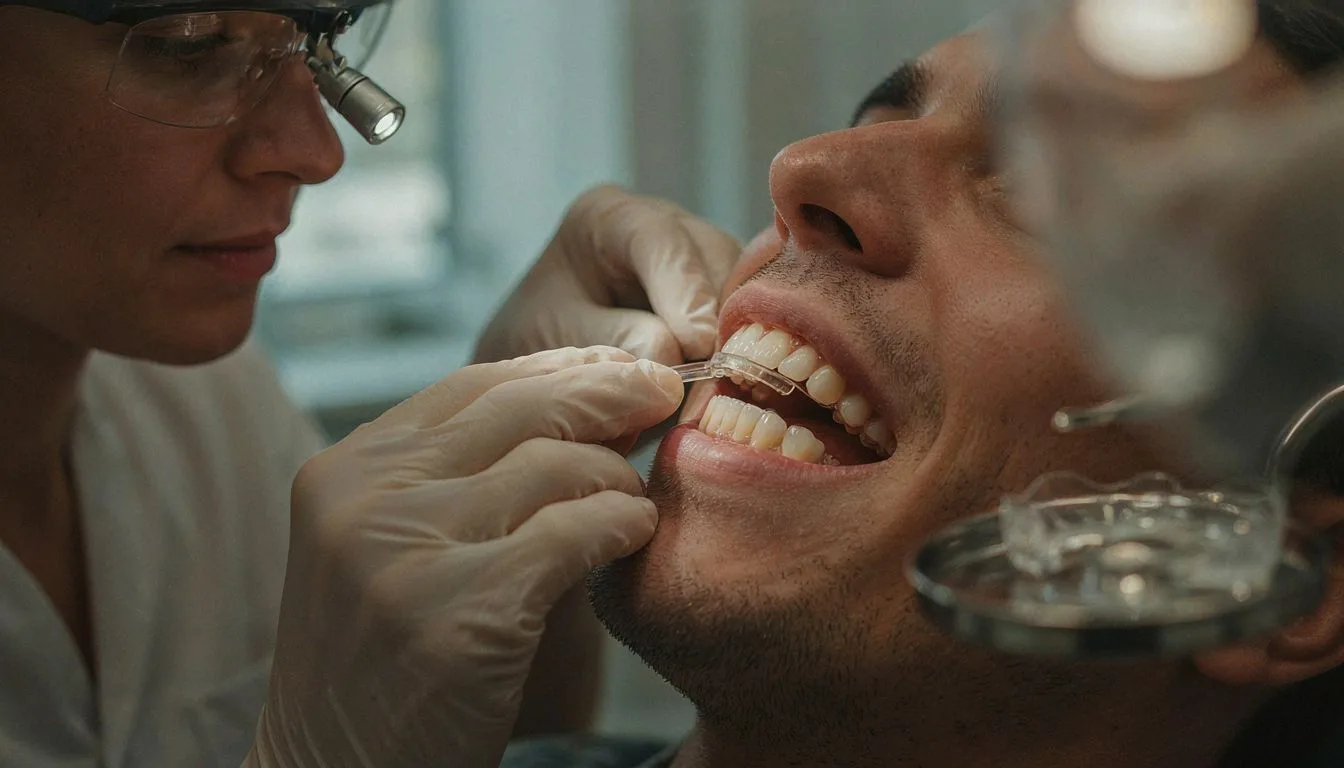
Every time your teeth meet, they generate force. Chewing a meal, clenching during a stressful phone call, or grinding through the night all load your dental work with mechanical stress. A crown absorbs a share of that load, and over years the repeated cycle of pressure and release slowly shapes its fate. This is where occlusal loading becomes the quiet force behind crown wear.
Normal chewing produces forces in the range of 20 to 40 pounds on the back teeth, but parafunctional habits push well beyond that. Bruxism and clenching can generate hundreds of pounds of pressure, often for seconds at a time rather than the split-second contact of a normal chew. That sustained force is what damages crowns. Porcelain, in particular, is brittle under concentrated pressure and can chip, crack, or fracture at the edges. Even tougher materials like zirconia crown restorations are not immune; they can wear down opposing teeth or develop fractures at the margins after years of heavy loading.
Grinding also accelerates wear on the crown itself and on the natural teeth opposite it. A crown that sits slightly high in the bite takes more force than its neighbors, which is why an uneven bite can shorten a crown’s life dramatically. The damage rarely happens overnight. Instead, small fractures accumulate, the marginal integrity weakens, and bacteria find their way beneath the restoration.
If you grind or clench, a night guard is one of the most effective protections you can add. It cushions the forces and spreads them across the whole arch rather than concentrating them on a single crown. Discussing your bite with your dentist at routine visits also matters, since minor adjustments to the crown’s contact points can relieve pressure before cracks develop.
Warning Signs That a Crown Is Nearing the End of Its Life
A crown rarely fails without warning. Long before a crown actually breaks or comes loose, it usually communicates its decline through small, easy-to-miss changes. The challenge is that these signals develop gradually, so they blend into daily life and only become obvious once the damage is advanced. Learning to read them early is what separates a simple repair from a full replacement.
Most of the meaningful clues cluster around the crown’s edges, its fit, and the way it feels under pressure. Pay attention to any of the following:
- A visible gap or dark line at the margin. When the seal between crown and tooth weakens, bacteria slip underneath and decay can start in the underlying tooth.
- Recurring food trapping or a persistent bad taste. This often points to the same compromised margin rather than a hygiene problem.
- Increased sensitivity to cold, heat, or sweets. New or worsening sensitivity suggests the protective barrier is no longer doing its job.
- A loose or rocking sensation. Even slight movement means the crown is no longer firmly seated and needs prompt attention.
- Chipping, cracks, or a dull, flattened chewing surface. These reflect accumulated wear that can eventually reach the underlying structure.
One sign deserves particular attention: a fractured or chipped crown edge combined with sensitivity is a strong indicator that the restoration is close to failing. A chip alone might seem cosmetic, but once the underlying tooth is exposed, decay and nerve irritation can progress quickly.
Timing matters here. A crown showing these signs can often be saved or replaced on a planned basis, but waiting until it breaks completely may mean the tooth beneath it is no longer restorable. Acting on early warning signs is what protects both the crown and the natural tooth it was meant to safeguard.
Professional Checkups and Maintenance for Crown Longevity
Even the best-made crown depends on what happens in the chair every six months. Professional maintenance catches the slow, quiet changes that home care cannot see, and those visits are often what separate a crown that lasts five years from one that lasts fifteen.
During a routine exam, your dentist checks the crown in ways you simply cannot at home. A dental explorer is run along the margin to detect softness, catches, or early decay beneath the edge. Probing depths around the crown are compared to previous readings, since a sudden increase can signal gum inflammation or bone loss near the restoration. Bite paper and articulating film reveal whether the crown is hitting too hard in one spot, a problem that gradually wears through both the crown and the opposing tooth. Radiographs show the hidden margin, the bone level, and any decay that has crept underneath without visible symptoms.
Professional cleaning matters just as much. Plaque and calculus accumulate around crown margins faster than on natural enamel, especially where the fit is not perfect. A hygienist can remove deposits from areas your brush and floss never reach, and polishing the crown surface reduces the roughness that traps bacteria.
Some maintenance steps go beyond observation:
- Minor occlusal adjustments to redistribute bite forces away from a single contact point.
- Recontouring or polishing a rough margin that is catching food.
- Application of fluoride varnish around the crown edge to strengthen adjacent enamel.
- Night guard evaluation or adjustment if grinding is accelerating wear.
- Targeted advice on interdental brushes or water flossers for the specific crown location.
How often you need these visits depends on your risk profile. If you grind, have a history of gum disease, or your crown sits near the gum line, your dentist may recommend checkups every three to four months rather than every six. Patients with well-maintained crowns and low risk can usually stay on the standard schedule.
The practical takeaway is simple: a crown is not a one-time fix. It is a restoration that needs the same ongoing attention as the tooth it covers, and regular professional review is the most reliable way to protect that investment.
When Replacement Becomes Necessary and What to Expect
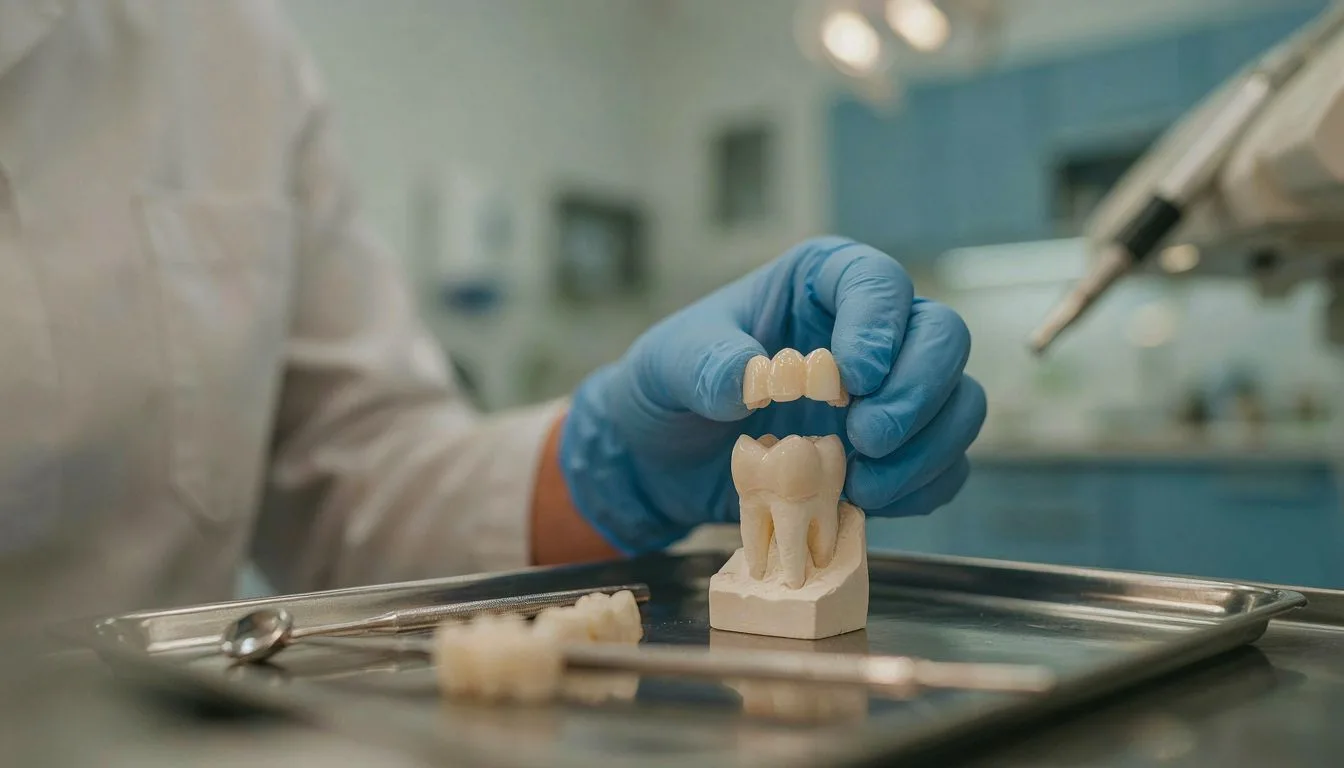
There comes a point when monitoring and repairing a crown no longer makes sense, and replacement is the better clinical and financial decision. The clearest trigger is loss of the seal between the crown and the tooth. Once bacteria have a persistent pathway into the margin, decay can advance underneath the restoration without any visible surface damage, and by the time symptoms appear, the underlying tooth structure may already be compromised.
Replacement is also the standard recommendation when the crown itself has fractured through its thickness, when the tooth has cracked below the gumline, or when recurrent decay has reached the pulp and root canal treatment is required. A crown that has become loose because the cement has failed is sometimes re-cementable, but if it keeps loosening, the fit is the problem, not the adhesive, and a new crown is the durable answer. Persistent sensitivity that does not settle after a bite adjustment points in the same direction.
What you can expect during the process is fairly predictable. The old crown is removed, usually by sectioning it so the tooth stays intact, and the underlying structure is cleaned and assessed. If decay or fracture is found, it is treated first, and a core build-up may be needed to rebuild enough tooth for a new crown to seat properly. You will then be re-scanned or re-impressed, fitted with a temporary crown, and receive the final restoration at a later visit.
The most common complication is discovering damage that was hidden under the old crown, which can extend the timeline or change the treatment plan. Temporary crowns are also more fragile than the final one, so avoid sticky or hard foods until the permanent crown is cemented. If the tooth proves unsalvageable, an extraction and implant or bridge may become the realistic path, which is why an early, honest assessment is always preferable to waiting.
FAQs
How long do dental crowns results last with good oral hygiene?
With good oral hygiene and regular dental checkups, most dental crowns last between 5 and 15 years, and many make it to the 15-to-20-year mark. The biggest factors that shorten lifespan are grinding or clenching, biting hard foods, and gum disease around the crowned tooth. Getting the crown cleaned professionally and addressing any bite issues early will help you push yours toward the upper end of that range.
What factors can shorten how long dental crowns results last?
Poor oral hygiene is the biggest culprit, since plaque buildup along the crown margin invites decay and gum disease that can loosen or undermine the restoration. Heavy biting forces from bruxism, chewing ice, or biting fingernails can crack or chip the porcelain, while a crown placed on a tooth with insufficient remaining structure or a poorly sealed margin tends to fail sooner. Habits like smoking, frequent sugary or acidic drinks, and skipping regular dental checkups also accelerate wear and shorten the crown's lifespan.
Can a damaged crown be repaired, or does it need to be replaced?
Minor chips or small fractures can often be smoothed and repaired with composite resin right in the chair, so you may not need a whole new crown. If the damage is deeper, the crown has come loose, or the underlying tooth is cracked, replacement is usually the safer and more durable option. Your dentist will check the fit, the margin, and the health of the tooth underneath before deciding which route makes sense.