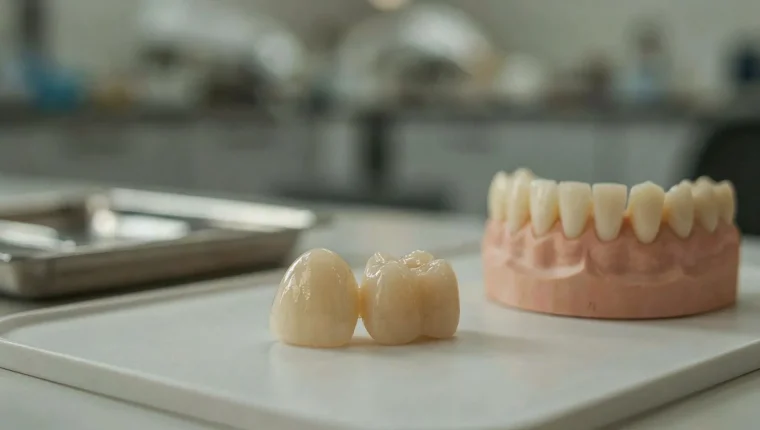
You have a tooth that is damaged, worn down, or discolored, and two treatment names keep coming up: crowns and veneers. They sound similar in conversation, but they are not interchangeable. One covers and protects a weakened tooth; the other is a thin shell bonded to the front surface, mainly for appearance. Choosing between dental crowns vs dental veneers depends not on which is more popular or modern. It depends on how much healthy tooth structure remains, where the tooth sits in your mouth, and what you need it to do for the next decade. That is why the right answer changes from one person to the next, and why it deserves a careful look rather than a quick decision.
What Dental Crowns and Veneers Actually Are
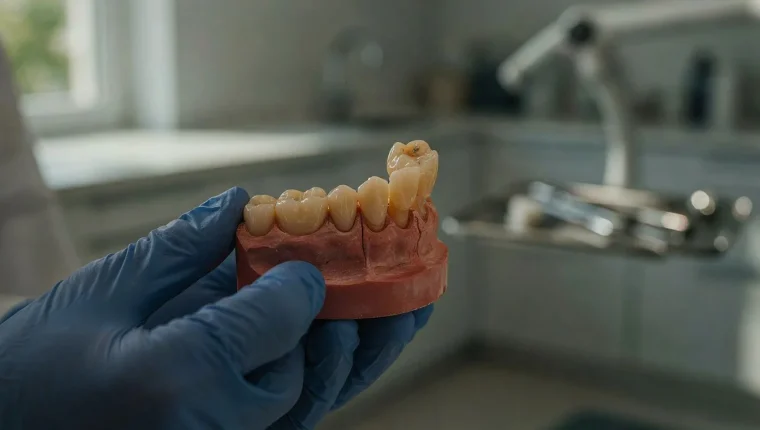
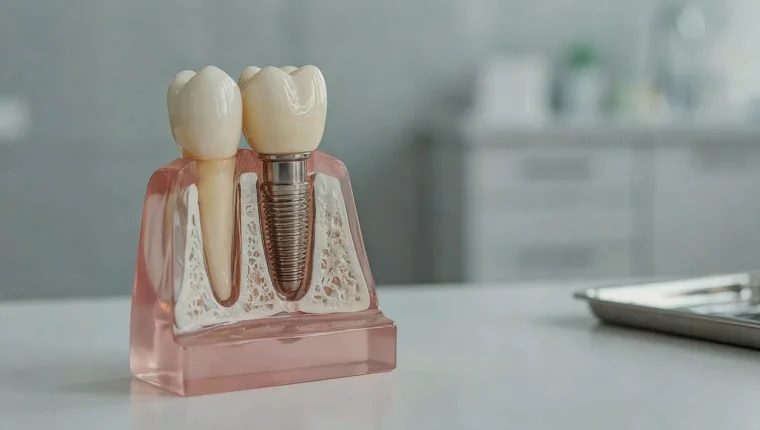
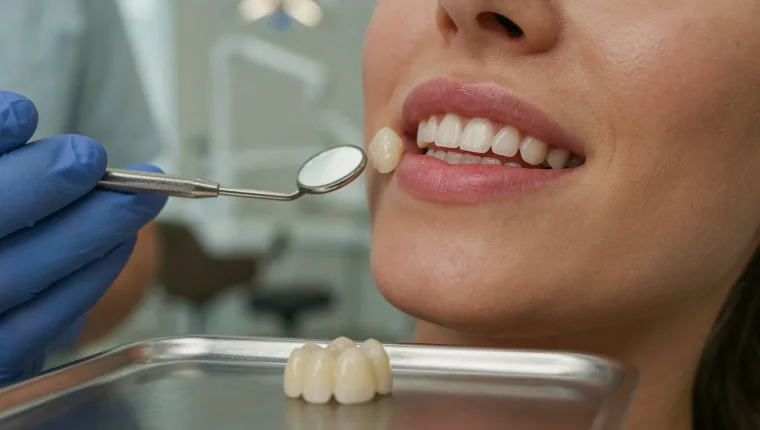
A dental crown is a custom-made cap that covers the entire visible portion of a tooth, from the gum line to the chewing surface. It wraps the tooth on all sides, which is why it can restore a tooth that is cracked, heavily worn, or weakened after a root canal. A dental veneer works differently: it is a thin shell, usually bonded to the front-facing surface of a tooth, designed to change how that tooth looks without covering the whole structure.
That single structural difference — full coverage versus a front-facing shell — is what separates the two treatments at every level. A crown replaces missing or compromised structure and protects what remains. A veneer reshapes the appearance of a tooth that is still largely intact. One is a restoration that happens to look natural; the other is a cosmetic layer that happens to sit on a healthy tooth.
This distinction matters because it explains why the two options are not simply interchangeable. A veneer cannot hold together a fractured tooth, and a crown is rarely the first choice for a tooth whose only problem is color or minor shape. Every comparison that follows — materials, tooth preparation, cost, longevity — flows from this basic difference in what each restoration physically is.
Key Differences in Materials and Placement
Materials set the two restorations apart right away. Crowns are typically made from zirconia, lithium disilicate, porcelain-fused-to-metal, or full metal, chosen for strength and wear resistance. Veneers rely on thinner porcelain or composite resin, built to bond to the front surface only. That material difference explains why a crown feels like a solid cap and a veneer feels like a delicate shell.
Placement follows a different path for each. A crown appointment involves shaping the tooth around its entire circumference, taking an impression or digital scan, and fitting a temporary while the permanent crown is made. At the second visit, the crown is cemented over the prepared tooth. A veneer appointment usually requires less shaping, often limited to the front and biting edge, followed by an impression and a temporary or no temporary at all. Bonding happens with a light-cured resin that locks the veneer to enamel.
These steps shape how each restoration feels and fits. Crowns cover and protect more of the tooth, while veneers sit lightly on the visible surface. That practical contrast leads directly to the question of how much natural tooth structure each option leaves intact.
How Each Option Preserves or Alters Natural Teeth
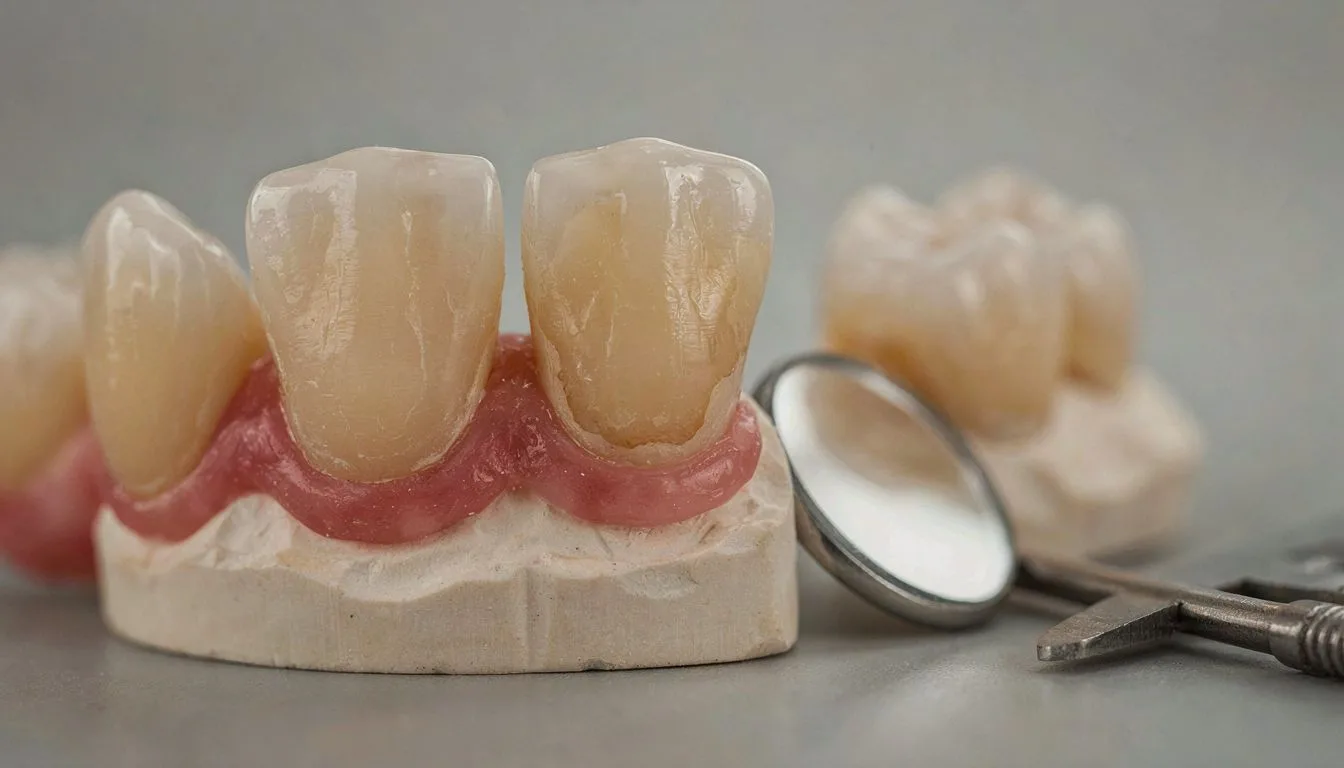
Tooth preparation is where the two options diverge most sharply, and it is the part of the decision patients feel for the rest of their lives. A veneer typically removes a thin layer of enamel — often less than a millimeter — from the front and biting edge of the tooth. A crown, by contrast, must reduce the tooth on all sides so the cap can slide over it, which usually means removing a substantial amount of healthy structure, sometimes down to the level of the gum line.
That gap matters because tooth preparation is irreversible. Enamel does not grow back, and a reduced tooth will always need some form of restoration from that point forward. This is not a cosmetic detail; it is a structural change to the tooth itself. Once a tooth is shaped for a crown, it cannot simply be returned to its original state if you later change your mind.
The practical consequence is about future flexibility. A conservatively prepared tooth leaves more healthy structure intact, which keeps more treatment paths open down the road. A more aggressively reduced tooth narrows those options, because there is simply less natural tooth left to work with. Understanding how much structure each option asks you to give up is central to choosing well.
Ideal Candidates for Crowns Versus Veneers

Candidacy for either restoration comes down to the condition of the tooth itself, not personal preference. A crown is built for a tooth that has lost too much structure to stand on its own. Heavy decay, a fracture that reaches below the gumline, a tooth that has already had root canal treatment, or one that is cracked and weakened all point toward full coverage. In these situations, the crown holds what remains together and protects it from further breakdown.
Veneers suit a different profile. The tooth is essentially sound but looks wrong: discoloration that whitening cannot touch, a chipped front edge, minor gaps, or slight misalignment. Because a veneer is a thin shell bonded to the front surface, it changes appearance without rebuilding structure. The underlying tooth has to be healthy enough to support it.
The overlap is where things get less clear. A tooth can be mildly damaged and discolored at the same time, and that combination leaves room for either option. A front tooth with a small fracture may qualify for a veneer, while a back tooth with the same fracture usually needs a crown because of biting forces. Location matters as much as condition.
This is why a dentist’s exam settles the question. X-rays and a visual check reveal how much healthy tooth structure remains, and that single factor often decides the path. When both options seem possible, the decision shifts to other considerations, which we will cover later.
Durability, Cost, and Longevity Compared
Longevity is not a fixed number you can look up, because it depends on what the restoration is made of, how hard you bite, and how well you care for it. Well-made crowns in strong materials such as zirconia can serve for many years, often a decade or more, and some last considerably longer. Veneers are thinner and typically cover only the front of the tooth, so they face different stresses. With good hygiene and sensible habits, veneers commonly last around ten to fifteen years. Heavy grinding, nail-biting, or crunching ice shortens the life of either option, and a restoration placed on a heavily damaged tooth may need earlier replacement than one on a sound foundation.
Cost follows a similar logic. The price reflects the material, the lab work involved, and how much tooth preparation is required. Veneers usually cost less per tooth because they involve less material and less removal of tooth structure. Crowns cost more because they rebuild the whole tooth and demand more clinical and laboratory time. This is the part many people miss: the cheaper upfront option is not always cheaper over time. A veneer that chips and needs replacing twice while a crown survives once can end up costing more overall. When you weigh the two, compare the total investment across the years, not just the first invoice.
Aesthetic Outcomes and Smile Design Potential
Most people considering either restoration are chasing the same handful of improvements: whiter color, better shape, straighter-looking front teeth, or full coverage of a tooth that no longer looks whole. Veneers and crowns deliver on those goals differently, and knowing which one matches your aesthetic wish list prevents disappointment later.
Veneers excel at the front of the smile. A thin ceramic shell bonded to the facial surface lets your dentist fine-tune shade, contour, and even create the illusion of better alignment without moving teeth. Because they cover only the visible face, they are ideal when the underlying tooth is mostly intact but its appearance bothers you. Crowns, by contrast, reshape and cover the entire tooth, which makes them the better cosmetic answer when a tooth is broken, heavily worn, or already rebuilt.
The honest limit sits at the back of the mouth. Neither option is chosen there for looks, and crowns are used mainly for strength. It is also worth remembering that every aesthetic gain carries a structural cost, since preparing a tooth for a crown or veneer is permanent. A beautiful result is only worth it if you accept that trade-off.
Making the Right Choice With Your Dentist
The most useful thing you can bring to the appointment isn’t a preference for one restoration over the other — it’s a set of questions that reveals how your dentist is thinking. Ask which option they’d choose for their own tooth in your situation, and why. Ask what happens to the tooth underneath if the restoration fails in five years. Ask whether the damage is structural or primarily cosmetic, since that answer usually decides the direction on its own.
Bring your own priorities into the conversation too. If budget is tight, ask what the long-term plan looks like rather than just today’s price. If you’re weighing visible front teeth against a back molar, say so — the dentist’s recommendation may shift depending on where the tooth sits in your smile.
Listen for reasoning, not just a treatment name. A dentist who explains why a crown protects a weakened tooth, or why a veneer is enough for a discolored but intact one, is giving you the information you actually need. The right choice is rarely universal; it’s the one that fits your tooth’s condition, your goals, and what you can maintain over time. That fit matters more than any general rule.
FAQs
Which option lasts longer, dental crowns or Dental Veneers?
Dental crowns generally last longer than dental veneers, with many crowns lasting 10 to 15 years or more compared to roughly 7 to 10 years for veneers. However, lifespan depends heavily on material, placement, and your oral hygiene habits. A well-maintained crown or veneer can exceed these ranges, while poor care or heavy grinding can shorten them significantly.
Can dental crowns vs Dental Veneers change how much healthy tooth structure is removed?
Yes, and this is one of the biggest practical differences between the two. A dental crown typically requires reducing the tooth on all sides, removing a substantial amount of healthy enamel and dentin to fit the cap over it, whereas veneers remove only a thin layer—often less than a millimeter—from the front surface. That means veneers are generally the more conservative choice when your goal is to preserve as much natural tooth structure as possible.
How do I know whether dental crowns or Dental Veneers fit my smile goals and budget?
Your choice between dental crowns and veneers usually comes down to how much healthy tooth structure remains and what you want to change. Crowns cap and protect a weakened, cracked, or heavily restored tooth, so they are the practical pick when strength and coverage matter most, while veneers cover only the front surface and suit teeth that are structurally sound but cosmetically imperfect. On budget, veneers often cost more per tooth and are typically not covered by insurance because they are elective, whereas crowns are frequently partially covered when they restore function. If your goal is primarily appearance and your teeth are healthy, veneers make sense; if you need to rebuild or protect a damaged tooth, a crown is the better investment.