A dental crown is not right for everyone; eligibility depends more on the condition of a specific tooth than on any single rule. Some people come in with a tooth cracked down the middle after biting into something hard. Others have a molar held together by an old, failing filling that keeps chipping at the edges. A few are mainly unhappy with how a front tooth looks. All these situations can point to a crown, but for different reasons.
Broadly, dental crowns candidate status usually comes down to one question: can the tooth still be saved, and will a filling alone hold up? If the answer to the second part is no, a crown often becomes the more reliable choice. Candidates tend to fall into a few groups — teeth with structural damage, teeth that need protection after a root canal, worn or fractured teeth, and implants that need a visible replacement.
Not everyone benefits. Sometimes a tooth is too far gone, or the underlying issue needs to be handled first. Candidacy is really about matching the right fix to the right tooth.
Who May Need a Dental Crown
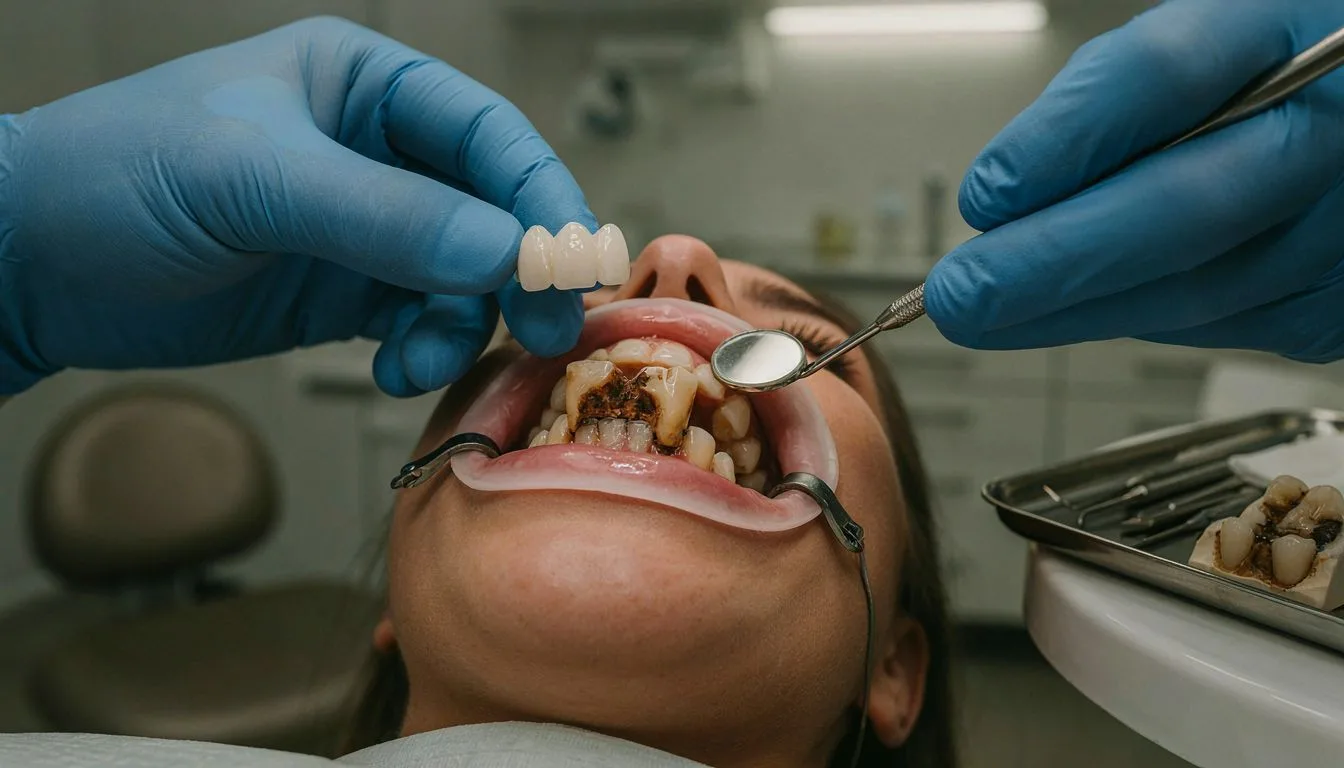
Most people picture a crown as the final step after a major dental event, but the reasons a dentist recommends one are broader than that. The common thread is structure: a crown becomes the standard choice when a tooth no longer has enough healthy material to hold a smaller restoration securely. A filling depends on surrounding walls of sound enamel and dentin to lock into place. Once those walls are compromised, the filling can’t carry the biting force on its own, and the tooth needs something that covers and protects what remains.
Several clinical situations land in this category. A tooth with extensive decay that has consumed a large portion of its structure is a frequent example, especially when the cavity extends close to the pulp or below the gum line. A fracture, whether a visible crack or a piece that has broken off, is another. Teeth that have already undergone significant treatment, such as a large older filling or endodontic work, often qualify because so much original structure has been removed or lost. In each case, the crown’s job is to hold the tooth together, distribute chewing forces evenly, and reduce the risk of further breakdown.
It helps to separate two different motivations here. Some crowns are recommended primarily for protection and function, where the goal is to keep a weakened tooth in service. Others are chosen mainly for appearance, where the structure is adequate but the patient wants to change the tooth’s shape, color, or alignment. Both are legitimate reasons, but they lead to different conversations with your dentist about what the crown is actually solving.
Signs That a Tooth Cannot Be Saved by Fillings Alone
A filling is a patch, and like any patch it needs a solid surface to hold onto. When a tooth loses too much of that surface, the patch stops being the right tool for the job. The most obvious sign is a cracked tooth that extends below the gumline or reaches into the pulp chamber. A fracture that deep cannot be bonded back together reliably, because the two halves flex independently every time you bite. A split tooth, where the segments have already separated, is beyond filling repair by definition.
Repeated failure tells a similar story. If a tooth has needed a new filling every year or two, or if a filling keeps falling out, the problem is usually the remaining tooth structure, not the dentist’s technique. Each replacement removes a little more healthy enamel and dentin, so the walls holding the restoration get thinner and weaker. At some point there is simply not enough tooth left to support another filling.
Symptoms alone will not settle the question. A sharp twinge on biting may point to a crack, but it can also come from a high spot on an existing filling or from sinus pressure. That is why dentists rely on imaging and a careful bite assessment rather than patient reports. A bite test with a small instrument, plus a radiograph or sometimes a cone beam scan, shows how deep a crack runs and how much sound structure remains. Those two facts, not the level of pain, decide whether a filling can still work or whether the tooth needs full coverage.
How Root Canal Treatment Leads to Crown Placement
Root canal treatment saves a tooth by removing infected pulp from inside the roots, but it leaves that tooth structurally compromised. The procedure itself is not the problem — the issue is what remains afterward. A tooth that has undergone endodontic therapy no longer has the living tissue that once kept it hydrated and flexible, so it becomes drier and more prone to fracture over time. That vulnerability is the main reason a root-treated tooth so often ends up needing full coverage.
A crown addresses this by holding the tooth together and sealing it against reinfection. Without that protection, a back tooth under normal biting force can crack in a way that makes it unsalvageable, wasting the root canal work entirely.
Not every root-treated tooth needs a crown, though. Front teeth that have only a small access opening and minimal loss of structure may do fine with a filling. The recommendation shifts toward crowning when the tooth is a molar or premolar, when a large amount of tooth structure was already lost to decay before treatment, or when the tooth has had multiple prior restorations. In those cases, the remaining walls are thin enough that a crown is the more reliable long-term choice.
If you have had a root canal and your dentist recommends a crown, the reasoning is usually about protecting an investment rather than adding unnecessary treatment.
Patients With Broken or Worn-Down Teeth

Not every damaged tooth starts with decay. Some lose their structure from the outside in, through forces that have nothing to do with bacteria. Bruxism, the habitual grinding and clenching of teeth, is one of the most common culprits. Over time, this constant pressure flattens cusps, shortens teeth, and wears through enamel faster than the body can repair it. Acid erosion, whether from diet, reflux, or medical conditions, dissolves the mineral surface and leaves teeth thinner and more brittle. Trauma, such as a fall, a sports injury, or a hard blow, can chip or fracture a tooth in an instant.
When a tooth has lost significant height or shape, a filling often cannot restore it. There is simply not enough healthy structure left to hold the material in place. A crown rebuilds the tooth from the outside, covering what remains and returning the full biting surface. This protects the weakened walls from splitting under normal chewing forces and restores the tooth’s original function.
Restoring the tooth is only part of the picture. If grinding or erosion is ongoing, the same forces that damaged the natural tooth will eventually wear down the crown as well. Addressing the underlying cause, whether through a night guard, dietary changes, or treatment for reflux, gives the restoration the best chance of lasting.
Candidates Seeking Cosmetic Improvements With Crowns
Some patients come to a consultation with a healthy, functional bite and one clear goal: they want their smile to look different. Crowns can serve that goal in selected cases by reshaping a tooth that is too short, too narrow, or visibly out of proportion with its neighbors. They can also mask deep intrinsic staining that whitening cannot reach, or close small gaps by widening a single tooth rather than moving the whole arch.
Cosmetic crowning is a trade-off, not a free upgrade. Placing a crown means removing healthy enamel to make room for the restoration, and that tooth structure does not grow back. The patient also commits to long-term maintenance, since crowns can chip, wear, or loosen over the years and may eventually need replacement. In many cosmetic situations, bonding, veneers, or orthodontics achieve a comparable result while preserving more of the natural tooth.
A reasonable cosmetic crowning case usually involves a tooth that already needs coverage for structural reasons, or a shape or color problem that less invasive options genuinely cannot address. When the only issue is mild discoloration or a minor gap, the enamel cost is often hard to justify.
When Dental Implants Require a Crown
An implant crown is the visible and functional part of an implant, the piece that actually looks and chews like a tooth. The titanium post replaces the root, but it is the crown that restores the biting surface and blends with the surrounding teeth. Without it, the implant serves no practical purpose for the patient.
Not every implant site is ready for that final crown right away. Osseointegration, the process by which bone fuses with the implant surface, determines when the restorative phase can begin. This typically takes several months, and placing a crown too early can compromise stability. Adequate bone volume is essential; if the jaw has shrunk from long-term tooth loss, grafting may be needed before the implant itself is even placed. Gum health matters too, since inflamed tissue around an implant can lead to complications that affect the crown’s fit and longevity.
Once healing is confirmed and the implant is stable, an abutment connects the post to the crown. The crown is then custom-fitted to match the shade and shape of neighboring teeth. For patients weighing whether they are a suitable dental crowns candidate in the implant context, the deciding factors are bone quality, tissue health, and successful integration, not the crown itself. When those conditions are met, the implant crown completes a restoration that functions like a natural tooth.
Who Should Avoid or Delay Dental Crowns
Even when a crown looks like the obvious fix, certain conditions make it the wrong move right now. Active decay, untreated gum disease, or heavy plaque buildup need to be brought under control first. Placing a crown over an inflamed gum line or a still-decaying tooth traps bacteria underneath it, which can lead to reinfection, bone loss, and a crown that fails early. Your dentist will usually want a clean, stable foundation before committing to a permanent restoration.
Your overall health matters too. Uncontrolled diabetes, immune disorders, and medications such as blood thinners or bisphosphonates can affect healing, bleeding, and long-term outcomes. In some cases, the timing of treatment needs to shift rather than the treatment itself. If you grind or clench heavily, a crown may wear or fracture faster without a protective night guard.
Sometimes the problem is structural. If too little healthy tooth remains above the gum, or your bite puts extreme force on one spot, a crown may not hold. In these situations, extraction followed by an implant or bridge can be the more predictable path. A candid conversation with your dentist about risks and alternatives will help you decide what is genuinely right for your mouth.
FAQs
What signs indicate that you might be a good dental crowns candidate?
You may be a good candidate if you have a heavily worn, cracked, or fractured tooth, a large filling that leaves little healthy tooth structure, or a tooth that has had root canal treatment and needs protection. Crowns also work well for restoring a broken cusp, covering a dental implant, or improving the shape and color of a tooth that can't be fixed with bonding or veneers. In general, the best candidates have healthy gums and enough remaining tooth structure to support the crown.
Can a dental crowns candidate have the procedure done on a front tooth for cosmetic reasons?
Yes, a dental crown can be placed on a front tooth for purely cosmetic reasons, and this is a common request when a tooth is severely discolored, misshapen, chipped, or worn in a way that bonding or veneers cannot fully correct. Because front teeth are highly visible, your dentist will typically match the crown's shape, size, and shade to your neighboring teeth so the result looks natural rather than obvious. A crown requires removing a layer of healthy enamel, so it is usually reserved for cases where less invasive options like whitening, bonding, or veneers would not give you the outcome you want.
Are there health conditions that could disqualify someone from being a dental crowns candidate?
Yes, certain health conditions can make dental crowns a poor fit or require extra precautions. Active gum disease or significant bone loss around the tooth must be treated first, since a crown cannot succeed on an unstable foundation. Uncontrolled diabetes, severe immune suppression, or a history of head and neck radiation can impair healing and raise the risk of infection or crown failure. Heavy teeth grinding, untreated decay, and poor oral hygiene are also common reasons a dentist may delay or reconsider crowning a tooth.