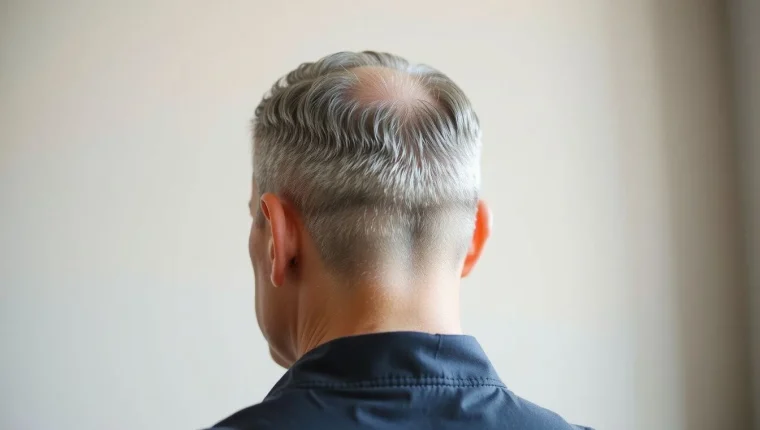
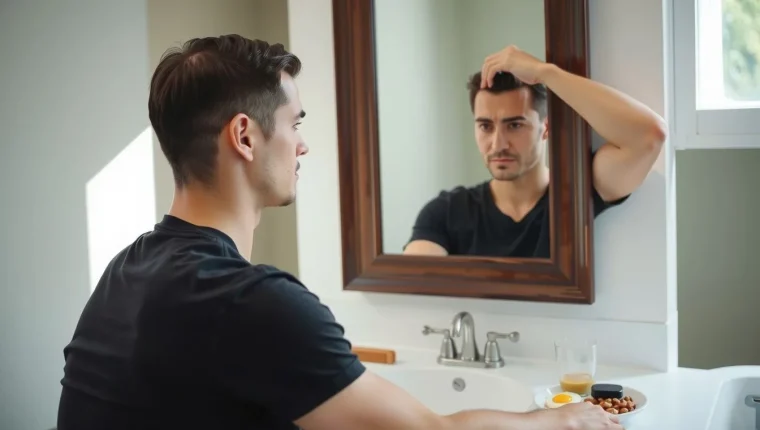
Thinning at the crown and back of the head catches many men off guard because it does not follow the hairline. You may notice a widening spot under bright light, a scalp that shows through when hair is wet, or a bald patch that slowly expands across the back of the head. This pattern is not random. It is a recognizable form of male pattern hair loss, and it reflects a specific interaction between hormones and inherited follicle sensitivity. The balding back of head male pattern often progresses quietly before becoming obvious. Understanding what drives it, how it typically evolves, and which treatments actually target the cause gives you a realistic basis for deciding what to do next.
Why Hair Thins Specifically at the Back of the Head in Men

Male pattern hair loss rarely affects the scalp evenly. Men typically notice thinning at the crown and vertex while the sides and lower back of the head keep a relatively dense fringe for years. That asymmetry is the first clue that this is not uniform shedding but a regionally selective follicle sensitivity to androgens.
Follicles across the scalp are not identical. Those in the crown and vertex carry a genetically programmed response to dihydrotestosterone, the androgen that gradually miniaturizes them. Hair in the sides and lower back, by contrast, often lacks this inherited sensitivity, so it continues to grow normally even as the top thins. This is why a man can develop a bald patch at the back while his sideburns and temple fringe remain intact.
Understanding this regional vulnerability sets up the next question: what exactly drives that follicle-level response.
How DHT and Genetics Drive Androgenetic Balding in Males
DHT, or dihydrotestosterone, is a normal androgen that every man produces, largely as a byproduct of testosterone. In androgenetic alopecia, the hormone itself is rarely abnormal. Blood tests in most affected men show ordinary testosterone and DHT levels. The decisive factor is not how much DHT circulates, but how sensitive a given follicle is to it.
That sensitivity is inherited. Specific genes shape how receptors in the hair follicle respond to androgens, and this inherited trait is what separates a follicle that resists DHT from one that does not. On the crown and vertex, genetically primed follicles react to DHT by gradually shortening each growth phase and producing thinner, shorter hairs. This process is called follicle miniaturization. It is not a single event but a slow shift across many cycles, which is why crown thinning tends to appear gradually rather than overnight.
Over time, miniaturized follicles shrink until they stop producing visible hair at all. The result is the expanding thin patch or bald spot that defines androgenetic loss at the back of the head. Understanding this mechanism matters because it explains why treatments aim to interrupt DHT signaling or sensitivity rather than simply adding moisture or nutrients to the scalp.
Early Signs and Norwood Stages of Crown and Vertex Hair Loss
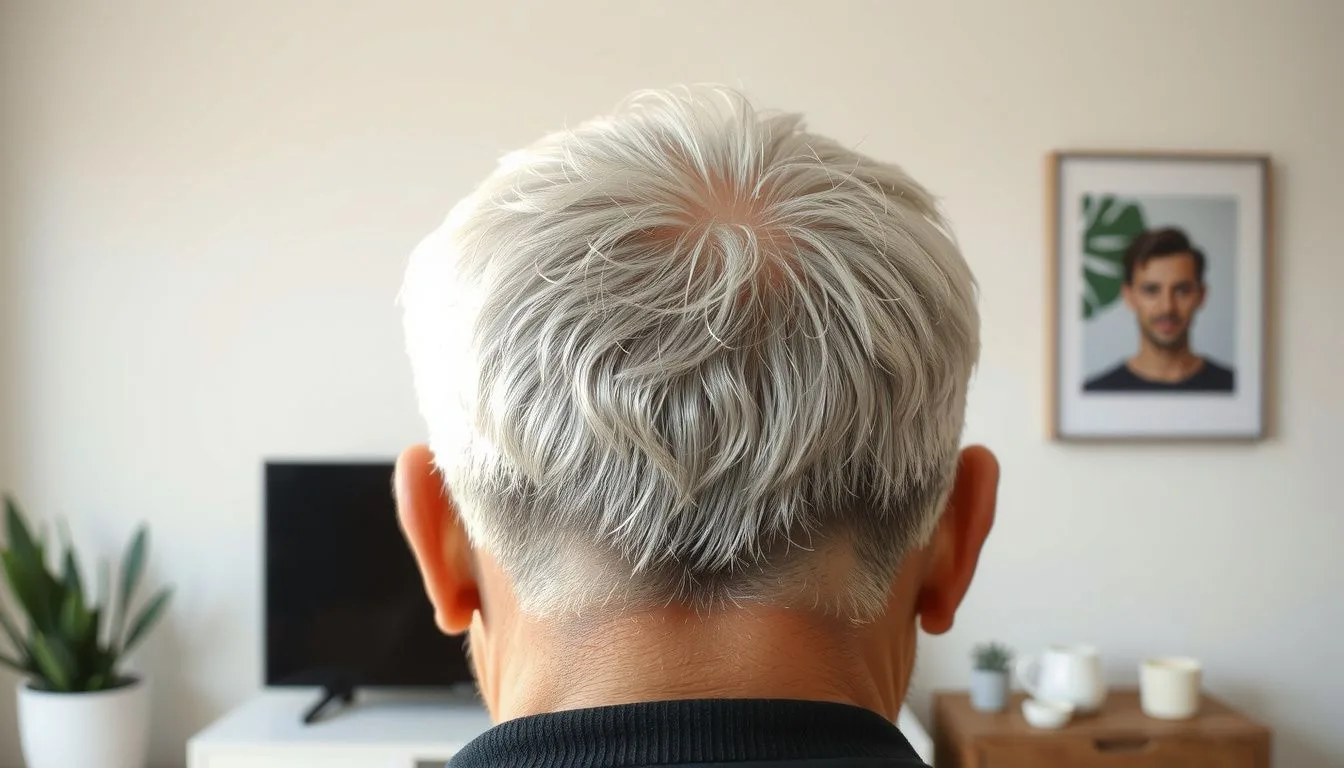
Crown thinning rarely announces itself with a sudden bald patch. Instead, it begins as a subtle loss of density that is easy to dismiss until a widening part or a faint horseshoe shape becomes visible at the vertex.
- Reduced density: The scalp becomes more visible when hair is wet or pulled back, even though no bare spot exists yet.
- Widening part: A gap along the back of the head gradually broadens, especially under direct light.
- Softening hairline at the vertex: Individual strands feel finer and weaker before any clear thinning area forms.
The Norwood scale organizes this progression into recognizable stages. Early crown involvement often aligns with Norwood III vertex, where the front may remain stable while the back begins to thin. By Norwood IV and V, the crown and frontal regions typically merge into a larger affected area. Self-assessment is approximate, but accurate staging helps determine when treatment is most effective.
Medical Treatments That Target Androgenetic Hair Loss
Medical treatment for androgenetic hair loss works by interrupting the miniaturization process rather than instantly restoring lost density. The realistic goal is to slow further thinning, stabilize the crown and vertex, and in some cases encourage partial regrowth over months of consistent use.
Options fall into two broad groups. 5-alpha-reductase inhibitors such as finasteride and dutasteride lower DHT, the hormone driving follicle shrinkage, so they mainly slow or halt progression. Topical minoxidil and oral minoxidil instead stimulate follicles to re-enter the growth phase, which can thicken existing hair and improve coverage. Because these act on an ongoing hormonal process, most require continued use to hold results; stopping usually allows loss to resume.
Which approach suits you depends on your Norwood stage, how much viable hair remains in the thinning zone, your health history, and possible side effects. No single option works for everyone, and combining treatments is common. This is why a proper evaluation by a clinician matters more than a self-prescribed plan. If medical therapy cannot meet your goals, procedural and surgical routes offer another path.
Procedural and Surgical Options for Restoring Hair on the Back of the Head
Restoring hair at the crown and back of the head is more demanding than it looks, because this region has poorer blood supply and a wider surface to cover than the frontal hairline. That makes the crown a challenging recipient area, and it directly shapes who is a good candidate for procedural treatment.
Two main routes exist. Hair transplant surgery moves DHT-resistant follicles from the donor zone at the sides and back to the thinning crown, and results depend heavily on donor supply and graft survival. Scalp micropigmentation is a non-surgical option that uses pigment to create the appearance of density rather than new growth. Each carries different commitments in cost, sessions, and aftercare.
No procedure guarantees a full head of hair, and outcomes vary with the stage of loss and the quality of the donor area. In practice, the right choice depends on how much donor hair remains, how advanced the thinning has become, and what the patient realistically wants to achieve. Because untreated androgenetic loss continues to progress, procedural work is usually paired with ongoing medical therapy to protect both the transplanted and remaining follicles.
FAQs
Why does a balding back of head male often keep hair on the sides but lose it at the crown?
Dihydrotestosterone (DHT) binds to androgen receptors in genetically susceptible hair follicles, and follicles at the crown and frontal hairline are typically the most sensitive to this hormone. Hair on the sides and lower back of the head usually carries fewer androgen receptors, so it resists DHT-driven miniaturization and remains intact. This pattern is the hallmark of androgenetic alopecia and explains why the horseshoe-shaped rim of hair often persists even as the crown thins.
Is androgenetic hair loss in men permanent without treatment?
Yes, androgenetic hair loss in men is permanent without treatment because the condition progressively miniaturizes hair follicles rather than causing temporary shedding. This is why balding at the back of the head is often the most stubborn area, as follicles in that region are genetically more sensitive to dihydrotestosterone (DHT). Without intervention such as minoxidil, finasteride, or procedures like hair transplantation, the affected follicles gradually stop producing visible hair.
Which treatments actually work for a balding back of head male?
For balding at the back of the head, the most proven treatments are FDA-approved medications like finasteride and minoxidil, which can slow hair loss and promote regrowth in many men. Low-level laser therapy and platelet-rich plasma injections offer additional support, though results vary. In advanced cases where the follicles are permanently lost, hair transplant surgery using donor hair from the back and sides remains the only permanent solution. Because the back of the head is often the most treatment-resistant area, combining therapies usually works better than any single option.