Finding a smooth, circular bald patch on your scalp—sometimes overnight—is unsettling, especially when the skin looks normal and there is no itching or scaling. This pattern is typical of alopecia areata, an immune-related condition in which the body’s defenses mistakenly target hair follicles. It is not ordinary shedding, and it is not caused by stress alone or a bad shampoo. Because the mechanism differs, treatment choices depend on identifying the condition correctly. Some cases are limited to a few patches and improve on their own, while others need active medical care. Understanding how the condition is assessed and which options realistically help makes the next steps clearer.
Understanding Alopecia Areata and Why It Happens
Alopecia areata is an autoimmune condition, which means the body’s defense system mistakenly targets its own tissue. In this case, the target is the hair follicle, specifically the rapidly dividing cells in the hair bulb that produce the shaft. Immune cells gather around the follicle in a cluster sometimes described as a “swarm of bees,” signaling it to stop production and shed the hair. Because the inflammation stays near the surface and does not destroy the follicle’s stem cells, the structure remains alive beneath the skin.
This is why the bald patches are described as non-scarring: the follicle is suppressed rather than permanently replaced by scar tissue. That distinction matters because it explains why regrowth is possible at all. The follicle has not been erased; it has been switched off, and it can often be switched back on.
Understanding this mechanism clarifies the logic behind treatment. Because the problem is an overactive immune response, therapies aim to calm that response rather than repair a damaged follicle. Nothing needs to be rebuilt—the machinery is intact but silenced.
The course of the disease varies widely. Some people regrow hair within months without intervention, while others experience repeated cycles of loss and regrowth. Factors such as the extent of involvement, age at onset, and family history can influence how the condition behaves, though no single factor reliably predicts the outcome for an individual.
How Doctors Diagnose and Classify Different Patterns of Hair Loss
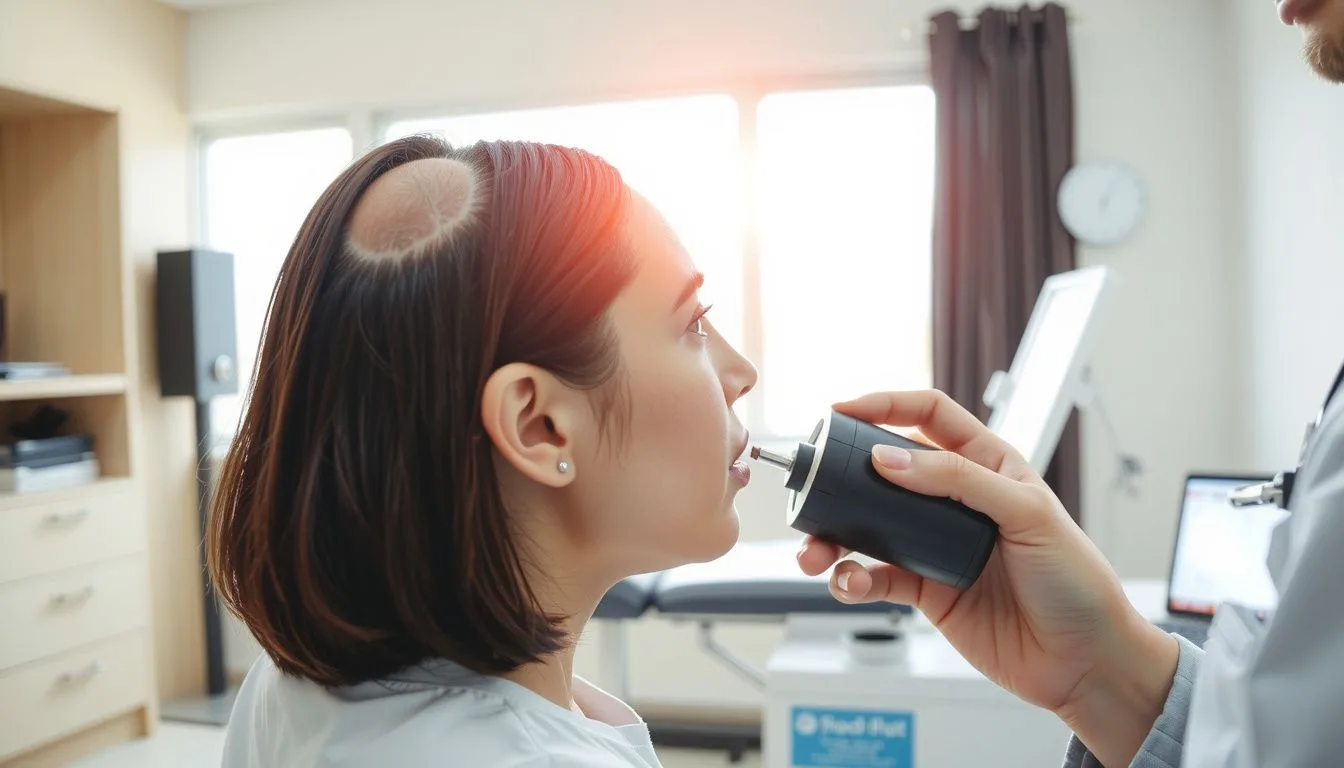
In most cases, alopecia areata is a clinical diagnosis, meaning a dermatologist can identify it by examining the scalp and asking about your history rather than relying on a single lab test. The classic sign is smooth, round patches of hair loss without scaling, broken hairs, or scarring. Because several other conditions can mimic this appearance, doctors sometimes use a scalp dermoscopy or a gentle hair pull to look for characteristic “exclamation point” hairs. Blood tests or a scalp biopsy are reserved for unusual cases, such as when the pattern is diffuse, the skin looks inflamed, or another underlying condition needs to be ruled out.
Once the diagnosis is confirmed, the next step is classifying the extent and pattern of loss, since this directly shapes the treatment plan. Clinicians commonly describe disease as limited, meaning a few small patches, or extensive, involving larger areas or the whole scalp. They also note specific patterns, such as patchy, ophiasis along the sides and back, or involvement of the eyebrows, eyelashes, and nails. This classification matters because limited disease often responds to first-line options, while widespread or stubborn patterns may require advanced therapies. Understanding where you fall on this spectrum helps you and your doctor set realistic expectations and choose the right starting point.
First-Line Treatments: Corticosteroids and Topical Options
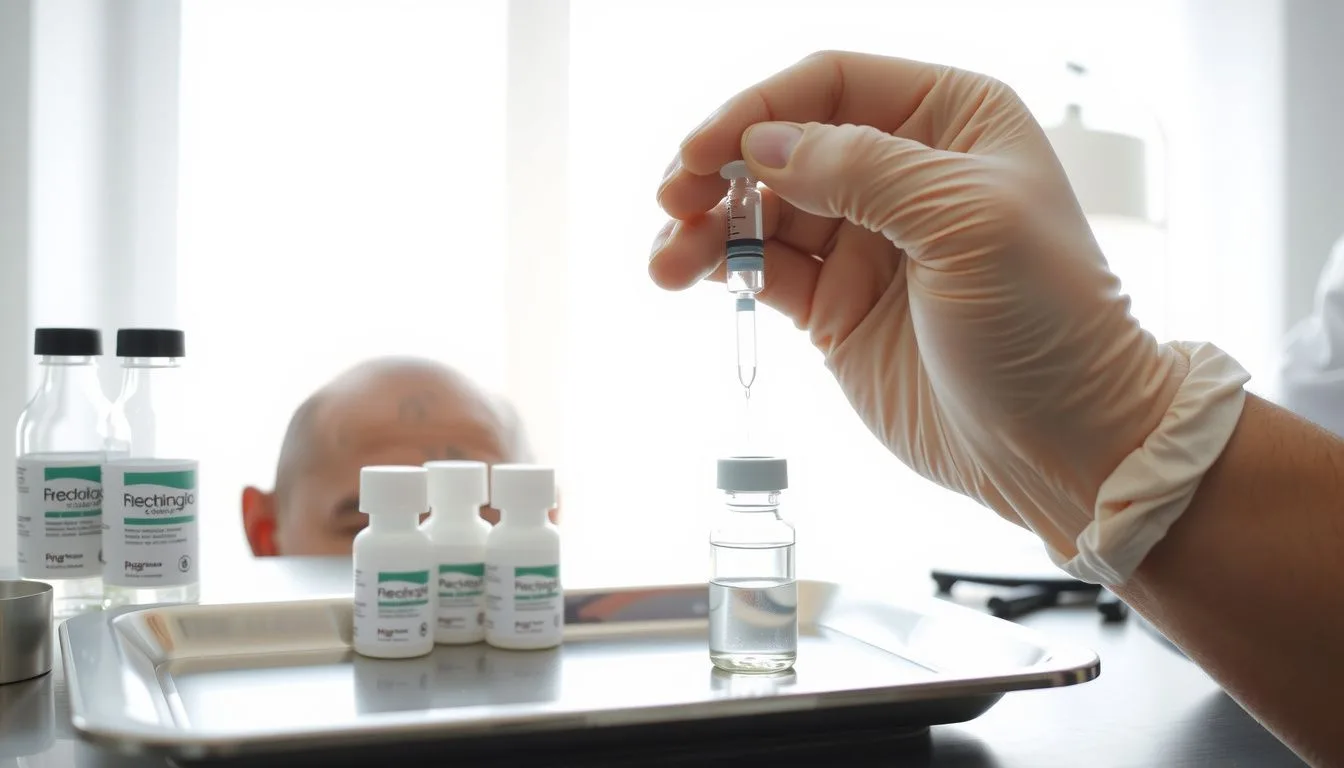
When hair loss is limited to a few small patches, doctors usually begin with treatments that calm the immune reaction at the scalp level rather than affecting the whole body. This stepwise logic matters: localized disease often responds to targeted therapy, so systemic drugs are held in reserve for later.
The most common first-line approach is intralesional corticosteroid injections. A dilute steroid solution is injected directly into the affected skin every few weeks, typically by a dermatologist. This delivers a concentrated anti-inflammatory effect exactly where the immune system is attacking the follicle, while minimizing exposure elsewhere. Small, stable patches on the scalp tend to respond best, and regrowth often becomes visible over several weeks to a few months.
Topical options serve a similar purpose for those who prefer to avoid injections or have broader, thinner patches. High-potency topical corticosteroids are applied to the affected areas, sometimes under occlusion to improve absorption. They are convenient and well tolerated, but they work more slowly than injections and are less effective on thick skin. A related option, topical minoxidil, is sometimes added to support follicle activity, though it does not address the underlying immune trigger on its own.
Expectations should stay realistic. First-line treatments aim to interrupt the attack and encourage regrowth, but results vary, and hair may return slowly or unevenly. Side effects are generally mild and local—skin thinning, mild irritation, or temporary discomfort at injection sites—and usually fade when treatment pauses. If patches persist or spread despite these measures, care shifts toward broader therapies.
Advanced Therapies for Resistant or Extensive Cases
Escalation is considered when hair loss is extensive—involving large portions of the scalp or progressing to total scalp or body hair loss—or when first-line options such as intralesional corticosteroid injections and topical therapies fail to produce meaningful regrowth after a reasonable trial. In these situations, treatment shifts toward systemic or device-based approaches that act on the immune response more broadly.
Janus kinase (JAK) inhibitors, taken orally or applied topically, are the most significant advance for extensive disease. Oral options can produce substantial regrowth, but they require ongoing laboratory monitoring, carry infection and metabolic risks, and typically work only while treatment continues. Topical JAK inhibitors offer a gentler profile but penetrate less reliably across large areas.
Other escalation routes include systemic corticosteroids for short-term control, immunosuppressants such as methotrexate or cyclosporine, and contact immunotherapy with diphenylcyclopropenone (DPCP). Each carries a distinct burden: systemic steroids are limited by cumulative side effects, immunosuppressants demand regular bloodwork, and contact immunotherapy requires repeated clinic visits and can cause local reactions.
Choosing among these options is rarely straightforward. The decision balances the extent of hair loss, the potential for regrowth, the monitoring and cost each therapy demands, and the patient’s tolerance for risk. Because these treatments carry meaningful side effects and require careful follow-up, specialist involvement—usually a dermatologist experienced in hair disorders—shapes both the choice and the safety of the plan.
Lifestyle Support, Emotional Coping, and Long-Term Management
Patchy hair loss is visible, unpredictable, and often beyond your control, and that combination can affect mood, social confidence, and daily routines. Stress does not cause alopecia areata, and reducing it will not cure the condition, but emotional coping is a legitimate part of care. Many people find it helpful to talk with a counselor, join a support group, or simply tell trusted friends and colleagues what is happening so they can respond with understanding rather than awkward questions.
Practical self-care supports overall wellbeing alongside medical care: adequate sleep, balanced nutrition, gentle hair handling, and sun protection for exposed scalp. Because the disease can flare and settle without warning, a sustainable long-term plan matters more than chasing every new remedy. Keep regular follow-up appointments, track changes with photos, and stay in contact with your dermatologist so treatment can be adjusted when needed.
FAQs
Is there a permanent cure for alopecia areata, or do treatments only manage symptoms?
Currently, there is no permanent cure for alopecia areata, so treatment focuses on controlling the condition and promoting hair regrowth. Many people experience spontaneous regrowth without any treatment, especially in mild cases, while others may need ongoing therapy to manage flare-ups. Treatments such as corticosteroids, minoxidil, and JAK inhibitors can help restore hair, but they do not prevent future episodes. The goal of treatment is therefore to reduce symptoms, speed regrowth, and improve quality of life rather than eliminate the condition permanently.
Which alopecia areata treatment options work best for mild versus extensive hair loss?
For mild or limited alopecia areata, topical corticosteroids, intralesional corticosteroid injections, and topical minoxidil are typically the first-line options and often produce good regrowth. When hair loss is extensive or involves the entire scalp or body, dermatologists usually turn to systemic treatments such as oral corticosteroids, Janus kinase (JAK) inhibitors like baricitinib and ritlecitinib, or contact immunotherapy. The best choice depends on the extent, location, and duration of hair loss, the patient's age, and how quickly treatment is started.
How long does it typically take to see results from alopecia areata treatment?
Most people begin to see noticeable regrowth within three to six months of starting treatment, though this varies based on the treatment type, the extent of hair loss, and individual response. Corticosteroid injections often produce early signs of regrowth in four to six weeks, while topical or oral therapies typically take longer. Because alopecia areata can resolve on its own and cycles unpredictably, doctors usually recommend continuing treatment for at least several months before judging its effectiveness.