You may notice more hair in the brush, on the pillow, or circling the shower drain, and wonder whether this is normal or worth acting on. Some daily shedding is expected. The line between ordinary hair loss and a problem needing medical attention is not obvious, especially when the change is gradual rather than sudden. Many adults wait months, assuming it will settle on its own, only to find that thinning has continued. The decision you face is practical: is this something to monitor, or is it time to see a dermatologist for hair loss? Getting that judgment right early matters because the cause of excessive shedding shapes what can be done and how much regrowth is realistic. These sections help you assess your situation and decide when professional care is the right next step.
Recognizing When Normal Shedding Becomes a Medical Concern

Hair shedding is a normal part of the hair growth cycle. Each follicle moves through phases: a growing phase, a brief transitional phase, and a resting phase, after which the old hair is released and a new one begins to form. Because these phases are staggered across the scalp, most people lose roughly 50 to 100 strands per day without any noticeable change in thickness. This steady turnover is why a few hairs on a pillow or in the shower drain are rarely cause for alarm.
The key reference point is not a fixed number but your own baseline. If your daily shedding has been stable for years, that pattern is your normal. Concern begins when shedding clearly departs from that baseline and does not settle. A temporary increase after illness, stress, or a seasonal shift often resolves within a few weeks to a few months as the cycle rebalances.
What separates ordinary shedding from a medical concern is persistence and recovery. When increased loss continues for several months, when hair does not grow back at the same density, or when shedding escalates rather than tapering, the cycle is no longer self-correcting. At that point, the change in amount, duration, and lack of recovery together suggest an underlying issue worth evaluating rather than watching.
Key Signs That Warrant a Dermatologist for Hair Loss
Once you have a rough baseline for normal shedding, the next step is recognizing the point where observation at home stops being useful. Some changes are subtle and easy to explain away; others are specific enough that they clearly point toward professional evaluation. The signs below are the ones worth checking against your own situation, because each reflects a shift that simple monitoring cannot address.
- Visible scalp: When parting your hair reveals more skin than it used to, or light passes through more easily at the crown, the density loss has moved beyond normal variation.
- Sudden or heavy shedding: Losing clumps in the shower or waking to a pillow covered in hair suggests an abrupt change rather than a gradual cycle.
- Diffuse thinning: Thinning spread evenly across the whole scalp rather than confined to one area often signals a systemic trigger.
- Scalp symptoms: Itching, burning, tenderness, or flaking alongside hair loss points to inflammation or infection rather than simple shedding.
- Persistent loss: Shedding that continues for several weeks without slowing is no longer a temporary fluctuation.
What ties these signs together is that each one moves past normal variation into a pattern that needs an explanation. Visible scalp and diffuse thinning, in particular, reflect cumulative change rather than a passing cycle. If any of these describe what you are seeing, the appropriate step is an evaluation rather than another month of waiting.
How Pattern, Location, and Timing Point to Specific Causes
Where hair loss appears on the scalp and how it evolves over time often narrows the list of possible causes before any test is run. Patterned thinning that follows a recognizable shape — a receding hairline and crown involvement in men, or a widening part and diffuse thinning along the top of the scalp in women — usually points toward androgenetic alopecia, a genetically influenced sensitivity to hormones. This pattern tends to develop gradually and spares the sides and back of the scalp, which is why it looks different from other forms of loss.
Patchy loss, by contrast, appears as smooth, round bald spots that can show up suddenly and may involve the eyebrows or beard. This distribution raises suspicion for alopecia areata, an autoimmune condition, or for a fungal infection when scaling and broken hairs accompany it. Loss concentrated at the edges of the scalp, especially with tight hairstyles, suggests traction, while shedding spread evenly across the whole scalp is more typical of a systemic trigger.
Timing adds another layer. Sudden shedding that begins weeks after illness, surgery, childbirth, a crash diet, or intense stress fits a condition called telogen effluvium, where many follicles shift into a resting phase at once. Gradual thinning over months or years, without an obvious trigger, more often reflects a progressive or hormonal cause. Reading your own pattern this way turns a vague worry into a meaningful clue.
What to Expect During a Scalp and Follicle Evaluation

An evaluation for hair loss is usually more conversational and hands-on than people expect. It typically begins with a detailed history: when the shedding started, whether it is sudden or gradual, how much hair you find on your pillow or in the shower, and what medications, illnesses, diets, or stressors have coincided with the change. Family history of thinning also matters, because it can point toward inherited patterns.
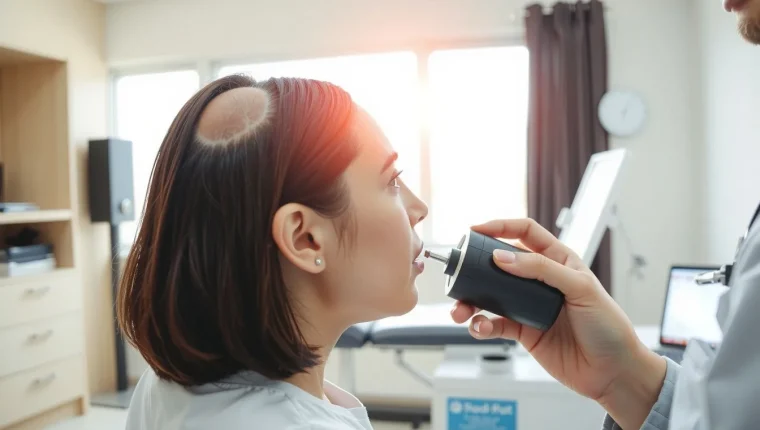
The next step is a close examination of the scalp and hair. Your dermatologist looks at the distribution of loss, checks for redness, scaling, or scarring, and may perform a hair pull test — gently tugging a small group of strands to see how many come away. In some cases they examine individual follicles under magnification, called trichoscopy, to assess hair diameter and follicle health.
If the cause is unclear, blood tests may be ordered to check for thyroid problems, iron deficiency, or hormonal imbalances. A small scalp biopsy is occasionally needed when scarring or an autoimmune process is suspected.
Each step exists to separate one cause from another, because treatment depends entirely on what is actually driving the loss. An accurate diagnosis is what allows the right therapy to be chosen rather than guessed at.
Treatment Options and the Risks of Delaying Professional Care
Treatment is not a single protocol applied to every scalp; it is chosen according to what the evaluation identifies. When the cause is an active inflammatory or autoimmune process, the priority is calming that process so follicles are not permanently damaged. When the cause is hormonal, therapy aims to interrupt the influence driving the thinning. When the cause is a nutritional deficiency, a medication side effect, or a stress-related shift in the growth cycle, correcting the trigger often allows regrowth to resume on its own. In many cases, more than one approach is combined, and results are judged over months rather than weeks.
What matters most for the reader is that delayed treatment can reduce the options available later. Hair follicles that are repeatedly inflamed or chronically miniaturized may eventually stop producing visible hair, and no treatment can reliably revive a follicle that has already scarred over. Waiting also means more ground to recover once therapy begins. Acting on the signs already described — visible scalp, persistent shedding, or scalp symptoms — is the safer path, because earlier evaluation generally preserves more of what can still be treated.
FAQs
How long should I wait before seeing a dermatologist for hair loss?
If you notice gradual thinning or shedding, it is reasonable to see a dermatologist within four to six weeks if the loss persists or worsens. You should seek an appointment sooner, within one to two weeks, if the hair loss is sudden, patchy, accompanied by scalp pain, scaling, or redness, or occurs alongside fatigue, weight changes, or other systemic symptoms. Early evaluation matters because many causes of hair loss, including telogen effluvium, alopecia areata, and androgenetic alopecia, respond best when treatment begins before the follicles are permanently damaged.
What symptoms along with hair loss mean I should see a dermatologist?
You should see a dermatologist if your hair loss comes with scalp symptoms such as redness, scaling, itching, pain, or visible patches of broken hairs, since these can point to conditions like lichen planopilaris, scalp psoriasis, or fungal infection that need targeted treatment. Other warning signs include rapid or sudden shedding, losing hair in well-defined smooth patches, or noticing eyebrow, eyelash, or body hair loss, which may suggest alopecia areata or an underlying medical issue. Any hair loss accompanied by fatigue, unexplained weight changes, or hormonal symptoms also warrants a dermatologist's evaluation to rule out thyroid disease, anemia, or PCOS.
Can a dermatologist for hair loss help if my shedding seems stress-related?
Yes, a dermatologist for hair loss can still help when shedding appears stress-related, because telogen effluvium is a common diagnosis they evaluate and treat. They will confirm whether stress is the true trigger or whether an underlying condition such as thyroid disease, iron deficiency, or androgenetic alopecia is contributing. A dermatologist can also recommend appropriate treatments and monitor your regrowth, since stress-related shedding usually resolves once the cause is addressed.