You run your fingers through your hair and come away with a loose clump. The shower drain is clogged again, the brush fills faster than it should, and your pillow is covered in strands every morning. This kind of sudden, heavy shedding is frightening, but it is not random. It usually has a defined cause and a name: telogen effluvium. It is one of the most common reasons people temporarily lose large amounts of hair, and in most cases it is reversible. Understanding its triggers and how the hair cycle responds is the first step in judging whether what you see is temporary or needs medical attention.
What Telogen Effluvium Actually Is
Every hair on your scalp is following its own schedule. Each follicle cycles through a growth phase, a short transition, and a resting phase before the hair is released and the cycle begins again. At any given moment, most follicles are actively growing, while a smaller share sits in the resting phase, known as telogen. Shedding a modest number of these resting hairs each day is normal and largely invisible.
In telogen effluvium, that balance shifts. An unusually large share of follicles move into the resting phase at roughly the same time. Because these follicles are synchronized, they also release their hairs together, producing a noticeable surge in daily shedding rather than the scattered loss of a normal cycle.
The important point is what does not happen. The follicles are not scarred, destroyed, or permanently shut down. They have simply been pushed into a resting state ahead of schedule. This is why telogen effluvium is described as a reversible shedding disorder, and why the underlying capacity for regrowth remains intact.
How to Recognize the Shedding Pattern

What most people notice first is not a bald spot but a change in volume everywhere. The shedding is diffuse, meaning hair thins across the whole scalp rather than concentrating in one patch. You might see more scalp along your part, or feel that your ponytail has lost thickness, without any single area becoming clearly bare.
The daily loss itself is often the clearest clue. Instead of the usual fifty to a hundred hairs, you may be losing several hundred, and the shedding tends to be steady rather than episodic. Hair shows up in places it rarely did before: wrapped around your brush, clogging the shower drain, scattered across your pillow and the bathroom floor. Washing or brushing can feel alarming because so much comes out at once.
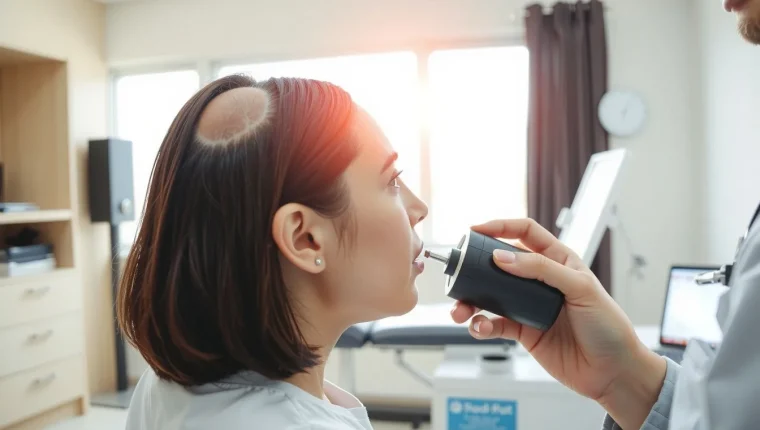
This pattern looks different from other common types of hair loss. Conditions that cause distinct patches leave smooth, clearly defined areas of scalp, while pattern hair loss usually follows a predictable route, such as a receding hairline or thinning crown. With this diffuse shedding, the loss is spread out and the scalp itself looks normal, with no redness, scaling, or broken hairs.
Common Triggers That Push Hair Into the Resting Phase
Hair follicles respond to the body’s overall state, so anything that significantly disrupts that state can shift a large number of follicles into the resting phase at once. Physical illness is one of the most frequently reported triggers, particularly infections with high fever, major surgery, or any condition that puts sustained stress on the body. Severe emotional stress can do the same, which is why periods of grief, job loss, or intense anxiety sometimes precede heavy shedding.
Nutritional and hormonal shifts form another broad category. Rapid weight loss, crash dieting, low iron stores, and thyroid imbalances have all been linked to this type of shedding. Pregnancy and childbirth are common examples, since hormone levels change dramatically and then readjust. Starting, stopping, or switching certain medications — including some antidepressants, blood pressure drugs, and retinoids — can also act as a trigger.
The key point is that these triggers look very different on the surface, yet most of them converge on the same underlying route: they interrupt the normal growth cycle and push follicles into the resting phase prematurely. That shared mechanism explains why the shedding looks similar regardless of whether the original cause was a fever, a diet, or a stressful event.
If you can identify a major illness, emotional upheaval, dietary change, or new medication in your recent past, that event is a plausible explanation for what you are experiencing now. Many people find more than one possible trigger when they look back carefully.
Why the Shedding Starts Weeks After the Trigger

The delay comes down to how the hair cycle works. When a stressor hits, hair does not fall out on that day. Instead, the follicle receives a signal that shifts it out of its active growing phase and into telogen, the resting phase. The hair stays anchored in the follicle the entire time it rests, so nothing is released yet. That is why the shedding you see now reflects an event from roughly two to three months ago, not last week.
Only after the resting period ends does the follicle let go and push the hair out, which is when the visible shedding appears. So the timeline runs from trigger, to the shift into telogen, to release — and the release is what you finally notice in your brush or shower drain.
This means the gap is not a sign that something is still going wrong. It is simply how the cycle unfolds. When you trace backward, look for the trigger around two to three months before the shedding began, rather than searching your recent days for an explanation.
How Long It Lasts and When Hair Regrows
Once shedding reaches its peak, most people want a number: how many weeks until this stops? The honest answer is that the timeline varies, but the typical course is reasonably predictable. Shedding usually builds over two to three months, plateaus for a period, then gradually tapers as the follicles that were pushed into the resting phase re-enter the growth phase. From the moment the trigger occurred, the whole episode often runs somewhere between six and twelve months, though some people resolve faster and others take longer.
Regrowth does not begin the day shedding stops. It follows once the hair cycle normalizes, and because each follicle moves through its phases on its own schedule, recovery is gradual rather than sudden. New growth often appears as fine, shorter hairs along the hairline and part, which is a reassuring sign. Density typically returns over several months, and while full recovery is the usual outcome, the exact pace depends on factors like hair length, overall health, and whether the original trigger has been resolved.
That last point matters. If a stressor is still active, shedding may persist or recur, so addressing an ongoing trigger supports recovery. It is also worth seeking a clinician’s assessment if shedding continues well beyond a year, if you notice patches of smooth scalp, scaling, or breakage, or if you have symptoms like fatigue, unusual weight change, or heavy periods that could point to an underlying condition. Those signs fall outside the typical pattern and deserve a closer look rather than watchful waiting.
FAQs
How long does telogen effluvium usually last before hair regrowth begins?
Telogen effluvium typically lasts about three to six months, though some cases can persist longer depending on the underlying trigger. Once the cause is resolved, shedding usually slows and stops within a few months. Regrowth generally begins as the hair follicles re-enter the anagen phase, with visible new growth often appearing around three to six months after the shedding subsides. Full recovery can take up to a year, especially in cases with a prolonged trigger.
Can stress or a recent illness really trigger this type of shedding?
Yes, stress and recent illness are well-known triggers of telogen effluvium, because both can shock the hair follicles into prematurely entering the resting (telogen) phase. Once that happens, the affected hairs are typically shed two to three months later, which is why the shedding often appears delayed rather than immediate. Other common triggers include major surgery, high fever, severe nutritional deficiencies, and rapid weight loss. In most cases this type of shedding is temporary and reverses once the underlying stressor resolves.
What treatments or lifestyle changes help stop telogen effluvium faster?
The most effective way to speed up recovery from telogen effluvium is to identify and correct the underlying trigger, such as a nutritional deficiency, thyroid disorder, severe stress, or medication side effect. Once the cause is addressed, hair typically regrows on its own within three to six months, since telogen effluvium is a self-limiting condition. Gentle hair care, a balanced diet rich in iron, zinc, and protein, and stress management can support regrowth, but no treatment will shorten the shedding phase until the root cause resolves.