More hair in the sink or a thinning crown can be unsettling, especially when it progresses slowly and without warning. Male pattern alopecia is a common inherited condition in which hair follicles gradually shrink under hormonal influence, causing a receding hairline or thinning at the crown. It affects a large share of adult men and is not a sign of poor health or poor grooming. Understanding what drives it, how it is assessed, which treatments exist, and how to manage it day to day provides clear, practical direction instead of guesswork.
Understanding Male Pattern Alopecia and Why It Happens

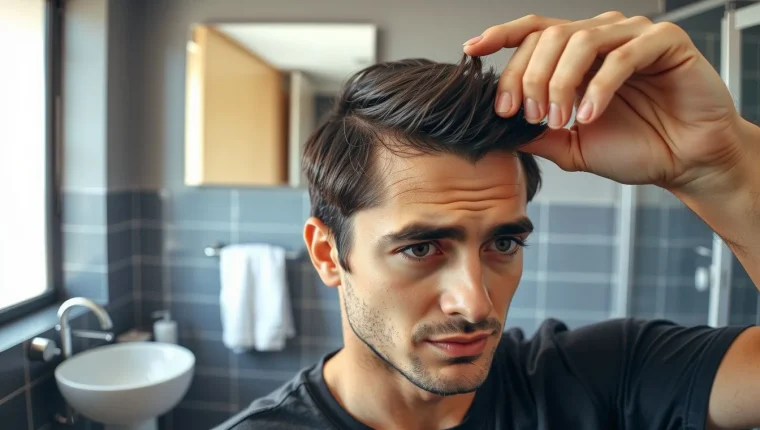
Male pattern alopecia follows a pattern that most men recognize long before they have a name for it: a receding hairline at the temples, thinning at the crown, and a gradual widening of the part. What makes this condition distinctive is precisely that predictability. Hair does not disappear evenly across the scalp. Instead, loss concentrates in specific zones while other areas, particularly the sides and back, often remain largely intact for years.
Underneath that visible pattern, something measurable is happening at the follicle level. Each hair follicle cycles through growth, transition, and rest. In areas affected by this condition, the growth phase steadily shortens while the resting phase lengthens. As a result, new hairs emerge thinner, shorter, and less pigmented than the ones they replace. This process, known as follicular miniaturization, repeats over successive cycles until a follicle produces only a fine, nearly invisible hair or stops producing visible hair altogether.
Because miniaturization advances gradually and affects defined regions rather than the whole scalp, the result is a recognizable shape of loss rather than random thinning. That consistency is what allows the pattern to be predicted, tracked, and eventually treated with more precision.
How Genetics and Hormones Drive Hair Loss Progression

Whether hair loss advances quickly or slowly comes down to an inherited trait: how sensitive your hair follicles are to androgens, the group of hormones that includes testosterone. This sensitivity is written into your genes, and it is the single most important reason why some men keep a full head of hair for life while others see steady thinning in their twenties. You inherit this trait from either side of your family, so a bald grandfather on your mother’s side matters just as much as your father’s hairline.
The key androgen is dihydrotestosterone, or DHT, which the body produces from testosterone. In men with inherited follicle sensitivity, DHT binds to receptors in susceptible follicles and gradually shortens each hair’s growth phase. Over time, affected hairs grow back thinner, shorter, and lighter until the follicle stops producing visible hair altogether. Follicles that are not genetically sensitive remain unaffected, which is why loss follows a recognizable pattern rather than spreading evenly.
Because sensitivity is inherited in varying degrees, no two men progress at the same rate. Some lose ground steadily across a decade; others hold a stable hairline for years before any noticeable change. This variability is exactly why family history is worth paying attention to, and why earlier attention tends to offer more options than waiting does.
Early Signs, Diagnosis, and When to Seek Help
Early changes are easy to explain away. A slightly higher hairline, a thinner crown in photographs, or more scalp visible under bright light often gets blamed on a recent haircut or a stressful month. What makes these shifts meaningful is their location and persistence. Thinning that settles along the temples and crown while the sides and back stay dense is the classic distribution, and it tends to worsen gradually rather than recover on its own.
A clinician separates this pattern from other causes by asking about timing, family history, and recent illness, then examining the scalp directly. Trichoscopy, a magnified view of the scalp, reveals the widening part and hairs of varying thickness that point toward patterned loss rather than shedding from stress, thyroid problems, or iron deficiency. Blood tests are sometimes ordered to rule out those alternatives.
Self-observation is reasonable while changes stay slow and stable. It is worth booking a visit once loss accelerates, becomes patchy or itchy, or starts affecting how you feel about your appearance. That appointment is usually a short exam and history, followed by an honest discussion of what can realistically be done.
Treatment Options for Male Pattern Baldness
Treatment options fall into three broad aims: slowing further loss, encouraging regrowth, and restoring hair through procedures. Most clinically supported treatments target the first two. Medications such as minoxidil and finasteride work by extending the growth phase or reducing the hormone effect that shrinks susceptible follicles. They tend to preserve existing hair better than they replace what is already gone, and consistent daily use is usually what separates a modest result from no visible change.
Procedural options, including hair transplantation, move healthy follicles to thinning areas. Results depend heavily on donor density, the stage of loss, and realistic expectations about coverage. Light-based devices and cosmetic concealers occupy a different space: they may improve appearance or support the scalp environment, but they do not reverse the underlying process.
What works for one man may not suit another. Stage of loss, medical history, and how much regrowth is genuinely achievable all shape the choice, which is why self-selecting a product from advertising rarely leads to a satisfying outcome. A professional can match the option to your pattern and explain what it can realistically deliver.
Living Well With Hair Loss and Protecting Long-Term Scalp Health
Hair loss carries a social weight that is easy to underestimate. Many men describe feeling older, less attractive, or caught off guard by comments from friends and family. Those feelings are real, and they deserve acknowledgment rather than dismissal. At the same time, the daily habits that support scalp health remain largely within your control, and they matter whether or not you pursue medical treatment.
Gentle care is the foundation. Wash with a mild shampoo, avoid harsh scrubbing, and resist tight hairstyles or aggressive brushing that pull on fragile follicles. Protecting the scalp from sunburn is equally important, since exposed skin on a thinning crown or receding hairline burns more easily and repeated damage adds up over years. Smoking and poor sleep are worth addressing too, as both can impair circulation and slow the body’s natural repair processes.
What daily care cannot do is reverse follicular miniaturization; that is the domain of the treatments discussed earlier, which work best with consistent daily use. The practical takeaway is simple: control what you can, seek professional guidance for what you cannot, and make choices from information rather than anxiety. Confidence, in the end, tends to follow clarity.
FAQs
Can male pattern alopecia be reversed if treatment starts early?
Early treatment can slow or partially reverse male pattern alopecia, but it rarely restores a full head of hair once follicles have miniaturized. Medications like finasteride and minoxidil are most effective when started in the early stages, as they can stabilize hair loss and promote some regrowth. The key limitation is that dormant or scarred follicles cannot be revived, so preserving existing hair remains the primary goal.
Which treatments actually work for male pattern alopecia?
For male pattern alopecia, the two treatments with the strongest evidence are minoxidil, a topical solution or foam applied to the scalp, and finasteride, an oral prescription medication that lowers DHT levels. These can slow hair loss and, in many men, promote partial regrowth, though results vary and both require ongoing use to maintain benefits. Other options supported by evidence include low-level laser therapy and, for more advanced cases, hair transplantation, while most shampoos, supplements, and unproven remedies have little effect on the underlying cause.
Does male pattern alopecia always lead to full baldness?
No, male pattern alopecia does not always progress to full baldness. The rate and extent of hair loss vary widely between individuals and are influenced by genetics, age, and hormone levels. Many men experience only thinning or a receding hairline, while others may develop more extensive baldness over time.