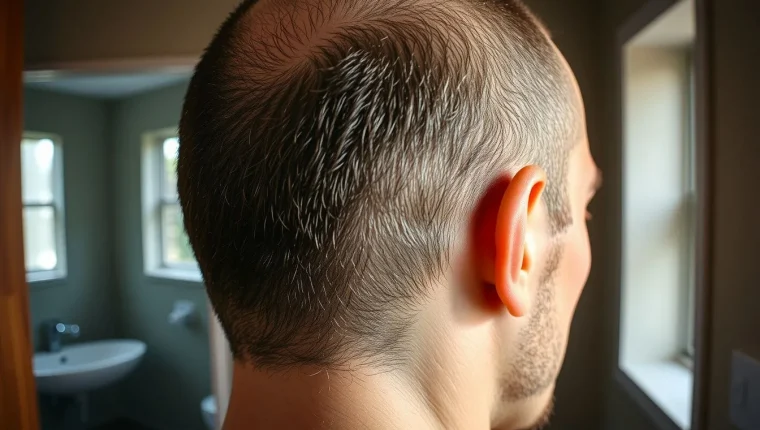
Many Black men notice thinning at the hairline or crown earlier than expected, often as the first sign of male pattern baldness. This hair loss is common in Black men, but it may not follow the same visible pattern described in general hair-loss advice. Genetics, hair texture, scalp condition, and grooming habits all shape how and when thinning appears. Tight styles, chemical treatments, and dryness can make the process harder to read. The same factors also affect which treatments and styling choices actually help.
How Hair Loss Patterns Differ in Black Men

The classic image of male pattern baldness follows a predictable map: the hairline retreats at the temples, then a bald spot opens at the crown, and the two eventually meet. That Norwood-style progression is useful, but it does not capture how thinning often appears in Black men. Rather than a clean receding hairline, the first visible change is frequently a widening part, a thinning patch at the crown, or a diffuse breakdown along the front and top that keeps an irregular edge instead of a smooth recession.
Two features of textured hair help explain the difference. Tightly coiled follicles grow at an angle and bunch together, so reduced density shows up as gaps between clusters rather than a single bald line. Styling tension from braids, cornrows, or tight waves can also pull on the same front and edge zones, making early thinning look patchy rather than symmetrical.
Because of this, location of loss matters more than any single shape. Mapping where density drops first, and whether the pattern stays diffuse or forms a distinct patch, gives a clearer signal than comparing your hairline to a standard diagram.
Why Black Men May Experience Hair Loss Earlier

Pattern hair loss in Black men is driven by the same fundamental mechanism that affects all men: a genetic sensitivity to dihydrotestosterone (DHT), the hormone that gradually miniaturizes hair follicles. This inherited trait, known as androgenetic alopecia, sets the stage for loss regardless of race. What may shift the timeline is how that genetic predisposition interacts with a unique set of external and systemic factors.
Grooming habits common in Black hair care can add cumulative stress to the scalp. Tight braids, chemical relaxers, and frequent heat styling may not cause pattern baldness, but they can inflame the scalp and weaken follicles already vulnerable to DHT. Over time, this added strain could make existing thinning more noticeable sooner. Scalp inflammation itself is a recognized co-factor in hair loss, and when it becomes chronic, it may accelerate the miniaturization process.
Health disparities also play a role. Black men experience higher rates of conditions such as hypertension and diabetes, both of which can affect circulation and hormone balance. However, it is important to separate what is well established from what remains unclear. Genetics and DHT sensitivity are proven drivers. The exact degree to which grooming habits, inflammation, and systemic health conditions push earlier onset is still an area of active research. For now, the most reliable takeaway is that multiple factors can converge, making early evaluation worthwhile.
Scalp and Hair Care Practices That Affect Thinning
Many Black men rely on styling practices that shape their look but also place ongoing demands on the scalp. Tight braids, cornrows, and waves created with brushing and durags can pull on the hair for hours at a time. Over months, that sustained traction may irritate follicles along the hairline and temples, and the resulting thinning can overlap with pattern loss. Frequent chemical straightening or relaxing adds another stressor, since harsh agents can burn the scalp, weaken the hair shaft, and leave follicles less able to recover.
Moisture balance matters just as much. Textured hair loses moisture easily, so infrequent washing or heavy product buildup can clog the scalp, while overwashing strips natural oils. Gentle cleansing, regular conditioning, and giving the scalp rest between tight styles support healthier follicles. These habits will not reverse androgenetic alopecia, but they can reduce added strain that makes visible thinning worse.
Medical Conditions That Can Mimic Male Pattern Baldness
Not every receding hairline or thinning crown in a Black man is androgenetic alopecia. Several treatable conditions produce similar shedding and can be mistaken for pattern hair loss, especially when they develop gradually. Recognizing the difference matters, because the right treatment depends on the actual cause.
Traction alopecia is one of the most common look-alikes. It develops from repeated tension on the hair, often along the temples, edges, or wherever tight styles pull hardest. Unlike pattern loss, it tends to appear as patchy thinning at the margins rather than a smooth, symmetrical recession.
Central centrifugal cicatricial alopecia (CCCA) is another condition that disproportionately affects Black men and women. It typically begins at the crown or center of the scalp and spreads outward, sometimes with itching, tenderness, or a shiny, scarred appearance. Because scarring can be permanent, early diagnosis is important.
Scalp infections, including fungal infections and folliculitis, can also cause shedding that mimics pattern loss. Warning signs include scaling, redness, pus-filled bumps, pain, or patchy hair loss rather than a predictable receding pattern.
If your hair loss is patchy, painful, itchy, or accompanied by scaling or changes to the scalp itself, a doctor or dermatologist should examine the scalp before you assume it is pattern baldness alone.
Treatment Options and Styling Strategies for Black Men
Treatment for pattern hair loss in Black men starts with the same proven options used for other groups, but how they fit depends on hair texture, styling habits, and the stage of loss. Minoxidil, applied as a topical liquid or foam, is the most accessible starting point and can slow shedding while supporting regrowth in some users. Finasteride, an oral prescription, works on the hormonal driver of androgenetic alopecia and tends to be more effective at preserving existing hair than restoring what is already gone. For Black patients, evidence on response rates is still thinner than for white patients, so a clinician’s input matters before starting either option, especially given possible side effects like scalp irritation or sexual side effects.
These treatments can work with relaxed, locked, or short hair, though application needs care. Minoxidil foam may be easier to spread through a close cut or fade than liquid, which can leave residue on locs. Finasteride is taken orally, so it does not interfere with styling at all. Anyone using these should watch for irritation and check in with a doctor if shedding does not ease within a few months.
While deciding on treatment, styling can reduce strain on remaining hair. Choosing looser styles that avoid tension at the hairline, rotating braids or twists, and skipping tight chemical processes can protect fragile follicles. For visible thinning, a shorter cut, a fade that blends the hairline, or scalp micropigmentation can create a fuller look without adding stress to the scalp.
FAQs
Does male pattern baldness in Black men usually start with a receding hairline or thinning at the crown?
Male pattern baldness in Black men most often begins with a receding hairline at the temples, though some men first notice thinning at the crown. The pattern and pace vary by individual, and many men experience both over time. Because hair loss can also result from other causes like traction alopecia or scalp conditions, a proper diagnosis matters before assuming it is genetic.
How does the shape of a Black males hair follicles affect the progression of male pattern baldness?
The curl and elliptical shape of Afro-textured hair follicles means the hair exits the scalp at a flatter angle, which can make early thinning around the temples and crown less obvious until significant miniaturization has occurred. This same follicle structure also raises the risk of traction alopecia and folliculitis, conditions that can mimic or accelerate the visible effects of male pattern baldness in Black men. Because of these overlapping factors, diagnosis should rely on pattern recognition and scalp examination rather than hairline recession alone.
Are there specific treatments for male pattern baldness in Black men that work better with textured or chemically treated hair?
The same FDA-approved treatments for male pattern baldness, including minoxidil and finasteride, work for Black men regardless of hair texture or chemical treatment. What changes is how you apply and maintain them: minoxidil liquid or foam can be massaged into the scalp along the part lines of textured or relaxed hair, and avoiding harsh relaxers, tight braids, or weaves helps prevent additional traction-related hair loss. Because chemical relaxers and certain styling practices can damage the scalp and follicles, a dermatologist may recommend adjusting your hair care routine alongside treatment for the best results.