When progressive thinning no longer responds to styling or over-the-counter products, people usually ask: is surgery the right move? Androgenetic alopecia is not temporary shedding. It is a genetic, hormone-driven condition that continues to shrink hair follicles over time, so a hair transplant is a planning decision rather than a one-time fix. Surgery can redistribute durable follicles, but it cannot stop the underlying process or create new hair where none remains. Whether you are a suitable candidate depends on donor density, the pattern of loss, and your age. The process includes candidacy, the procedure, recovery, and long-term treatment that protects the result.
Understanding Androgenetic Alopecia and Who Qualifies for Surgery
Androgenetic alopecia is not simple shedding. It is a genetically driven process in which susceptible hair follicles gradually miniaturize under the influence of dihydrotestosterone (DHT). Over successive growth cycles, affected hairs become finer, shorter, and less pigmented until they stop producing visible strands. Crucially, this process is patterned and progressive, which means it rarely stays still on its own.
That biology shapes who is a realistic surgical candidate. A transplant relocates DHT-resistant follicles, so it works best when loss has stabilized enough to be mapped. Younger patients with rapidly advancing thinning often need medical therapy first, because surgery on an unstable scalp can leave gaps as native hair continues to recede. Age, the pattern and pace of loss, and overall health all factor into candidacy. Active scalp infection, uncontrolled medical conditions, or unrealistic expectations are legitimate reasons to delay or decline surgery.
In short, candidacy is conditional, not universal. The right question is not whether a transplant is possible, but whether a patient’s pattern of hair loss and general health make it appropriate now.
How Donor Hair Quality and Density Shape Transplant Planning
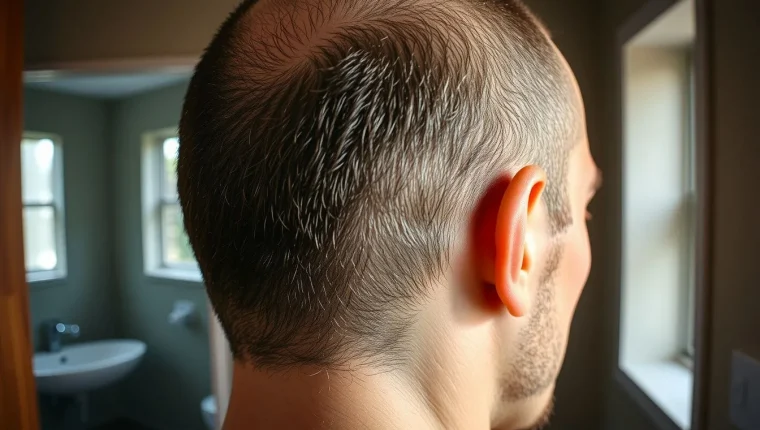
Every transplant plan starts with a hard limit: the amount of usable hair a person still has in the donor zone. In androgenetic alopecia, hair loss follows a recognizable distribution. Follicles along the back and sides of the scalp are largely resistant to the hormonal process that thins the top and crown, which is why this band is treated as a permanent reservoir. The problem is that this reservoir is finite, and once follicles are moved, they do not grow back where they came from. Results, therefore, depend far less on how many grafts someone hopes for than on how many their own donor area can safely provide.
Surgeons assess that supply in several ways. Density counts how many follicular units sit in a given area of the donor zone. Hair caliber describes the thickness of each individual strand, since coarse hair delivers more visual coverage per graft than fine hair. Scalp laxity determines how much tissue can be safely harvested without excessive tension. These three factors together set a practical ceiling on graft numbers.
Planning then becomes a trade-off between coverage area and density. Spreading a limited number of grafts across a large balding region produces thin, diffuse coverage, while concentrating them in a smaller zone creates a denser but more limited result. A realistic plan matches graft distribution to what the donor supply can actually sustain over time.
The Hair Transplant Procedure: From Extraction to Graft Placement

The day of surgery follows a fixed sequence, and knowing that order removes much of the uncertainty. It begins with preparation: the scalp is cleaned, the donor zone is trimmed, and local anesthesia is administered. Most clinics also use sedation, so many patients drift in and out of sleep rather than staying fully alert. Once the scalp is numb, the surgeon confirms the planned hairline and marks the recipient area while the patient is still upright.
Extraction comes next. In follicular unit excision, a small punch tool removes grafts one by one, and the surgeon angles each pass to follow the natural direction of the hair. Alternatively, a strip of donor tissue may be removed and then divided under a microscope. Either way, the extracted grafts are kept cool and moist, because dehydration is one of the fastest ways to compromise their survival.
The final stage is graft placement. The surgeon creates tiny recipient sites at a controlled angle and density, then inserts each graft with forceps or an implanter. This part is slow and meticulous, since the direction of each site determines how naturally the hair will grow. Sessions commonly run four to eight hours, and larger cases may be split across two days.
Recovery Timeline and What the First Year of Growth Looks Like

Recovery after a transplant is a sequence, not a single event. The scalp typically crusts and feels tender for the first week to ten days, then the crusts and scabbing clear over the following weeks. By around the second or third week, most patients look presentable again, though redness may linger. What surprises many people is the shedding phase: between roughly weeks two and eight, the transplanted hairs fall out. This is expected and does not mean the grafts failed. The follicles remain in place and are simply resetting into a new growth cycle.
Real growth begins quietly. Fine, often lighter hairs start emerging around the third to fourth month, and this early growth can look sparse and uneven. Density builds gradually from there, with the most visible change appearing between months six and nine. The growth cycle of transplanted follicles is the reason this timeline cannot be rushed, since each graft must pass through its own resting and shedding phases before producing mature hair.
By month twelve, most patients can fairly judge the result. The hair is generally thicker and more settled, though it may continue to mature and improve slightly beyond the first year. Judging progress against this sequence, rather than week by week, helps keep expectations realistic.
Realistic Results, Risks, and Long-Term Maintenance After Surgery
A good result is not a full head of teenage hair, but a natural-looking improvement that frames the face and holds up under close inspection. The realistic ceiling depends on how much donor hair was available and how much bald area needed coverage, so a person with early thinning will always achieve more density than someone with extensive loss. Judging that outcome fairly means waiting for the growth cycle to complete and comparing the final result to your starting point, not to a stranger’s photos.
Risks exist but are uncommon in experienced hands. These include infection, poor graft survival, visible scarring, and an unnatural hairline that looks plugged or too straight. Shock loss of nearby native hair can occur temporarily after surgery. Choosing a qualified surgeon and following aftercare instructions carefully reduces these chances, but no procedure is entirely risk-free.
The most important long-term truth is that surgery does not stop the underlying condition. Native hair continues to thin, so transplanted grafts may survive while the surrounding hair recedes, creating gaps over time. Maintenance treatment such as medication or minoxidil is usually needed to protect both the transplanted and remaining hair. Without it, results can look uneven within a few years, making surgery part of an ongoing plan rather than a one-time fix.
FAQs
How soon can I see noticeable hair growth after an androgenetic alopecia hair transplant?
You will typically notice the first signs of new growth around three to four months after an androgenetic alopecia hair transplant, when dormant transplanted follicles begin producing fine, thin hairs. Noticeable cosmetic improvement usually becomes apparent between six and nine months, with the most significant density and thickness developing by twelve to eighteen months. Because androgenetic alopecia is progressive, the final result also depends on continued medical management to protect both transplanted and native hair.
Will a hair transplant for androgenetic alopecia leave visible scars on my scalp?
A hair transplant for androgenetic alopecia typically leaves only minimal, barely noticeable scarring when performed by an experienced surgeon. The most common techniques, such as Follicular Unit Extraction (FUE), create tiny dot-like marks that usually fade over time and are easily concealed by surrounding hair. Strip harvesting (FUT) leaves a single linear scar at the back of the scalp, which is generally hidden by longer hair. In most cases, any scarring is subtle and does not significantly affect the overall cosmetic result.
Can I still lose transplanted hair over time if my androgenetic alopecia keeps progressing?
Transplanted hair follicles are typically taken from the DHT-resistant donor zone at the back and sides of the scalp, so they usually remain permanent even as androgenetic alopecia progresses. However, the surrounding native hair can continue to thin over time, which may create a noticeable contrast between the transplanted grafts and the receding areas. This is why surgeons often recommend ongoing medical therapy, such as finasteride or minoxidil, to protect the remaining non-transplanted hair. Without this maintenance, the overall result may look less dense even though the grafts themselves survive.