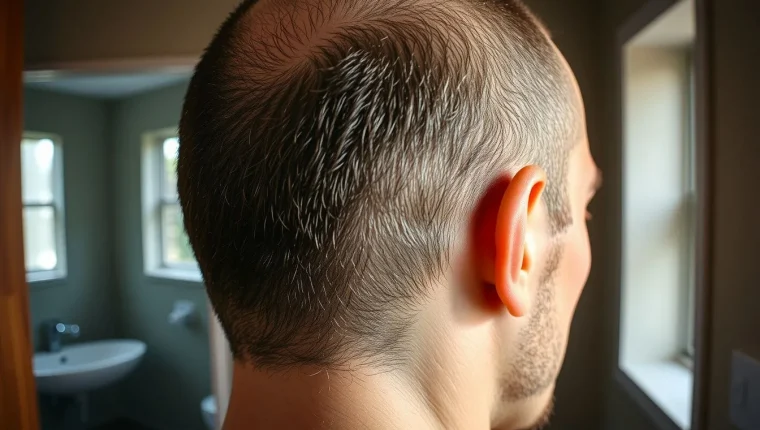
You notice it first in the sink or in a photo taken from an angle you usually avoid. You notice more strands on the pillow and a hairline that no longer sits where it used to. That moment brings a specific kind of uncertainty: is this normal shedding, or the start of something permanent? Male pattern baldness is not random hair loss. It follows a defined mechanism and a recognizable pattern, which is why it can be described, tracked, and treated rather than simply feared. MPB hair thins in predictable zones, at a predictable pace, driven by genetics and hormones rather than stress or bad luck. Understanding what is happening, why it happens, how it progresses, how it differs from other forms of thinning, and what options exist turns a vague worry into a manageable decision.
What Male Pattern Baldness Actually Is
Male pattern baldness is a specific condition, not a general term for any hair shedding. It is a patterned, progressive, hormone-linked thinning of scalp hair that follows a recognizable distribution over time. The word “pattern” matters more than the amount of hair you find on your pillow or in the shower drain, because shedding alone does not define the condition.
What separates it from other forms of hair loss is where the thinning appears. It typically begins at the temples or the crown and advances in a predictable shape, while the sides and back of the scalp often remain largely intact. This contrast between areas is the hallmark of the condition, and it is why two people losing the same number of hairs can have very different situations.
Because the change is gradual and follows a set route, the visible result reflects an underlying process rather than random loss. That process is what the next section explains.
How DHT and Genetics Drive Hair Follicle Miniaturization
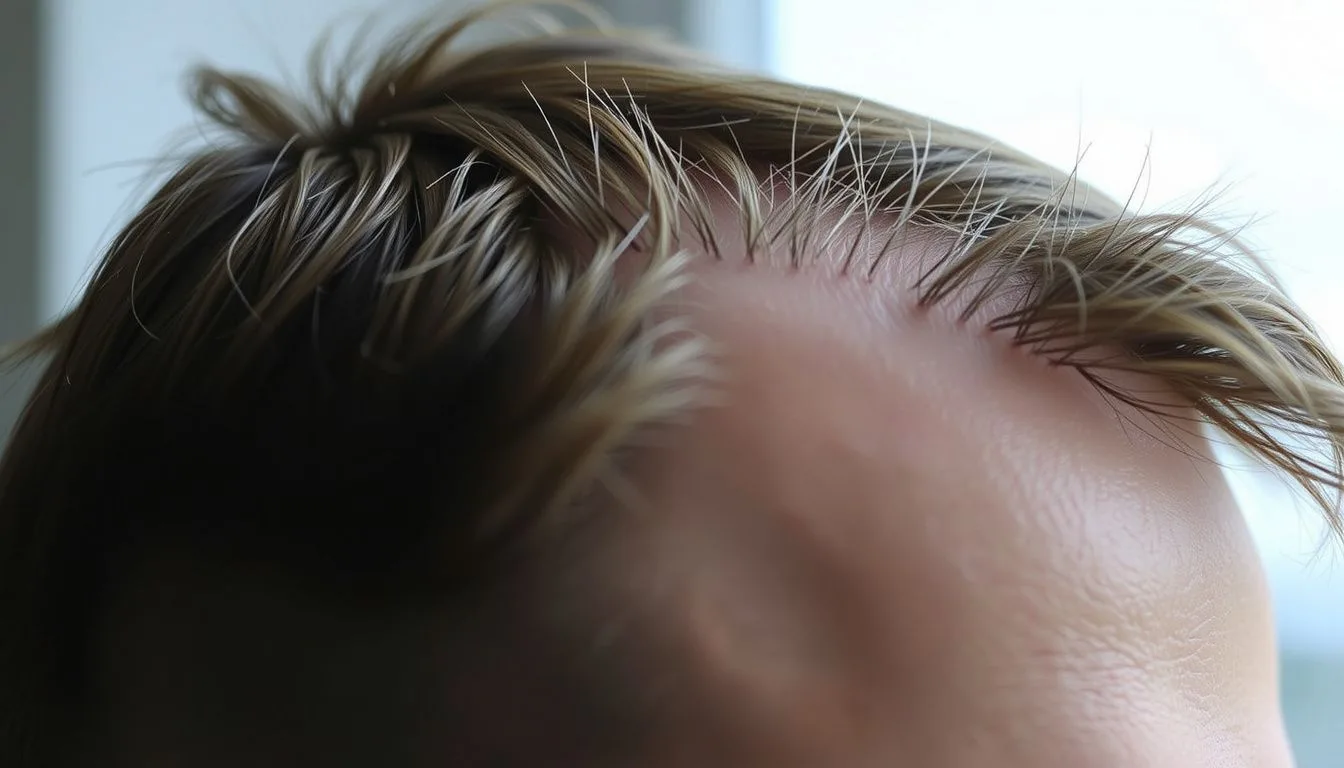
Male pattern baldness is not simply a matter of hair falling out; it is a process of hair becoming smaller. The main driver is a hormone called dihydrotestosterone, or DHT. DHT is a byproduct of testosterone, and it attaches to receptors in certain hair follicles. In men who are genetically predisposed, those follicles are unusually sensitive to DHT. This sensitivity is the key inherited factor: it determines both who is affected and where on the scalp the thinning begins.
When DHT binds to receptors in susceptible follicles, it gradually shortens the growth phase of each hair and causes the follicle itself to shrink. This is follicle miniaturization. Over repeated growth cycles, the hair produced becomes finer, shorter, and lighter in color before it eventually stops emerging. Because the follicles most sensitive to DHT tend to sit along the temples and crown, the result is a predictable pattern rather than random shedding.
Genetics also shape how quickly this process unfolds. Some men inherit a strong sensitivity that accelerates miniaturization in their twenties, while others see a slower shift over decades. The underlying mechanism is the same, which is why the changes follow a recognizable shape. That shape is what the visible stages of hair loss describe next.
Recognizing the Norwood Stages of Hair Loss
The Norwood scale is the shared vocabulary clinicians use to describe how far male pattern baldness has progressed. It is not a diagnosis and not a prediction — it is a way to put a name to a pattern so you can describe it clearly to a professional. The scale runs from minimal change to advanced loss, and most men fall somewhere along a recognizable path.
- Norwood I–II: The hairline sits at or near its original position, with only slight recession at the temples that many men never notice.
- Norwood III: Deepening temporal recession creates the classic M-shaped hairline, often the first stage a man actively recognizes in the mirror.
- Norwood IV–V: The frontal recession meets a thinning or bald crown, leaving a band of hair across the top that gradually narrows.
- Norwood VI–VII: The frontal and crown zones merge, and the remaining hair forms a horseshoe around the sides and back of the head.
Progression speed varies widely. Some men hold at Norwood III for decades; others move through several stages in a few years. Your stage is descriptive, not a forecast of what happens next. It tells a clinician where you are now, which is exactly what makes it useful when you decide to seek advice.
One caution: several other conditions can produce thinning that looks like these stages, so the scale alone should never be treated as a verdict.
Distinguishing MPB Hair From Other Forms of Thinning
Not every thin patch or shedding episode is MPB. Male pattern baldness follows a recognizable course: gradual onset, a patterned distribution along the temples, crown, or mid-scalp, and a slow progression that tracks the Norwood stages. When hair loss behaves differently, a different cause is usually at work.
Telogen effluvium is the clearest contrast. It produces sudden, diffuse shedding across the whole scalp rather than a defined pattern, often weeks after a trigger such as illness, surgery, or severe stress, and it frequently reverses once that trigger resolves. Alopecia areata looks different again, appearing as smooth, sharply defined patches that can affect any area, including the beard or eyebrows. Thinning linked to thyroid imbalance, poor nutrition, or chronic stress tends to be generalized and may come with other symptoms like fatigue or changes in weight.
The cues that point away from MPB are fairly consistent: sudden rather than gradual onset, spread across the scalp rather than a pattern, and improvement after a trigger is addressed. An unclear or atypical pattern is itself a reason to seek assessment rather than assume.
Treatment Options and When to Seek Professional Help

Treatment for male pattern baldness generally falls into two intents: slowing further loss and encouraging regrowth. Options aimed at slowing loss include prescription medications that reduce the hormone activity driving follicle miniaturization, and in-office treatments that support the follicles still present. Regrowth-focused approaches, such as certain topical solutions or procedural options, tend to work best where follicles remain active rather than fully dormant. The key point is that most of these require ongoing use to hold their results — stopping usually means the pattern resumes its course.
Timing matters more than many people expect. Because treatment can only work with the hair you still have, intervening earlier generally preserves more of it. This reframes acting soon as a practical decision rather than a cosmetic one, and it is why waiting for advanced thinning often narrows the options available.
Self-management has limits, though. You should seek professional assessment if you notice rapid or sudden change, patchy or diffuse shedding rather than a patterned shift, or if you are simply unsure what is causing your thinning. A clinician can confirm whether you are dealing with male pattern baldness or something with a different cause and a different response.
FAQs
What are the earliest signs of MPB hair loss, and how can you tell it apart from normal shedding?
The earliest signs of MPB typically include a receding hairline at the temples and thinning at the crown, often noticed as a widening part or a softer, less dense hairline. Unlike normal shedding, which is diffuse and temporary, MPB hair loss follows a predictable pattern and gradually progresses over time. You can tell them apart by tracking whether the loss is localized to androgen-sensitive areas and whether it persists for months rather than fluctuating with stress, season, or diet.
Can mpb hair loss be reversed naturally, or do you need medical treatment to regrow hair?
MPB cannot be fully reversed by natural means alone, because the underlying cause is a genetic sensitivity to DHT that gradually miniaturizes hair follicles. Natural approaches such as reducing stress, improving diet, and using gentle scalp care may support overall hair health, but they rarely regrow hair lost to male pattern baldness. Proven regrowth typically requires medical treatments like minoxidil, finasteride, or procedures such as hair transplantation.
How does MPB hair differ between men and women in terms of pattern and progression?
Men typically experience MPB as a receding hairline and thinning at the crown, which can eventually meet and leave the top of the scalp bald while the sides and back remain. Women usually see diffuse thinning along the part and across the top of the scalp, with the frontal hairline staying largely intact. This difference in pattern reflects how MPB hair loss progresses more gradually and broadly in women than the more defined, localized balding seen in men.