A crown that felt solid and natural for years can develop problems. You may notice a dull ache when you bite down, a rough edge with your tongue, or a thin dark line along the gum. These changes rarely mean the crown has failed overnight. More often they point to something happening underneath it: the tooth, the gum, or the cement holding it in place.
That distinction matters because crown replacement after dental crowns is not automatic. Some problems are repaired in a single visit; others mean the crown has to come off. The deciding factors are why the crown is failing, what you can see and feel, and what replacement actually involves. From there, the path runs from recognizing a problem to living comfortably with a new crown.
Why a Dental Crown May Fail Over Time
A crown rarely fails because of a single dramatic event. More often, several small stresses accumulate until the restoration can no longer do its job. Understanding these causes helps you judge whether what you are feeling is part of normal wear or a sign that the crown is on its way out.
The most common mechanical culprit is cement breakdown at the margin. The cement that holds a crown onto the tooth is the weakest link in the system, and over years it can wash out or dissolve, especially in hard-to-clean areas. Once the seal opens, the crown may still look fine while bacteria slip underneath. Fracture is the other frequent mechanical cause: porcelain can chip, and the underlying tooth can crack under heavy bite forces, particularly in back teeth or in people who grind. Wear plays a slower role, gradually flattening the contact points until the bite shifts.
Biological causes are just as important. Decay can develop at the edge of the crown where the tooth meets the restoration, and gum recession can expose the margin, making that area harder to keep clean. Each of these problems undermines the crown not by breaking it outright, but by weakening the foundation it depends on. When the cause is mechanical and the tooth underneath is still sound, the situation may point toward one kind of solution; when decay or gum changes are involved, the picture often shifts. That distinction matters, because the cause frequently determines whether replacement is the realistic path forward.
Signs That a Crown Needs to Be Replaced
Most crown problems announce themselves before they cause real damage, and the earliest clues are things you feel rather than see. A crown that shifts slightly when you bite, catches on floss, or delivers a sharp twinge under pressure is telling you the seal may be compromised. A bite that suddenly feels high or uneven is another signal — the crown may have moved, or the tooth beneath it may have changed.
Visible changes matter just as much. Look for a dark line creeping along the gumline, which often points to cement breakdown at the margin allowing bacteria and stain to seep underneath. Cracks, chips, or a crown that simply looks duller or differently shaped than you remember also deserve a closer look.
Some signs call for urgency: a loose crown you can wiggle, swelling or throbbing near the tooth, or a foul taste that won’t rinse away. Others — mild sensitivity, a faint shadow at the edge — can reasonably wait for your next scheduled visit. Either way, a dentist needs to confirm what these symptoms actually mean before deciding on treatment.
How Dentists Diagnose a Failing or Damaged Crown
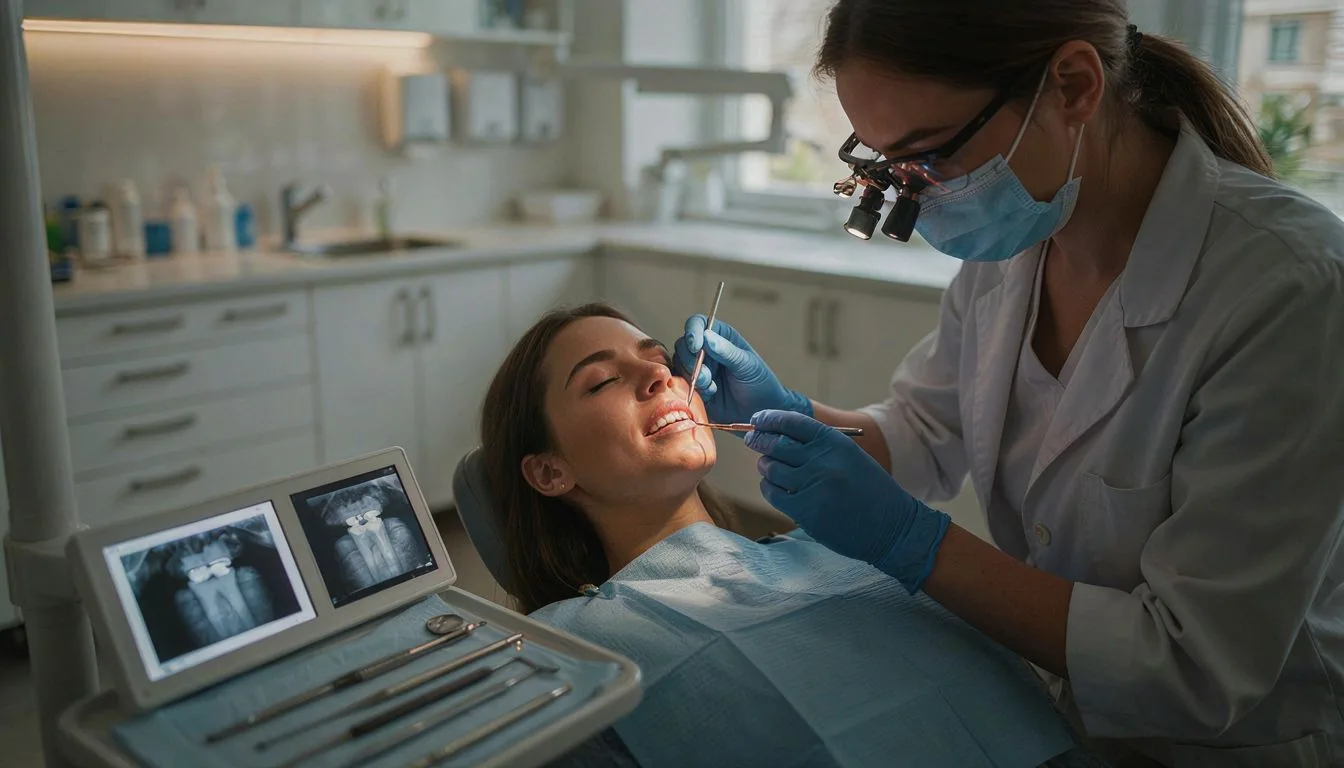
Diagnosis starts the moment your dentist looks in your mouth. A visual exam checks the crown’s edges, the gum line, and the surrounding tooth structure for gaps, cracks, or darkening that can signal trouble underneath. A probe is then run gently along the margin to feel for softness, catch, or a ledge where the crown no longer sits flush. Pressure and bite tests follow, letting the dentist feel whether the crown moves, rocks, or causes pain when you close down.
What the eye and probe cannot reach is where imaging earns its place. A dental X-ray shows the tooth beneath the crown, revealing decay at the margin, bone loss, or a fracture running into the root that no surface exam can detect. In some cases, a cone beam scan adds a three-dimensional view when a root issue is suspected but unclear on a standard film.
Each finding shifts the diagnosis in a specific direction. Decay confined to the margin may still leave the underlying tooth healthy enough to save. A fracture that reaches the root, or significant bone loss around the tooth, changes that picture entirely. These results are what let your dentist say with confidence whether the crown alone has failed or whether the tooth itself is compromised, which is the point where the conversation turns to what comes next.
Key Differences Between Repairing and Replacing a Crown
Repair and replacement are not competing preferences; they solve different problems. A repair makes sense when the crown itself is intact and the issue sits at the interface between crown and tooth. A loose crown with healthy structure underneath can often be cleaned and recemented, and a small chip or worn edge may be smoothed or patched without remaking the restoration. These fixes are conservative, faster, and usually less expensive, and they preserve the tooth structure you still have.
Replacement becomes the better path when the crown can no longer do its job. If the restoration is cracked through, worn thin, or repeatedly loosening despite recementation, the problem is the crown, not the cement. The same is true when decay or fracture has reached the tooth beneath it, since the crown must come off before that area can be treated.
The balance also shifts with context. An older crown near the end of its realistic lifespan is a poor candidate for repeated repairs, while a relatively new one with a single localized defect may be worth saving. Location matters too: a crown on a heavily loaded molar faces more force than one on a front tooth, so the condition of the underlying tooth and the demands of the bite often decide the recommendation. The choice is ultimately a judgment about durability and risk, not a simple preference.
The Crown Replacement Procedure Explained Step by Step
Once the decision to replace rather than repair has been made, the appointment itself follows a fairly predictable arc. Understanding that arc in advance removes most of the anxiety, because nothing that happens during a replacement is improvised. Every step exists to protect the tooth underneath and to make sure the new crown fits as well as the original once did.
The visit begins with removing the old crown, which is usually done by carefully cutting or lifting it away rather than pulling it off. This matters because the tooth beneath may already be weakened, and a forceful removal could fracture it. Once the crown is off, your dentist inspects the exposed tooth and the margin where the crown used to sit, checking for decay, cracks, or the cement breakdown that likely contributed to the failure in the first place.
From there, the sequence typically unfolds like this:
- Assessment and cleanup — any decayed or compromised tissue is removed, and the tooth is reshaped slightly if the new crown will need different contours.
- New impression or digital scan — this record captures the exact shape of the prepared tooth and the surrounding bite, and it is what the lab uses to build the replacement.
- Temporary crown placement — a provisional crown protects the prepared tooth, keeps it from shifting, and lets you eat and speak normally while the permanent one is being made.
- Final fitting — the new crown is tried in, adjusted for fit and color, then checked against your bite before being cemented into place.
The temporary phase generally lasts one to three weeks, though it can stretch longer if the lab needs extra time or if your dentist wants to monitor how the tooth responds. The final fitting is also where your bite gets verified with articulating paper, since a crown that sits even slightly high can cause soreness or jaw discomfort later. Timelines shift depending on the material chosen and how much work the underlying tooth required.
Choosing the Right Replacement Crown Material
Material choice is one of the few decisions during replacement that genuinely belongs to you, because it is a trade-off rather than a test with one correct answer. A crown at the back of the mouth absorbs heavy biting forces and is rarely seen, while a crown near the front is judged almost entirely on how it blends with neighboring teeth. That single difference in position often settles the question before cost or durability are even discussed.
Where appearance matters most, ceramic and porcelain-based options are generally chosen because they can be matched closely to the shade and translucency of natural enamel. Where strength matters most, metal and metal-ceramic crowns have a long record of withstanding heavy load, though the metal edge may show over time. Zirconia sits between these poles, offering high strength with a tooth-colored finish.
Your own priorities — budget, aesthetic sensitivity, grinding habits, and how much tooth structure remains — shape the answer more than any single “best” material. A material that suits a molar may be the wrong pick for a visible front tooth.
| Material | Appearance | Durability | Typical Use Case |
|---|---|---|---|
| Porcelain / Ceramic | Excellent — closely matches natural enamel | Good, but more prone to chipping under heavy force | Front teeth and visible areas |
| Zirconia | Very good — tooth-colored, slightly less translucent | Very high — resists fracture well | Back teeth and patients who grind |
| Metal-Ceramic | Good — porcelain fused to a metal base | High — strong core with a durable surface | Both front and back, when strength is prioritized |
| Full Metal | Low — visible metal color | Very high — least likely to fracture | Out-of-sight molars, limited remaining tooth |
Aftercare and Longevity Tips for Your New Crown
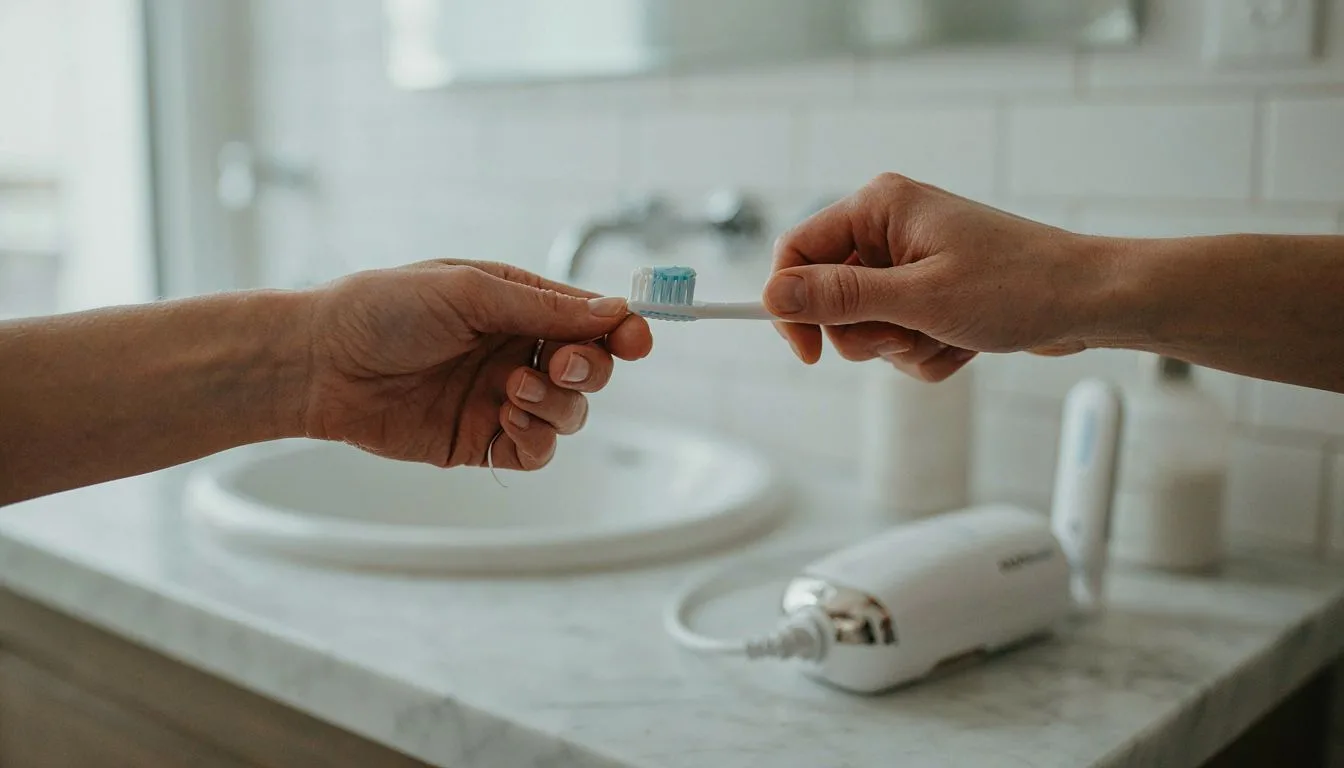
Most of what determines how long a new crown lasts happens after you leave the chair. The margin where crown meets tooth is the most vulnerable zone, because that thin seam collects plaque faster than smooth enamel ever did. Brush along it with a soft-bristled brush angled toward the gum line, and floss daily with a gentle see-saw motion rather than snapping the floss down onto the edge. A water flosser can help if your crown sits close to a bridge or implant, but it works best as a supplement to, not a replacement for, string floss.
Force is the other quiet enemy. Avoid chewing ice, hard candy, unpopped popcorn kernels, and pen caps, and talk to your dentist about a night guard if you grind or clench. Bruxism is one of the most common reasons a well-made crown chips or loosens early, and it is also one of the easiest risks to manage once identified.
Finally, keep your routine checkups. A dentist can detect a worn margin, a small fracture, or early decay under the crown long before you feel anything, and catching those problems early is what turns a replacement crown into a long-term restoration rather than a temporary fix.
FAQs
How long do dental crowns typically last before crown replacement becomes necessary?
Most dental crowns last between five and fifteen years, and many make it well past the ten-year mark with good oral hygiene and regular checkups. When replacement becomes necessary, it usually comes down to wear, decay at the margin, a fracture, or gum recession exposing the edge rather than the crown simply reaching a set expiry date. That's why we assess the crown and the tooth underneath at every visit instead of waiting for a fixed timeline.
What signs indicate that crown replacement after dental crowns is needed rather than a simple repair?
You will likely need a full crown replacement rather than a simple repair when the crown itself is fractured, loose, or has worn through, or when decay has spread underneath it and reached the underlying tooth structure. Persistent pain, a foul taste, or visible darkening at the margin often signals recurrent decay or a failing seal that a patch cannot fix. If the core tooth is compromised or the crown no longer fits the prepared tooth accurately, replacing the crown is the more reliable option.
Can crown replacement after dental crowns be avoided with proper oral care and regular checkups?
Yes, in many cases you can avoid crown replacement with solid oral care and routine dental visits. Brushing twice daily, flossing around the crown margin, and limiting hard or sticky foods help protect both the crown and the underlying tooth from decay and fracture. Regular checkups let your dentist catch small problems like marginal wear, recurrent decay, or a loose crown before they force a full replacement. Even excellent hygiene cannot prevent every issue, since crowns eventually wear down or the tooth beneath them can change over time.