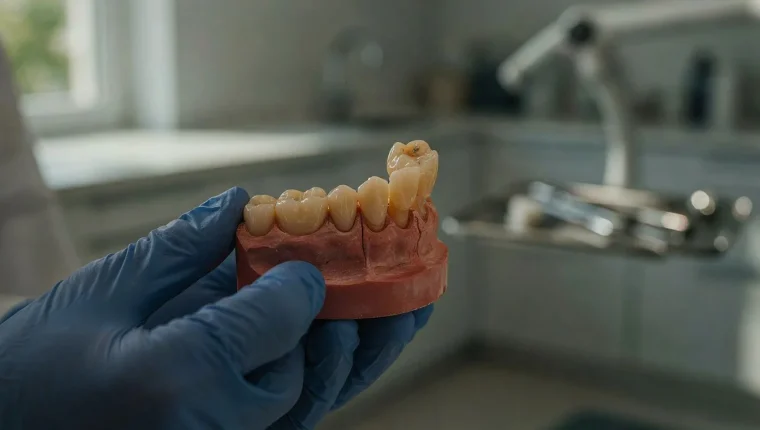
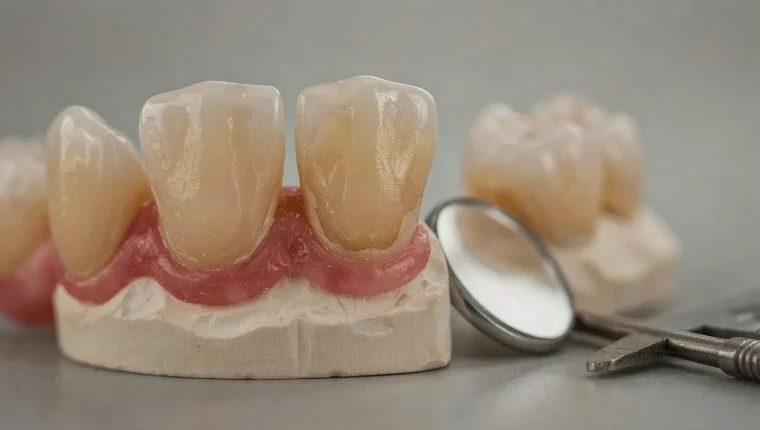
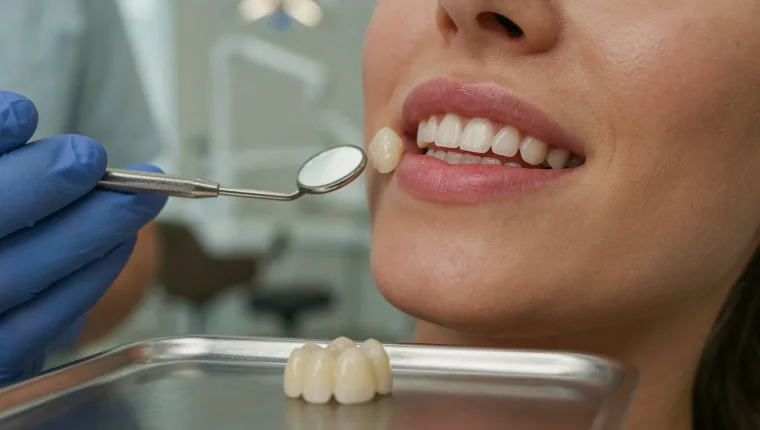
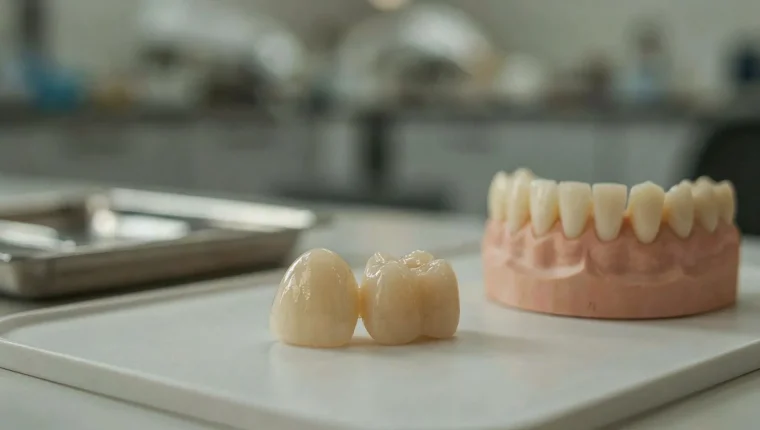
A dental implant replaces the tooth root, not the visible part of the tooth. That is why almost every implant needs a separate restoration on top, usually a crown. Yes: dental crowns with dental implants are not competing options but two halves of the same treatment. The implant is the titanium post placed in the jawbone; the crown is the custom-made cap above the gumline that handles chewing, speaking, and smiling.
The real decision is not whether to combine them, but which type of crown and connection to use. You can choose a screw-retained crown, which the dentist can tighten or remove later, or a cemented crown, which often looks and feels more like a natural tooth. Materials matter too: zirconia and porcelain-fused-to-metal behave differently in terms of wear, shading, and strength on back teeth.
Timing also shapes the result. Some patients leave the clinic with a temporary crown the same day, while others wait several months for the implant to fuse with bone before the final crown is fitted.
What It Means to Combine Dental Crowns With Dental Implants

Combining a crown with an implant is not simply placing a cap on a titanium post. It is a two-part prosthetic system in which a manufactured root and a manufactured crown work as a single functional unit. The implant fuses with living bone through a process called osseointegration, while the crown sits above the gum line and takes on every chewing force, temperature change, and aesthetic demand that a natural tooth once handled.
What makes this combination distinctive is the junction between the two parts. Unlike a natural tooth, where the crown and root are continuous, an implant crown connects to the implant through an abutment — a small connector that transfers load from the visible crown down into the bone. That connection point determines how the restoration is designed, how it is serviced, and how it ages.
Clinically, this matters for several reasons:
- Bone preservation: The implant stimulates the jawbone the way a natural root does, which helps prevent the ridge from shrinking over time.
- Adjacent tooth protection: A crown on an implant does not require grinding down healthy neighboring teeth, which is often necessary for a traditional bridge.
- Independent maintenance: Each implant crown can be repaired, replaced, or re-tightened without affecting the rest of the mouth.
There is also a practical distinction patients notice early: an implant crown can be removed and reattached by the dentist, while a natural crown is permanently cemented to its prepared tooth. That reversibility is one of the quiet advantages of the implant-and-crown approach, and it shapes nearly every decision that follows — from material choice to the way the final restoration is seated.
How an Implant Replaces a Missing Tooth Root
Underneath every visible crown sits a structure most people never think about: the root. That hidden anchor is what an implant is actually designed to replace, and understanding this part of the process explains why implants behave so differently from other tooth replacement options.
A natural tooth root does more than hold a crown in place. It transfers chewing forces into the jawbone, and that mechanical stimulation is what keeps the bone around it dense and alive. When a tooth is lost, this stimulation disappears. The bone in that area gradually resorbs, which is why long-standing gaps often show a sunken ridge or shifting neighboring teeth. An implant addresses this problem at its source by recreating the role of the root itself, not just filling the empty space above the gum.
The implant body is a small, biocompatible post, almost always made of titanium or a titanium alloy. It is placed surgically into the jawbone where the original root once sat. Over the following weeks and months, a process called osseointegration takes hold: bone cells grow directly against the implant surface and lock it into position without any soft tissue layer in between. This direct bone-to-implant contact is what allows the implant to bear the full load of biting and chewing.
Several features of the implant design mirror the anatomy it replaces:
- Root-shaped body: The threaded post is sized and positioned to occupy the space of the missing root, providing a stable foundation within the bone.
- Load transfer: Chewing pressure passes from the implant into the surrounding bone, mimicking the stimulation a natural root provides.
- Bone maintenance: Because the bone continues to receive that stimulation, it is less likely to shrink away the way it does under a conventional bridge or denture.
- Standalone support: The implant does not rely on neighboring teeth for stability, so adjacent teeth remain untouched and uncut.
Once the implant has fused solidly with the bone, it is ready to carry a restoration. At that point, the implant serves purely as the root substitute, and a separate component called an abutment connects it to whatever sits above the gum line. That visible portion is where the crown comes in, and it is the next piece of the puzzle worth examining closely.
Why a Crown Is the Visible Part of an Implant Restoration
Once the implant body has fused with the bone, the crown becomes the only part of the restoration a patient or anyone else will ever see. That visibility is not cosmetic luck; it is the design goal. The implant sits entirely beneath the gum line, so every function we associate with a tooth — chewing, speaking, smiling — happens at the crown.
Think of the crown as the interface between the biological foundation and the outside world. The implant handles anchorage and load transfer to bone, but the crown handles contact with food, opposing teeth, and oral fluids. It also restores the emergence profile, the way the restoration rises out of the gum tissue, which heavily influences how natural the final result looks.
Because the crown is the visible component, it absorbs most of the esthetic scrutiny. Shade matching, translucency, and surface texture are judged here, not at the implant level. This is also why crown selection carries real weight: a beautifully placed implant can still look disappointing if the crown above it is mismatched or poorly contoured.
The crown additionally protects the connection between the implant and the abutment, sealing the internal components from bacterial contamination. In this sense, its role is both seen and unseen — visible in appearance, essential in shielding the structures underneath.
Screw-Retained vs Cement-Retained Implant Crowns
How the crown attaches to the implant is one of the most consequential decisions in the entire restoration, and it usually comes down to two options: screw-retained or cement-retained. A screw-retained crown connects directly to the implant through an access hole in the biting surface, which is later sealed with composite. A cement-retained crown fits over a small connector called an abutment and is bonded in place with dental cement, leaving no visible opening on top.
The central trade-off is retrievability. A screw-retained restoration can be loosened and removed by the dentist without destroying the crown, which matters if the implant needs maintenance, the screw loosens, or the crown chips. Cement-retained crowns typically require drilling the crown off if removal becomes necessary, so they are harder to service but often easier to seat and shade-match.
Each design carries practical strengths. Screw-retained crowns avoid excess cement, which is a genuine concern because trapped cement can irritate surrounding tissue. Cement-retained crowns, on the other hand, offer more flexibility when the implant sits at an angle that would make a screw channel awkward or place the access hole in an unflattering spot.
Your dentist weighs implant position, bite forces, gum contours, and esthetic demands before choosing. Neither option is universally better; the right fit depends on where the implant sits and what the crown needs to accomplish.
Materials Used for Implant-Supported Crowns
The material chosen for the visible crown determines how the finished restoration looks, how it wears against neighboring teeth, and how well it hides the metal components underneath. Because an implant crown sits on a titanium or zirconia abutment rather than on natural tooth structure, the material must be thick enough to mask that underlying color without looking bulky. The three options below cover the vast majority of cases, and each carries its own balance of aesthetics, strength, and cost.
- Porcelain-fused-to-metal (PFM): A metal shell is covered with layered porcelain, giving reliable strength at a moderate price. The trade-off is a slightly opaque appearance and, over time, a thin dark line that can appear at the gum margin.
- Full zirconia: A single block of tooth-colored ceramic milled to shape, offering high fracture resistance and no metal to show through. It suits back teeth especially well, where biting forces are heaviest.
- Layered porcelain on zirconia: A zirconia core with hand-stacked porcelain on top, which delivers the most natural light reflection and shading. It is often reserved for front teeth where appearance matters most.
- Full metal: Rarely used today for visible teeth, but still chosen occasionally for molars in patients who grind heavily and prioritize durability over appearance.
Whichever material is selected, the crown is shaped and cemented or screwed onto the abutment so that it meets the gumline cleanly. A well-fitted margin keeps bacteria out and protects the tissue around the implant, which has no natural ligament to cushion it. Your dentist will also check the bite carefully, since an implant crown cannot adapt to uneven pressure the way a natural tooth can.
Step-by-Step: From Implant Placement to Final Crown
The journey from an empty space in the jaw to a finished, natural-looking tooth follows a predictable sequence. It begins with a consultation and imaging, where the dentist uses X-rays or a CBCT scan to map bone volume, nerve position, and the exact spot where the implant will sit. If bone is thin, a graft may be placed first and left to mature for several months before anything else happens.
Once the site is ready, the implant fixture — a small titanium post — is placed into the jawbone under local anesthesia. This is a minor surgical step, usually completed in under an hour. The post is then left undisturbed while osseointegration takes place, the process in which bone grows directly against the implant surface and locks it in place. This healing window typically runs three to six months, and during it the patient wears a temporary tooth or nothing at all, depending on the location.
When the implant has integrated, the second stage begins. A small connector called an abutment is attached to the implant, or an impression is taken so the lab can build the final crown to fit precisely. For screw-retained designs, the crown is crafted with a channel that allows it to be tightened directly onto the implant; for cemented designs, the crown is bonded over the abutment. Either way, the crown is shaped and shaded to match the neighboring teeth.
The final appointment is short. The crown is tried in, checked for fit, bite, and color, then secured. Most patients leave with a fully functional tooth that looks and feels like the rest of their smile. The entire timeline, from first scan to final crown, usually spans four to eight months, though it can stretch longer if grafting or additional healing is needed.
Caring for and Maintaining an Implant Crown

An implant crown does not decay the way a natural tooth does, because the visible portion is typically made of ceramic or metal rather than living tissue. What threatens its longevity is everything around it: the gum seal, the bone beneath, and the small components that hold the crown to the implant. That distinction shapes how you clean and monitor the restoration over the years.
Daily care centers on the margin where the crown meets the gum line. Plaque that collects there can inflame the surrounding soft tissue, a condition known as peri-implant mucositis, and if it progresses it can reach the bone and become peri-implantitis. Because an implant has no periodontal ligament to cushion or signal early trouble, bone loss around the implant often develops quietly. Gentle brushing twice a day with a soft-bristled brush, plus daily cleaning between the crown and neighboring teeth, removes most of the bacterial film that drives this process.
Interdental cleaning deserves particular attention. Floss alone may not reach the contours of a crown that sits slightly wider than the tooth it replaced. Interdental brushes, floss threaders, or a water flosser can clear the gap between the crown and adjacent teeth. If your restoration is screw-retained, your clinician may have left a small access channel that was sealed after tightening; that seal should be checked at each visit rather than probed at home.
Professional maintenance usually means a check every six months, though some patients need shorter intervals. At these visits the clinician verifies the crown is not loose, tests the bite, and may take radiographs to confirm the bone level has stayed stable. Avoid using the crown to open packaging or bite hard objects, since porcelain can chip even when the underlying implant is sound. Night grinding, if present, is worth addressing with a guard to protect the ceramic surface.
Report any change in how the crown feels, a persistent taste, or bleeding when you brush. Catching a loose screw or an early soft-tissue problem is far simpler than rebuilding bone later.
FAQs
Can dental crowns with dental implants be placed in a single appointment?
In most cases, no, because a dental implant needs time to fuse with your jawbone before it can support a crown. This healing phase, called osseointegration, typically takes three to six months, so the crown is usually placed at a separate visit once the implant is stable. Certain cases can be handled in a single appointment, such as an immediate-load implant placed in good-quality bone or a temporary crown added right after surgery for appearance. Your dentist will decide based on your bone density, the implant's stability, and where in your mouth it sits.
How long do implant-supported dental crowns typically last compared to natural teeth?
An implant-supported crown usually lasts between 10 and 15 years, and with good hygiene and regular checkups many patients get 20 years or more out of them. That's comparable to a natural tooth's crown, which typically serves 10 to 15 years before it needs replacement, though the natural tooth underneath can last a lifetime. The key difference is that implants don't decay, so failures tend to come from wear, fracture, or gum and bone health around the implant rather than cavities.
What factors determine whether a dental implant is strong enough to support a crown?
The main factors are bone quality and volume at the implant site, the implant's own dimensions and material, and how well it integrates with the surrounding bone. A crown can be supported reliably when the implant is wide and long enough for the load, placed in dense bone, and fully osseointegrated without micromovement. Your dentist also weighs the forces of your bite and the crown's design, since heavy chewing on a short or narrow implant in soft bone raises the risk of failure.