A dental crowns Turkey package is rarely just a crown. It usually combines clinical work, materials, and travel-related services in one price, and the mix varies by provider. That is exactly where confusion starts. Two quotes can look identical on a website but cover very different things once you sit in the chair.
This article does not recommend a specific clinic. Instead, it gives you a clear frame for reading any package with confidence: what is typically included, what often sits outside the price, and which questions expose the gaps before you book flights. You will see how materials, crown count, imaging, lab work, and aftercare each shape the final offer. Prices and inclusions shift over time, so treat every detail here as a checklist to verify directly with providers, not a fixed promise.
What a Standard Dental Crowns Turkey Package Typically Covers
Most providers build their offers around a recognizable core, and knowing that core is what lets you tell a complete offer from a stripped-down one. In practice, a standard package is a bundle of clinical work, lab work, and travel-related support sold as one price. The clinical spine is fairly consistent: an initial consultation and oral examination, preparation of the teeth that will receive crowns, placement of temporary crowns while the permanent ones are being made, and the final fitting and cementation. Many packages also include a post-fitting check before you fly home, which gives the dentist a chance to adjust the bite while you are still in the country.
Beyond the chair itself, providers often fold in services that make the trip workable. These are the parts that matter most to international patients, because they determine how much you have to organize on your own. Typical inclusions at this level are:
- Airport transfers between the airport, your hotel, and the clinic, usually for the main arrival and departure.
- Hotel accommodation for a set number of nights, sometimes with breakfast and often chosen by the provider rather than by you.
- English-speaking coordination, meaning a translator or patient coordinator who handles scheduling and communication during visits.
- Treatment planning and a written quote that lists the crowns, materials, and number of appointments before you commit.
What sits outside the core varies more than the core itself. Sedation, bone grafting, root canal treatment on a crowned tooth, extractions, and night guards are frequently priced separately, as are additional hotel nights beyond the stated limit. The practical takeaway is that inclusions shift with the provider and with the size of the treatment, so a single crown and a full-mouth reconstruction will not carry identical terms. Compare the written list, not the headline price.
Which Crown Materials Are Available in Turkish Dental Packages
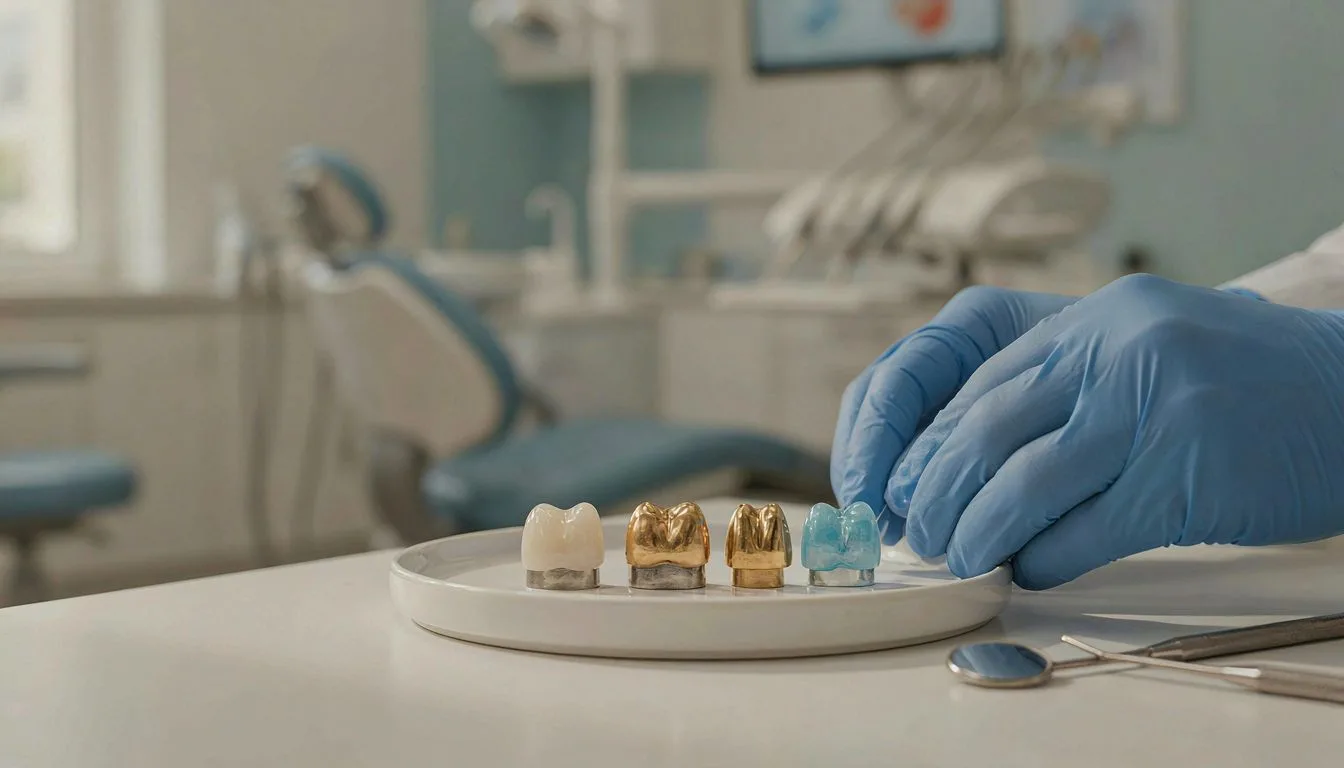
When you look at what a Turkish clinic offers, the crown material is often the single biggest variable in both price and result. Most packages are built around a default option, and understanding that default is the key to reading a quote correctly.
The most common categories you will see are zirconia, metal-ceramic (porcelain fused to metal), full metal, and, less frequently, e.max or other lithium disilicate ceramics. Zirconia is popular for its strength and natural translucency, which makes it a strong choice for visible front teeth. Metal-ceramic remains the workhorse for back teeth because it is durable and affordable, though it can show a grey line at the gum. Full metal is the most budget-friendly but the least aesthetic. e.max offers excellent light transmission but is generally reserved for single crowns rather than long bridges.
Material choice can affect the number of visits. Some ceramics require a specific shade-matching appointment or a longer lab turnaround, while zirconia can often be milled faster. This is why a package may list a default material and price others separately: the clinic is protecting its base rate while giving you an upgrade path.
Before you commit, ask about the brand and origin of the material, whether it carries a certification such as CE or FDA, and how the clinic handles material changes after your arrival.
How Many Crowns and Which Teeth Are Addressed in a Package
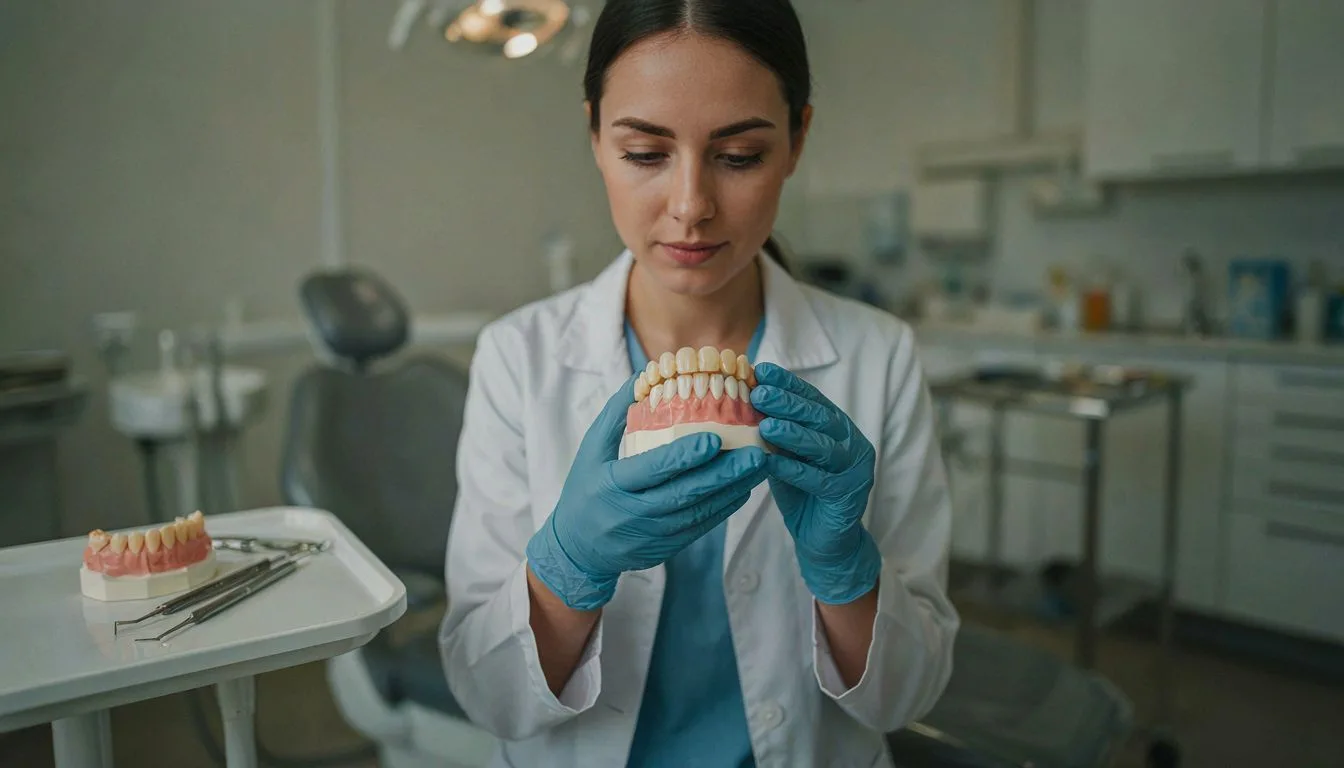
Most packages define their scope by a specific number of crowns, not by unlimited treatment. You will usually see a figure such as “up to six crowns” or “one arch,” and that number is the single biggest driver of what the package actually covers. A single tooth case sits at the low end, a bridge spanning several adjacent teeth sits in the middle, and a full-arch restoration sits at the top. Each is priced and structured differently, so a package built for one crown should not be expected to absorb a full-mouth case.
When your needs exceed the stated count, providers typically price each additional crown separately. That per-unit rate matters more than the headline package price if your case is complex. It is also worth knowing that a package’s crown count is an estimate, not a guarantee. An in-person exam after you arrive can reveal cracked roots, hidden decay, or bone loss that changes the plan, and the final number of crowns may shift accordingly.
The practical takeaway: match the package’s stated scope to your own dental situation before you commit, and ask how extra units are charged.
What Diagnostic and Imaging Services Are Bundled Into the Treatment
Before any crown is shaped or fitted, your case has to be measured, recorded, and planned. Most Turkish providers bundle a defined set of diagnostic and imaging services into the treatment, and knowing what that set contains helps you spot gaps before you commit to travel. The typical starting point is a clinical examination on arrival, where the dentist assesses the condition of the teeth being crowned, checks the surrounding gums, and confirms whether the treatment plan you received remotely still applies.
Imaging usually follows the same pattern. A panoramic X-ray gives a full view of both arches and is standard in most package offers. Periapical X-rays zoom in on individual teeth when the dentist needs detail on root position or bone level. Digital intraoral scans then replace the older putty impressions, capturing the exact shape of the prepared teeth and the bite so the crown can be manufactured accurately.
Some packages include these items in the quoted price, while others list imaging as an add-on. Ask directly which X-rays, scans, and records are covered and which are billed separately. Extra imaging such as a CBCT scan is sometimes needed when an implant or a root-treated tooth is involved, and this is often charged on top of the package.
Records matter beyond planning. The scan data and X-rays become the reference the lab uses to build a crown that fits your bite, so missing or low-quality imaging at this stage tends to show up later as adjustments, remakes, or discomfort after you return home.
Which Laboratory and Manufacturing Steps Are Included
Once your teeth have been prepared, the real production work begins — and this is where the quality of a package is often quietly decided. The process typically starts with a digital intraoral scan or a traditional impression, which is then used to create a plaster or digital model of your mouth. From that model, a technician designs the crown, and the design moves into manufacturing: either CAD/CAM milling from a solid block of zirconia or another ceramic, or layering porcelain by hand over a framework. After shaping, the crown is stained, glazed, and polished to match the shade and translucency of your natural teeth.
Where that work happens matters. Some clinics run their own in-house laboratory, which usually shortens turnaround and makes small adjustments easier to handle on the spot. Others outsource to a separate lab, which can add a day or two to the timeline but may offer a wider range of technicians and materials. Most packages cover the standard fabrication of the crown itself, while certain extras — custom shading, rush production, or a second material upgrade — may be billed separately.
If a crown does not fit or match well at the try-in stage, the remake is normally handled at the laboratory level before anything is permanently cemented. What that remake means for your warranty is a separate matter, covered later.
What Aftercare, Warranty, and Follow-Up Support Comes With the Package
Once your treatment is finished and you fly home, the value of a package often rests on what happens next. Most providers include a written aftercare protocol covering diet restrictions, cleaning routines, and warning signs to watch for during the first weeks. A review appointment before departure is standard, so the dentist can check bite, fit, and gum response while you are still in the country.
Warranty terms deserve close reading. A typical warranty covers the crown itself against fracture, chipping, or fitting failure for a set period, commonly one to five years, but coverage usually depends on conditions: attending recommended check-ups, avoiding accidents, and maintaining oral hygiene. Workmanship and material defects are generally included; damage from grinding, trauma, or neglect often is not.
Remote follow-up is increasingly common. Many clinics offer photo or video reviews through messaging apps, and some help coordinate with your local dentist for minor adjustments. Ask whether this coordination is included or billed separately.
Finally, confirm which aftercare items sit outside the package. Replacement crowns, emergency visits abroad, and treatment for complications linked to pre-existing conditions are frequently excluded or charged at extra cost.
How to Compare Dental Crowns Turkey Package Prices and Exclusions
Comparing headline prices across providers is the fastest way to make a bad decision. A lower number often means fewer crowns, a cheaper material, or services quietly left out. The only fair method is to line up packages on matched scope before you look at cost.
Start by confirming four things are identical in every quote you compare:
- Crown count and material — the same number of units in the same ceramic, since material choice drives both lab cost and longevity.
- Imaging and diagnostics — whether scans, X-rays, and the clinical examination are bundled or billed separately.
- Follow-up and warranty — what support continues after you fly home, and for how long.
- Logistics — transfers, accommodation nights, and coordination are frequently offered as headline perks but capped in ways that matter.
Then read the exclusions just as carefully. Extractions, bone work, sedation, and nights beyond the stated plan are the usual add-ons. Ask for a written, itemized quote that lists every inclusion and exclusion in one document, and treat any quoted price as changeable until each provider confirms current terms in writing.
| Package element | Commonly included | Often excluded | Confirm with provider |
|---|---|---|---|
| Crowns | Stated number of units in a named material | Additional crowns beyond the plan | Exact material grade and unit count |
| Diagnostics | Clinical examination and basic imaging | Advanced scans or repeat X-rays | Which imaging is bundled vs. billed |
| Procedures | Tooth preparation and fitting | Extractions, bone work, sedation | Whether surgical add-ons are priced upfront |
| Logistics | Airport transfers and set hotel nights | Extra nights, flights, meals | Night cap and transfer conditions |
| Aftercare | Warranty and remote follow-up | In-person visits after return | Warranty duration and claim process |
Once every column matches, the price difference finally tells you something real.
FAQs
What treatments and materials are typically covered in a dental crowns Turkey package?
A typical dental crowns Turkey package covers the crown itself, which is usually made from zirconium, porcelain-fused-to-metal, or E-max ceramic, along with the initial consultation, X-rays, and any necessary tooth preparation or temporary crown. Many packages also include a full set of impressions, local anesthesia, and the final fitting and cementation of the permanent crown. Some providers add extras such as airport transfers, hotel accommodation, and a translator, while more complex work like root canal treatment or dental implants is often priced separately.
Does a dental crowns Turkey package usually include airport transfers, hotel stays, and follow-up visits?
Many dental crown packages in Turkey are all-inclusive and typically cover airport transfers, hotel accommodation, and scheduled follow-up visits as part of the advertised price. These bundled offers are especially common at clinics catering to international patients, and they often include additional services such as translation support and post-treatment check-ups. Because inclusions vary between providers, you should confirm the exact scope in writing before booking.
How long does a dental crowns Turkey package normally take from consultation to final fitting?
A dental crown package in Turkey typically takes 5 to 7 days from the initial consultation to the final fitting. The process usually begins with an examination and preparation of the tooth, followed by impressions or digital scans, with temporary crowns placed while the permanent ones are made in a laboratory. Most clinics schedule the final fitting within about a week, though complex cases involving multiple crowns, root canal treatment, or gum healing may require 10 to 14 days or more.