Choosing a cosmetic dentist in Turkey for dental crowns is a big decision, and it requires more than looking at before-and-after photos. This guide is a practical selection aid, not a clinic advertisement. Its purpose is simple: to help you match the right cosmetic dentist, clinic, and travel plan to your crown needs.
We will cover how to verify a dentist’s qualifications, compare crown materials, understand the typical treatment process from first contact to flying home, evaluate costs beyond the headline price, plan your trip around appointments and healing, and manage aftercare once you are back. Individual cases vary, and final choices always rest with you and your dentist.
Why Turkey Has Become a Leading Destination for Cosmetic Dentistry
Turkey’s rise in cosmetic dentistry is not a marketing accident. It reflects structural shifts in how dental care is delivered, priced, and accessed across borders. Several forces have converged to make the country a credible option for patients considering crowns and similar restorative work.
The most visible driver is the cost differential. Treatment in Turkey often costs a fraction of what patients pay in Western Europe or North America, largely because of lower operating expenses rather than lower clinical standards. That gap has funded an entire dental tourism infrastructure: direct flights from major cities, clinics with multilingual coordinators, airport transfers, and hotel partnerships built specifically around short treatment trips.
Volume matters too. Cities like Istanbul, Antalya, and Izmir host clinics that place crowns daily, and that repetition builds practical expertise. Turkey’s Ministry of Health regulates private clinics, and many facilities hold international accreditations such as ISO certifications or affiliations with European dental bodies. These are useful country-level signals, but they describe systems, not individuals.
Reputation is strongest in major metropolitan clinics with transparent credentials and verifiable patient outcomes. It is weaker, and far more variable, in smaller operations that trade mainly on price. Quality is not uniform across Turkey, and no national reputation can substitute for checking a specific dentist’s training and case history.
How to Verify a Cosmetic Dentist's Credentials and Training

Turkey’s dental landscape includes excellent clinicians alongside providers whose marketing outpaces their qualifications. The difference usually comes down to whether a dentist’s training can be independently confirmed. Start by asking for the dentist’s full name, diploma number, and any specialty title, then check that information against the records of the Turkish Ministry of Health or the relevant dental chamber. A registered dental license is the baseline: it confirms the person is legally permitted to practise, though it does not by itself confirm cosmetic expertise.
- Diplomas and specialty titles: DDS or DMD credentials should come from a recognised dental faculty, and any claimed specialty in prosthodontics should be verifiable through the university or the Turkish Dental Association.
- Prosthodontic or cosmetic training: Crown work sits largely within prosthodontics, so ask how many years of post-graduate training the dentist completed and whether it included fixed prosthetics.
- Continuing education and case experience: Certificates from implantology, aesthetic dentistry, or digital smile design courses add context, but request before-and-after cases with dates so you can judge real volume.
- Independent verification: Cross-check the dentist’s name on official registries, professional association listings, and clinic registration records rather than relying on the clinic’s own website.
- Red flags: Treat vague answers about qualifications, reluctance to share a license number, and reviews that cannot be traced to real patients as reasons to slow down.
Verification takes a few emails and a short search, but it separates a genuinely qualified provider from one whose profile is built only on presentation. If a clinic resists these requests or answers them evasively, that response itself is useful information about how the relationship is likely to proceed.
What Dental Crown Materials Are Available and How to Choose

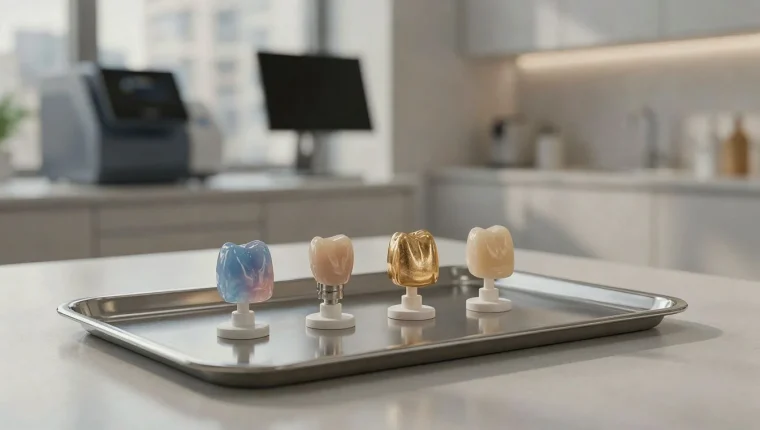
Crown material choice is one of the few decisions patients can genuinely influence, and it deserves more than a default answer. The main families used in modern cosmetic work are zirconia, lithium disilicate, porcelain-fused-to-metal, and full metal alloys. Each sits at a different point on the strength-versus-aesthetics spectrum, and no single option wins everywhere in the mouth.
Zirconia offers high fracture resistance and works well for molars and heavy bite forces, though older generations looked more opaque. Lithium disilicate delivers the most natural translucency and is often chosen for front teeth, but it is less forgiving under intense grinding. Porcelain-fused-to-metal remains a durable, cost-conscious option, with the trade-off of a visible metal line if gums recede. Full metal crowns are the most wear-resistant and gentlest on opposing enamel, but they are rarely the cosmetic choice.
| Material | Strength | Aesthetics | Typical Use | Durability Notes |
|---|---|---|---|---|
| Zirconia | Very high | Good to very good | Molars, bridges, heavy bites | Resists fracture; can wear opposing teeth |
| Lithium disilicate | High | Excellent | Front teeth, visible smiles | Natural look; avoid extreme grinding |
| Porcelain-fused-to-metal | High | Moderate | Back teeth, budget-conscious cases | Durable; metal edge may show |
| Full metal alloy | Very high | Low | Hidden molars, bruxism | Long-lasting; least aesthetic |
Tooth position, bite force, gum response, and your aesthetic goals should steer the decision. Before agreeing, ask about the specific brand, where the crown is fabricated, and the expected lifespan. Material choice also affects the quoted price, which this guide covers later.
The Step-by-Step Process of Getting Dental Crowns Abroad
Understanding the practical sequence of crown treatment abroad helps you separate realistic clinic promises from marketing gloss. Most reputable providers follow a predictable structure because crown work is technique-sensitive and cannot be rushed without risking fit, bite, or longevity. The timeline below reflects how a typical case unfolds from your first email to the moment you fly home.
The whole pathway depends on one factor more than any other: accurate digital impressions and records captured before any permanent restoration is fabricated.
- Remote consultation and planning: You send photos, X-rays, or a panoramic scan, and the clinic proposes a provisional treatment plan, material options, and an estimated number of visits.
- First in-person visit: The dentist examines your teeth, confirms or revises the plan, prepares the tooth structure, and takes impressions or intraoral scans. Temporary crowns are usually placed the same day.
- Laboratory phase: Your permanent crowns are milled or crafted, typically taking several working days. This is when you rest, sightsee, or recover from any extra procedures.
- Fitting appointment: The permanent crowns are tried in, checked for fit, color, and bite, then cemented or bonded. Minor adjustments to the bite are common and quick.
- Case variation: A single crown may need two visits; multiple crowns, root canal work, or extractions extend the schedule and the number of appointments.
Ask your clinic to state clearly how many days each stage requires in your specific case, since that figure determines how you book flights and accommodation. Once you have that written breakdown, you can plan your trip with confidence, knowing exactly when the temporary phase ends and when your permanent crowns will be seated. Keeping a copy of the plan also gives you a reference point if anything shifts during treatment, so you can compare the original schedule with any revised timeline and adjust your travel arrangements accordingly.
How to Evaluate Clinics, Pricing, and What's Included
A quote for dental crowns means very little until you know what sits behind the number. Ask every clinic for a written breakdown that itemizes the crown material by brand and type, laboratory fees, the number of appointments, imaging such as X-rays or CT scans, and any medication included. When these line items are missing, the advertised price is usually a starting point rather than a final cost, and the difference often appears after you arrive.
Next, separate genuinely included services from optional add-ons. Sedation, extractions, root canal treatment, temporary crowns, and night guards are frequently priced separately, and a clinic that states this upfront is generally more trustworthy than one that reveals it later. Read the warranty and revision policy carefully, and confirm who honors it once you return home — a warranty that only applies if you fly back has limited practical value. This matters most for the total treatment cost, not the headline figure.
Finally, compare clinics on communication, transparency, and aftercare commitments. A provider that answers detailed questions in writing, explains what happens if a crown needs adjustment, and offers a clear remote follow-up process is giving you more real value than one quoting the lowest price. Weigh substance over savings.
Planning Your Trip Around Treatment and Recovery Time
Treatment timelines vary dramatically depending on how much work you need. A single crown on an existing tooth, with the tooth already prepared and the case suitable for digital scanning, can often be completed in two visits across three to five days. Multiple crowns, crowns combined with veneers or implants, or any case requiring extraction, bone grafting, or root canal therapy first will extend the stay considerably. If you need several crowns plus preparatory procedures, plan for seven to fourteen days on the ground as a realistic baseline, and ask your clinic in writing how many days each stage requires before you book flights.
Appointments are rarely back-to-back. The laboratory needs working days to fabricate crowns, and your dentist will want a fitting appointment followed by a short adjustment visit once you have worn the crowns for a day or two. Build in at least one buffer day before your return flight, so a crown that needs a minor bite correction does not force a rushed second trip. Flying immediately after treatment is generally fine, but keep the first day after fitting light: soft food, no extreme temperatures, and no aggressive chewing on the treated side while the cement sets and your gums settle.
Choose accommodation within walking distance of the clinic if possible. You will likely attend two or three short appointments, and easy access matters more than a scenic location while you are healing. If you are traveling alone, confirm that the clinic offers a driver or chaperone for the appointment days, since some sedation or lengthy sessions can leave you preferring not to navigate public transport afterward.
Aftercare, Follow-Up, and Long-Term Crown Maintenance
Crowns can last many years, but what happens after you fly home shapes how long they stay comfortable and functional. Daily care matters more than most patients expect: brush gently around the crown margins, floss or use interdental brushes carefully, and avoid chewing ice, hard candy, or opening packaging with your teeth. If you grind at night, a protective night guard is one of the best investments you can make. These habits protect both the crown and the underlying tooth.
Book a routine checkup with your local dentist within six months of returning, and mention the materials used and the date of placement. Regular exams let small issues, like a slightly loose margin or early wear, get caught before they become expensive problems.
If something feels wrong, contact the treating clinic first, since most offer a warranty period covering the crown itself. For pain, a lost crown, or a dental emergency, seek local care immediately rather than waiting. Keep your treatment records and warranty terms handy, as these make cross-border repairs or claims far easier to resolve.
FAQs
How much should I expect to pay for dental crowns from a cosmetic dentist in Turkey compared to prices in the UK or US?
Cosmetic dentists in Turkey typically charge between $150 and $400 per dental crown, compared with roughly $800 to $1,500 in the UK and $1,000 to $2,500 in the US, depending on the material and clinic. These lower prices usually reflect lower local labor and overhead costs rather than a difference in the crown itself, though quality varies widely between clinics. Patients should factor in travel, accommodation, and potential follow-up costs, and verify the dentist's credentials and the crown material before committing.
Are the materials and techniques used by a cosmetic dentist in Turkey for dental crowns the same quality as those in Western clinics?
Leading cosmetic dentists in Turkey use the same globally recognized crown materials as Western clinics, including zirconia, e.max lithium disilicate, and high-noble porcelain-fused-to-metal, often sourced from the same manufacturers such as Ivoclar, VITA, and 3M. Digital workflows with intraoral scanners and CAD/CAM milling are also standard in reputable Turkish practices. The main variable is not material availability but the individual clinic's standards, so choosing an accredited, experienced provider matters more than the country itself.
How many days should I plan to stay in Turkey to complete dental crown treatment with a cosmetic dentist?
Most cosmetic dentists in Turkey complete dental crown treatment in two visits: the first for examination, preparation, and impressions, and the second for fitting and cementing the permanent crowns, which usually requires a stay of about 5 to 7 days in total. If you need multiple crowns, root canal work, or implant-supported crowns, you should plan around 7 to 10 days to allow for healing and laboratory time. Your dentist can confirm the exact schedule after reviewing your dental records and treatment plan.