Two clinics in the same city can quote you €180 and €550 for what seems like the same crown, and both quotes can be legitimate. That gap confuses patients, but it rarely means one clinic is overcharging. Dental crowns Turkey cost factors are cumulative: the material, the clinic’s city and reputation, the number of teeth needing restoration, the dentist’s experience, the laboratory producing the crown, and extra procedures such as root canal treatment or gum work all affect the final figure.
Because these variables stack, comparing headline prices without knowing what sits behind them usually leads to the wrong conclusion. A cheap quote may reflect a basic material or a high-volume lab; a higher one may include premium ceramics and more chair time. Understanding each factor separately is what makes a quote readable — and comparable.
How Material Choice Shapes Dental Crown Prices in Turkey
When a clinic in Turkey quotes you a price for a dental crown, the single biggest variable behind that number is usually the material itself. The same tooth, prepared by the same hands in the same chair, can carry a base fee that swings by hundreds of euros depending on what gets cemented on top of it.
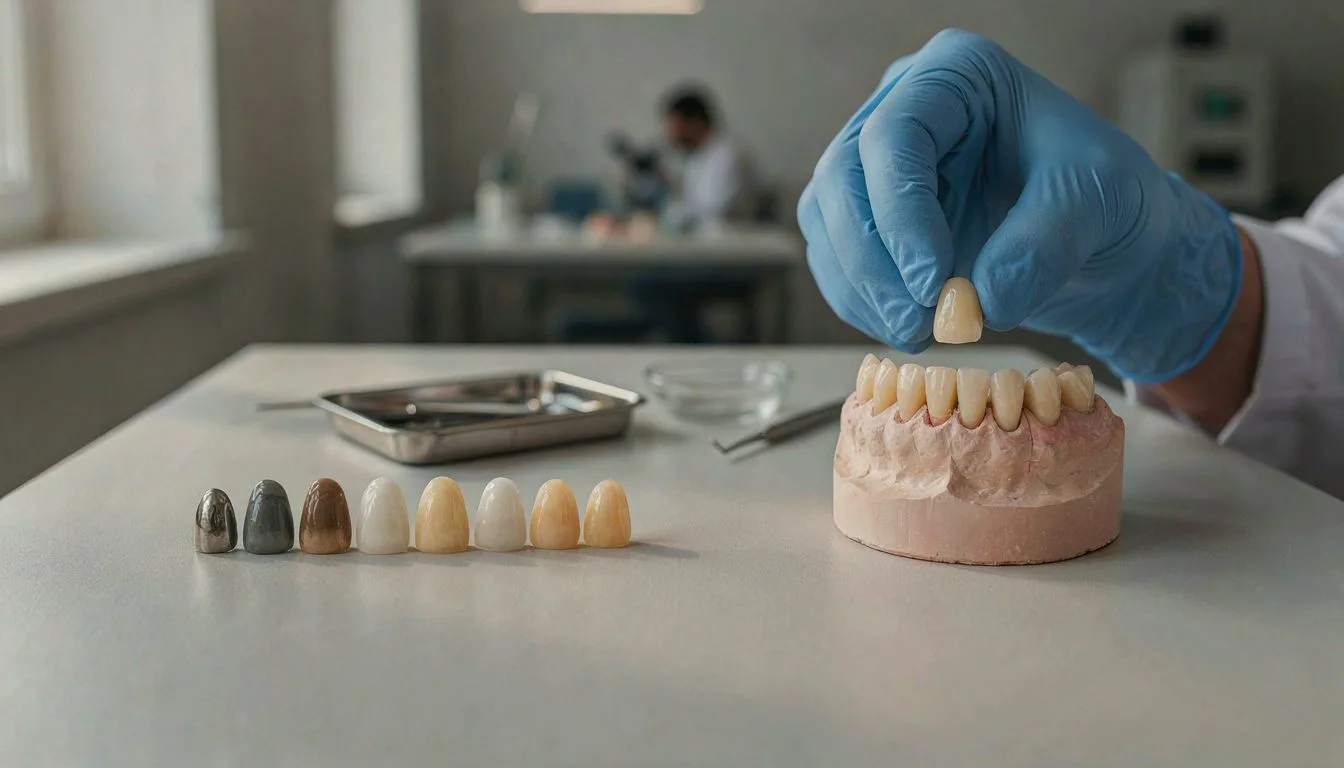
Most practices in Turkey work with a fairly predictable ladder of options. At the budget end sit base metal alloys and, slightly above them, metal-ceramic crowns — a metal shell finished with layered porcelain. These are affordable because the materials are inexpensive and the lab work is straightforward. Mid-range choices include zirconia, a strong tooth-coloured ceramic that has become the workhorse of modern crown work, and lithium disilicate (often sold under brand names), which offers a more natural translucency for front teeth. At the top sit fully customised, high-translucency ceramics and layered zirconia, where the technician spends far more time shaping and characterising each unit.
Price tracks three things: the raw material cost, the durability it buys, and the laboratory hours required. A metal-ceramic crown might take a technician under an hour to build; a hand-layered aesthetic crown can take several. That labour gap is why a premium material raises the base fee regardless of how competitive the clinic is, how many crowns you need, or where in Turkey you sit. The material decision is made before any of those other factors come into play — and it sets the floor that everything else builds on.
The Role of Clinic Location and Reputation in Treatment Pricing
Where a clinic sits — and how well known it is — can move a crown quote by a meaningful margin, even when the material is identical. The clearest driver is overhead. A practice in central Istanbul or a coastal hub with heavy international traffic pays far more in rent, staffing, and marketing than one operating in a smaller inland city, and those fixed costs are absorbed into every treatment fee. District matters just as much as city: two clinics a few kilometres apart can sit in very different rental brackets, which shows up directly in what you are quoted.
Reputation works differently. A clinic with a strong track record, high patient volume, or a dedicated international patient department can charge more because demand supports it — and because that reputation is often backed by investments in technology, training, and patient coordination that cheaper competitors may not offer. You are partly paying for consistency and a smoother experience, not just the crown itself.
This is why two clinics in the same city can quote noticeably different prices for the same zirconia crown. Location sets the cost floor, reputation sets the premium, and the gap between them is usually a reflection of what each practice chooses to prioritise. A higher fee is not automatically better value, but a suspiciously low one in an expensive district is worth questioning.
Why the Number of Crowns Needed Changes the Total Cost
Dental work rarely stays at one tooth. A patient who comes in for a single crown often leaves the planning stage with two, four, or even a full arch on the treatment list, and that multiplication is one of the most underrated drivers of the final bill. Most clinics price crowns per unit, so the arithmetic looks simple at first: a crown quoted at €180 becomes €720 for four teeth. In practice, per-unit pricing is only the starting point, and the way clinics structure multi-unit work is where the real variation appears.
Many practices offer multi-unit discounts once the count crosses a certain threshold, typically three or four crowns. The logic is practical rather than generous — impressions, shade matching, and chair time are partly shared across teeth, so the clinic’s own costs per unit drop. A discount of 10 to 20 percent on the per-unit rate is common, and it can shift a case from one price bracket to another entirely. Others quote a flat package rate for a defined span, such as a full-mouth rehabilitation, which bundles the crowns into a single figure that is easier to compare but harder to break down.
Single crowns and bridge cases behave differently. A bridge covering three missing teeth may involve only two abutment crowns plus pontics, so the unit count and the billing logic do not always match the number of teeth visible in the smile. Full-mouth cases push this further, since the count is set by the treatment plan, not by the patient’s original complaint.
This is why the treatment plan is the true price document. Before any quote means anything, the dentist has to decide which teeth genuinely need full coverage, which can wait, and which might be managed with a smaller restoration. That count — not the material or the clinic’s postcode — is often the single largest swing factor in what you ultimately pay.
How Dentist Experience and Specialization Affect Fees
Two crowns made from the same zirconia block can still carry different price tags depending on who prepares the tooth and fits the restoration. In Turkey, a general dentist typically charges less than a prosthodontist — the specialist trained specifically in crowns, bridges, and full-mouth reconstructions. A general practitioner might quote €180 per unit, while a prosthodontist in the same city could ask €300 or more for the identical material. That gap reflects training, not markup. A prosthodontist completes three additional years of residency focused entirely on restorative and prosthetic work, which matters when a crown sits on a compromised tooth, follows a root canal, or must match a complex bite.
Experience compounds this difference. A dentist who has placed thousands of crowns over fifteen years will often work faster and with fewer adjustments, and many clinics price that track record into the fee. More importantly, experienced clinicians tend to handle complex cases — short clinical crowns, angled implants, or patients needing multiple units — that less seasoned dentists may refer out. If your case is straightforward, a general dentist can deliver excellent results at a lower fee. If it involves prosthodontic specialization, paying more for the right hands usually reduces the risk of remakes, which cost far more than the original difference.
Consultation and planning time also enter the fee. Some dentists include digital scanning, bite analysis, and a temporary crown in one package price; others bill these separately. Before you compare quotes, ask exactly what the fee covers — a lower number that excludes planning or temporaries may end up costing more once treatment begins.
Laboratory Quality and Its Impact on Crown Pricing
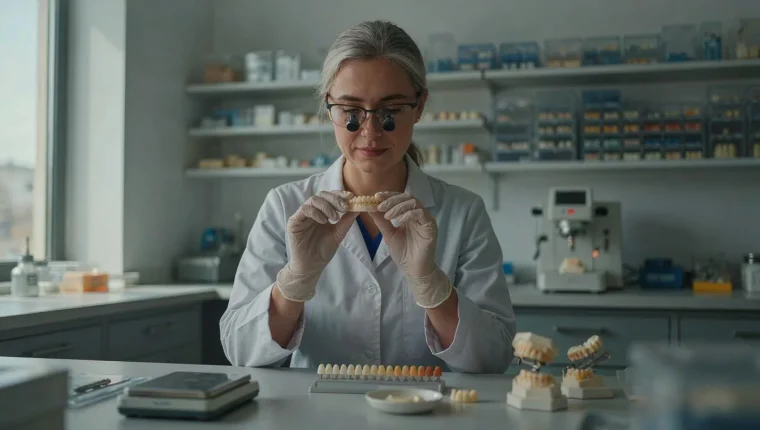
Behind almost every crown sits a dental laboratory, and the way that lab works shapes both the final price and the fit you feel years later. Some clinics in Turkey run their own in-house laboratory, which can trim costs by removing a middleman and speed up the process, since the technician and the dentist often sit in the same building. Others outsource to independent labs, and that added layer of coordination usually shows up in the quote.
The technique matters just as much. Manual waxing and casting has largely given way to digital scanning, CAD/CAM design, and milling, which tend to produce a more precise fit with fewer remakes. Digital workflows often cost more upfront, but they reduce the risk of a crown that needs redoing, so the price difference is not simply about technology for its own sake.
Turnaround time is the third lever. A rushed crown made in a day or two may carry a premium, while a standard two-week schedule keeps costs steadier. Whichever route a clinic takes, the laboratory is a genuine cost and quality variable, not just a workshop in the background.
Additional Treatments That Can Increase Your Final Bill
The crown itself is rarely the only item on the treatment plan. Many patients arrive with a tooth that has already been compromised, and preparing it for a crown often reveals problems that need to be solved first. A tooth with extensive decay or a previous fracture may require a root canal before any impression is taken. Once the nerve is removed, the remaining structure is often too weak to support a crown on its own, so the dentist may place a post inside the root and rebuild the core of the tooth. Each of these steps carries its own fee.
Gum health is another common source of added cost. If the tissue around the tooth is inflamed or receding, a course of periodontal treatment may be recommended before the crown is fitted. In cases where a tooth cannot be saved, an extraction becomes necessary, and if the plan is to replace it with an implant-supported crown, bone grafting may be required to create a stable foundation. These procedures are charged separately from the crown work.
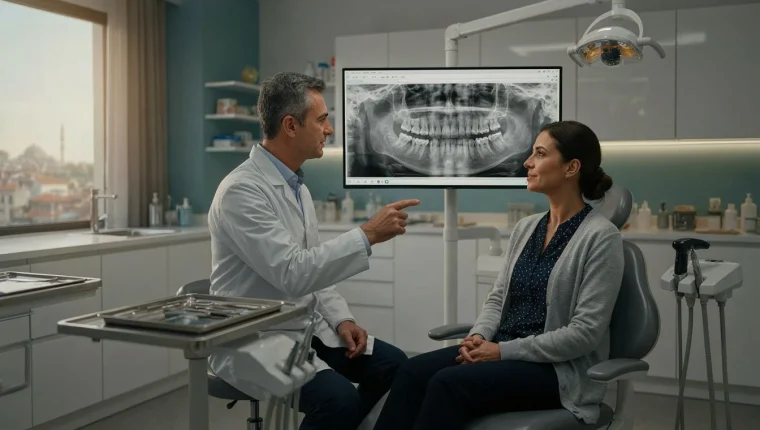
Even routine steps contribute to the total. Diagnostic imaging such as X-rays or a CBCT scan, impressions or digital scans, and a temporary crown worn while the final restoration is being made are all typically billed as part of the overall treatment. Individually these amounts may look modest, but together they can push a quote well beyond the figure a patient first had in mind.
Hidden Costs and Payment Options to Consider Before Treatment

Even a detailed quote can leave out services that appear later in your treatment journey. Before you commit, ask the clinic to confirm in writing exactly what the price includes: the crown itself, temporary crowns, impressions, local anesthesia, and the final fitting. If a crown needs adjustment after you return home, or if it fractures within the warranty period, find out whether the clinic covers the repair or charges a separate fee for revisions, follow-ups, and lab remakes.
Payment in Turkey is usually straightforward for international patients. Most clinics accept bank transfers, credit cards, and cash in euros, dollars, or lira, and many offer interest-free installment plans for larger treatment totals. Some package deals bundle multiple crowns, airport transfers, and hotel stays into one price, which can lower your overall spend but may lock you into a fixed schedule. Always request a written treatment plan with a full cost breakdown before any deposit, and keep a copy of the warranty terms so nothing about your final bill comes as a surprise.
FAQs
How does the type of material used affect dental crowns Turkey cost factors?
The material directly drives dental crown cost in Turkey because fabrication expenses, lab fees, and clinical time vary widely between options. Metal crowns and base-metal alloys sit at the lowest end, while porcelain-fused-to-metal falls in the mid-range, and full ceramic or zirconia crowns command the highest prices due to material and laboratory costs. Zirconia and high-grade ceramics typically add a premium because they require CAD/CAM technology and offer better aesthetics and durability. As a result, choosing a more advanced material can raise the total crown cost significantly compared with standard metal options.
Why do dental crowns in Turkey cost less than in the UK or US?
Dental crowns in Turkey cost less mainly because of lower operating expenses, including clinic rent, staff salaries, and laboratory fees, as well as a weaker currency that reduces prices for foreign patients. Turkish clinics also often operate at higher patient volumes and use efficient in-house labs, which spreads fixed costs across more cases. In contrast, UK and US prices include higher regulatory, insurance, and malpractice costs that are not present to the same degree in Turkey.
Can the number of crowns needed change the final price in Turkey?
Yes. In Turkey, the total price for dental treatment is typically calculated by multiplying the number of crowns by the per-unit price, so more crowns generally means a higher final cost. Many clinics also apply package discounts or tiered pricing for larger numbers of crowns, which can lower the per-unit rate. The final price therefore depends on both the per-crown price and the total quantity agreed with the clinic.