A crown consultation in Turkey differs from one at home. You often compare clinics through websites and WhatsApp messages, work in a second language, and try to judge a treatment plan you cannot easily verify in person. The pressure of a short trip and a price far lower than a local quote can make you want to book on instinct. That instinct leads to regret.
The real risk is not the treatment itself. It is committing to a clinic based on incomplete information: a glossy before-and-after gallery, a package price with unclear inclusions, or a dentist whose credentials you never properly checked. Once you are in the chair, it is too late to ask the questions that mattered.
A dental crowns consultation in Turkey works best when you treat it as a structured interview. You need to know what to verify about the clinic and the dentist, which material questions actually affect longevity, how many days the process really takes, what the final cost includes, and who is responsible if something goes wrong after you fly home. The questions below are the ones worth asking before you pay a deposit.
What a Dental Crowns Consultation in Turkey Typically Covers
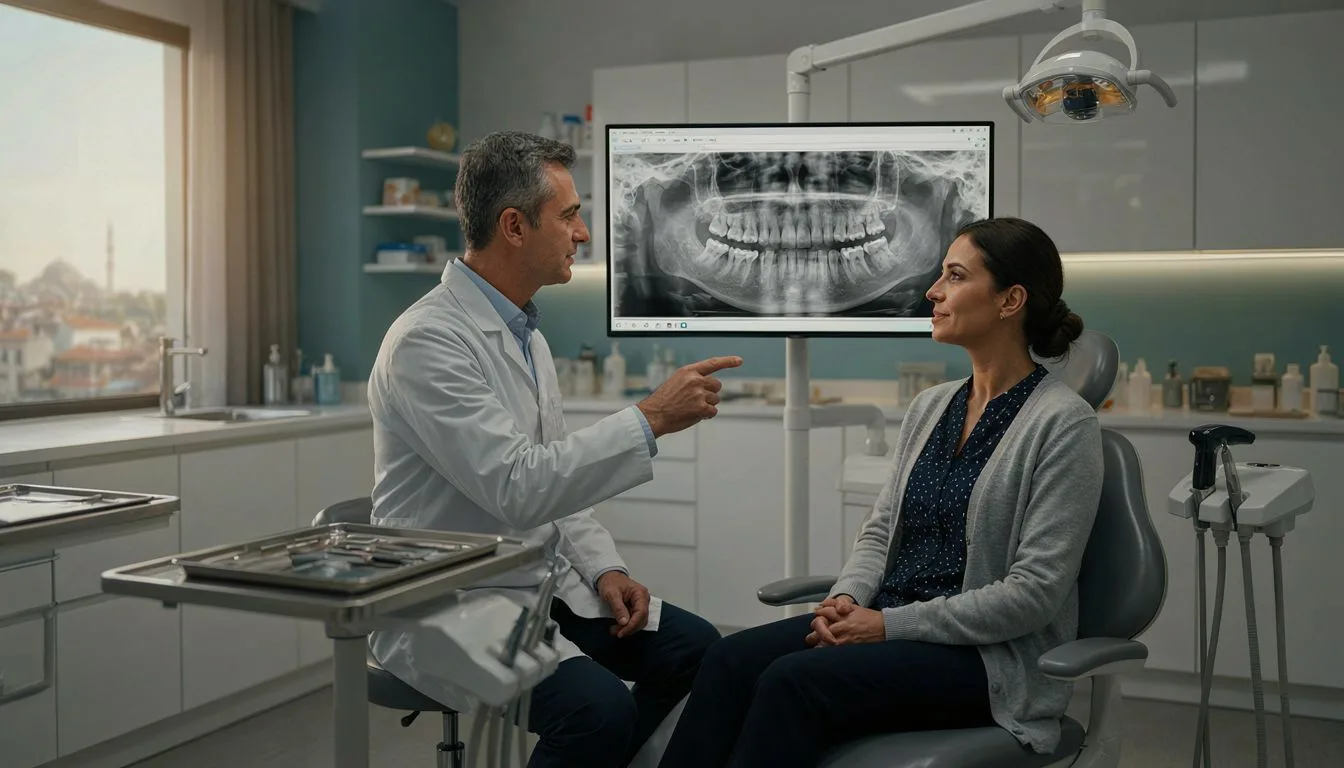
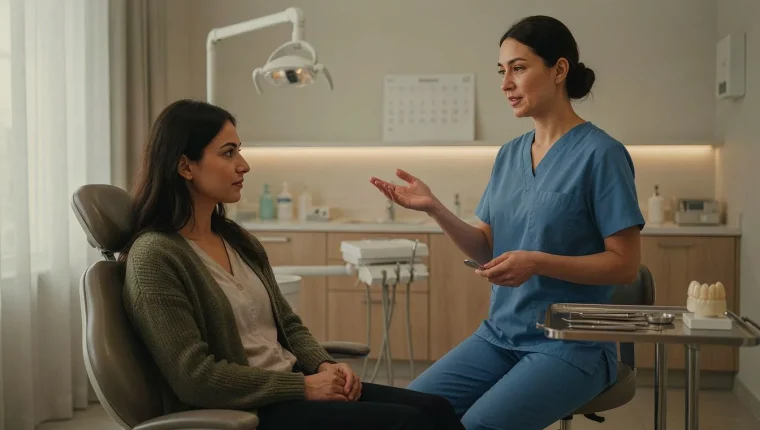
Most crown consultations in Turkey follow a recognizable rhythm, and knowing it helps you stay in control of the room. The visit usually opens with an intake conversation about your dental history, current discomfort, and what you expect from treatment. From there, the dentist moves to a visual and physical examination: the condition of the damaged or failing tooth, your bite alignment, gum health, and the state of neighboring teeth. Imaging comes next, typically a panoramic X-ray or a focused periapical view, and sometimes an intraoral scan if the clinic is digitally equipped. Only after that should a treatment proposal appear.
What matters is what the dentist actually inspects. A thorough exam checks whether the tooth can support a crown at all, whether the gums are healthy enough to hold it, and how the opposing teeth will meet once the crown is seated. If the dentist skips the bite check or never mentions the adjacent teeth, that is a gap worth noticing.
A diagnostic consultation produces a written plan in your language: tooth number, material options, number of visits, and what is included. A sales-driven one rushes you toward a decision, quotes a price before examining anything, and treats imaging as paperwork rather than evidence. If you feel hurried or steered, slow the conversation down and ask what the X-ray shows.
How to Verify Clinic Credentials and Dentist Expertise
In Turkey, dental clinics and dentists are regulated by the Ministry of Health, and legitimate practices hold a Ministry of Health authorization that can be requested and verified. Ask the clinic for its registration or health tourism license number, then confirm it through official channels rather than trusting a logo on a website. For the individual dentist, check the diploma and any specialty title through the relevant university or the Turkish Dental Association. Specialty certificates in prosthodontics or restorative dentistry carry more weight than general practice claims, so it is fair to ask where the dentist trained and when they qualified.
Reviews and before-after galleries deserve a critical eye. Look for consistent, detailed feedback over time rather than a burst of identical five-star comments. Ask how many crown cases the dentist handles monthly and whether you can see unedited images of work similar to yours. A clinic that answers these questions calmly is showing you its process, not just its marketing.
Watch for red flags: vague answers about qualifications, no verifiable license, or pressure to book and pay quickly. If a clinic avoids naming its dentist or cannot show proof of registration, treat that as a reason to slow down. A trustworthy provider will welcome your questions and give you time to decide.
Which Questions Reveal the Quality of Crown Materials
Material choices sit at the center of crown quality, and they deserve more than a passing mention during your consultation. The three main options you’ll encounter in Turkey are zirconia, e.max (lithium disilicate), and metal-ceramic. Zirconia offers exceptional strength and works well for back teeth; e.max delivers superior aesthetics and is often chosen for front teeth; metal-ceramic is the budget-friendly workhorse but shows a grey line at the gum over time. Ask your dentist which type they recommend for your specific tooth and why — the answer should reference your bite force, gum position, and aesthetic expectations, not just price.
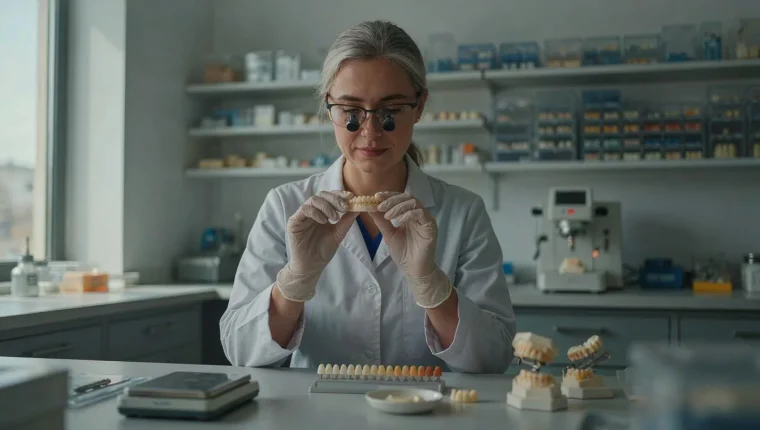
Beyond the material name, the dental lab matters enormously. Ask which lab fabricates the crown, whether it holds ISO or CE certification, and whether production happens in-house or is outsourced. A clinic that works with a certified, traceable lab can usually show you documentation. Request details on material origin and batch traceability — reputable manufacturers provide certificates for each batch of zirconia or ceramic blocks.
Shade matching is another quality signal. A good clinic will match your crown under natural light, not just fluorescent overheads, and will let you see the shade guide against your adjacent teeth. Finally, ask for written documentation of the exact material used for your crown. This record protects you if a problem arises later and helps any future dentist understand what’s in your mouth.
What to Ask About Treatment Timeline and Number of Visits

One of the most practical questions you can raise during a consultation is how many visits the crown process actually requires and how much total time you should plan to stay in Turkey. Most clinics follow one of two patterns: a two-trip protocol, where preparation and impressions happen on the first visit and the final fitting occurs on a second trip several weeks later, or a single extended stay that compresses everything into roughly one to two weeks. The two-trip protocol is common because it allows the dental lab to craft the crown while you are away, but it means factoring in two separate journeys.
Ask the dentist to walk you through the sequence step by step: when the tooth is prepared, when impressions or digital scans are taken, when a temporary crown is placed, and when the permanent crown is bonded. Understanding this order helps you match treatment stages to your available leave and travel budget.
Timelines can stretch for reasons worth anticipating. Healing between appointments, a lab remake if the fit is imperfect, or an unexpected complication can each add days. Ask directly what happens if the crown does not fit correctly on fitting day, whether a remake is included at no extra cost, and how much scheduling flexibility the clinic offers if your dates shift.
How to Clarify Pricing, Inclusions, and Hidden Costs
A headline price for a crown tells you very little on its own, because two clinics can quote the same figure and mean entirely different things. The most reliable way to compare offers is to ask for a written, itemized estimate that separates each component of treatment. A complete quote should spell out the initial examination, any X-rays or digital scans, the laboratory fabrication of the crown, the fitting appointment, and at least one follow-up check. If any of these items appear as separate line charges later, the original figure was never the real cost.
Certain treatments are frequently left out of package pricing, and you should ask about them by name. Extractions, bone grafting or sinus lifts, temporary crowns worn between visits, and additional revision appointments are the usual exclusions. A clinic that answers these questions openly is giving you a more honest picture than one that only repeats its lowest number.
Payment details deserve the same scrutiny. Confirm which currency the price is fixed in, whether exchange-rate movement can change what you owe, which payment methods are accepted, and how much deposit is required to reserve your dates. Ask directly what happens to that deposit if your travel plans change or treatment is cancelled, and request the refund terms in writing before you commit.
What Aftercare and Warranty Terms You Should Confirm
A crown that looks perfect on the day you leave can still develop problems months later, and that is exactly why aftercare terms deserve as much attention as the treatment itself. Ask how long the warranty lasts and what it actually covers. Most clinics distinguish between the crown itself and the underlying tooth, and coverage often excludes damage caused by accidents, poor hygiene, or untreated grinding. Get the warranty period and its exclusions in writing before you commit.
Then ask what happens if something goes wrong once you are home. Some clinics arrange for a local dentist to handle minor repairs and reimburse the cost; others require you to return to Turkey. Clarify the process for reporting a problem, including whether you send photographs, dental records, or the failed crown itself, and who pays for shipping. Ask directly whether replacement, repair, and any associated costs fall on the clinic or on you, and under which conditions. A clinic that answers these questions clearly and without hesitation is usually the one that stands behind its work.
Questions About Communication, Travel Support, and Follow-Up
A crown trip only works smoothly when the practical support around it is clear before you commit. Ask who will speak with you during treatment. Many clinics in Turkey employ English-speaking coordinators or provide interpreters, and translated consent forms should be available in writing, not explained verbally on the spot. If a clinic cannot show you a written translation, treat that as a warning sign rather than a minor detail.
Travel support matters just as much. Confirm whether airport transfer is included, how accommodation is arranged or recommended, and who schedules your appointments once you arrive. Ask for a direct emergency contact number and a realistic response time during your stay, including evenings and weekends.
After you fly home, the relationship should not end. Clarify which follow-up channels the clinic uses: email, scheduled video calls, or photo-based check-ins sent through a messaging app. Ask how quickly they typically reply and who reviews those messages. Warranty claims usually run through these same channels, so knowing them in advance saves confusion later.
FAQs
What should you ask during a dental crowns consultation in Turkey to confirm the clinics sterilization and material quality standards?
Ask which specific autoclave class and sterilization validation method the clinic uses, and request documentation such as sterilization cycle logs or spore test results. For materials, ask for the exact brand and origin of the crown (for example, Ivoclar, Vita, or 3M) plus the batch number and a manufacturer certificate of authenticity. Confirm whether the clinic uses a CAD/CAM system or an outside dental laboratory, and ask to see the material certificate before treatment begins.
How does the cost of dental crowns in Turkey compare with your home country once travel, accommodation, and follow-up visits are included?
Even after adding flights, hotels, and a follow-up visit, dental crowns in Turkey usually cost 50 to 70 percent less than in the United States, Canada, or Western Europe, where a single crown often runs $1,000 to $2,000. A Turkish clinic typically charges $150 to $400 per crown, so a full trip for several crowns can still undercut home-country prices, especially when multiple teeth are treated in one visit. The savings shrink if you need a return trip for adjustments or if complications require repair at home, since most domestic dentists will not warranty work performed abroad. For a single crown, the total cost including travel may end up close to local prices, so the financial advantage is strongest for patients needing three or more crowns.
Which legal protections and aftercare guarantees apply if a crown needs adjustment or replacement after you return home?
Most clinics provide a written warranty covering crowns for a set period, typically one to five years, and will repair or replace a defective crown at no charge if the problem stems from their workmanship. This guarantee usually requires you to attend follow-up visits and maintain good oral hygiene, and it may not cover damage from accidents, neglect, or treatment performed elsewhere. If you return home and need an adjustment, many providers offer remote support through photos or video calls and coordinate with a local dentist, though you may be responsible for the cost of the local visit. Always confirm the warranty terms, duration, and exclusions in writing before treatment, since policies vary widely between clinics and countries.