Choosing a dental veneers clinic in Turkey requires more than comparing prices or browsing before-and-after photos. Your result can depend on the dentist’s experience, the materials used, the clinic’s standards, and the care provided before and after treatment. A trustworthy clinic should explain which veneer type suits your teeth, assess your oral health, and present a realistic treatment plan without pressure. It should also clarify essential details, including laboratory work, appointment stages, costs, and follow-up support. If you are searching for the best dental veneers clinic Turkey has to offer, knowing what to check can help you avoid poor communication and disappointing results. This guide covers the key questions to ask, the credentials to verify, and the warning signs to watch for before booking.
What Qualifications Should a Turkish Veneers Clinic Have?

A properly qualified clinic should make its professional credentials easy to verify before you discuss treatment or travel arrangements. In Turkey, dental clinics must operate under the country’s healthcare regulations, and the treating dentist should hold a valid licence to practise dentistry. Ask for the dentist’s full name, professional registration details, and the clinic’s legal name so you can check whether the information is consistent across official and independent sources.
Pay close attention to the clinic’s infection control and sterilisation protocols. The practice should use documented procedures for instrument sterilisation, surface disinfection, personal protective equipment, and clinical waste disposal. It should also have suitable diagnostic equipment, such as digital X-rays or 3D imaging when clinically necessary, rather than recommending veneers from photographs alone.
Qualifications should extend beyond the dentist’s basic licence. Look for relevant postgraduate education, continuing professional development, and experience in restorative or cosmetic dentistry. A reputable clinic should explain who will examine you, design your smile, prepare the teeth, and fit the veneers. If different clinicians are involved, their responsibilities should be clear.
The clinic should also provide a written treatment plan based on an in-person assessment, including alternatives, possible risks, aftercare, and the qualifications of the laboratory technicians producing the restorations. Be cautious if staff avoid clinical questions, guarantee a perfect result, or pressure you to make a quick payment before a qualified dentist has evaluated your teeth and gums.
How to Assess Dentist Experience and Treatment Quality
A dentist’s experience becomes meaningful when it is supported by consistent, verifiable results. Look for a clinician who regularly performs veneers rather than one who offers them only occasionally. Their experience should include smile design, tooth preparation, bite assessment, and the management of complications such as sensitivity, debonding, or uneven margins.
Ask whether the dentist can show documented before-and-after cases that resemble your situation. Photos should be clear, taken from comparable angles, and represent the dentist’s own patients. Pay attention to natural tooth proportions, gum symmetry, shade selection, and how the veneers look when the patient smiles naturally—not only in heavily edited images.
A high-quality consultation should involve a detailed examination before any treatment is recommended. The dentist should assess enamel thickness, existing fillings, gum health, tooth alignment, occlusion, and habits such as grinding. They should also explain whether veneers are appropriate or whether orthodontic, restorative, or preventive care should come first. Be cautious if treatment is proposed without reviewing X-rays or discussing your bite.
Communication is another practical measure of quality. A reliable dentist should explain the proposed design, preparation limits, temporary stage, laboratory process, expected lifespan, and maintenance requirements in clear language. You should also be able to ask how adjustments are handled after fitting and who will provide follow-up care if you return home. This level of transparency helps distinguish genuine clinical experience from attractive marketing claims.
Which Veneer Materials and Techniques Are Available?
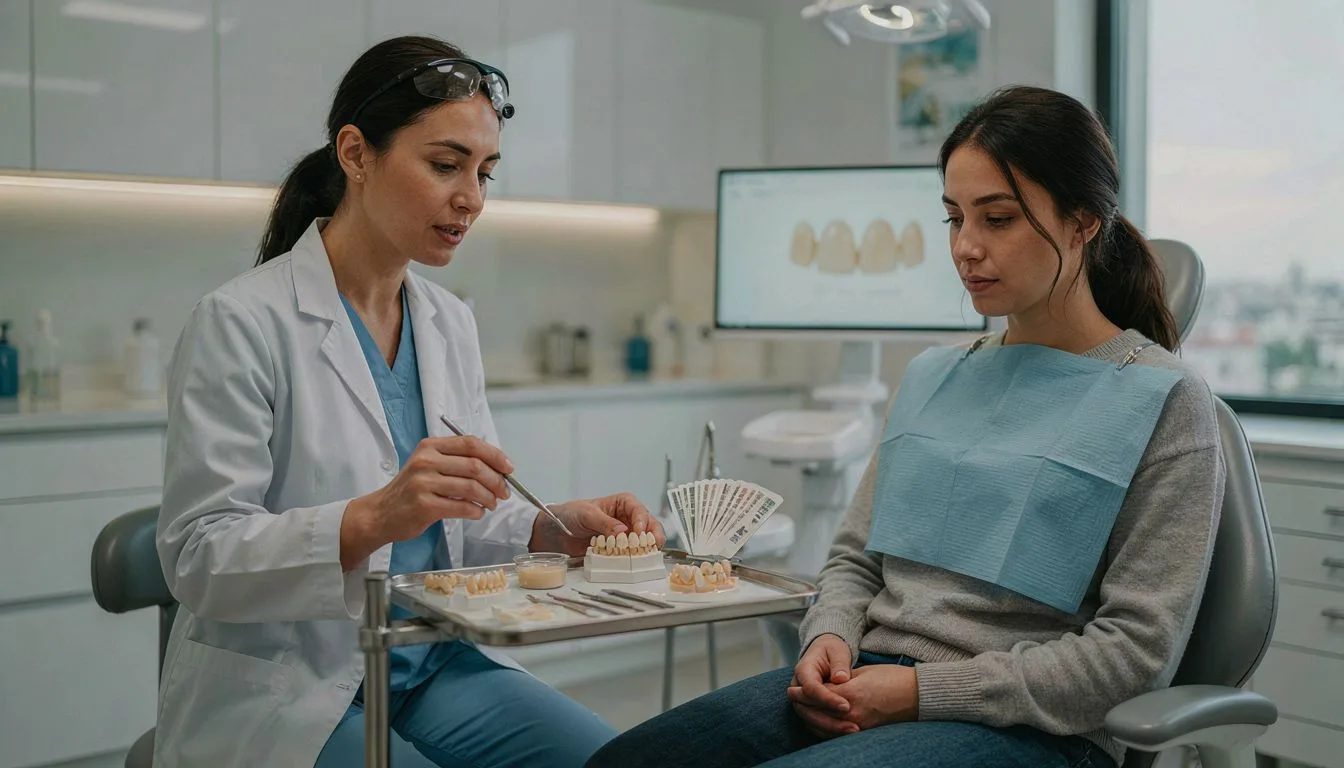
Veneers differ in appearance, durability, preparation requirements, and repairability, so the right choice depends on your enamel condition, bite, cosmetic goals, and long-term expectations. A reputable clinic should explain why a particular option suits your teeth rather than presenting one material as the solution for everyone. The proposed design should also be assessed digitally or with trial restorations before treatment begins. Understanding the available materials and techniques can help you compare their benefits, limitations, maintenance needs, and suitability for your individual smile.
- Porcelain veneers: These offer a highly natural appearance, strong stain resistance, and good long-term durability when bonded to healthy tooth structure. They usually require careful preparation and are difficult to repair once fractured.
- Composite veneers: A dentist applies tooth-coloured resin directly to the teeth, often completing treatment in fewer visits. They can be more affordable and easier to modify, but they may stain, chip, or require polishing sooner than porcelain.
- Minimal-prep or no-prep veneers: These techniques preserve more enamel in suitable cases, although they are not appropriate for every tooth position, alignment, or bite. Adding material without adequate space can create an overly bulky result.
- Digital smile design and mock-ups: Digital planning and temporary previews help patients evaluate tooth length, shape, symmetry, and facial proportion before final fabrication. The dentist should still verify the plan clinically rather than relying on software alone.
Conservative enamel preservation is one of the most important technical considerations because veneers bond most predictably to enamel. Ask whether preparation is necessary, how much tooth structure would be removed, and what happens if a veneer needs replacement. The laboratory’s communication with the dentist also affects shade matching, fit, and the consistency of the final smile.
The final decision should therefore consider both the immediate cosmetic result and the long-term health of the teeth. A detailed consultation can clarify whether porcelain, composite, minimal-prep, or no-prep treatment is appropriate, while digital smile design and mock-ups can help confirm the proposed appearance before the final restorations are made.
How Can You Compare Clinic Safety, Costs, and Patient Support?
Comparing clinics requires looking beyond the advertised veneer price. Safety, treatment planning, and aftercare should be assessed together because a low quote may exclude essential consultations, temporary restorations, X-rays, or follow-up appointments. Ask each clinic for a written treatment plan that explains the proposed materials, number of veneers, preparation method, laboratory involvement, and all included services.
Patient safety should remain the first comparison point. Confirm who will perform the treatment, whether diagnostic records are taken before preparation, and how the clinic manages complications such as sensitivity, fracture, or an ill-fitting veneer. A reliable provider should explain risks clearly and offer realistic expectations rather than promising a guaranteed smile.
When reviewing costs, compare like-for-like packages instead of headline prices. Check whether accommodation, airport transfers, medication, temporary veneers, final adjustments, and emergency support are included. You should also ask about refund policies and the cost of replacing or repairing a veneer after returning home.
Structured aftercare is one of the clearest signs of dependable patient support. The clinic should provide written maintenance instructions, a named contact person, and a practical plan for remote assistance or local referral if a problem develops after your journey. Before choosing, compare response times, communication options, and whether the dentist remains available after treatment, not just during the initial consultation.
What Should You Check Before Booking the Best Dental Veneers Clinic Turkey?
Before committing to a clinic, ask for a clear treatment plan that explains why veneers are suitable for your teeth and what alternatives were considered. A responsible dentist should examine your gums, bite, enamel, existing fillings, and overall oral health before recommending cosmetic treatment. Veneers should not be used to disguise untreated decay, active gum disease, or significant bite problems.
Request a written quotation that matches the proposed treatment. It should state the number of veneers, material, laboratory involvement, temporary restorations, included appointments, and any additional charges. Confirm whether the final price covers adjustments, fitting, and follow-up care rather than relying on a promotional package alone.
Ask how the clinic manages communication if you return home soon after treatment. You should know who to contact if a veneer feels uncomfortable, becomes damaged, or affects your bite. Clarify the clinic’s repair or replacement policy, particularly for issues related to fitting or laboratory defects.
Before booking, verify the dentist’s registration, review the consent documents, and ensure you will approve the planned shape and shade before permanent bonding. Most importantly, confirm that the clinic follows a documented informed consent process, including a discussion of risks such as sensitivity, chipping, replacement needs, and the irreversible removal of enamel when preparation is required.
FAQs
What should I look for when choosing the best dental veneers clinic Turkey?
Look for a clinic with qualified, experienced dentists, verified patient reviews, and clear evidence of accreditation and infection-control standards. Confirm that it uses high-quality veneer materials, provides a detailed treatment plan and transparent pricing, and includes proper consultations, aftercare, and follow-up support. Ask to see genuine before-and-after cases and ensure the dentist evaluates your oral health before recommending veneers.
How can I verify a Turkish veneers clinic’s dentists, credentials, and patient reviews?
Verify each dentist through Turkey’s official Ministry of Health or relevant professional registry, and confirm their dental degree, specialist training, license status, and experience with veneers. Check that the clinic has valid authorization, clear treatment plans, transparent pricing, and appropriate sterilization standards. Assess reviews across independent platforms, focusing on detailed, recent feedback and consistent comments about results, communication, aftercare, and complications rather than relying solely on testimonials published by the clinic.
What should a veneers clinic in Turkey include in its treatment quote?
A veneers clinic in Turkey should provide an itemised quote covering consultation, dental examinations, imaging, treatment planning, preparation, temporary and permanent veneers, laboratory fees, fitting, and follow-up care. It should also state the veneer material and brand, number of teeth treated, total price and currency, payment terms, estimated treatment timeline, and any excluded costs such as accommodation, travel, or corrective work.