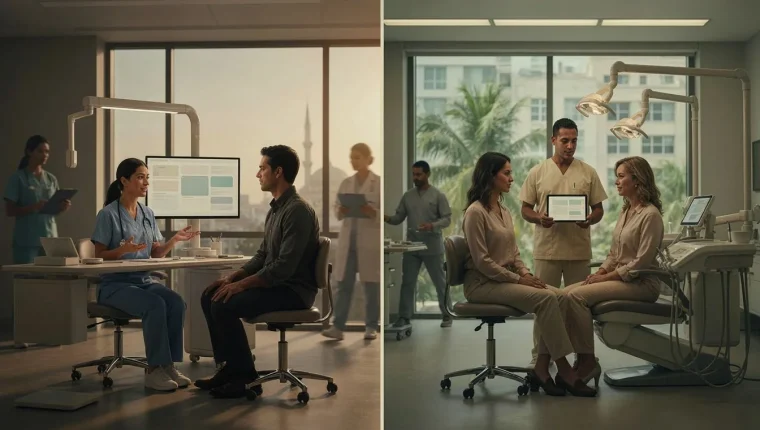
For many Americans, dental implants in Turkey may offer a practical alternative to treatment in the United States. However, the decision should be based on overall value rather than price alone. Treatment quality, the complexity of your case, provider credentials, communication, travel arrangements, and access to follow-up care all matter. This guide covers key questions before choosing treatment abroad, but suitability depends on your individual dental needs. A proper examination and an independent review of the proposed plan are essential before making a commitment. By comparing the full experience—not just the advertised cost—you can decide whether Turkey is the right option for you.
Why Americans Consider Dental Implants in Turkey
Americans often explore treatment abroad because implant care can be difficult to schedule at home. Long wait times, limited appointment availability, or the need to coordinate several procedures may make an international clinic seem more accessible. Turkey also appeals to patients who want to combine planned dental care with travel, provided their health, timeline, and recovery needs make that realistic.
Access is not the same as suitability. Implant treatment may involve examinations, extractions, bone grafting, implant placement, healing, and the final restoration, so patients must understand how many visits are required and whether the proposed schedule is clinically appropriate. Those with complex medical conditions, significant bone loss, smoking habits, or limited flexibility for return visits may find cross-border care harder to manage.
Another important consideration is communication. Patients should be able to discuss treatment alternatives, expected healing, medications, and warning signs clearly with the dental team. The central issue is continuity of care: before choosing treatment in Turkey, Americans should consider who will manage complications or adjustments after they return home. Travel convenience and potential value can be meaningful advantages, but they should support a carefully evaluated treatment plan rather than replace one.
How Much Can Dental Implants Turkey for Americans Cost?
Quoted prices for dental implants in Turkey can look straightforward, but the headline figure may cover only part of the treatment. Ask whether the estimate includes the implant fixture, abutment, crown, clinical examinations, three-dimensional imaging, temporary teeth, and prescribed medication. Some packages cover airport transfers or accommodation, while others price these services separately.
The condition of your jaw also affects the budget. Bone grafting, sinus lifting, extractions, treatment for gum disease, and sedation can add substantial costs. Confirm whether the quoted restoration is permanent and which materials and laboratory processes are being used. A low price may reflect a simpler treatment plan rather than an equivalent alternative to care in the United States.
Build your comparison around the total estimated expenditure: treatment, flights, accommodation, meals, local transport, time away from work, and a contingency reserve. Convert every quote using a realistic exchange rate and ask how long the price remains valid. You should also request written estimates for additional visits, unexpected complications, replacement components, or revision treatment, since these expenses may arise after the initial appointment.
Before paying a deposit, obtain a stage-by-stage plan showing what is due before surgery, during the visit, and when the final teeth are fitted. Compare that complete figure with a U.S. dentist’s estimate based on the same number of implants, procedures, materials, and restoration type—not with a simplified advertised price.
What Quality and Safety Standards Should You Expect?
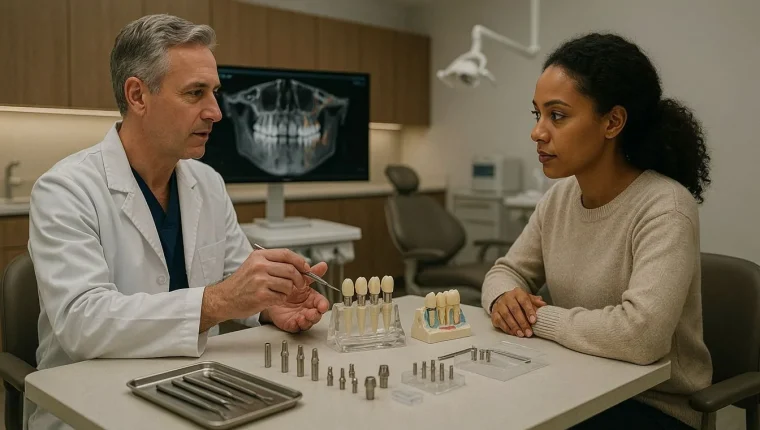
Quality and safety begin with evidence-based diagnosis, not a promotional treatment package. Before accepting a plan, ask whether the clinic will provide recent X-rays or 3D scans, explain bone volume and gum health, and show how implant positions, prosthetic design, and any required grafting were determined. A qualified dentist should also discuss alternatives, expected healing time, possible complications, and the materials being used.
Verify the treating dentist’s licensing and relevant implant training, along with the clinic’s registration and professional oversight. Ask which implant system is recommended, whether it is supported internationally, and how the manufacturer’s components can be identified later. Material traceability matters because implant brand, model, and batch information should be recorded in your treatment file and supplied to you after placement.
Hygiene standards should be clear and observable. The clinic should use validated sterilization procedures, sealed or properly disinfected instruments, appropriate protective equipment, and documented infection-control protocols. Diagnostic equipment should be maintained and used by trained staff rather than presented merely as a marketing feature.
Be cautious with unsupported “international accreditation,” perfect-result guarantees, or testimonials that replace clinical details. Informed consent should be available in English and explain fees, risks, follow-up expectations, and what happens if an implant fails or an infection develops. Before treatment, ask who handles urgent complications, how records are released, and whether the proposed plan is based on your individual examination rather than a standardized package.
How to Choose a Reliable Turkish Dental Clinic
A reliable clinic should be evaluated through verifiable evidence, not polished social media content or a low initial quote. Start by checking the dentist’s qualifications, registration, implant-specific experience, and training in any procedures your plan may require. Ask how often the clinician performs comparable cases and whether the consultation will be handled by the treating dentist rather than only a coordinator.
Request a written treatment plan based on current diagnostic records. It should identify the proposed procedures, implant and abutment brands, expected timeline, anesthesia arrangements, and what the quoted fee includes or excludes. Clear documentation makes it easier to compare clinics and identify vague promises, unexplained upgrades, or treatment that has been added without a clinical rationale.
During consultations, ask practical questions about communication and patient support. Confirm whether records and imaging will be provided in English, whether an interpreter is available, and who will answer questions after you return home. Independent patient feedback can add useful context, but assess detailed reviews more carefully than testimonials containing only photographs or discount claims.
Also compare how each clinic responds to uncertainty. A trustworthy provider should explain alternative treatments, limitations, and the reasons for recommending a particular sequence. Look for transparent treatment planning: a clear explanation of findings, proposed care, expected outcomes, and possible changes if the clinical situation differs from the initial assessment. Facility details, sterilization information, and equipment should be easy to verify rather than presented as marketing slogans.
What Travel, Follow-Up Care, and Legal Risks Should You Plan For?
Implant travel requires a schedule built around clinical milestones, not a short holiday. Allow time for examinations, surgery, recovery, and any staged procedures, and avoid booking a return flight immediately after treatment. Healing can affect comfort, eating, and your ability to travel, so your dentist should explain realistic restrictions before you commit.
Before leaving Turkey, obtain copies of imaging, treatment notes, implant details, prescriptions, and laboratory records. Confirm who will answer questions remotely, whether the clinic can coordinate with a dentist near your home, and how revisions or warranty claims are handled if a problem develops. These arrangements are especially important when follow-up cannot be completed in person.
Cross-border accountability can be limited. U.S. dental insurance may exclude treatment abroad, complications, or corrective work, while malpractice rules and complaint procedures depend on the country where care occurred. Read consent forms, warranty terms, cancellation policies, and dispute-resolution clauses carefully. Ask what happens if healing is delayed, an implant fails, or additional appointments become necessary after you return home.
FAQs
Are dental implants Turkey for Americans more affordable than treatment in the United States?
Yes, dental implants in Turkey are often more affordable for Americans than comparable treatment in the United States, even after factoring in travel costs. Prices vary by clinic, implant system, procedure complexity, and the number of implants required, so patients should compare complete treatment plans, credentials, materials, and aftercare rather than focusing on price alone.
How safe and reliable are dental implant clinics in Turkey for American patients?
Many dental implant clinics in Turkey serve international patients and use qualified dentists, modern equipment, and internationally recognized implant brands. Safety and reliability vary by clinic, so American patients should verify the dentist’s credentials, clinic accreditation, sterilization protocols, implant brand, treatment plan, and total costs before booking. They should also confirm follow-up arrangements and understand that U.S. providers may not manage complications from overseas treatment.
What travel, follow-up, and warranty issues should Americans consider before choosing dental implants in Turkey?
Americans should factor in international travel costs, recovery time, and the possibility of needing multiple visits for examinations, implant placement, and restoration. Confirm who will provide follow-up care after returning home, how complications will be handled, and whether the clinic’s warranty covers only the implant, the prosthetic tooth, or related treatment and travel expenses. Verify the dentist’s credentials, implant brand, written warranty terms, and total costs before treatment.