Choosing between All-on-4 implants and a single tooth implant starts with one practical question: how much of the smile needs to be restored? A single implant replaces one missing tooth, while an All-on-4 restoration is designed to support a complete row of replacement teeth on one dental arch. That difference affects more than appearance. Your remaining teeth, gum and jawbone health, bite, treatment goals, budget, and willingness to maintain the restoration influence which approach may suit you. Someone with one failing or missing tooth may need a focused replacement, while extensive tooth loss may require a broader solution. The comparison should consider clinical suitability, treatment demands, recovery, long-term maintenance, and overall value, not just the initial price or the number of implants used.
All-on-4 Implants vs Single Tooth Implant: Key Differences
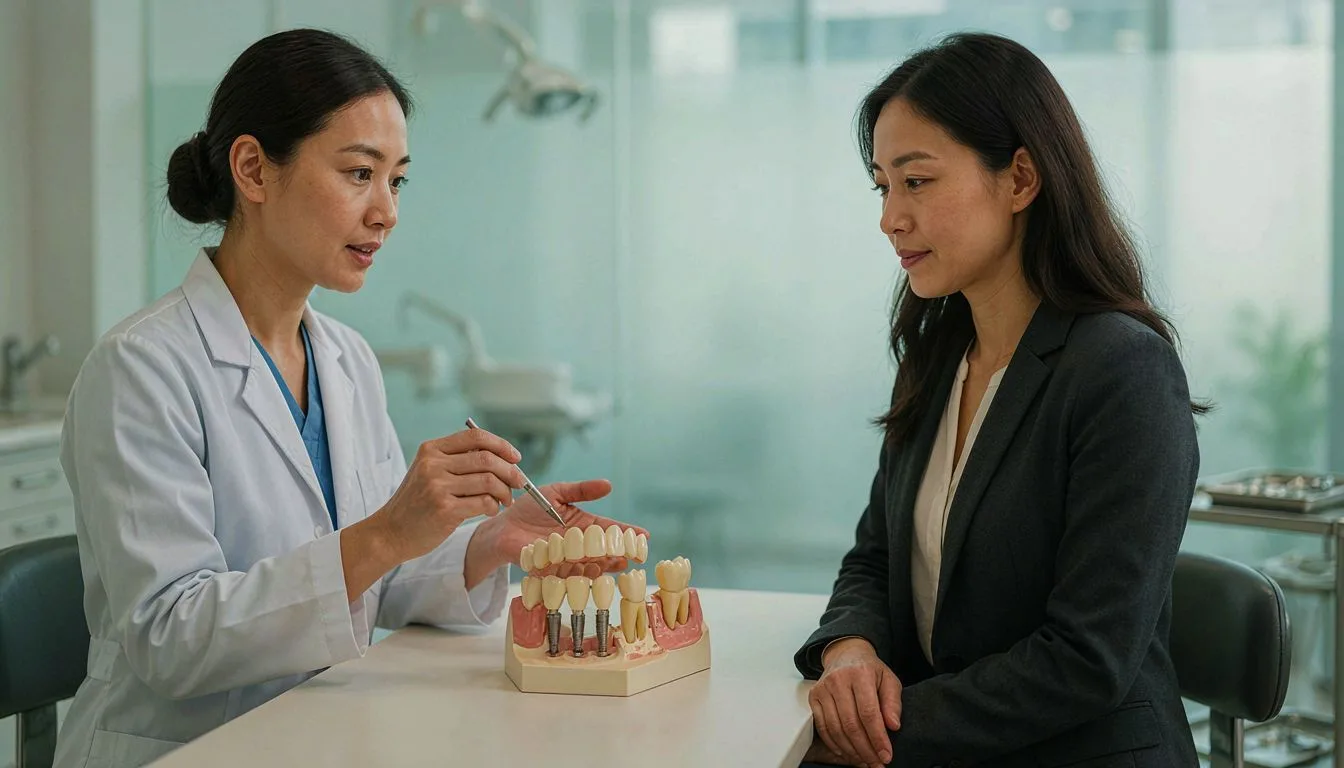
The main difference is the scope of tooth replacement. An All-on-4 restoration is designed to replace an entire arch of missing or failing teeth with one fixed prosthesis supported by four strategically placed implants. A single tooth implant, by contrast, replaces one missing tooth with an individual implant, abutment, and crown.
| Feature | All-on-4 Implants | Single Tooth Implant |
|---|---|---|
| Treatment scope | Replaces most or all teeth in one dental arch | Replaces one missing tooth |
| Restoration design | One fixed full-arch prosthesis | One individual crown |
| Implant support | Four implants support the arch restoration | One implant supports the replacement tooth |
| Effect on remaining teeth | May replace teeth that are extensively damaged or non-restorable | Preserves neighboring teeth without preparing them for a bridge |
| Daily function | Restores function across a full arch | Restores function in one specific area |
Because the implant fixtures are placed within the jaw, both approaches can provide more stable support than a removable denture. The restoration design, however, affects how chewing forces are distributed and how the teeth appear as a group or individually.
A further distinction is preservation. Replacing one tooth can protect the adjacent teeth from unnecessary alteration, while a full-arch solution can address widespread tooth loss and support a coordinated smile design. The appropriate comparison therefore depends first on whether the problem is isolated or involves an entire arch, followed by the condition of the remaining teeth and supporting bone.
Who Is a Candidate for Each Implant Option?
Candidacy begins with the pattern of tooth loss, not personal preference. A single tooth implant may suit someone who has one missing tooth while the neighboring teeth and surrounding tissues remain healthy. It can also be considered when several teeth are missing but each site can be treated independently. By contrast, All-on-4 implants are generally evaluated for people who have lost most or all teeth in one arch, or whose remaining teeth have a poor long-term outlook and may need removal.
Bone and gum health are central to the assessment. The implant sites must provide adequate support, and active gum disease, untreated decay, or infection usually needs attention before implant treatment can proceed. Bone loss does not automatically rule out either option, but it may affect the recommended approach and require additional planning.
General health, healing capacity, oral hygiene, and habits such as smoking also influence suitability. A patient who can maintain regular professional care and daily cleaning may be better positioned for a fixed full-arch restoration, while someone seeking to preserve healthy neighboring teeth may favor individual replacement. Because these findings can change the apparent choice, a clinical examination and three-dimensional imaging are essential before deciding between treatment pathways.
Comparing Treatment Procedures and Timelines
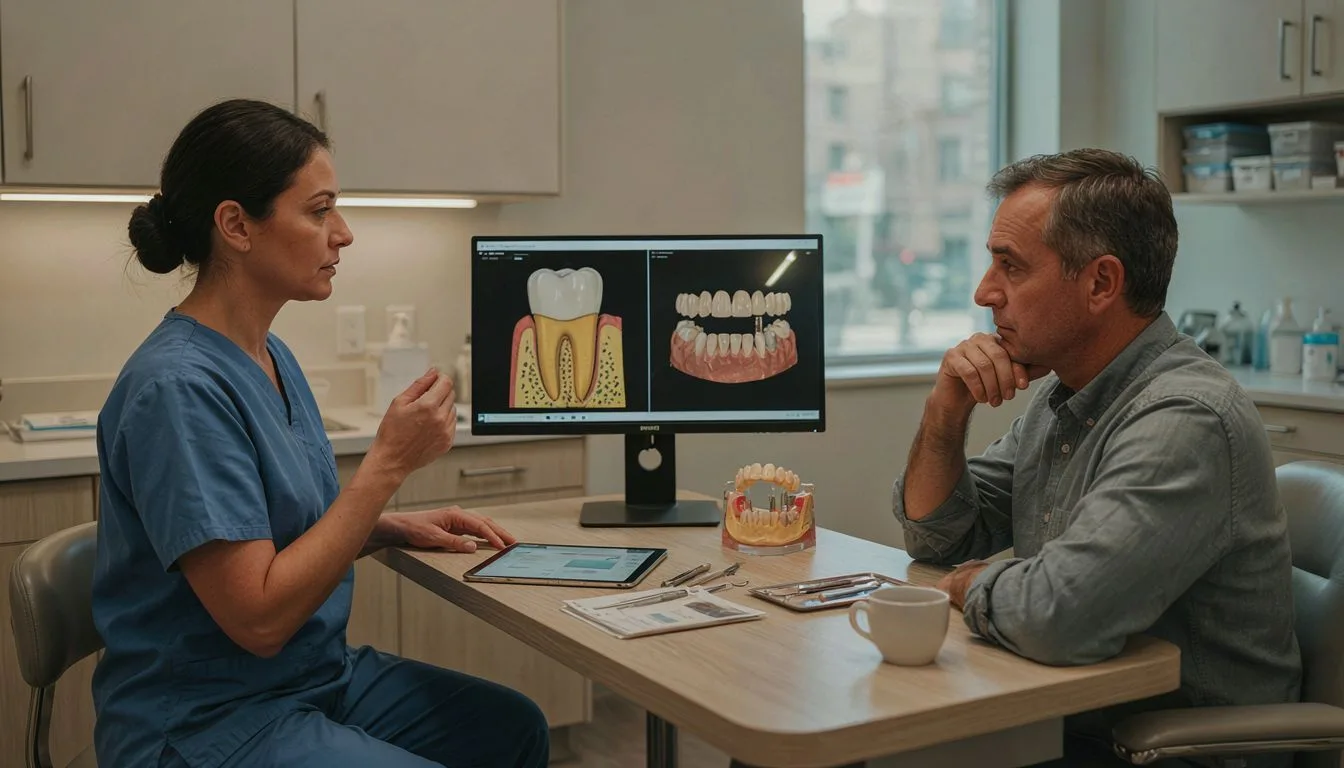
The treatment pathway begins with a clinical examination, digital imaging, and a discussion of the desired result. For a single tooth implant, planning usually focuses on the condition of the neighboring teeth, available bone, and the space for one crown. All-on-4 treatment requires broader full-arch planning, including the position of the remaining teeth, bite, gum health, and the design of a complete fixed restoration.
With a single tooth implant, the dentist typically places one implant after any necessary tooth removal or bone preparation. After healing and integration, an abutment and permanent crown are fitted. The process may take several months, although some patients can receive a temporary tooth during healing. The final schedule depends on bone quality, infection, and whether additional procedures are needed.
All-on-4 treatment commonly involves removing failing teeth, placing four strategically positioned implants, and attaching a provisional full-arch bridge. This temporary restoration can provide function while the implants heal. Once integration is confirmed and the tissues are stable, the provisional bridge is replaced with the definitive arch. Because the procedure covers an entire arch, adjustments to the bite and restoration design may require additional appointments.
Healing and implant integration are the main timeline variables for both options. Bone grafting, gum treatment, smoking, medical conditions, or unexpected healing changes can extend treatment. A dentist can provide a more reliable estimate only after assessing the mouth and identifying which preparatory steps are necessary.
Costs, Maintenance, and Long-Term Durability
The financial comparison goes beyond the initial quote. Replacing one missing tooth usually involves one implant, an abutment, and a crown, while a full-arch restoration involves several implants, a connected prosthesis, and more components. As a result, the starting investment and the potential repair costs are structured differently.
| Consideration | All-on-4 Implants | Single Tooth Implant |
|---|---|---|
| Initial cost structure | Several implants and a full-arch prosthesis make it a broader treatment investment. | Costs are focused on one implant, abutment, and crown. |
| Daily maintenance | Requires careful cleaning beneath and around the full-arch restoration. | Can usually be cleaned much like an individual natural tooth, with attention to the gumline. |
| Follow-up care | Regular professional reviews help assess the implants, prosthesis, and supporting tissues. | Reviews focus on the implant, crown, surrounding gums, and bite. |
| Repair considerations | A prosthetic repair or replacement may affect the wider restoration. | A damaged crown or component is generally limited to the treated tooth. |
| Long-term durability | Durability depends on implant health, prosthesis materials, cleaning, and professional care. | Durability depends on implant integration, gum health, bite forces, crown condition, and maintenance. |
Preventive maintenance is central to long-term value for both options. Home cleaning, routine examinations, and professional hygiene visits can help identify inflammation, wear, loose components, or prosthetic damage before problems become more extensive. The most suitable choice therefore depends not only on the starting fee, but also on the restoration’s care demands, possible future repairs, and the patient’s ability to maintain regular follow-up.
Which Implant Solution Fits Your Dental Needs?
The extent of tooth loss is the first filter when choosing between implant solutions. A single missing tooth may be addressed with an individual implant and crown, while widespread tooth loss may require a full-arch approach. Your dentist will also assess the condition of the gums, remaining teeth, jawbone, bite, and overall oral health before recommending a treatment direction.
Next, consider what matters most to you: a natural-looking result, chewing comfort, treatment complexity, budget, maintenance needs, or preserving future options. A consultation should clarify how each choice fits your daily routine and long-term expectations. The most suitable plan is based on individualized treatment planning, combining clinical findings with your goals rather than selecting an option by price or convenience alone.
FAQs
How do All-on-4 Implants vs Single Tooth Implant differ in cost and treatment time?
All-on-4 implants usually cost more overall because they replace an entire arch and require multiple implants, a customized prosthesis, and often preparatory procedures. A single-tooth implant typically costs less and can be completed in fewer visits, while All-on-4 treatment may take several months, especially when healing and the final prosthesis are included.
Which option is better for replacing one missing tooth: an All-on-4 restoration or a single tooth implant?
A single tooth implant is generally the better option for replacing one missing tooth because it restores the individual tooth without altering healthy neighboring teeth. All-on-4 is designed to replace an entire arch of missing or failing teeth, so it is usually unnecessary for a single-tooth replacement.
How do maintenance and long-term durability compare between All-on-4 Implants and single tooth implants?
Single tooth implants generally require simpler maintenance, as each implant can be cleaned and monitored independently, and they often offer excellent long-term durability with proper care. All-on-4 implants can also last many years, but the full-arch prosthesis may need periodic repairs, adjustments, or replacement, while the implants themselves remain stable. Regular professional cleanings, daily oral hygiene, and avoiding smoking are essential for both options.