When the jaw has too little healthy bone, dental implants with bone graft treatment may still be possible. A bone graft can rebuild or strengthen the area to better support an implant, but the procedures are not always performed at the same time. The decision depends on the amount and condition of the available bone, the implant’s ability to achieve initial stability, and the findings from a clinical examination and imaging. In some cases, the graft and implant can be coordinated during one treatment phase. In others, the graft must heal before implant placement is safe and predictable. Understanding this timing helps you set realistic expectations, compare treatment options, and make a more informed decision with your dental implant specialist.
Can Dental Implants Be Placed With a Bone Graft?
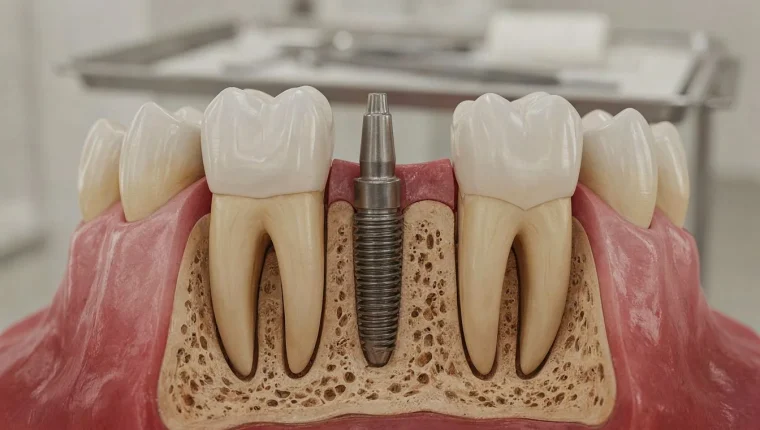
Yes, dental implants and a bone graft can sometimes be placed during the same surgery. This approach is most realistic when the area has enough existing bone to hold the implant firmly while the graft repairs a limited defect around it. The implant must remain stable from the start, because early movement can interfere with the bone’s attachment to its surface.
The key consideration is primary stability. If the surgeon can achieve reliable support in the remaining natural bone, simultaneous grafting may be possible. The graft can then fill a contained gap, improve the contour of the ridge, or provide additional support around the implant without requiring a separate operation.
Immediate placement is not suitable for every patient. A larger deficiency, poor bone quality, an unstable implant position, or a defect that cannot be contained may make staged treatment safer. In that situation, the bone is rebuilt first, allowed to mature, and assessed before implant placement is planned. The decision depends on three-dimensional imaging, the location of the missing tooth, the amount and quality of available bone, and the clinician’s ability to secure the implant without excessive pressure.
Therefore, combining both treatments is a realistic option, but it is not determined by tooth loss alone. A surgical assessment must confirm that the implant can remain stable while the graft heals.
When Is Bone Grafting Needed Before Implant Surgery?

Bone grafting is considered when the jaw does not contain enough healthy bone to support an implant securely. This commonly occurs after tooth loss because the surrounding bone gradually resorbs when it no longer receives stimulation from a tooth root. A long-standing missing tooth, advanced gum disease, trauma, or removal of a cyst may therefore leave the ridge too narrow or too short for reliable implant support.
Grafting may also be needed because of the jaw’s natural anatomy. In the upper back jaw, the sinus can limit the available bone height, while in the lower jaw, important nerves may restrict implant positioning. These factors do not automatically prevent treatment, but they may mean that the bone must be rebuilt or that the implant position must be carefully modified.
The decision is based on a clinical examination and detailed imaging, usually including three-dimensional CBCT scanning. The dentist or oral surgeon assesses bone height, width, density, nearby nerves, sinus position, bite forces, and gum health. Adequate bone volume is essential for initial implant stability and long-term integration. If the deficiency is limited, grafting may be considered during implant treatment; if the defect is larger or the site is compromised, rebuilding the area first may provide a more predictable foundation.
What Happens During Combined Implant and Grafting Treatment?

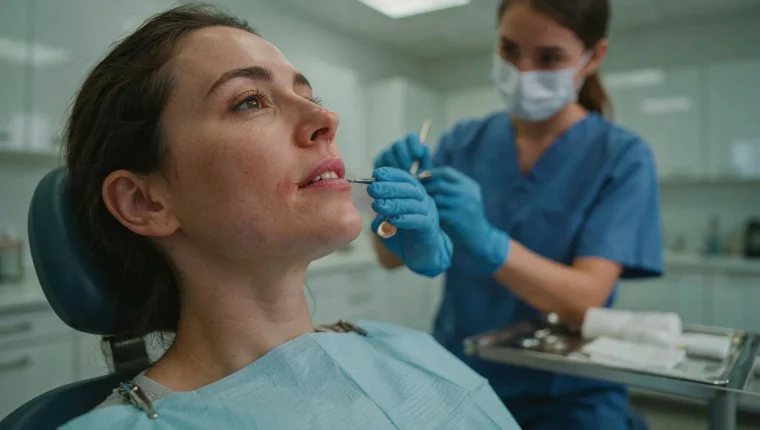
Combined implant and grafting treatment begins with detailed planning rather than surgery itself. The dentist or oral surgeon reviews dental imaging, examines the planned implant site, and confirms whether the available bone can provide enough support for the implant. This assessment also helps determine the graft material, implant position, and whether both procedures can be safely completed during one appointment.
On the day of surgery, local anesthesia is used to numb the area; sedation may also be discussed when appropriate. The gum is gently opened to expose the treatment site. Any unhealthy tissue is removed, and the area is prepared so the graft can contact clean, healthy bone. The implant is then inserted into the planned position when the site can provide sufficient immediate support.
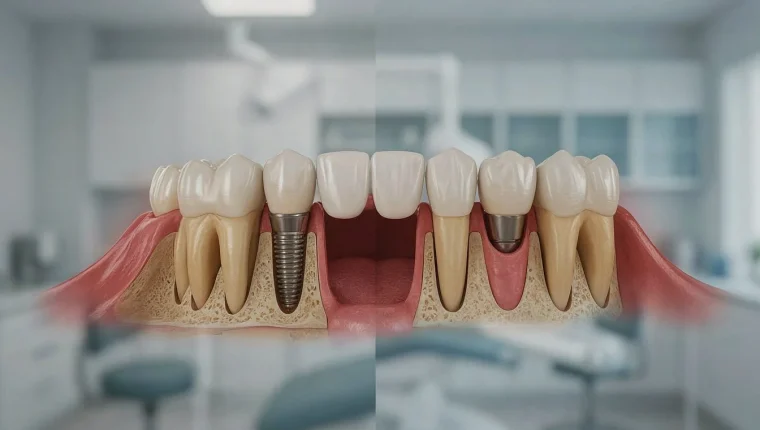
The graft material is placed around areas where additional bone volume is needed. Depending on the size and shape of the defect, a protective membrane may be used to help contain the material and support healing. The gum is repositioned and closed with sutures, leaving the surgical site protected while the graft and surrounding bone begin to repair.
The key consideration during this sequence is primary stability. If the implant is firmly secured at placement, grafting may be completed at the same time. If it cannot be stabilized adequately, the surgeon may graft the area first and delay implant placement until the site has matured. Instructions after surgery commonly include protecting the area, following prescribed care, and attending review appointments.
How Long Does Healing Take After the Procedure?
Healing occurs in stages, and the gums often recover before the graft and implant are fully ready. Swelling and tenderness usually improve during the first several days, while the soft tissues continue settling over the following weeks. This early recovery does not mean the deeper bone has finished healing.
The graft must integrate with the surrounding jawbone, and the implant must develop a stable connection through osseointegration. Depending on the amount and location of grafting, as well as the implant’s stability at placement, this process may take several months. Some patients can proceed to the next restorative stage sooner, while others need additional healing time before the implant is uncovered or fitted with a permanent crown.
Clinical and radiographic review determines when treatment can safely continue. The dentist or oral surgeon evaluates symptoms, gum healing, implant stability, and imaging findings rather than relying on a fixed calendar date. Keeping follow-up appointments and avoiding pressure on the healing area help protect the developing bone and support predictable progress.
What Affects the Success of Dental Implants With Bone Graft?
Success depends first on how well the graft becomes integrated with the surrounding jawbone. The quality and quantity of available bone, implant position, and the stability achieved during placement all influence the biological foundation of treatment. Careful surgical planning helps the clinician select an appropriate grafting approach and place the implant where it can function effectively.
Graft integration also depends on healthy healing conditions. Smoking, uncontrolled medical conditions, poor nutrition, and certain medications may interfere with bone healing and should be discussed before surgery. Good oral hygiene is equally important because infection around the graft or implant can compromise the result.
After treatment, following care instructions and attending scheduled reviews help identify problems early. Long-term success also requires regular dental maintenance, professional cleaning, and protection from excessive biting forces, particularly in patients who grind their teeth. These measures support stable implant function after the graft has healed.
FAQs
Can dental implants with bone graft be placed during the same procedure?
Yes, dental implants and bone grafting can often be performed during the same procedure when the graft provides enough stability for immediate implant placement. This approach may shorten treatment time, but it depends on the amount and quality of available bone, the type of graft, and your overall oral health. Extensive bone loss may require healing before the implant can be placed.
How long does healing take after a bone graft before implant placement?
Healing usually takes about 3 to 6 months after a dental bone graft before implant placement, allowing the graft to integrate with the jawbone. Larger grafts or areas with limited bone may require additional healing time, which your dentist can confirm through follow-up examinations and imaging.
Are dental implants possible if I have significant jawbone loss?
Yes, dental implants may still be possible with significant jawbone loss when a bone graft can rebuild enough support. Your dentist or oral surgeon will assess your bone volume and may recommend procedures such as a bone graft or sinus lift before, or sometimes alongside, implant placement.