A dental crown quote from Turkey can look like a bargain, but two quotes rarely describe the same treatment. One may list a single figure covering only the crown, while another includes the consultation, X-rays, temporary crown, and fitting appointments. When you compare dental crowns Turkey quotes, the cheapest number often hides the most gaps.
The real decision is not about price alone. It is about value: what the quote actually includes, which materials it names, who performs the work, and what happens if something needs adjusting later. A quote that specifies the crown type, the clinic’s credentials, and its aftercare terms tells you far more than a bare figure ever could.
Treat each quote as a scope of work, not a price tag. Read the line items, check what sits outside the total, and weigh the practical details that shape the final cost. That approach turns a confusing set of numbers into a clear, defensible choice.
What a Dental Crown Quote Should Include Beyond the Price

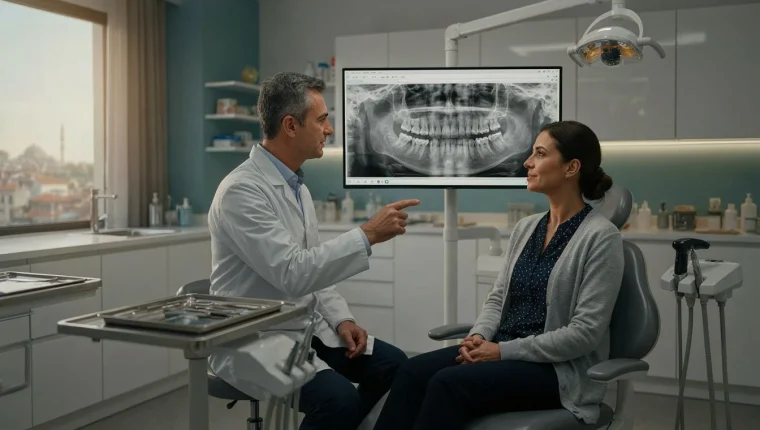
A headline price is often the least useful number in a dental crown quote. Two clinics can advertise the same figure while covering completely different work, and the gap only becomes visible when you read the line items. What separates a genuine quote from a teaser price is itemization: the breakdown that shows exactly which procedures, materials, and appointments sit inside the number you were given.
When you request a quote, ask for it in writing and check whether these elements appear as named lines:
- Consultation, imaging, and lab fees — some clinics bundle X-rays, scans, and laboratory work into one figure, while others bill them separately once you arrive.
- The specific crown type — a quote should name the material, such as zirconia or porcelain-fused-to-metal, rather than saying “crown” generically.
- Preparatory treatment — extraction, root canal therapy, or a core build-up may be required before the crown is fitted, and each adds cost if it is not already priced in.
- Currency and payment terms — confirm which currency the figure is quoted in, what exchange rate applies, and whether deposits or card fees change the total.
- Triggers for extra charges — additional visits, temporary crowns, or a remake after a poor fit should be described, not left to assumption.
A quote that answers these points lets you line up providers on equal terms, because you are no longer guessing what sits behind the number. If a clinic resists putting details in writing, treat that as information in itself. The full picture of inclusions and exclusions deserves closer attention later, but this first filter already removes the quotes that were never designed to be compared.
Understanding Material Options and Their Impact on Cost
Two quotes can both say “crown” and still describe completely different products. The material chosen for your crown is one of the largest single drivers of price, so a quote that does not name it clearly is almost impossible to compare fairly against another.
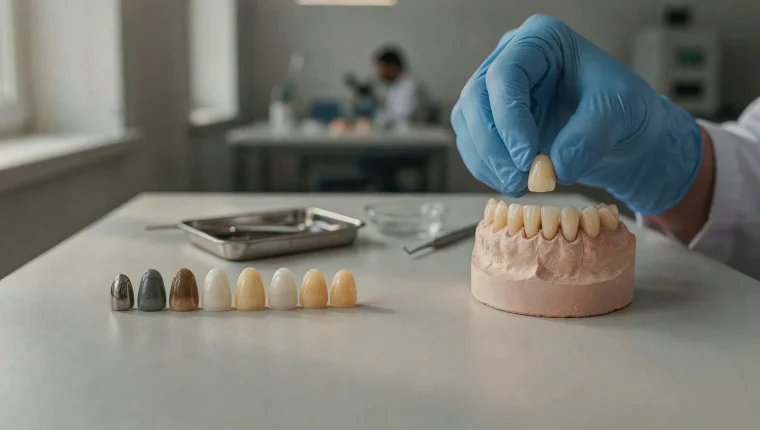
Most Turkish clinics work with a handful of common options. Full metal and metal-ceramic crowns sit at the lower end of the cost range; they are strong and durable but show a grey line near the gum and look less natural. Zirconia crowns cost more, resist wear well, and offer a tooth-like appearance without a metal base. E-max (lithium disilicate) crowns sit at the premium end — excellent aesthetics and translucency, often chosen for front teeth, but they demand careful handling and can cost noticeably more. Each step up usually reflects both the raw material price and the extra lab skill involved.
The trade-offs matter as much as the number. A cheaper metal-ceramic crown may be the right call for a back molar under heavy bite force, while a front tooth often justifies paying for zirconia or E-max to match surrounding teeth. Harder materials can also wear down the opposing natural tooth faster, so “strongest” is not automatically “best.”
This is why a vague “ceramic crown” line prevents fair comparison. Ceramic could mean several different products at very different price points. Ask each clinic to state the exact material name, the brand if applicable, and whether the price covers that specific option — not a generic substitute.
How Clinic Accreditation and Dentist Credentials Affect Value
Accreditation tells you that a clinic has chosen to be measured against a standard it did not write for itself. Bodies such as JCI, ISO 9001, and Turkey’s own health tourism authorization system verify different things, and the differences matter. JCI inspects surgical safety, sterilization protocols, infection control, and patient records against international benchmarks. ISO 9001 is a quality-management framework, broader but less clinically specific. A Ministry of Health health-tourism certificate confirms the clinic is licensed to treat international patients, which is a legal minimum rather than a quality signal. None of these guarantee a good crown, but they do indicate whether a clinic has been audited by someone other than its own marketing team.
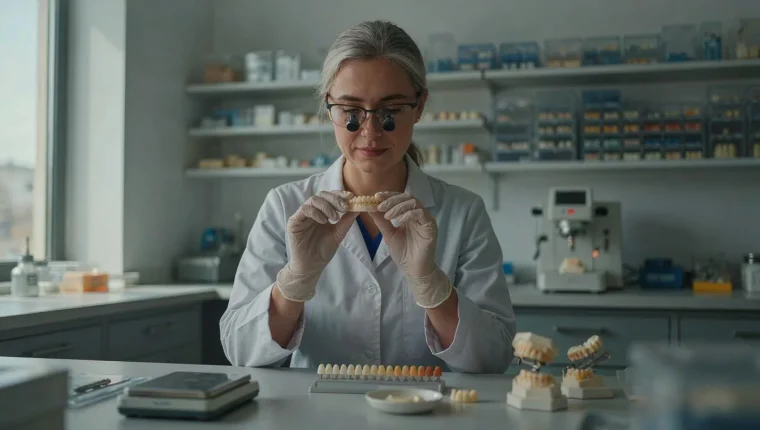
Dentist credentials work at a more personal level. A crown is a precision restoration, and the outcome depends on the clinician preparing the tooth, capturing the impression, and matching shade and fit. Look for a named dentist with a prosthodontics or restorative dentistry background, documented case volume, and before-and-after images that show similar cases to yours. Ask how many crowns that specific dentist places per month, not how many the clinic places per year.
Verification is where most patients stop too early. Clinic websites are self-published, so cross-check claims elsewhere. Turkey’s Ministry of Health maintains a searchable register of authorized health tourism facilities. International accreditation bodies publish certified provider lists. Professional associations list members. You can also request the dentist’s diploma number and confirm it through the relevant dental chamber. Reviews deserve the same scrutiny: a pattern across multiple independent platforms carries more weight than a single glowing testimonial on the clinic’s own page.
One caution applies here. Accreditation and credentials raise the floor of what you can reasonably expect, but they do not set the ceiling on skill. A highly certified clinic can still produce a poorly fitted crown, while a smaller practice with a meticulous dentist can outperform it. Treat these signals as filters that remove obvious risk, then let the clinical details in the rest of the quote carry the decision.
Reading Inclusions and Exclusions in Turkey Dental Crown Packages
Package language is where two quotes that looked identical on the first page start to drift apart. A crown price can be bundled with airport transfers, hotel nights, and follow-up visits, or it can sit alone with every practical cost left for you to arrange. That difference matters because a bundled package shifts coordination onto the clinic, while a lean quote hands it back to you — and both can be legitimate depending on what you want from the trip. The key is forcing each clinic to state, in writing, what sits inside the price and what does not, so a missing item becomes visible before you commit rather than after you arrive.
- Inclusions to confirm: airport and hotel transfers, accommodation nights, laboratory fabrication, x-rays and imaging, temporary crowns, and scheduled follow-up appointments.
- Exclusions to expect: treatment for complications, additional visits beyond the agreed plan, replacement temporaries, and any revision work not tied to the original crown.
- Boundary questions: ask directly whether a failed fitting, a cracked crown, or an extended stay is covered, and who pays for the return trip if it is not.
- Written confirmation: request the inclusion and exclusion list in the quote document itself, not in a chat message that can be reinterpreted later.
A clinic that answers these questions precisely is usually the one whose quote you can trust when you line it up against the others. Vague answers — “everything is included” or “we handle it” — are the ones that tend to grow into extra charges once you are already in the chair. Read the package boundaries as carefully as you read the price, because that is where the real comparison happens.
Comparing Turnaround Times and Appointment Logistics
Turnaround time is where two quotes with identical prices can produce very different trips. The first number to pin down is how many visits the clinic requires. Some crowns are completed in a single visit using same-day milling, while others need two or three appointments spaced across several days. Ask each clinic for the total number of visits and the minimum days you must stay in Turkey to complete treatment, not just the chair time on each day.
Lab turnaround drives that calendar. A crown fabricated in an on-site lab can often be fitted within 24 to 72 hours, whereas a quote that outsources to an external lab may stretch to a week or more. When the lab is off-site, ask whether a temporary crown is provided and whether it is included in the price or billed separately. Temporary protection is not cosmetic — it shields the prepared tooth between appointments.
Appointment flexibility matters too. Clinics that reserve specific slots for international patients can usually accommodate arrival and departure dates, while busier practices may push your fitting into a fixed window. Confirm how much notice they need to reschedule and whether a missed appointment resets the lab timeline. A shorter stay sounds convenient, but only if the schedule genuinely fits your travel dates.
Evaluating Aftercare, Warranty, and Revision Policies
A warranty is only as useful as the process behind it. When you review aftercare terms, look for the warranty length and, more importantly, what it actually covers. A one-year guarantee on the crown itself is common, but check whether it extends to the fitting, the underlying tooth, or the lab work. Some clinics exclude anything they classify as a pre-existing condition or poor hygiene, which can leave you paying for a repair you assumed was protected.
Ask exactly how a revision or repair is handled if something goes wrong after you return home. Who pays for the replacement crown, the appointment, and any travel? Get the answer in writing before you commit. A strong quote will state the revision policy clearly, including how long it applies and what proof you need, such as photos or a local dentist’s report.
Remote follow-up matters too. Confirm whether the clinic offers video check-ins, how quickly they respond, and whether a local dentist can handle minor adjustments under the warranty. These details separate a quote that protects you from one that simply looks cheaper on paper.
Turning Multiple Crown Quotes Into a Clear Decision
Once you have several quotes in hand, the fastest way to a defensible choice is to stop reading them as documents and start reading them as rows in a single comparison grid. Normalise every quote onto the same five axes: materials named, inclusions and exclusions, credentials, logistics, and aftercare. When one quote leaves a field blank, treat the blank as unfavourable rather than neutral — a missing material specification or an unstated revision window is a gap you would be paying to discover later. The weighted scoring matrix below forces that discipline.
| Criterion | What to Score | Weight (Your Priority) | Quote A | Quote B | Quote C |
|---|---|---|---|---|---|
| Materials | Crown type named, brand stated, lab identified | High / Med / Low | |||
| Inclusions | Imaging, consultation, temporaries, extractions, transfers covered | High / Med / Low | |||
| Credentials | Accreditation, dentist specialisation, case volume | High / Med / Low | |||
| Logistics | Total visits, stay length, scheduling flexibility | High / Med / Low | |||
| Aftercare | Warranty length, revision policy, remote support | High / Med / Low |
Score each quote from one to five per row, multiply by the weight you assigned, and total the columns. The quote with the highest total is rarely the cheapest one — and that is the point.
Two red flags should remove a quote from the grid entirely, regardless of its score: refusal to put inclusions, materials, and warranty terms in writing, and pressure to pay a deposit before you have seen a written treatment plan. Both signal that the terms you are comparing are not the terms you would receive.
FAQs
What should I check in a Turkey dental crowns quote besides the price?
Check what the quote includes beyond the crown itself, such as X-rays, temporary crowns, impressions, and follow-up visits, since these are often billed separately. Confirm the crown material (for example zirconia, e.max, or metal-ceramic) because this strongly affects both durability and cost. Verify the dentist's qualifications, laboratory standards, and whether any warranty or revision policy is offered in writing. Also ask about the clinic's sterilization protocols and whether an English-speaking coordinator will handle your aftercare once you return home.
How do I compare dental crowns Turkey quotes when clinics include different materials?
To compare quotes fairly, ask each clinic to specify the exact crown material and brand, since prices for zirconia, e.max, and metal-ceramic differ substantially. Then request a written treatment plan listing the number of units, whether the price includes X-rays, temporary crowns, and lab fees, plus any warranty terms. Normalize every quote to a single all-inclusive figure per tooth so you can compare like for like rather than judging headline prices.
Why do dental crown quotes in Turkey vary so much between clinics?
Prices differ because clinics use different crown materials (such as zirconia, e.max, or metal-ceramic), vary in dentist experience and laboratory quality, and include different services in their quotes, such as X-rays, temporary crowns, or airport transfers. Location, clinic reputation, and whether the price covers only the crown or a full package with hotel and treatment also shift the total cost significantly. Some low quotes exclude essential steps like root canal treatment or bone work, so the final bill can end up much higher than advertised.