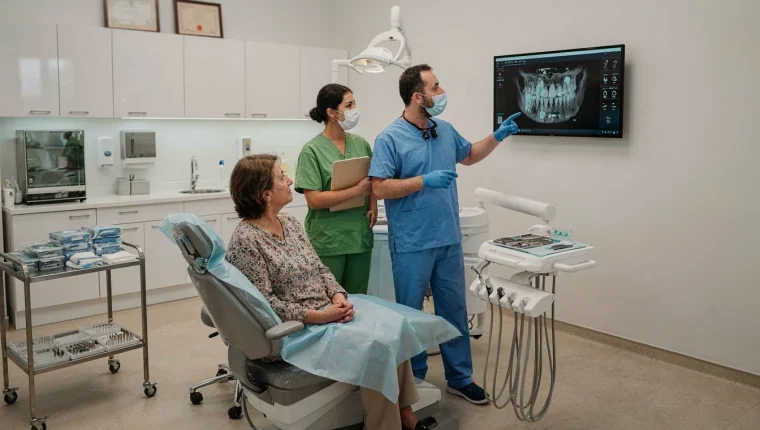
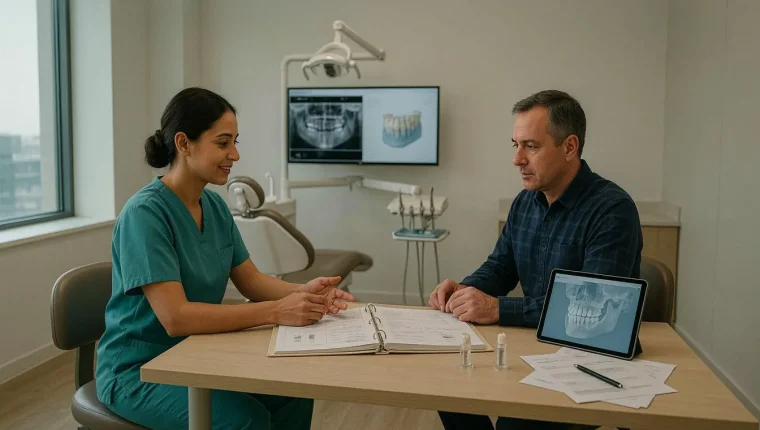
Choosing dental implants in Turkey should begin with a clear clinical assessment, not a quick decision based on price or treatment photographs. A thorough dental implants consultation in Turkey determines whether implants suit your oral health, which treatment options are available, and how the plan will be managed from diagnosis through recovery. You should leave the consultation understanding the proposed procedures, required scans, expected timeline, potential risks, and your responsibilities before and after treatment. You should also clarify whether your plan is tailored to your bone levels, gum health, medical history, and long-term restoration needs. Asking direct, practical questions lets you compare care more confidently and see whether the clinic offers suitable planning and reliable ongoing support.
What Happens During a Dental Implants Consultation in Turkey?
A thorough consultation begins with your dental history and a clear discussion of what you want to improve. The dentist should review missing teeth, previous treatments, discomfort, bite concerns, and any difficulties with eating or speaking. This conversation helps connect the proposed treatment with your actual needs rather than treating each missing tooth in isolation.
The clinician will then examine your teeth, gums, bite, and the condition of the areas where implants may be placed. Appropriate imaging, often including dental X-rays or three-dimensional scans, can help assess bone dimensions, nearby anatomical structures, and the position of planned implants. These findings should be explained in understandable terms, with an opportunity for you to ask why a particular approach is recommended.
Important planning details include bone volume, gum health, the type and appearance of the final restoration, and whether treatment needs to be completed in stages. The dentist may discuss how implant placement relates to crowns, bridges, or dentures, while keeping the focus on your individual anatomy and goals.
A personalized consultation should feel clinical and unhurried, not like a quick appointment focused on selling a procedure. Before agreeing to treatment, you should receive a clear explanation of the findings, proposed sequence, expected appointments, and any preparatory care required. This gives you a reliable basis for evaluating the recommendations in the next stages of your decision.
Are You a Suitable Candidate for Dental Implants?
Implants may be appropriate when you have one or more missing teeth and the surrounding tissues can support a stable restoration. Your dentist will assess the amount and quality of jawbone, the condition of your gums, your oral hygiene, and whether there is enough space for the planned crown or bridge. These factors help determine whether implant placement is realistic and predictable.
Your general health also matters. Share your complete medical history, including diabetes, immune-related conditions, previous radiation treatment, and any medicines that may affect bleeding or bone healing. Smoking can increase the risk of complications, while poorly controlled medical conditions may need attention before treatment. Active decay, gum disease, or infection should usually be treated first rather than overlooked during planning.
Insufficient bone does not automatically rule out implants. In some cases, bone grafting or another preparatory procedure can improve support, although this may extend the healing period and change the treatment sequence. The dentist should explain whether such steps are necessary before recommending a final plan.
Individual clinical assessment is essential because the same missing-tooth situation can have different solutions for different patients. An online questionnaire or photograph cannot reliably evaluate healing capacity, gum health, or the suitability of your bite. During your consultation, ask which factors affect your candidacy, what must be treated first, and how each finding could influence the proposed timeline.
Which Implant Materials and Treatment Options Are Available?
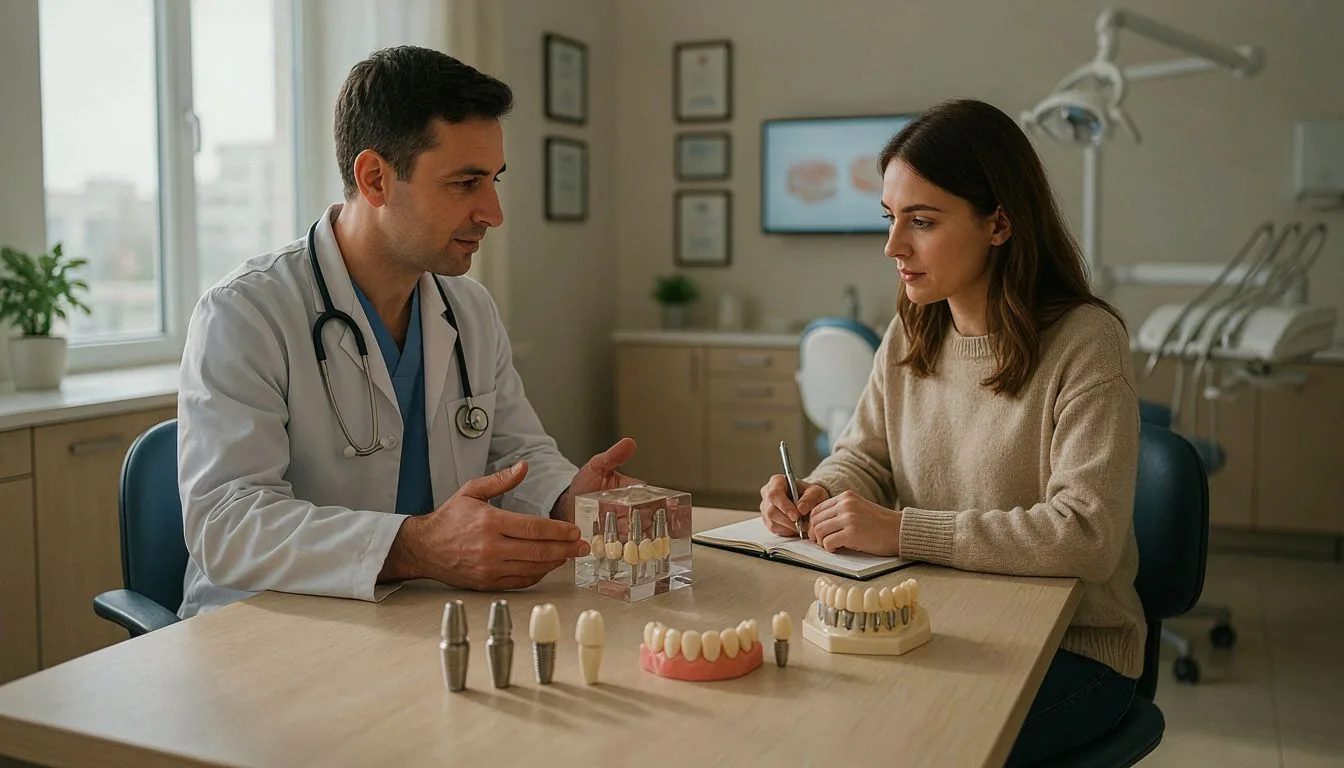
The proposed implant system should be explained in terms of clinical purpose, not simply by brand name or price. Most implants are made from titanium, while some use zirconia. Titanium has extensive long-term clinical use and can be supplied with different surface treatments designed to support bone integration. Zirconia may appeal to patients seeking a metal-free option, but its suitability depends on the implant design, location, loading demands, and the clinician’s experience. Ask which material is recommended for your case, why it is appropriate, and what evidence supports its use.
The restoration also affects the treatment plan. A single missing tooth may require one implant, an abutment, and an individual crown. Several missing teeth might be replaced with separate implants or a fixed bridge supported by fewer implants. Full-arch treatment follows a different pathway, often using several strategically placed implants to support a fixed provisional restoration before the final teeth are made.
Discuss whether the abutment and crown will be screw-retained or cemented, which materials will be used for temporary and final restorations, and how the design may affect cleaning and maintenance. In some cases, treatment is staged so that healing occurs before the final restoration is fitted. The key question is whether the recommended option offers a sound balance of function, appearance, hygiene access, and long-term maintainability for your individual circumstances.
What Should You Ask About Costs, Timing, and Travel Plans?
Before booking treatment abroad, make sure the proposed plan is financially and logistically realistic. A headline package price may not represent the full cost, while the number of visits can affect flights, accommodation, time off work, and recovery arrangements. Ask for a written estimate that distinguishes confirmed fees from items that depend on clinical findings. It is also important to understand how the clinic organizes each stage of care, because the timing of procedures, healing periods, and final treatment can influence both your total expenses and your travel plans.
- Cost inclusions: Confirm whether diagnostics, temporary teeth, medications, bone grafting, sedation, laboratory work, and follow-up appointments are included or charged separately.
- Visit schedule: Ask how many appointments are expected, how far apart they will be, and when the final restoration is likely to be fitted after healing.
- Travel timing: Check how long you should remain in Turkey after each procedure, when flying is considered practical, and whether recovery may limit normal activities.
- Accommodation and transfers: Clarify whether transport or hotel arrangements are included, recommended, or entirely your responsibility.
- Unexpected changes: Ask who approves additional procedures and how extra costs would be calculated if the treatment plan changes.
Request realistic time allowances rather than planning around the shortest advertised stay. Delays can result from healing, laboratory schedules, or additional treatment, so avoid non-refundable travel arrangements until the clinic confirms the appointment sequence. A clear written plan makes it easier to compare providers and protect your budget. Keep copies of the estimate, proposed schedule, and any information about additional charges so you can review the arrangements before committing to treatment or travel.
How Can You Evaluate the Clinic and Aftercare Support?

Assess the clinic’s reliability by looking beyond polished websites and package prices. Check the dentists’ qualifications, experience with implant procedures, professional registration, and the standards of the facility where treatment will take place. The clinic should provide clear treatment records, explain who is responsible for each stage, and communicate realistic outcomes rather than making guarantees.
Pay close attention to how openly the team discusses risks, alternatives, consent, and possible changes to the plan. Ask for a written explanation of aftercare responsibility: who reviews your healing, how quickly the clinic responds to concerns after you return home, and whether remote assessments or coordination with a local dentist are available.
Before committing, request written policies covering complications, revisions, failed implants, refunds, guarantees, and communication channels. Reliable support should remain accessible after treatment, with defined instructions for urgent symptoms and a clear process for arranging further care when necessary.
FAQs
What should I ask about the dentist’s qualifications during a dental implants consultation in Turkey?
Ask where the dentist completed their dental and implantology training, and whether they hold relevant specialist certifications or professional memberships. Request details about their experience with dental implants, including how many procedures they perform annually and their success and complication rates. Also ask who will place and restore the implants, and whether the clinic can provide before-and-after cases or patient references.
Which diagnostic scans and tests are needed before getting dental implants in Turkey?
Before dental implants, the dentist typically performs a comprehensive oral examination, dental X-rays, and a 3D CBCT scan to assess bone volume, nerve locations, sinuses, and implant positioning. They may also request medical history, medication details, and blood tests such as glucose or clotting tests when health conditions or medications make them necessary.
What costs, aftercare, and treatment guarantees should I clarify before choosing an implant clinic?
Clarify the complete price, including consultation, imaging, surgery, implant components, restoration, medication, and any potential additional procedures. Ask what aftercare is included, how emergencies and follow-up visits are handled, and whether travel or accommodation costs apply. Confirm the written guarantee’s duration, coverage, exclusions, and who pays if an implant fails or treatment requires correction.