Choosing between silicone implants and saline implants is one of the first—and often most confusing—decisions you’ll face before a breast augmentation consultation. Both types are FDA-approved and considered safe, but online advice often points in opposite directions. One person swears by silicone’s natural feel, while another values saline’s peace of mind if a rupture occurs. Neither option is simply “better.” Each involves trade-offs in material, appearance, safety behavior, surgery details, and cost—and the right answer depends on your body and priorities. Understanding these trade-offs can turn a confusing choice into a confident decision.
What Are Silicone and Saline Implants Made Of?
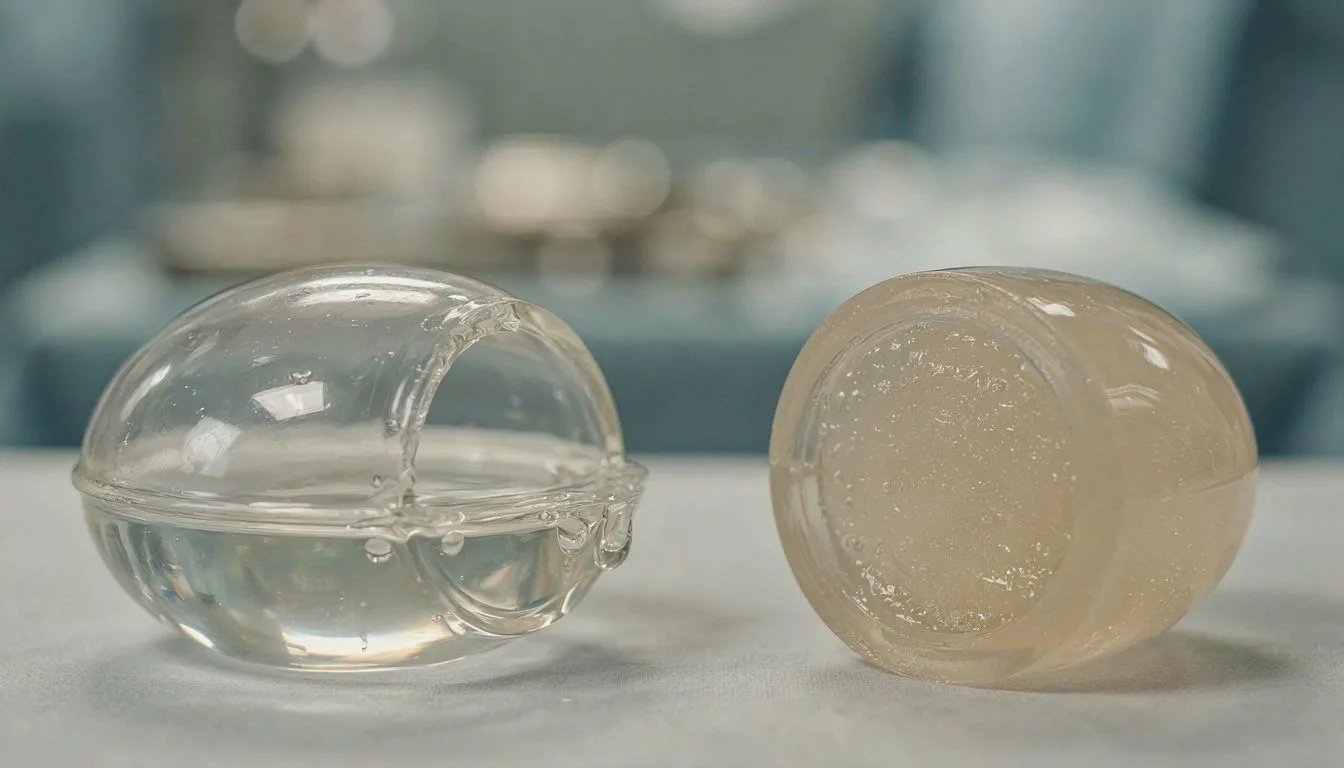
Every implant, regardless of type, shares the same basic structure: a solid outer shell made of silicone elastomer, a flexible, durable material that feels somewhat like a very thin, tough rubber. What separates the two options is what goes inside that shell.
Saline implants are filled with sterile salt water — essentially the same fluid used in IV drips. This means the material going into your body is mostly water, which many people find reassuring during the decision process.
Silicone implants, on the other hand, are filled with a cohesive silicone gel. Modern versions of this gel are thicker than the liquid silicone used decades ago; it has a consistency often compared to gummy candy, holding together as a unified mass rather than flowing freely. This fill is what gives silicone implants their reputation for closely mimicking the feel of natural breast tissue.
That difference in fill consistency isn’t a small technical detail — it drives nearly everything that follows, from how each implant looks and feels to what happens if the shell ever fails.
Silicone Implants vs Saline Implants: Key Differences at a Glance
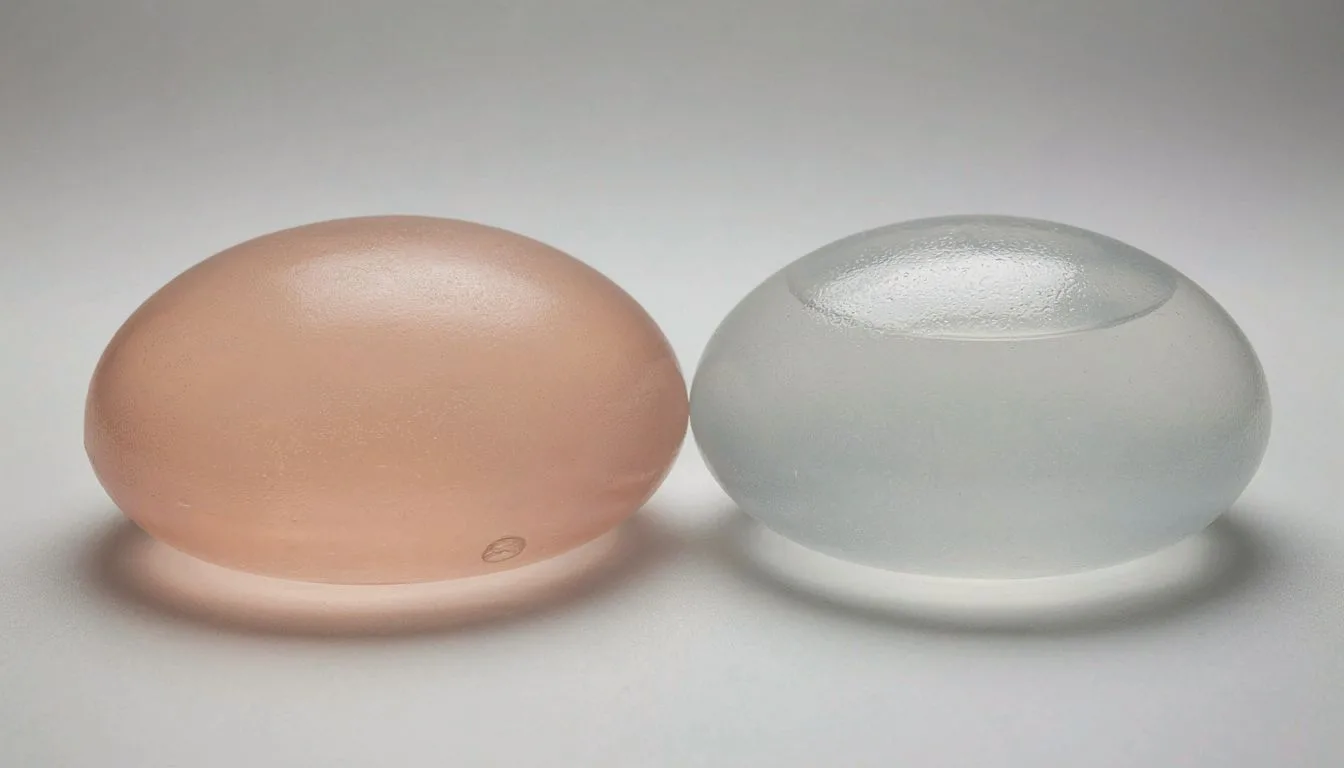
Before diving into each topic in depth, it helps to see the whole picture in one place. The table below maps out the key differences between the two implant types across every factor worth weighing — from what fills them to what they cost. Use it as a mental checklist, then follow the detailed sections that unpack each row.
| Factor | Silicone Implants | Saline Implants |
|---|---|---|
| Fill material | Cohesive silicone gel | Sterile salt water (saline) |
| Age requirement | 22+ for cosmetic use | 18+ for cosmetic use |
| Incision size | Longer incision (prefilled) | Shorter incision (filled after placement) |
| Rupture behavior | Often “silent” — may go unnoticed without imaging | Immediate deflation, usually obvious |
| Look and feel | Feels more like natural breast tissue | Slightly firmer; may ripple in thin patients |
| Cost | Higher upfront price | Lower upfront price, but replacement may add long-term cost |
A quick scan already reveals a pattern: saline tends to win on logistics — smaller incisions, easier rupture detection, lower price — while silicone tends to win on aesthetics. The sections ahead look at each of these trade-offs in detail, starting with how the two options actually look and feel in daily life.
How Do the Two Options Compare in Look and Feel?
For most people, this is where the decision really gets personal. Silicone implants are widely considered the gold standard for a natural look and feel because the cohesive gel inside moves and jiggles much like breast tissue itself. Saline implants, filled with sterile salt water, tend to feel a bit firmer and can have a slightly more “done” appearance in some body types.
That difference matters most for patients with less natural breast tissue to work with. If you’re very slim or have minimal existing tissue, a saline implant has less padding to hide behind, which can make its edges or shape more noticeable. Silicone gel blends more seamlessly in these cases.
Then there’s rippling — subtle waviness that can sometimes be seen or felt under the skin. Saline implants carry a higher risk of visible rippling, especially when placed above the muscle or in thinner patients. Silicone’s thicker gel is less prone to this, giving it an edge for smoother contours.
None of this makes saline a poor choice; many patients are delighted with how saline looks and feels, particularly when they have enough natural tissue for coverage. But if replicating the softness and movement of natural breast tissue is your top priority, silicone is usually the stronger contender.
Which Implant Type Is Safer if It Ruptures?
Rupture behavior is one of the most practical safety differences between the two implant types, because it determines whether you’ll actually know something has gone wrong. With a saline implant, there’s no mystery: if the shell tears, the sterile salt water is absorbed by your body, and the breast visibly deflates over days. You’ll know almost immediately that replacement surgery is needed.
Silicone implants behave differently. If the shell fails, the cohesive silicone gel usually stays in place within the pocket or the shell itself, so the breast often looks and feels unchanged. This is known as a silent rupture, and it’s the single biggest safety consideration with silicone: the implant can be ruptured for months or even years without any obvious symptom.
That’s why patients with silicone implants are advised to undergo periodic imaging — typically an ultrasound or MRI — to confirm the implant is intact. In the United States, the FDA recommends the first screening MRI or ultrasound a few years after surgery and then every two to three years afterward. Saline implants don’t require this routine monitoring, since any rupture announces itself.
It’s also worth knowing that neither implant type is designed to last a lifetime. When a rupture is confirmed — silent or obvious — surgical removal and replacement is the recommended course for both options. The difference is simply whether your body signals the problem for you, or whether scheduled screening has to catch it.
Surgical Incision and Placement Differences
Many people assume the implant choice only matters after surgery, but it actually shapes the operation itself. One of the clearest examples is the incision size each option requires.
Saline implants are inserted empty and filled with sterile salt water once they are already in place. Because the shell collapses to a much smaller profile, your surgeon can often use a shorter incision, which may mean a less noticeable scar and a slightly easier insertion process.
Silicone implants, on the other hand, come pre-filled from the manufacturer. The cohesive gel cannot be added later, so the incision must be large enough to accommodate the full implant. For a given desired size, this typically adds a centimeter or so to the incision length.
Both types can generally be placed in the same positions — either partially under the chest muscle or above it — so your anatomy and aesthetic goals usually drive that decision more than the fill material does. Keep in mind that a pre-filled silicone implant also means your final size is fixed before surgery, while saline allows minor adjustments during the procedure itself.
Cost Comparison: Upfront Price and Long-Term Expenses
For most patients, saline implants cost less upfront—often by $1,000 or more per procedure—because they are filled after placement and require no silicone shell preparation. Silicone implants typically carry a higher sticker price, but the gap at the operating table is only the beginning of the financial story.
The long-term picture looks different. Saline ruptures announce themselves quickly, so no extra monitoring is needed. Silicone ruptures can be silent, which means regular MRI or ultrasound screening is recommended—usually starting a few years after surgery. These imaging appointments add recurring costs that saline patients simply don’t face.
Either way, budget for the future. Implants are not lifetime devices, and most people will need at least one replacement surgery over the years. When you compare quotes, ask what follow-up imaging, ruptured implant removal, and revision surgery typically cost in your area, so you can weigh the cheaper upfront option against the lifetime expense of each choice.
Which One Is Right for You? Factors to Discuss With Your Surgeon
By now, the trade-offs are familiar: feel, rupture behavior, incision size, and cost all point in slightly different directions. The honest answer is that neither implant is universally better — the right choice depends on your body, your priorities, and how you weigh the risks we have covered. This is exactly what a personalized consultation is designed to resolve, and walking in prepared makes that conversation far more productive.
Before your appointment, think through these factors in the order they usually matter:
- Your anatomy and existing tissue: Patients with more natural breast tissue can often cushion either implant type well, while those with less coverage may be steered toward silicone to avoid visible rippling or a firmer edge.
- Your aesthetic priority: If a natural look and feel tops your list, silicone usually wins; if you want the smallest possible incision and easier rupture detection, saline has the edge.
- Your tolerance for monitoring: Saline leaks announce themselves immediately, while silicone requires periodic MRI or ultrasound screening to catch silent ruptures — decide honestly how comfortable you are with ongoing surveillance.
- Your budget horizon: Look beyond the sticker price to replacement surgery, screening costs, and the likelihood of needing a revision within ten to twenty years.
- Your age eligibility: Silicone implants are FDA-approved only for patients 22 and older, while saline is available from 18, which can settle the question on its own for younger patients.
Bring these points to your surgeon as questions rather than conclusions. Ask which implant type fits your tissue coverage, what incision and placement they recommend and why, what monitoring schedule they advise, and how they handle revisions under warranty. A surgeon who can connect each answer back to your specific anatomy is giving you the personalized framework that no general comparison — including this one — can provide.
FAQs
How do silicone and saline implants differ in look and feel?
Silicone implants generally look and feel more natural because the silicone gel closely mimics the softness and movement of breast tissue, making them especially popular among women with less natural breast tissue. Saline implants tend to feel firmer and may show slight rippling or a rounder shape under the skin, though differences are often less noticeable with more natural tissue coverage. Many surgeons note that silicone implants are harder to detect both by sight and touch. Both options can deliver beautiful results, so the choice often comes down to your body type and personal preference.
Which type of implant ruptures more noticeably, and what happens if it leaks?
Saline implant ruptures are far more noticeable because the implant deflates quickly as the sterile salt water is absorbed by your body, usually within days. Silicone ruptures, on the other hand, are often "silent," since the gel tends to stay in place and you may not notice any change without an imaging test like an MRI or ultrasound. If a saline implant leaks, your breast simply returns to its smaller original size and you can schedule a replacement, with no health risk from the absorbed fluid. If a silicone implant leaks, the gel typically remains contained within the scar capsule, but you should see your surgeon for evaluation and discuss removal or replacement options.
Is one implant option safer than the other for long-term use?
Both silicone and saline implants are considered safe for long-term use, and neither has been linked to breast cancer or other serious diseases in extensive studies. Saline implants have a slight practical advantage: if they rupture, the body safely absorbs the saltwater, and the deflation is immediately noticeable. Silicone ruptures, by contrast, are often "silent," meaning you may need regular MRI or ultrasound screenings to detect them. Both options have strong long-term safety records when monitored properly, so the choice usually comes down to your personal priorities rather than safety alone.