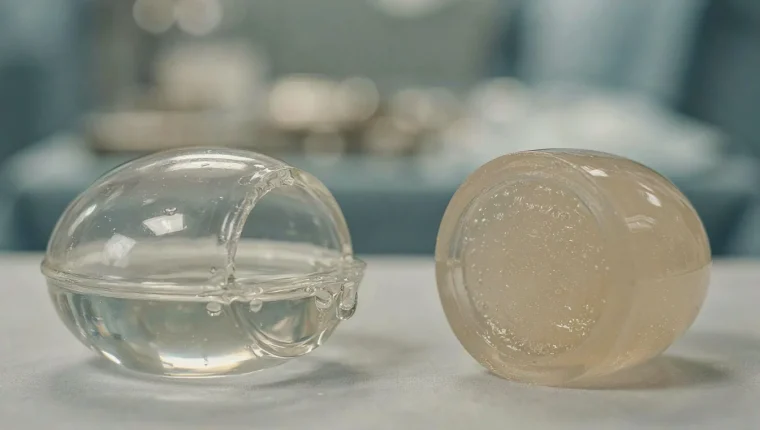
Choosing the right implant size is a major decision in breast augmentation, but patients often feel least prepared for it. Many arrive at their consultation with a cup size in mind, but cup sizes vary between brands, bra styles, and even countries. What matters is implant volume in cubic centimeters, its relationship to your chest width, existing breast tissue, and skin elasticity, and whether it matches the look you want in real life—not just in a photo. A size that looks beautiful on a friend or an influencer can look or feel entirely wrong on your body. Getting this decision right reduces the risk of revision surgery, discomfort, and long-term dissatisfaction. Here is what to understand before settling on a size.
How Implant Size Is Measured in Breast Augmentation
When surgeons talk about sizing in breast augmentation, they don’t use bra cup sizes at all. Instead, implant volume is measured in cubic centimeters, commonly abbreviated as cc (cubic centimeters). This unit tells you exactly how much volume the implant holds, which is why two implants labeled the same “cup size” at different clinics can actually look quite different once placed.
Most implants fall somewhere between 200 cc and 800 cc, though smaller and larger options exist. As a rough reference point, 150 to 200 cc often translates to about one cup size increase — but this is only an approximation. Your starting chest dimensions, body frame, and the amount of existing breast tissue all influence how a given volume will actually appear on you.
Implant size is also described by two other measurements that matter during sizing: diameter (the width of the implant) and projection (how far it extends forward from the chest wall). A 350 cc implant comes in different widths and profiles, so the same volume can produce noticeably different shapes. This is why surgeons measure your breast base width during consultation — it helps them narrow down which diameter will fit your anatomy naturally rather than fighting against it.
It’s worth knowing that saline implants are filled after placement, allowing minor adjustments to volume during surgery, while silicone implants come pre-filled with a fixed volume. Either way, the cc measurement — not the bra size on the box — is the real language of implant sizing, and understanding it puts you in a much stronger position when discussing your goals with your surgeon.
Why Breast Dimensions Matter More Than Cup Size

Cup size is often the first thing patients mention when describing their goals, yet it is one of the least reliable ways to plan surgery. A “C cup” in one brand or bra style can look completely different in another, and the same cup letter sits differently on a 5’2″ frame than on a 5’9″ one. This is why experienced surgeons think in terms of breast dimensions rather than cup labels when planning breast augmentation.
Dimensions describe the actual geometry of your chest, which stays consistent no matter what clothing label you read. Key measurements include:
- Base width — the horizontal distance across your natural breast footprint, which determines the maximum implant diameter your chest can accommodate without looking unnatural.
- Breast height — the vertical span from your collarbone to the breast crease, influencing how tall an implant can be before it rides too high or too low.
- Projection — how far forward the breast extends from the chest wall, which shapes the side profile more than overall volume does.
- Cleavage gap — the distance between your breasts, guiding implant placement so the result looks balanced rather than overly wide or crowded.
Understanding these measurements also changes how you communicate with your surgeon. Saying “I want to fill out a 34C” gives an approximation, but knowing your base width is 12.5 cm tells the surgeon exactly which implant diameters are physically appropriate. Volume in cc then becomes the fine-tuning tool rather than the starting point — you first rule out implants that do not fit your frame, and only then discuss how much fullness you want within that range.
This dimensional approach is also what keeps results looking natural over time. An implant matched to your measurements moves with your body, ages gracefully, and places less strain on tissue than one chosen purely by chasing a cup number.
Matching Implant Size to Your Body Frame and Anatomy
Your body’s frame sets the natural boundaries for what an implant can do for you. A surgeon’s first measurements — the base width of your breast, the width of your chest wall, and your overall height and shoulder structure — tell them which implant volumes will look harmonious and which will look or feel out of place.
The key concept here is proportionality: an implant that fits your anatomy blends with your natural contours, while one that exceeds what your chest can support tends to create telltale signs. These can include implants sitting too close together, edges visible at the sides, or tissue and skin that appear stretched and thin over the device.
As a general reference, surgeons often match the implant’s base diameter to your breast’s base width first, then select the volume within that diameter. Someone with a narrow frame may reach their ideal look at 250–300 cc, while a broader chest wall might comfortably carry 400 cc or more with the same natural result. This is why the same implant size can look completely different on two friends — and why borrowing a friend’s size goal rarely works.
Body weight matters too. A patient with more existing breast tissue often needs less volume to achieve a visible change, while a very athletic, low-body-fat patient has less tissue to camouflage the implant, making moderate sizing and careful placement especially important.
The right size is the one your anatomy can carry gracefully over time — not simply the largest number you find appealing.
The Role of Skin Elasticity and Tissue Coverage in Sizing
Your skin and natural breast tissue act as the “envelope” that contains the implant, and this envelope’s quality directly shapes what implant size will actually work for you. Two patients with identical chest measurements may tolerate very different volumes simply because one has skin elasticity and tissue coverage the other lacks.
When skin is firm and resilient, it stretches smoothly over an implant and holds it in a natural position over time. When skin has lost elasticity—due to aging, significant weight changes, pregnancy, or breastfeeding—the same volume can cause the implant to sit lower, stretch the tissue further, and create a “bottoming out” appearance years down the line. A responsible surgeon will often moderate the implant size in these cases, or recommend a breast lift alongside augmentation to support the new volume.
Tissue coverage matters just as much. The amount of breast tissue and submuscular coverage available determines how well an implant is concealed. A patient with thin tissue coverage who chooses an overly large implant risks visible or palpable edges, rippling, and an unnatural “implant look,” because there simply isn’t enough soft tissue to cushion and blend the device. Placing the implant partially under the muscle can add softness, but it doesn’t eliminate the limits entirely.
This is why surgeons frequently perform a pinch test and assess tissue thickness during your evaluation—it’s not a formality. These quick checks reveal how much support and concealment your anatomy offers, guiding the volume range that will age gracefully with your body rather than against it.
How Implant Profile and Volume Work Together
Volume and profile are not two separate decisions you make one after the other—they constantly adjust each other. A 350 cc implant can look modest on one body and strikingly full on another, simply because its profile changes how far the volume projects forward from the chest wall. Understanding this relationship is what turns a number on a product label into an actual visual outcome.
Think of volume as the amount of material and profile as the shape that material is packed into. Two implants with identical cc measurements can differ dramatically in how they fill clothing, because one may be wider and flatter while the other is narrower and taller from the side. Surgeons use this interplay to fine-tune results in ways that cup size alone could never capture:
- Higher profile, same volume: A moderate-volume implant in a high profile pushes more of its cc forward, creating noticeable projection without widening the breast. This is often the answer for narrow frames that still want a fuller look.
- Lower profile, larger volume: Adding volume with a low or moderate profile spreads the implant across the base width instead, producing broader, more natural-looking fullness on the sides.
- Balanced pairs: When breast dimensions show both adequate width and room for projection, a mid-range volume in a medium profile keeps everything in proportion.
- Correcting asymmetry: Slight differences in cc between the two sides, paired with the same or different profiles, let the surgeon match each breast individually rather than forcing both to a single specification.
This is why experienced surgeons rarely ask “what size do you want?” before asking “what look do you want?” The profile decision determines how much volume a given frame can carry gracefully. A wide chest with good skin elasticity may comfortably accommodate a larger volume at a lower profile, while a petite frame with tight tissue may achieve the same visual fullness with fewer cc at a higher profile. In either case, the same projected result comes from very different numbers. During your sizing consultation, expect these two variables to be adjusted together—often with sizers you can view in the mirror—until the combination matches both your anatomy and your aesthetic goals.
Profile and Projection Options to Consider

Once volume is settled, the next decision shapes how the breast looks from the side and in profile view: how far the implant projects forward. This is where profile choice becomes personal, because two women with the same volume can end up with very different silhouettes.
Most manufacturers offer three or four profile families. Low profile implants spread more width across the chest, creating a gentle, natural slope that suits wider frames or women who want subtle enhancement. Moderate profiles sit in the middle, offering a soft roundness without dramatic forward projection — a frequent choice for everyday balance. High and ultra-high profiles concentrate the same volume into a narrower base with more forward push, producing fuller upper-pole roundness and closer cleavage.
It helps to think of profile as the trade-off dial. If you love a particular volume but your chest wall is narrow, a higher profile lets you keep that volume without the implant extending too far toward the armpit. Conversely, if you have broad shoulders and want softness rather than push, a lower profile with slightly more volume can fill the frame naturally. This is exactly the “balanced pairs” logic introduced earlier — profile adjusts the shape, volume adjusts the size.
Placement matters here too. Under-the-muscle placement softens the top edge of a high profile implant, which is why the same implant can look quite different in two patients. Skin elasticity plays its part as well: tighter skin holds projection crisply, while looser tissue may round the contour slightly.
During fitting, surgeons often use sizer implants with different profiles at the same volume so you can see the difference in a mirror rather than imagine it. Photos taken from the side are especially useful, since projection is easiest to judge in profile view. Come to your consultation with images of chests you like — but pay attention to body type in those photos, not just the shape, because profile that flatters one frame may overwhelm another.
What to Expect During the Sizing Consultation
By the time you reach the sizing consultation, most of the groundwork is already done. You’ve learned how implants are measured, why your breast dimensions matter more than the number on a bra label, and how profile and volume interact. The consultation is where all of that theory becomes personal — it’s the appointment where your surgeon translates those concepts onto your actual body.
Expect the visit to start with measurements. Your surgeon will record your base width, breast height, skin elasticity, and the amount of natural tissue you have to work with. These numbers aren’t formality — they directly narrow down which implant sizes and profiles are realistically safe and natural-looking for your frame.
From there, most surgeons move into hands-on sizing. You’ll typically try on sizer implants — trial implants placed inside a non-padded bra so you can see how different volumes look and feel in real time. This is your chance to be honest and specific. Don’t just say “bigger.” Say whether the cleavage gap looks right, whether the projection matches what you pictured, and whether you can imagine living with that silhouette in fitted clothing.
A few practical tips make this visit far more productive:
Wear the top you actually want to fit into after surgery — a fitted shirt or dress tells you more than a mirror alone.
Bring photos of results you like, but stay open to your surgeon explaining what’s achievable for your anatomy.
Ask to see the difference between two volumes side by side, not just one option in isolation.
Notice how each sizer feels in motion — lean forward, raise your arms, walk around the room.
Finally, expect a candid conversation about limits. A good surgeon will tell you when a requested volume exceeds what your tissue coverage can safely support, and will explain the trade-offs — wider stretch marks, faster sagging, or an “operated” look. That honesty isn’t a limitation on your choice; it’s the last piece of information you need to make it confidently.
FAQs
How do I choose the right implant size for my body type?
The right implant size depends on your chest width, existing breast tissue, skin elasticity, and your lifestyle, which is why your surgeon will measure these factors during your consultation rather than simply asking for a cup size. Most surgeons use sizers you can try on during your appointment, so you can see how different volumes look on your actual frame instead of guessing. As a general rule, staying proportional to your body measurements lowers the risk of complications like stretching, sagging, or the need for revision surgery. Bring photos of looks you like and communicate your goals clearly, but trust your surgeon's guidance on what your anatomy can comfortably support.
Will larger implants stretch my skin or cause more sagging over time?
Yes, oversized implants can gradually stretch your skin and surrounding tissue, potentially leading to sagging, thinning, or visible implant edges over time. Heavier implants also pull on skin and Cooper's ligaments, which accelerates drooping, especially without strong support from a well-fitted bra. Choosing a size proportionate to your natural tissue and skin elasticity significantly reduces these risks. Your surgeon can help you find the largest size your body can comfortably support long-term.
How does implant size affect recovery and long-term comfort?
Larger implants place more weight and stretch on your skin, breast tissue, and chest muscles, which typically means a somewhat longer recovery, more swelling, and a greater need for supportive garments. Over time, bigger implants can also increase the likelihood of sagging, thinning of tissue, or visible rippling, while very large sizes may cause back, neck, and shoulder discomfort. Smaller implants generally feel lighter, settle faster, and tend to age more gracefully with your body. Choosing a size proportionate to your frame and tissue thickness is the best way to support both comfortable healing and long-term results.