Noticing that one or both of your implants feel firmer than before can be unsettling. A breast that feels harder, sits higher, or looks rounder than it did a few weeks ago is among the most common concerns women raise after breast augmentation and deserves attention. In many cases, implant hardness is an early sign of capsular contracture, a condition where the scar tissue around the implant tightens. The earlier it is caught, the more treatment options you have, from massage and medication to surgical correction. Sometimes, though, firmness in the first few weeks is simply part of normal healing. Knowing the difference between what’s expected and what’s a warning sign can save unnecessary worry or help you act quickly when it matters. Here’s how to tell them apart and when to contact your surgeon.
What Is Normal vs. Abnormal Implant Hardness After Breast Augmentation
A soft, natural feel is the goal of every well-performed breast augmentation, and in the first days after surgery most implants actually feel firmer than expected. That early tightness comes from swelling and the healing process itself, and it gradually eases over several weeks as tissues relax. So some firmness early on is completely normal — the question is what happens after the healing phase is over.
Once recovery is complete, a healthy implant should sit softly and move naturally with your body. You should be able to press gently on the breast and feel a slight give, similar to natural breast tissue. Minor differences between the two sides are also common and not a cause for alarm.
Abnormal firmness, on the other hand, tends to develop gradually and has a distinct character. The breast may feel increasingly tight, round and hard, sometimes described as feeling like a ball under the skin. It may sit higher than before, look visibly different from the other side, or become tender or painful. This progressive hardening is the classic sign of capsular contracture — a condition where the scar tissue capsule that naturally forms around the implant tightens and squeezes it.
The key distinction is simple: firmness that improves over time is part of healing, while firmness that appears or worsens weeks, months, or even years after surgery deserves attention. Tracking how the feel of your breasts changes over time gives you and your surgeon the most useful information for deciding whether anything needs to be done.
Why Capsular Contracture Is the Main Cause of Firmness
Every breast implant, once placed, triggers the same biological response: your body recognizes it as a foreign object and begins building a thin membrane of scar tissue around it. This membrane, called the capsule, is completely normal and exists around every implant. The trouble starts when that capsule, for reasons doctors are still working to fully understand, tightens and thickens instead of staying soft and pliable.
When the capsule squeezes down on the implant, the firmness you feel is not the implant itself changing — silicone gel does not harden on its own. What you are feeling is scar tissue contracting around it, much like a shrinking sleeve. That is why capsular contracture sits at the top of the list when surgeons evaluate a breast that has become firmer than expected.
Several factors are known to raise the risk of a capsule tightening:
- Bacterial contamination — Low-grade bacteria on the implant surface can spark chronic inflammation, which encourages the capsule to thicken over time.
- Hematoma or infection — Bleeding around the implant or an early postoperative infection significantly increases the likelihood of contracture later.
- Implant position and surface — Implants placed above the muscle, and textured implants in particular, have shown different contracture rates than smooth implants placed under the muscle.
- Radiation exposure — Prior chest radiation or radiation therapy after a cancer diagnosis dramatically raises the risk of a tightening capsule.
Contracture can appear months or even years after a completely uneventful surgery, so firmness developing late does not mean something went wrong during the operation itself. It typically progresses gradually — one breast may start feeling slightly firmer, sit a bit higher, or look rounder than the other before the difference becomes obvious. Because the process is driven by your own scar tissue rather than the device, the solution always involves addressing the capsule, not replacing the implant alone.
Early Firmness in the First Weeks: What to Expect During Healing
In the first few weeks after surgery, some degree of firmness is not only common — it is expected. Your body is actively healing, and the tissue around each implant swells as part of the normal inflammatory response. During this phase, the breasts often feel tighter, higher on the chest, and firmer than they will eventually be, and many patients describe a sensation similar to fullness or even mild tightness across the chest wall.
This early firmness typically follows a predictable pattern. It is usually most noticeable during the first two to three weeks, when swelling peaks and the pectoral muscle (if the implant sits under it) is still tight and irritated. As the swelling gradually subsides and the muscle relaxes, most implants begin to soften and settle into a more natural position, often described as “dropping and fluffing.”
A few characteristics help distinguish normal healing firmness from something concerning. Normal early firmness is generally symmetrical or close to it, tends to improve week by week, and comes with progressive softening rather than increasing tightness. Discomfort that steadily eases, rather than intensifies, is another reassuring sign.
It is also worth knowing that the capsule — the thin layer of scar tissue your body forms around the implant — is just beginning to develop during these early weeks. At this stage, it is soft and thin; problems arise only if it later thickens and tightens abnormally.
In short, firm implants in week two or three are rarely a cause for alarm. What matters most is the direction of change: steady improvement is expected, while firmness that keeps worsening after the first month deserves closer attention.
Warning Signs That Warrant a Call to Your Surgeon

Some firmness during early healing is expected, but certain changes deserve a phone call rather than a wait-and-see approach. The most important of these is a breast that is becoming progressively harder over weeks rather than softer — a pattern that often signals early capsular contracture developing before it becomes obvious to the eye.
Beyond gradual tightening, pay attention to a handful of specific warning signs. One breast feeling noticeably firmer or sitting higher than the other is a classic red flag, because contracture typically affects one side first and can gently push the implant upward. New or increasing pain, tenderness, or a pulling sensation that worsens rather than fades also warrants contact, as does any visible change in shape — a rounded, ball-like appearance, visible implant edges that were not there before, or asymmetry that seems to be evolving.
Do not wait if you notice sudden swelling, warmth, or redness in one breast, especially with fever, since these can indicate infection or a fluid collection that needs prompt treatment. Likewise, report any trauma to the chest, a change in implant position, or rippling sensations that are new. Skin that looks tight or shiny over the implant is another reason to call.
Trust your instincts, too. Surgeons generally prefer an early call about a subtle change over a late call about an established problem, because contracture caught in its mild stages is far easier to manage — often with medication or massage protocols — than one left until the implant is visibly distorted or painful. Keep your follow-up appointments even when everything feels fine, since your surgeon can detect firmness changes by palpation before you can.
How Doctors Assess and Grade Implant Firmness
When you report that an implant feels firmer than before, your surgeon will not simply take your word for it and jump to conclusions. Instead, they use a standardized system that turns a subjective feeling into an objective finding, allowing them to track changes over time and compare your results with established norms. The most widely used tool is the Baker grading scale, a four-point classification that has guided surgeons for decades in evaluating capsular contracture.
During your examination, the surgeon will visually inspect your breasts, gently palpate the implant area, and sometimes ask you to tighten your chest muscles to see how the implant responds. The findings are then assigned a Baker grade:
- Grade I: The breast looks natural and feels soft, with no perceptible capsule tightness. This is the ideal outcome after healing is complete.
- Grade II: The breast appears normal, but the surgeon can feel firmness in the capsule on examination. Many patients at this stage notice nothing themselves.
- Grade III: Firmness is both visible and palpable — the breast looks rounded, sits higher, or appears distorted, and the implant feels noticeably tight to the touch.
- Grade IV: In addition to visible distortion and firmness, the breast is painful or tender. This is the most advanced stage and typically warrants active treatment.
Grades I and II are generally considered acceptable results and rarely require intervention. Grade III and IV, however, represent true capsular contracture, and the severity of visible change and pain usually drives the decision about what to do next. This is why your surgeon may grade each breast separately — contracture can affect one side and not the other, and an asymmetry in firmness is itself an important diagnostic clue.
Beyond the physical exam, surgeons may use imaging to confirm what they feel. An ultrasound or MRI can reveal whether the implant shell is intact, measure capsule thickness indirectly, and rule out other causes of firmness such as fluid collection or implant rupture. Combining your symptoms, the Baker grade, and imaging findings gives your surgeon a complete picture — and that picture is what determines which treatment path makes the most sense for you.
Treatment Options When Hardness Develops
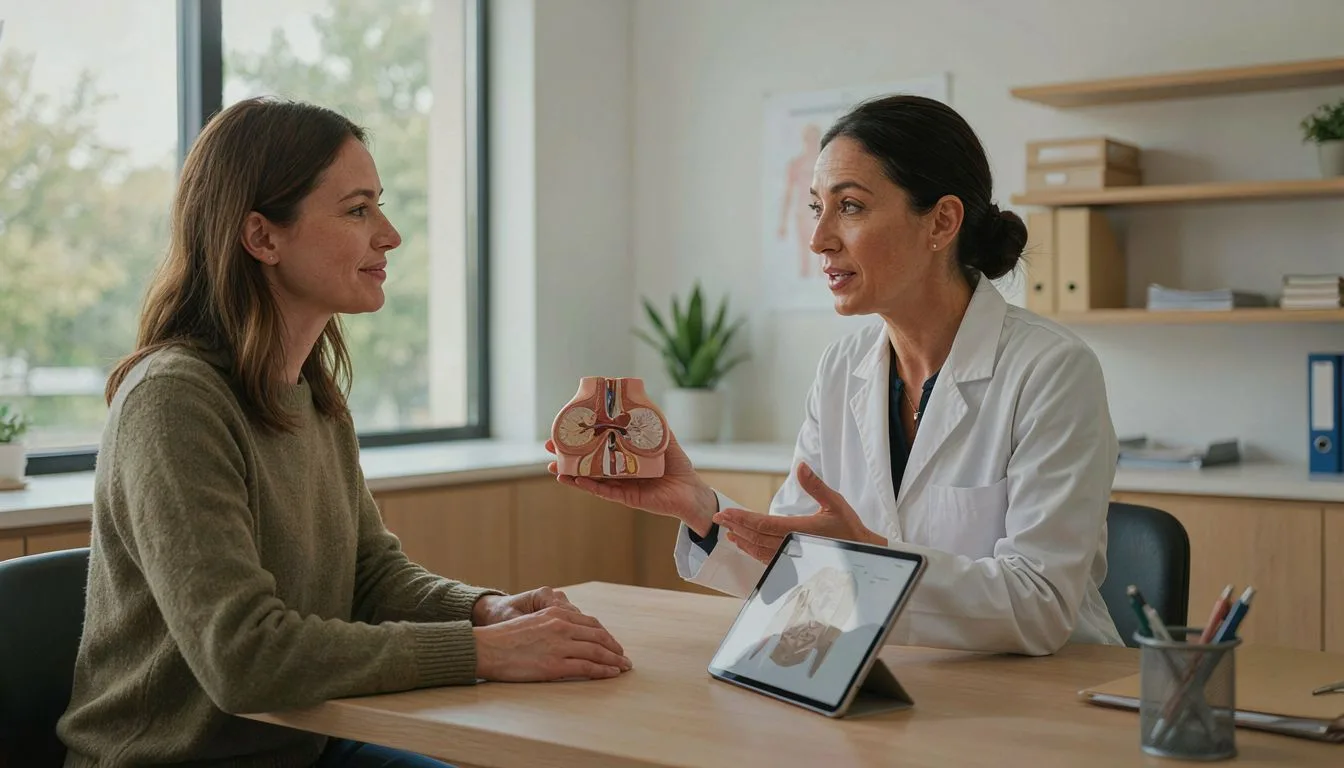
Once capsular contracture is confirmed, treatment depends on the severity of the firmness, the symptoms you’re experiencing, and how long ago your surgery took place. Not every case requires immediate surgery — but most Grade III and Grade IV cases eventually do, because the tightening tends to progress rather than resolve on its own.
For mild firmness, particularly in the early months of healing, surgeons often begin with observation and non-surgical management. This may include anti-inflammatory medications such as montelukast, targeted breast massage, and periodic follow-up exams to track whether the capsule is stabilizing or tightening further. Some mild early contractures soften over time with this approach alone.
When firmness is more advanced, or when discomfort, shape distortion, or upward displacement of the implant is present, surgical revision becomes the definitive option. The most commonly performed procedure is a capsulectomy — the surgical removal of some or all of the tightened scar capsule. In a total (complete) capsulectomy, the entire capsule is excised along with the implant, which is then replaced with a new one, often of a different surface type or position. In an incomplete capsulectomy, only the thickened portions of scar tissue are removed.
Your surgeon may also recommend changing the plane of the implant — for example, moving it from above the chest muscle to beneath it — or switching from smooth to textured (or vice versa) implants, since these adjustments can lower the risk of the contracture returning. If a bacterial biofilm is suspected as the underlying driver, the plan includes meticulous sterile technique during revision, antibiotic prophylaxis, and sometimes irrigating the surgical pocket with antibacterial solutions.
Recovery from capsulectomy and implant revision is generally similar to your original augmentation, though it may be somewhat shorter since the surgical pockets already exist. Most patients return to light activities within one to two weeks and resume full exercise after four to six weeks, following their surgeon’s specific guidance.
Can Breast Massage and Medications Help Keep Implants Soft?
Breast massage and medication are two of the most frequently asked-about strategies for preventing firmness, and the honest answer is that their value depends heavily on timing and implant type.
Implant massage, sometimes called displacement exercises, involves firmly pressing and moving the implant within its pocket during the early healing phase. The theory is straightforward: keeping the pocket stretched may discourage the capsule from tightening around the implant. Evidence for this is mixed. Some surgeons routinely prescribe massage for patients with smooth implants and report satisfying long-term softness rates, while controlled studies have not consistently shown that massage reduces capsular contracture compared with no massage at all. What is clear is that technique matters — aggressive or early manipulation can worsen swelling or bleeding, so massage should only begin when your surgeon confirms it is safe, usually after the initial healing period.
Medications have been studied with similar mixed results. The most researched option is leukotriene inhibitors such as montelukast (Singulair). These drugs target inflammatory pathways involved in capsule formation, and some small studies and clinical observations suggest they may soften early, mild capsular contracture — particularly Baker Grade II cases. However, the evidence remains limited, results are inconsistent, and these medications carry their own potential side effects, including mood-related warnings issued by regulators. No pill currently available reliably prevents or reverses established contracture.
Other approaches sometimes mentioned include vitamin E, which has little supporting evidence, and prophylactic antibiotics, which are useful around surgery but not as a long-term softness strategy.
A more reliable way to support soft implants is to choose factors proven to matter: textured or polyurethane-coated surfaces where appropriate, placement under the muscle, meticulous surgical technique to minimize contamination and bleeding, and avoiding smoking, which impairs healing.
The practical takeaway is this: massage and medication may play a supportive role in select cases, especially when firmness is caught early, but neither is a substitute for proper surgical planning and prompt evaluation if hardness develops. If you are considering either option, discuss it with your surgeon rather than starting on your own — timing, implant type, and your specific healing pattern all shape whether these measures can genuinely help.
FAQs
How soon after breast augmentation can implant hardness appear?
Implant hardness from capsular contracture can appear at any time, but it most often develops gradually within the first few months to a couple of years after surgery. Some women notice early firmness within weeks, especially if swelling or bleeding around the implant contributes to the problem. Contracture can also emerge years later, so any new or increasing hardness—whenever it appears—deserves a call to your surgeon.
Can implant hardness after breast augmentation be a sign of capsular contracture?
Yes, increasing firmness or hardness of a breast implant is one of the classic early signs of capsular contracture, which occurs when the scar tissue around the implant tightens. You may also notice the implant sitting higher, looking rounder, or feeling uncomfortable. If the hardness comes on gradually, mention it at your next follow-up, but if it appears suddenly or comes with pain, redness, or shape changes, call your surgeon promptly. Early detection makes treatment options much more effective.
Will massage or medication help if my implants start to feel firm?
Massage alone will not reverse established capsular contracture, though gentle massage may be recommended in the very early stages to help keep the pocket soft. Medication has a limited role—some surgeons try medications like leukotriene inhibitors, but the evidence is mixed. If your implants feel progressively firmer, the most effective treatment is usually surgical, such as capsulotomy or capsulectomy, so contact your surgeon promptly rather than waiting for massage or pills to fix it.