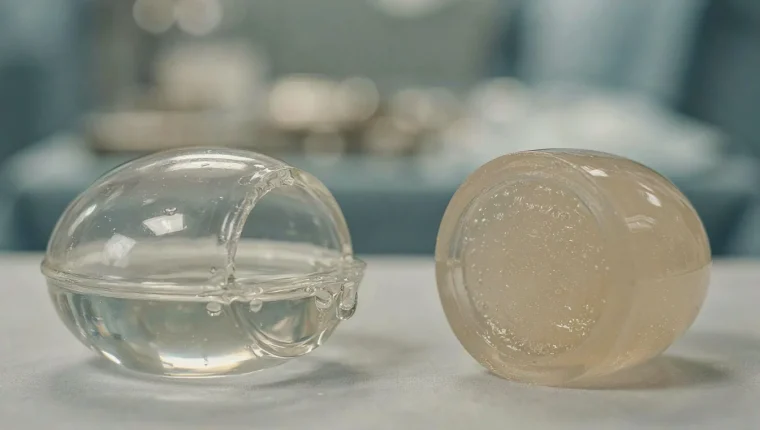
Choosing a breast implant type is a major decision in any augmentation journey, and it affects your safety, final look, and recovery. If you have researched your options, saline implants have probably come up with mixed claims: some call them the safest choice, while others say they look less natural. The truth is more balanced, and the right answer depends on your body, priorities, and guidance from an experienced surgeon.
The way to reach that answer is to understand how saline implants actually work, weigh their genuine strengths against their real limitations, see how they compare with silicone on the factors that matter most, and learn who tends to be the best candidate. Knowing what the procedure and recovery involve completes the picture — so you can walk into your consultation informed and confident.
What Are Saline Implants and How Do They Work?
A saline implant is essentially a silicone shell that a surgeon fills with sterile salt water — the same saline solution used in many medical treatments. The shell itself is made of solid silicone elastomer, which gives the implant its shape and structure, while the fill provides the volume.
One detail sets this design apart from its silicone-gel counterpart: the implant arrives empty. This is the key idea behind the fill-during-surgery approach. The surgeon inserts the collapsed shell through a small incision and then fills it to the agreed size, adjusting the volume in real time before sealing it. Because only the empty shell needs to fit through the incision, this mechanism often allows smaller incisions and gives the surgeon fine-tuned control over size and symmetry — sometimes even adjusting one side slightly differently from the other to correct minor imbalances.
Saline implants can be placed either under the chest muscle or directly behind the breast tissue, depending on anatomy and the look the patient wants. It’s this simple construction — a shell and salt water — that shapes everything about how these devices behave, and it’s the source of both the strengths and the limitations we’ll examine in the sections ahead.
Saline Implants Pros and Cons: An Overview

Before diving into the details, it helps to see the whole picture at a glance. Every implant type involves trade-offs, and saline is no exception: some of its strengths are exactly what other patients consider weaknesses.
| Advantages | Drawbacks |
|---|---|
| If a saline implant ruptures, the body safely absorbs the saltwater and the change is immediately visible | Tends to feel firmer and less natural than silicone |
| Filled during surgery, so smaller incisions are possible | More prone to visible rippling, especially in women with less natural breast tissue |
| Volume can be fine-tuned on the spot for symmetry | Deflation means a clear second surgery will be needed |
Think of these points as signposts rather than conclusions. Each benefit and each limitation has practical implications that depend on your body, your goals, and your anatomy, and the sections ahead unpack both sides in depth so you can weigh them properly before speaking with a surgeon.
The Advantages of Choosing Saline Over Silicone

When women compare implant options, saline comes with a set of practical benefits that trace directly back to its shell-and-fill construction. Because the implant is filled after placement, a surgeon can insert the empty shell through a smaller incision, which often means a shorter scar and a potentially easier recovery.
The most frequently cited benefit is safety around rupture. If a saline implant leaks, the body absorbs the sterile saltwater naturally, and the breast visibly deflates within days. That immediate detection—sometimes called a saline implant deflation—means you never live with a silent rupture, a real concern with silicone, where leaks can go unnoticed and require imaging to confirm.
Age eligibility is another meaningful difference. The FDA approves saline implants for women 18 and older, while silicone requires a minimum age of 22. For younger patients, this can make saline the only approved option.
Cost also tends to favor saline. Saline implants are typically less expensive than silicone, which can lower the overall price of surgery—a genuine factor when budgeting for a procedure.
Finally, saline offers a degree of adjustability. Because the volume is set during surgery, your surgeon can fine-tune fill levels to address minor asymmetries between breasts, something pre-filled silicone implants cannot do. Taken together, these advantages explain why many women find saline aligns well with both their health priorities and their practical circumstances.
The Drawbacks and Limitations You Should Know
Despite their safety advantages, saline implants come with honest trade-offs you should weigh carefully. The most noticeable one is look and feel. Because saline is a water-like fluid, these implants tend to feel firmer and less natural than silicone. In women with little natural breast tissue, this can also show on the surface: edges may be more visible, and the breast may not drape as softly.
Another cosmetic concern is rippling — subtle wrinkles or waves that can appear on the implant’s surface and sometimes show through the skin, especially in thinner patients or those choosing larger sizes. Silicone gel’s thicker consistency resists this better, which is one reason many surgeons steer very slim patients toward silicone.
There are also practical drawbacks to consider. Saline implants can deflate suddenly if the shell ruptures, and the body simply absorbs the fluid — which means the breast visibly loses volume, often within days. While this isn’t dangerous, it does require replacement surgery, along with the cost, anesthesia, and recovery time that come with it. Deflation rates rise gradually over the years, so most women with saline implants should expect at least one revision surgery in their lifetime. Finally, some women find that over time the implant feels slightly firmer due to tightening of the surrounding scar capsule. None of these issues are deal-breakers for everyone, but knowing them upfront makes for a much more confident decision.
Saline Implants vs Silicone Implants: Key Differences
By now you understand what each implant type offers on its own, but most women make their final decision with a direct comparison in hand. The honest answer is that neither option is universally better — the right choice depends on which factors matter most to you.
| Factor | Saline | Silicone |
|---|---|---|
| Feel | Firmer, less natural | Softer, closer to natural breast tissue |
| Rupture behavior | Immediate deflation, easy to detect | “Silent rupture,” often requires imaging to confirm |
| Incision size | Smaller, filled after placement | Larger, inserted pre-filled |
| Age limits | Approved from age 18 | Approved from age 22 |
| Cost | Generally lower | Generally higher |
| Monitoring | Minimal — changes are visible | Periodic MRI or ultrasound recommended |
A few of these rows deserve extra weight. The rupture detection difference is arguably the most meaningful: with saline, you know right away and can schedule revision without panic, while silicone requires ongoing imaging to catch a problem you cannot feel or see.
On the other hand, if a natural look and feel sits at the top of your priority list, silicone usually wins that trade-off — especially in women with less natural breast tissue to cover the implant. Younger patients, budget-conscious patients, and those who dislike the idea of long-term MRI monitoring often find that saline aligns better with how they actually live.
Who Is the Best Candidate for Saline Breast Implants?
So, how do you know if saline is right for you? The strongest fit tends to be a woman who wants a smaller incision, since saline implants are filled during surgery and can be inserted through a more discreet entry point. She also values peace of mind about safety: if a leak ever happens, she will know it almost immediately rather than wondering silently for months.
Saline also suits patients who have enough natural breast tissue to soften the implant’s edges and reduce visible rippling. Age matters here too — saline is approved for women 18 and older, making it an option for younger patients who may not yet qualify for silicone.
Finally, budget-conscious women often find saline appealing, as it typically costs less than silicone without compromising on the fundamental goal of enhancement.
None of these factors replaces professional judgment. A board-certified surgeon will evaluate your anatomy, skin quality, and goals during consultation — that conversation is the real filter that confirms whether the saline profile genuinely fits you.
What to Expect During Surgery and Recovery
On the day of surgery, saline implants follow a refreshingly straightforward process. After you receive anesthesia, your surgeon makes a small incision — often in the crease beneath the breast — creates a pocket, and positions the empty implant shell. Because the shell is inserted deflated and filled afterward with sterile saline, the incision can stay smaller than what silicone typically requires, which may mean a less noticeable scar.
The procedure usually takes one to two hours, and most women go home the same day. Expect soreness, swelling, and a feeling of tightness for the first several days. Prescription or over-the-counter pain medication generally keeps discomfort manageable.
Most patients return to desk work within about a week, though you’ll need to avoid lifting, pushing, or upper-body exercise for roughly four to six weeks. A supportive surgical bra helps during early healing.
One reassuring detail: because your body naturally absorbs saline, a rupture — if it ever occurs — announces itself quickly and harmlessly. Full results typically settle within a few months as swelling fades, and your consultation is the ideal time to discuss your personal recovery timeline.
FAQs
How long do saline implants typically last, and when might they need replacement?
Saline implants typically last 10 to 20 years, though many remain intact for even longer without causing problems. They don't come with an official expiration date, so replacement is only needed if a rupture occurs, which is often noticeable right away because the implant deflates as the saline is absorbed by the body. Other reasons for replacement can include capsular contracture, sagging over time, or a desire to change size. Since saline ruptures are easy to detect, you won't need routine imaging the way patients with silicone implants often do.
What happens if a saline implant ruptures, and how noticeable is it?
If a saline implant ruptures, the sterile salt water inside simply leaks out and your body safely absorbs it, so there is no health danger from the escaping fluid. It is very noticeable, often almost immediately: the breast visibly deflates within hours or days, sometimes called a "sloshing" effect. This is actually one advantage of saline implants—you know right away that you need a replacement, unlike silicone implants where a rupture can be silent. Treatment is a straightforward surgery to remove and replace the shell.
Are saline implants a good choice for women under 22 or those concerned about incision size?
Saline implants are often the preferred option for women under 22, since FDA approval for silicone implants in cosmetic augmentation typically begins at age 22 while saline is approved from 18. They also allow smaller incisions because they're filled after placement, which means less scarring—another plus if incision size concerns you. Keep in mind that saline implants can feel firmer and may show rippling more than silicone, so discuss your anatomy and goals with a board-certified surgeon before deciding.