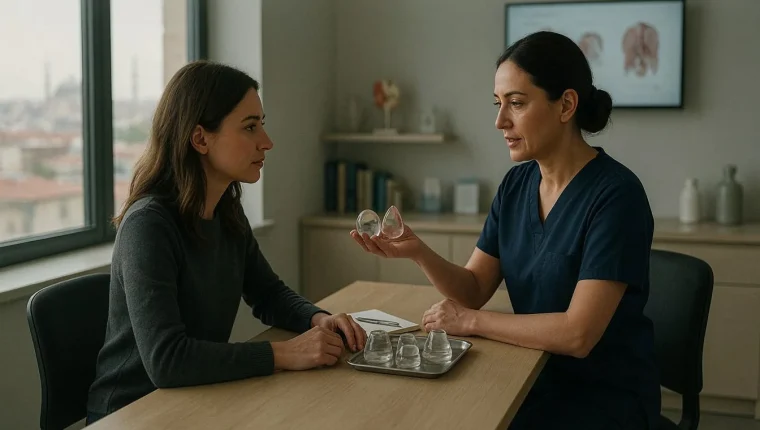
Turkey has become one of the most popular destinations for breast augmentation, attracting thousands of international patients each year with competitive prices and all-inclusive packages. This popularity has also attracted clinics that prioritize volume over quality. Not every online offer comes from a facility that will look after you properly, and the difference between a good and careless clinic can affect your health for years. Surgeons without verifiable credentials and prices that seem impossibly low are red flags you can often spot before booking a flight. Whether comparing offers or talking to a clinic, understanding the warning signs behind breast augmentation in Turkey is the most reliable way to protect your safety and results.
Why Patients Consider Breast Augmentation in Turkey
Every year, tens of thousands of women travel to Turkey for breast augmentation, and the reasons go far beyond the postcards. The country has built one of the largest medical tourism infrastructures in the world, with dedicated international patient departments, English-speaking coordinators, and all-inclusive packages that cover surgery, accommodation, transfers, and aftercare. For many patients in the UK, Europe, and the Middle East, the combination of short flight times and significantly lower costs makes the decision feel practical rather than risky.
The price difference is real. A breast augmentation in Turkey typically costs 40–60% less than the same procedure in Western Europe or the United States, even when flights and hotel stays are included. This is partly due to lower operational costs and favorable exchange rates, and partly because high-volume clinics genuinely perform more surgeries per surgeon than most private practices abroad. At the same time, Turkey’s Ministry of Health regulates health tourism through licensed facilitators, and top hospitals hold international accreditations that reassure patients comparing options across borders.
There is also a social dimension. Before-and-after communities on Instagram, TikTok, and dedicated forums have made Turkish surgeons household names in some circles, and hearing a personal success story often outweighs statistics. Patients see real results from real people, and the perceived risk drops.
Yet this popularity is exactly why caution matters. Where demand is high, an aggressive market follows — and not every clinic offering affordable breast augmentation operates at the same standard. Understanding what draws patients to Turkey is the first step in recognizing when an attractive offer is actually one of the red flags this article will help you identify.
Unrealistically Low Prices and What They Hide

When a quote for breast augmentation comes in dramatically below what reputable clinics charge, that number is rarely a genuine bargain. It is usually a pricing strategy designed to fill operating schedules quickly, and the savings are almost always recovered from somewhere the patient cannot see. Understanding what sits behind an all-inclusive package price that seems too good to be true is one of the most important skills you can develop before committing to surgery abroad.
The most common corners being cut include:
- Unqualified or underqualified surgeons: Some low-cost providers use general practitioners or doctors without board certification in plastic surgery to perform operations, because their time costs far less than a specialist’s.
- Expired or recycled implants: Discounted quotes may rely on implants from unreliable manufacturers or, in the worst cases, products without proper CE certification and traceable warranties.
- Inadequate hospital standards: Operating in a small clinic without full anesthesia support, intensive care backup, or emergency transfer agreements dramatically increases risk if complications arise.
- Compressed aftercare: Low prices rarely budget for genuine post-operative follow-up, meaning infections, seromas, or implant problems are left for the patient to solve — often back home.
- Hidden fees added later: Garments, medications, anesthesia, and even compression bras are sometimes billed separately after the patient has already paid a deposit.
A realistic price reflects the surgeon’s experience, the quality of the implants used, and the safety infrastructure of the facility. If a clinic cannot clearly explain what their fee covers — implant brand, hospital stay, anesthesia, and follow-up appointments — treat the silence itself as an answer. Legitimate providers are usually transparent precisely because they have nothing to hide.
Lack of Verified Surgeon Credentials and Certifications
A price tag tells you nothing about who will actually be holding the scalpel. One of the most dangerous red flags when arranging breast augmentation in Turkey is a clinic that cannot clearly prove who its surgeons are, what they are trained in, or whether they are legally permitted to perform the operation at all. In some facilities marketed to medical tourists, procedures are delegated to general practitioners with no board certification in plastic surgery, or even to residents, while the famous name on the website only appears in promotional photos.
Turkey has excellent, fully qualified plastic surgeons — but there is no guarantee the one advertised is the one operating. Legitimate specialists in aesthetic, plastic and reconstructive surgery in Turkey complete six years of medical school, then an additional five to six years of specialized residency, and are certified by the Turkish Society of Plastic, Reconstructive and Aesthetic Surgeons. Verifying this takes minutes; skipping it can cost you your health.
A trustworthy clinic will provide the surgeon’s full name, medical license number, and specialty certification without hesitation, and will confirm in writing that this specific doctor will perform your entire procedure. Be cautious if the website only shows brand names like “Elite Aesthetics Clinic” with no individual surgeon profiles, if staff dodge the question of who will operate, or if the surgeon has no verifiable presence on official registers or international databases such as ISAPS or EBOPRAS. Some unscrupulous operators also use stock photos or borrowed credentials, so a reverse image search of the surgeon’s photos is a simple extra check worth doing before you commit.
Warning Signs in Before-and-After Photos and Reviews
Before-and-after galleries are often the first thing patients check, and unfortunately, they are also the easiest marketing tool to manipulate. A trustworthy clinic shows consistent, high-resolution photos of its own patients, taken under the same lighting, angle, and time frame. When you see polished, heavily filtered images, or results that look almost too perfect, treat that as a serious signal rather than a selling point.
One of the most common tricks is using borrowed or licensed photos from other surgeons, sometimes even stock images. A quick reverse image search can reveal whether the same “result” appears on multiple clinics’ websites across different countries. Another warning sign is the complete absence of follow-up photos — genuine results include images taken six to twelve months after surgery, once swelling has fully subsided, not just the flattering early healing stage.
Reviews deserve the same scrutiny. A clinic with hundreds of flawless five-star ratings posted within a short window is showing you a pattern, not a track record. The most credible feedback includes specifics: how the surgeon communicated, how complications were handled, whether aftercare promises were actually kept. Be cautious when a review platform only displays positive comments while critical ones seem filtered out — independent forums and patient communities usually tell a more balanced story.
Finally, pay attention to how the clinic responds to negative reviews. Defensiveness, deletion, or legal threats say more about their culture than any gallery ever could. A confident, ethical clinic acknowledges criticism and explains how it improved — that transparency is worth far more than a portfolio of unverified images.
Red Flags During Your Initial Consultation
The consultation is where the business side of breast augmentation in Turkey reveals itself most clearly, long before you ever see an operating room. A reputable surgeon uses this conversation to understand your anatomy, discuss realistic outcomes, and give you honest space to reconsider. A sales operation, by contrast, treats the call as a closing opportunity — and the difference is usually obvious within the first fifteen minutes if you know what to listen for.
Perhaps the single most revealing moment is when the surgeon quotes you an implant size and surgical plan without ever conducting a proper physical examination. Because many international patients communicate remotely first, clinics have normalized offering precise recommendations based solely on photographs. While photos can be a starting point, a definitive plan — including implant type, placement, and incision site — requires hands-on assessment of your tissue quality, chest wall dimensions, and skin elasticity. If a clinic guarantees exact cc measurements over WhatsApp, they are selling a product, not planning an operation.
Beyond that, pay attention to these behaviors during your consultation:
- Pressure to book immediately — “discounted” prices that expire within 48 hours or claims that the surgeon’s calendar is nearly full are manufactured urgency, not genuine availability.
- Vague or evasive answers about complications — a confident surgeon discusses capsular contracture, implant revision rates, and what happens if results disappoint, because these are part of informed consent.
- Refusal to let you speak with the surgeon directly — if every conversation routes through a patient coordinator or sales agent, the person selling you the surgery may never have met the person performing it.
- One-size-fits-all recommendations — when a clinic pushes a single implant brand, profile, or technique for every patient regardless of anatomy, efficiency matters more to them than your outcome.
- Dismissiveness toward your questions — reluctance to discuss anesthesia methods, the operating facility, or who will assist in surgery suggests details they prefer you not examine too closely.
Trust your reaction to the conversation itself. A qualified plastic surgeon welcomes scrutiny and explains decisions in clinical terms; an intermediary reads from a script and steers every topic back to flights, hotels, and payment. If the consultation feels more like booking a holiday than planning major surgery, that instinct is worth following — the clinics that deserve your money are the ones that make you feel informed, not rushed.
What a Safe Clinic Should Provide Before Surgery

Once you have identified a clinic that seems trustworthy, the real test begins: what the clinic is willing to put in writing and arrange before you ever step into the operating room. A genuinely reputable facility for breast augmentation in Turkey does not ask you to take anything on faith. Instead, it builds a structured process that protects you at every stage.
The most important element is a comprehensive pre-operative medical assessment. This should include blood tests, an ECG, a mammogram or breast ultrasound where indicated, and a thorough review of your medical history. Any clinic willing to schedule surgery without these checks is prioritizing speed over your safety, and that alone should end the conversation.
Beyond testing, a safe clinic will give you clear, written documentation covering several essentials:
You should receive a detailed surgical plan prepared by the surgeon who will actually operate on you — not a sales coordinator. This plan specifies the implant type, size, placement, and incision approach, along with the reasoning behind each choice.
The implants themselves must be traceable: CE-certified, registered with a serial number, and accompanied by the manufacturer’s warranty documentation that you can keep. Ask to see the boxes and verify the details before surgery.
You should receive the full anesthesia plan, including who will administer it. A certified anesthesiologist — not a general practitioner — is non-negotiable for any operation under general anesthesia.
Written information about recovery timelines, potential complications, and exactly what to do if a problem arises should be provided before you pay, not after.
Finally, confirm where your surgery will take place. A fully licensed hospital or an accredited surgical facility with an intensive care unit on site offers a safety net that a small private office simply cannot. Reputable clinics state their operating facility openly and encourage you to verify its licensing. If that information is difficult to obtain, treat the silence as an answer in itself.
Recognizing Red Flags After Your Operation
Recovery does not end the moment your plane leaves Istanbul or Antalya. In many ways, the most important phase of safety monitoring begins after you land at home, which is why understanding post-operative complications and how a responsible clinic responds to them is essential knowledge before you commit to any provider.
Most typical healing signs are easy to recognize: mild swelling, bruising, and tightness that improve steadily week by week. What deserves your attention are symptoms that move in the opposite direction. A breast that becomes increasingly red, hot, or painful, a sudden asymmetry with one implant visibly higher or more swollen, fever above 38°C, or unusual discharge from the incision line are all signals that should be reported immediately — not “waited out.”
This is where compressed aftercare becomes a real problem. Some clinics in the medical tourism market consider their obligation finished at discharge, leaving patients to interpret concerning symptoms on their own. Before your operation, ask specifically what happens after you fly home: Is there a dedicated contact for post-operative questions? Will a doctor or nurse respond within a defined timeframe? Do they communicate with a local physician in your country if something goes wrong? A clinic that answers these questions vaguely is telling you something important.
Be equally alert to how problems are framed if they occur. Dismissing persistent pain as “normal,” pressuring you to accept a revision you have not had time to consider, or refusing to share your operative report — the document any local surgeon will need to help you — are serious warning signs. Reputable providers document everything and treat your aftercare as part of the service, not an inconvenience.
Finally, know your own follow-up obligations. Implants require periodic monitoring regardless of where surgery took place, so arrange an ultrasound or MRI schedule with a provider near home. If your surgeon of choice cannot commit to structured aftercare across borders, that limitation should weigh in your decision just as heavily as the surgeon’s skill or the price.
FAQs
How can I tell if a Turkish clinic offering breast augmentation is not properly accredited?
Warning signs include the clinic refusing to share its Ministry of Health medical tourism authorization or the surgeon's Turkish Medical Association registration, no verifiable hospital or surgical facility credentials, prices dramatically below market rates, and pressure to book quickly without a proper consultation. Legitimate clinics will provide the surgeon's board certification, before-and-after photos from real patients, and clear information about the accredited hospital where the surgery will be performed. If the clinic communicates only through unverified social media accounts, lacks a physical address, or cannot provide an official treatment contract, consider those red flags. You can also verify the facility's health tourism certificate through Turkey's official USHA (Health Tourism Portal) registry.
What warning signs should I watch for when a surgeons before-and-after photos look manipulated or reused?
Warning signs include identical scars, moles, or freckles appearing on different patients, photos with inconsistent lighting or backgrounds between the before and after images, and head positions or angles that seem artificially aligned to exaggerate results. Be cautious if the photos look overly airbrushed or retouched, if the same image set appears on multiple surgeons' websites, or if there are noticeably fewer after photos than before photos. A surgeon who refuses to show a larger portfolio or only displays a handful of carefully chosen cases should also raise concern. When in doubt, ask to see unretouched images of patients with your specific procedure during an in-person consultation.
Why is unusually low pricing for breast augmentation in Turkey often a red flag?
Unusually low pricing often signals that clinics are cutting corners in critical areas such as surgeon qualifications, implant quality (using unapproved or counterfeit devices), anesthesia standards, or sterile operating conditions. Some facilities also advertise low base prices to attract international patients, then add hidden fees for tests, medications, compression garments, or post-operative care. Bargain prices frequently come with no meaningful follow-up care, leaving patients without support if complications like infection, capsular contracture, or implant malposition arise. Reputable clinics in Turkey maintain transparent, comprehensive pricing that covers the surgeon, hospital, implants, and aftercare, so a price that seems too good to be true usually reflects compromised safety.