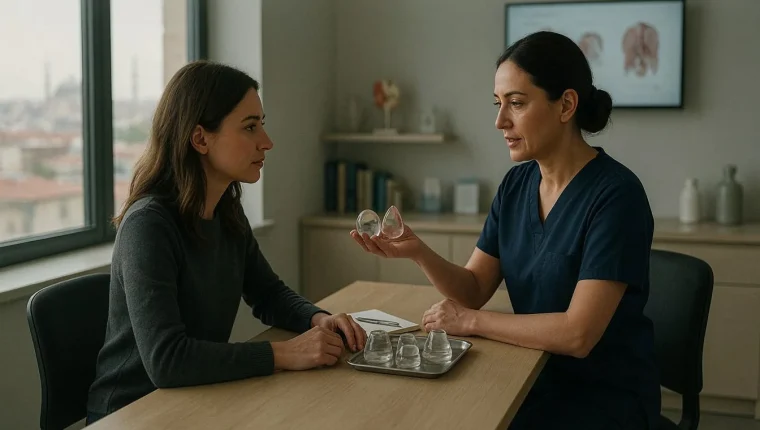
Breast augmentation in Turkey often costs one-third to one-half as much as the same surgery in the US or Western Europe. For anyone paying out of pocket, that difference is hard to ignore — and it’s the reason thousands of patients travel there every year. But cheap breast augmentation in Turkey comes with trade-offs that the advertised price doesn’t show. The quoted figure usually covers surgery and a short hotel stay, not the full cost or requirements of your procedure. It also says nothing about the surgeon’s experience, the clinic’s standards, or who handles complications if something goes wrong after you fly home. This isn’t an argument against Turkey — many excellent surgeons work there. It offers a balanced look at the real risks and value: how low prices are structured, what hidden costs appear later, how to vet a clinic properly, and what happens when revision surgery is needed.
Why Turkey Offers Lower Prices for Breast Augmentation
Turkey’s low surgery prices are not primarily a sign of corner-cutting — they reflect a fundamentally different economic environment. Surgeons and clinic staff earn salaries in Turkish lira, and when those costs are converted for paying patients in dollars, euros, or pounds, the difference is substantial. Lower overheads for operating facilities, staff wages, and rent all feed into a lower final price without necessarily lowering the standard of care.
The second major driver is the high-volume business model behind Turkish health tourism. Clinics that serve international patients every day spread their fixed costs across many cases, allowing them to charge less per patient than a small private practice in Western Europe or the US might.
Government policy also plays a role. Turkey has actively promoted medical tourism for years, with incentives and infrastructure that make it easier for hospitals to attract and treat foreign patients at scale.
The market includes a wide spectrum. The same city can host internationally accredited hospitals and budget clinics operating on thin margins. Low price alone tells you little about quality — the economics explain why prices differ, but the surgeon’s qualifications determine whether you should book.
What the Advertised Price Usually Includes — and What It Doesn't

Most advertised prices in Turkey are quoted as all-inclusive surgery packages, and on paper they cover a lot: the surgeon’s fee, anesthesia, the implants themselves, hospital and operating theater costs, pre-operative blood tests and imaging, plus practical extras like airport transfers, a interpreter, and several nights in a hotel. For many patients, this bundle is exactly what makes the quote look unbeatable compared to a itemized bill at home.
But the word “package” deserves scrutiny, because what sits outside it varies enormously from clinic to clinic. Commonly excluded are post-operative follow-up care once you fly home, prescription medications, compression bras, and any treatment for complications. Some quotes also leave out the anesthesiologist’s fee or charge separately for premium implant brands, so the final invoice can drift upward from the number you first saw.
Comparing packages between clinics is genuinely difficult for this reason. Two quotes of the same figure may include completely different scopes — one covering a year of aftercare, the other ending at discharge from the hospital. Before you compare a single price, ask each clinic for a written, itemized list of what is and is not included, and read the exclusion clauses carefully. The cheap offer and the fair offer are not always the same thing.
Hidden Costs Patients Should Budget For
Beyond the number on the clinic’s website, the true cost of surgery abroad is the sum of several smaller expenses that rarely appear in the quote. Flights are the obvious one, but many patients need to change or extend their tickets when healing takes longer than planned, and airline change fees can be steep. Add extra hotel nights, meals, and transport, and the accommodation line of your budget grows quickly — especially if a companion travels with you, which is strongly recommended after anesthesia.
Medical costs outside the package also add up. Prescription medications such as antibiotics and painkillers, surgical bras, and scar care products are often not included. Once you return home, your follow-up visits with a local surgeon or GP become your own expense, and not every doctor is willing to manage post-operative care for someone operated on elsewhere.
Perhaps the most important line item is a contingency fund: money set aside for unexpected needs such as an extended stay, urgent consultations, or additional treatment if healing does not go smoothly. A realistic rule of thumb is to budget 20–30% above the advertised price, so the final figure reflects your complete journey rather than just the operating room.
Qualifications to Check Before Choosing a Clinic Abroad
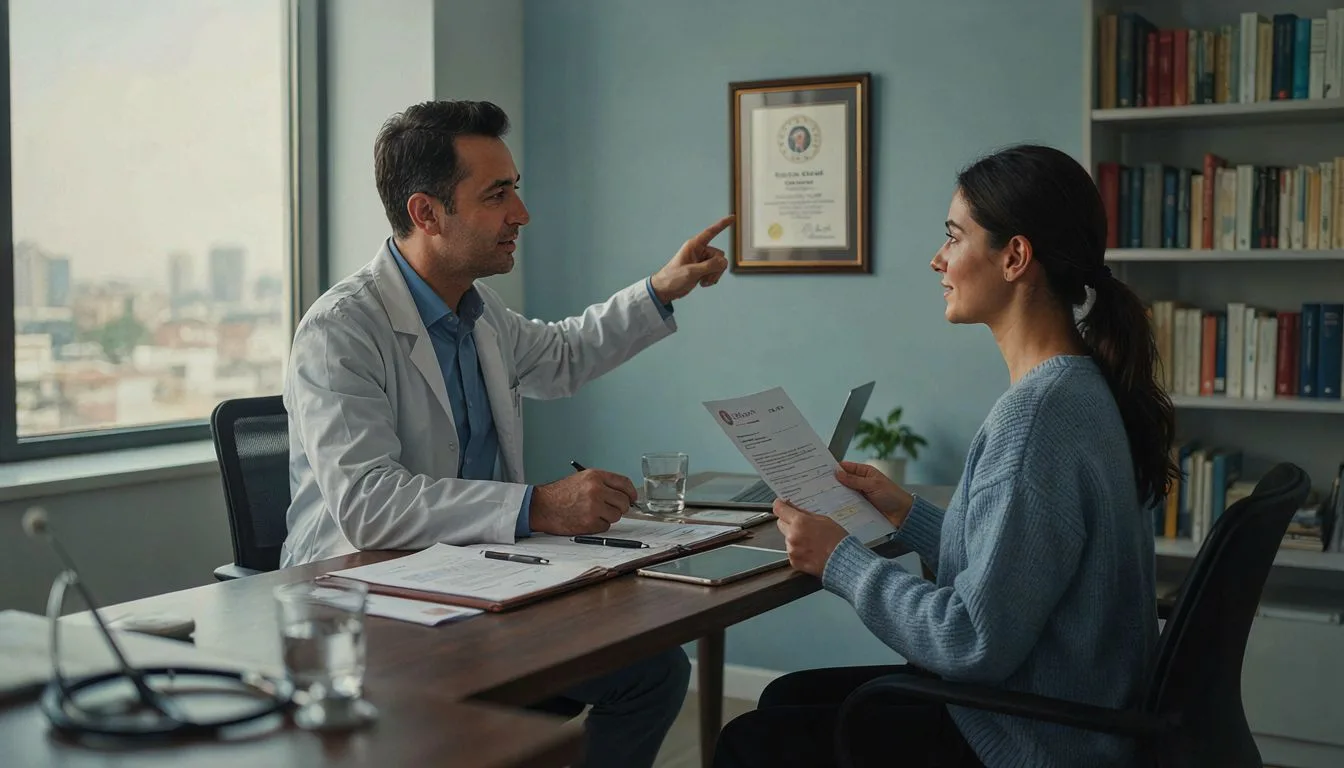
Vetting a clinic properly is the single most effective way to protect yourself when booking cheap breast augmentation abroad. Start with the surgeon, not the facility: confirm they are board-certified in plastic and reconstructive surgery and ask how many breast augmentations they personally perform each year. A legitimate surgeon will answer this without hesitation and can show you their registry number.
Next, look at the facility itself. Hospitals accredited by JCI or an equivalent international body must meet surgical and hygiene standards that many small private clinics never undergo. Operating in a full hospital also matters if something unexpected happens during the procedure — immediate access to intensive care is not a marketing extra, it is a safety requirement.
Some warning signs should end the conversation immediately. Pressure tactics such as “this discount expires tomorrow,” refusal to hold a live video consultation with the surgeon before booking, missing or inconsistent before-and-after photos, and prices that appear only through a middleman are all common red flags. Be equally cautious if the person communicating with you is a sales representative rather than a medically trained coordinator.
Before paying any deposit, ask who will perform the surgery, what implant brand and warranty apply, which hospital the operation takes place in, and what happens if you need to postpone. A clinic that answers these clearly and in writing has already passed the most basic test of credibility.
Common Complications Linked to Budget Surgery Abroad
Lower prices often come with a trade-off in surgical conditions. Complication rates reported after budget surgery abroad tend to cluster around a few well-known problems: capsular contracture (scar tissue tightening around the implant), infection, and implant malposition — where one or both implants sit too high, too low, or too far to the side.
These issues are not unique to Turkey, but they appear more often in practices built on a high-volume business model. When a surgeon operates on many patients a day with limited consultation time, screening is thinner. Patients with risk factors that a thorough evaluation would catch — smoking, certain immune conditions, or unrealistic tissue characteristics for large implants — may go into surgery anyway, raising the odds of wound healing problems and infection.
Malposition is also linked to rushed planning. Accurate pocket creation takes time and careful measurement; a compressed surgical schedule leaves less room for that precision, and asymmetry discovered later is difficult to reverse.
Complications often show up days or weeks after you fly home, which is exactly when access to your operating surgeon becomes limited. Managing a wound infection or early contracture requires prompt, in-person care — and depending on your clinic’s arrangements, that care may have to come from doctors in your own country who did not perform the original surgery.
How Travel and Recovery Timelines Affect Your Treatment Plan
Most reputable Turkish clinics ask breast augmentation patients to stay in the country for at least 7 to 10 days after surgery. That window isn’t arbitrary: the first week covers your initial follow-up appointments, drain removal if needed, and the early days when complications like bleeding or infection are most likely to appear. Flying before this period passes is genuinely risky, since cabin pressure changes and reduced mobility can worsen swelling and raise the theoretical risk of clotting problems.
Budget packages often advertise 4- or 5-day trips, and that compression is where problems start. Squeezing surgery, recovery, and aftercare into under a week leaves no margin — if your body needs extra healing time, you’re either flying unsafely or paying out of pocket to change flights and extend your hotel stay. Neither option is one you want to be forced into.
Once you fly home, follow-up becomes the weak link. Your surgeon in Turkey can review photos remotely, but wound checks, implant assessments, and any early intervention require a local doctor willing to take on another surgeon’s patient. Arrange that before you travel, not after a problem appears.
Revision Surgery: Who Pays When Results Go Wrong
One of the biggest surprises for patients who need a second operation is discovering that the original surgeon is often willing to help, but the rules differ from clinic to clinic. Some Turkish clinics include free or discounted revision surgery within the first year, while others treat it as an entirely new procedure with a fresh bill. This is exactly why you must ask about the policy before booking, not after a complication appears.
There is also a geographic problem. If you return home and need correction, local surgeons frequently charge more to fix work done abroad, partly because the case is more complex and they have no existing relationship with the original clinic. Travel insurance almost never covers this, and standard medical tourism policies often have strict caps and exclusions for follow-up operations.
Your best protection is documentation. Before paying any deposit, ask the clinic to send its revision policy in writing: what it covers, for how long, who pays travel costs for a return trip, and under what conditions. A clinic that refuses to put these terms in writing is telling you something important about how it handles problems.
FAQs
How much cheaper is breast augmentation in Turkey compared to the UK or US?
Breast augmentation in Turkey typically costs between $2,500 and $4,500, compared to $6,000–$12,000 in the UK and $8,000–$15,000 in the US. This means patients generally save 50% to 70% by choosing Turkey, even after factoring in flights and accommodation. The savings come mainly from lower operating costs and labor expenses rather than differences in quality, as many Turkish clinics use similar FDA-approved implants and internationally trained surgeons.
Is it safe to choose a low-cost breast augmentation clinic in Turkey?
Low-cost breast augmentation in Turkey can be safe when the clinic and surgeon are properly vetted, as many Turkish hospitals hold international accreditations like JCI and surgeons are often board-certified with strong track records. The risk comes from choosing providers based on price alone, so verify the surgeon's credentials, the hospital's accreditation, complication and revision rates, and what the package actually includes (aftercare, anesthesia, implant brand, follow-up). Reputable clinics will openly share before-and-after photos, patient reviews, and clear pricing without hidden fees.
What should I check before booking a budget breast augmentation in Turkey?
Before booking, verify the surgeon is board-certified in plastic surgery and check the clinic's international accreditations, such as JCI or TEMOS, along with verified patient reviews. Ask what the quoted price includes—pre-operative tests, anesthesia, implants, hospital stay, and post-operative follow-up—since budget packages often exclude these. Confirm the clinic's revision policy and who covers costs if complications arise after you return home. Request before-and-after photos of the actual surgeon's work and insist on a direct consultation with the surgeon, not just a coordinator, before committing.