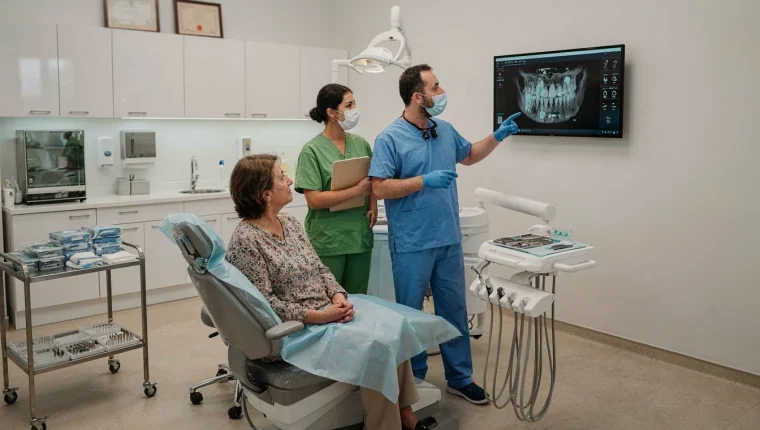
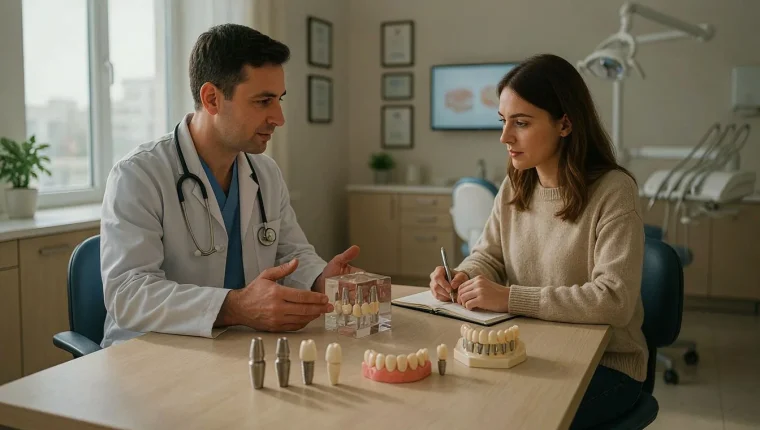
Returning to Canada after dental implant treatment abroad does not end your recovery; continuity of care remains especially important. Your Canadian dentist may need surgical notes, implant details, X-rays, medication information, and the original clinic’s contact details to monitor healing accurately. Until the implant is fully integrated, keeping the area clean, avoiding pressure, and following medication instructions can affect comfort and long-term stability. Arrange a local dental assessment soon after returning, particularly if you notice increasing pain, swelling, bleeding, a loose temporary tooth, or changes in your bite. Careful records, regular professional monitoring, and consistent home habits support safe dental implants aftercare in Canada.
Arranging Follow-Up Care With a Canadian Dentist
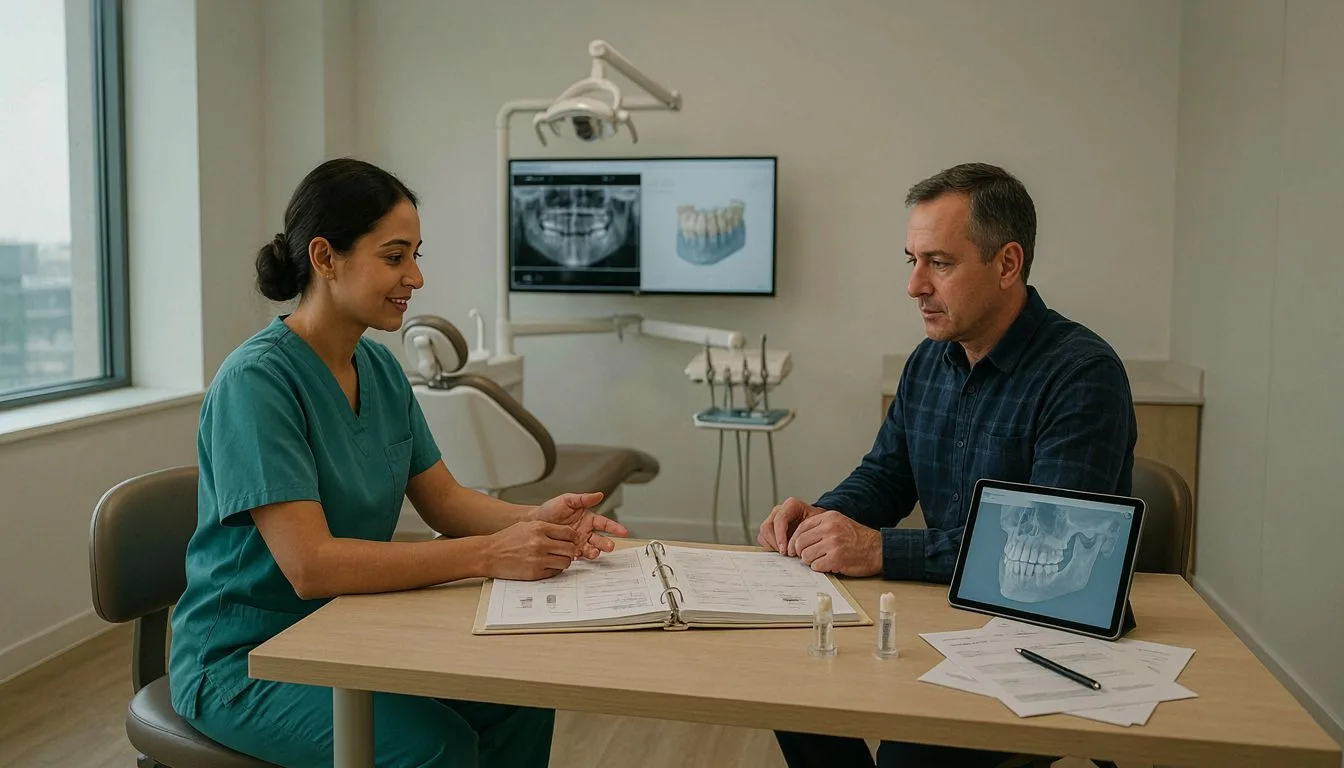
Before booking routine dental care in Canada, contact the overseas provider and request a complete copy of your implant records. These should include the implant system and size, surgical and restorative procedure details, dates of treatment, bone grafting or other related procedures, medication instructions, and the planned next steps. Include relevant X-rays or three-dimensional scans in their original format whenever possible.
Look for a Canadian dentist who regularly manages implant patients and is comfortable reviewing treatment completed abroad. You can ask whether the practice provides implant maintenance, evaluates healing around implants, and coordinates with specialists when needed. Share your records before the appointment so the dentist has time to understand the treatment rather than starting with incomplete information.
Clinical assessment should determine when you need an examination and whether new imaging is appropriate. Timing may depend on the type of implant procedure, the stage of restoration, your symptoms, and the instructions provided by the treating dentist. Avoid arranging imaging solely because it was performed overseas or requesting a fixed schedule without professional guidance.
With your permission, ask the overseas and Canadian providers to communicate directly about the surgical findings, healing expectations, restoration design, and outstanding appointments. Clear information exchange helps the Canadian dentist continue the existing plan and identify any differences that require clarification.
Managing Pain, Swelling, and Oral Hygiene at Home
During early healing, mild soreness, tightness, bruising, or swelling can be expected, particularly after extensive surgery or bone grafting. Swelling often increases during the first few days before gradually settling. Resting with your head elevated, using a cold pack externally for short periods, and choosing softer foods can improve comfort without placing pressure on the treated area.
Take pain relief, antibiotics, or other medicines only as directed by the clinician who performed the procedure or the Canadian dentist overseeing your care. Do not change the dose, stop an antibiotic early, or add an over-the-counter medicine without checking for possible interactions or medical contraindications. If your instructions from abroad are unclear, ask the treating clinic or a Canadian dental professional before making adjustments.
Gentle oral hygiene helps reduce plaque while protecting the surgical site. Follow the specific instructions you were given about brushing, rinsing, and any prescribed antimicrobial mouthwash. In many cases, the surrounding teeth can be brushed carefully with a soft toothbrush, while direct brushing over the implant site may need to wait temporarily. Avoid forceful rinsing, vigorous spitting, and probing the area with a finger or toothbrush.
Instructions may differ when an implant was placed with a bone graft, when a temporary restoration is present, or when treatment is being completed in stages. Keep the written aftercare plan available and confirm any uncertainty with your dental provider. Contact the practice for advice if discomfort or swelling is not following the expected pattern, rather than trying to manage a changing symptom alone.
Protecting the Implant During Eating and Daily Activities

Food choices can reduce stress on a healing implant and the surrounding tissues. Choose soft, nourishing options such as eggs, yogurt, pasta, cooked vegetables, fish, and tender meat, and avoid hard, sticky, crusty, or very chewy foods while your dentist recommends a restricted diet. If the treated area is sensitive or your clinician has advised it, chew on the opposite side and take small bites rather than testing the implant with firm foods.
Everyday habits also matter. Do not smoke or vape during healing, as nicotine can impair tissue recovery and increase the risk of complications. Avoid placing pressure on temporary teeth or restorations by biting pens, opening packages with your teeth, or chewing ice. If your work involves heavy lifting or strenuous exertion, ask your dentist when normal activity is appropriate instead of assuming that discomfort is a reliable guide.
Sleep with your head slightly elevated if this helps limit throbbing, and protect the area during sports by following your clinician’s advice about activity restrictions or a mouthguard. When travelling or returning to work, keep prescribed supplies available and avoid delaying care if a temporary restoration feels loose. These precautions are usually temporary; once healing is confirmed, your dentist can explain which foods and activities may safely return to normal.
Recognizing Complications That Need Urgent Attention
After returning to Canada, do not wait for a routine review if your recovery is moving in the wrong direction. A symptom that becomes more intense instead of gradually settling may indicate infection, impaired healing, or excessive strain on the implant site. Pay attention to changes that persist, spread, or interfere with eating, speaking, or opening your mouth. Progressively worsening symptoms deserve prompt professional assessment rather than continued home monitoring. Contact a dental professional promptly when these warning signs appear, even if the concern seems manageable at first.
- Increasing pain or swelling: Contact a dentist promptly if discomfort intensifies after initial improvement, swelling spreads into the cheek or neck, or the area becomes increasingly hot and tender.
- Fever or drainage: Fever, chills, a foul taste, pus, or persistent fluid from the surgical site can suggest infection and should be reported to a Canadian dental professional.
- Uncontrolled bleeding: If firm, continuous pressure does not control bleeding, seek urgent dental advice; heavy bleeding, breathing difficulty, or severe weakness requires emergency services.
- Movement or bite changes: An implant, healing component, crown, or temporary prosthesis that feels loose, shifts, or suddenly changes your bite needs prompt review. Avoid testing or tightening it yourself.
- Damage to a temporary component: Save any detached piece and contact the Canadian dentist and overseas provider for coordinated instructions, especially if treatment is still incomplete.
For a non-life-threatening concern, start with the Canadian dentist managing your follow-up and share treatment records, implant details, and photographs if requested. The overseas provider may clarify the original surgical plan, while emergency services are appropriate for severe bleeding, facial trauma, difficulty breathing or swallowing, or rapidly spreading swelling. Prompt communication can help the dental team determine whether you need an urgent examination, additional treatment, or specific instructions while care is coordinated between Canada and the overseas provider.
Maintaining Long-Term Implant Health in Canada
Once early healing is complete, ongoing maintenance helps protect both the implant and the tissues supporting it. Arrange regular examinations with a Canadian dentist so they can assess the gums, restoration, bite, and implant stability. Professional cleaning may be recommended to remove buildup from areas that are difficult to reach at home, while dental imaging should be used when clinical findings or symptoms make it appropriate.
Your cleaning routine should match the final restoration. A soft toothbrush, carefully selected interdental brushes, floss designed for implants, or a water flosser may help clean beneath and around the prosthetic teeth without damaging surrounding tissues. Your dentist or hygienist can demonstrate the safest technique and replace tools as needed.
Maintenance needs may be greater if you have a history of gum disease, smoke or use tobacco, or have difficulty controlling plaque. Keep a durable record of the implant system, component details, surgical notes, and restoration information from the original provider. This treatment history gives Canadian clinicians essential information when planning future examinations, repairs, or replacement parts.
FAQs
What should I do if I develop pain or swelling after returning to Canada following dental implant surgery?
Contact your implant dentist or oral surgeon promptly for advice, especially if the pain or swelling is worsening, severe, or begins several days after surgery. If you cannot reach the surgical team, see a qualified dentist or oral surgeon in Canada and provide your treatment records and medication details. Seek emergency care for difficulty breathing or swallowing, uncontrolled bleeding, rapidly spreading swelling, or a high fever.
How can I arrange follow-up appointments for dental implants aftercare in Canada?
Contact your implant dentist or oral surgeon before leaving the clinic to schedule the first follow-up, typically within one to two weeks, and arrange later visits as recommended. Canadian dental offices usually offer appointments by phone, online booking, or email; confirm the clinic’s after-hours contact details and whether your insurance requires preauthorization. If you experience severe pain, increasing swelling, fever, or implant looseness, request urgent dental assessment.
When should I contact my overseas dentist or a Canadian dental professional about implant complications?
Contact your overseas dentist promptly for persistent pain, swelling, bleeding, fever, pus, a loose implant or crown, altered bite, numbness, or difficulty opening your mouth. Seek a Canadian dental professional if you cannot reach the treating dentist, have returned home, or symptoms are severe or worsening; seek emergency care for facial swelling that affects breathing or swallowing.