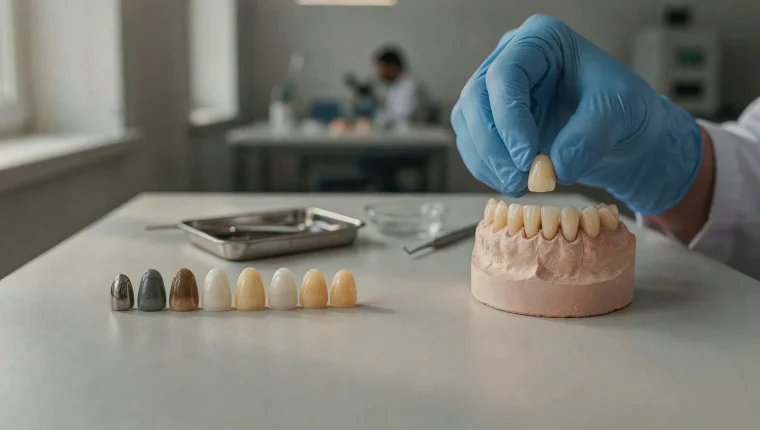
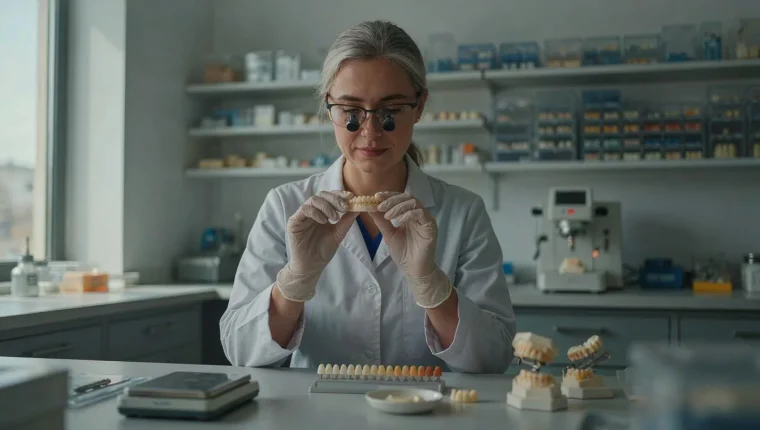
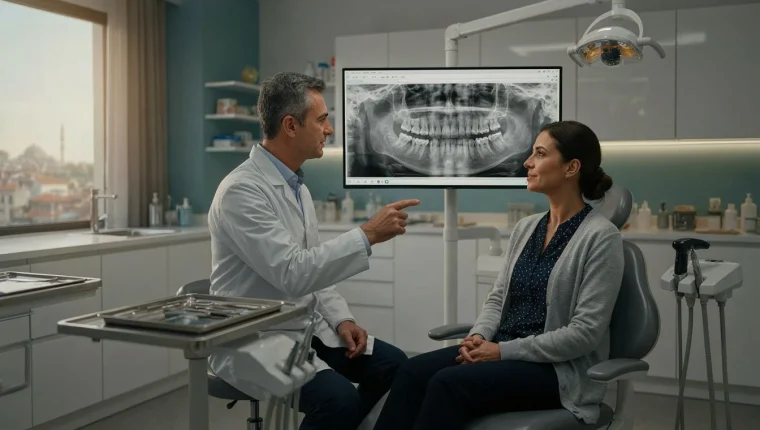
A dental crowns Turkey package can cost far less than what you would pay in the UK, the US, or much of Western Europe, which is why many people start searching. But the low price also raises a question: is this a genuine saving or a shortcut you will pay for later? There is no single answer because “worth it” depends on what the package contains, who does the work, and what happens after you fly home.
A package that covers only the crowns but leaves out scans, temporary teeth, or follow-up care is not the same deal as one that includes them. Add flights, hotel nights, time off work, and the cost of fixing anything that goes wrong, and the real number can shift fast. Weighing cost, crown quality, logistics, and aftercare together is the only honest way to judge value, and that balance is what separates a smart decision from an expensive gamble.
What Dental Crowns Turkey Packages Typically Include
A package price looks simple on a landing page, but the value sits in the details of what is actually covered. Most offers bundle clinical work with travel support, so the fastest way to compare two quotes is to separate the treatment itself from the logistics wrapped around it. A useful starting point is to identify the core treatment scope each provider commits to before you look at anything else.
- Clinical essentials: an initial consultation or X-ray review, crown fabrication in a lab, fitting sessions, and final cementing are the baseline every legitimate package should name explicitly.
- Support services: airport transfers, a set number of hotel nights, translation, and a coordinator who handles scheduling between appointments appear in most mid-range and premium offers.
- Common exclusions: extractions, root canal treatment, bone grafting, and revision work are frequently priced separately, so confirm before you commit.
- Variable item counts: packages differ on how many crowns, implants, or temporary units are included, which is why headline prices rarely compare directly.
Because these inclusions shift so much between providers, the number of crowns and the depth of aftercare support are usually what separate a genuinely complete offer from a stripped-back one. Read each quote as an itemised list rather than a single figure, and ask what happens if your case turns out to need more work than the package anticipates.
How Much You Can Realistically Save Compared to Western Clinics
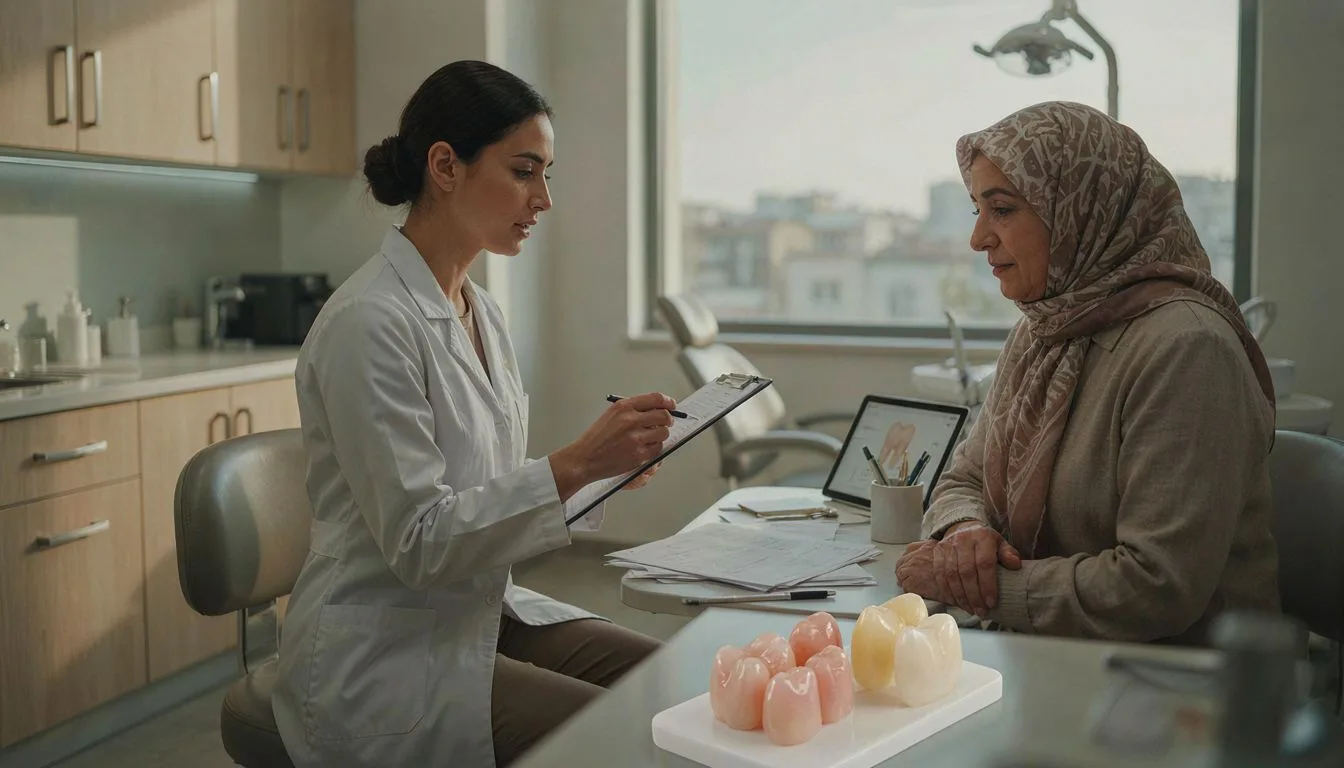
Savings on crowns in Turkey are real, but the headline numbers you see in ads are rarely what lands in your final budget. The gap starts with structural cost differences. Labor is the biggest driver: a dentist and technician in the UK, Germany, or the US carries overhead that a Turkish clinic simply does not, from higher rents and insurance to regulatory fees and staffing costs. Materials add another layer, since the same zirconia or porcelain brand can be sourced at different prices depending on local supply chains. Currency movement matters too, and a favorable exchange rate one month can narrow the gap the next.
Case complexity is where estimates often drift. A single crown on a healthy tooth is straightforward; multiple crowns, root canal work, or implants add chair time and lab work that push the total up. Seasonality plays a role as well, since peak travel months can raise accommodation and even clinic pricing.
The practical takeaway is to compare total case cost rather than per-crown price. Ask for a written quote that lists every crown, any extractions, X-rays, temporary crowns, and follow-up visits, then add your flights, hotel, and time off work. That combined figure is the only number worth comparing against a Western clinic’s invoice.
Why Crown Quality and Materials Matter More Than the Price Tag
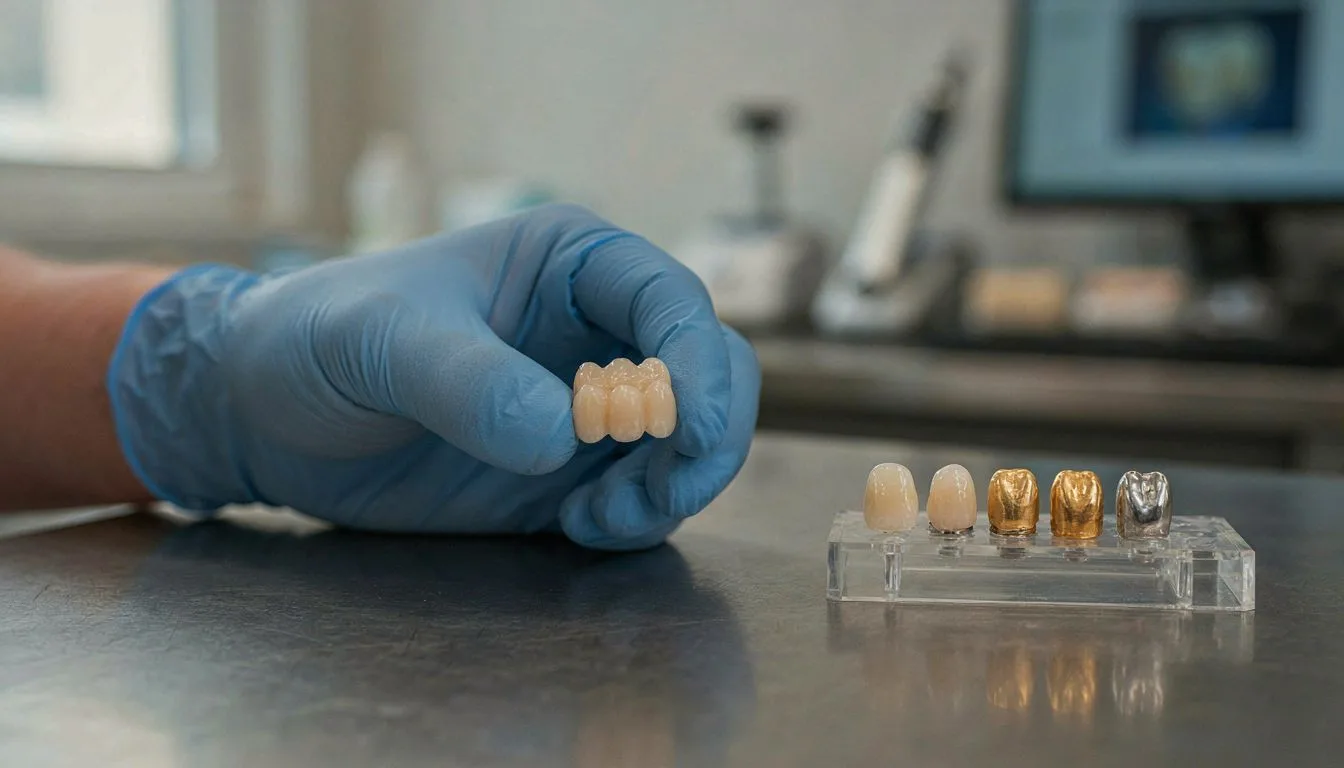
A package quote tells you what a clinic charges, not what your crown is actually made of. That distinction drives everything that happens after you fly home. Most crowns fall into a few material families: zirconia, lithium disilicate (often sold as e.max), porcelain-fused-to-metal, and full metal alloys. Each performs differently depending on where it sits in your mouth. Zirconia offers high strength and works well for molars and bridges, while lithium disilicate delivers better translucency for front teeth but demands more careful bonding. Porcelain-fused-to-metal remains a workhorse for back teeth, though the metal edge can show over time.
Material is only half the story. How a crown is fabricated matters just as much. A crown milled in a well-calibrated lab from a precise digital scan fits the tooth margin tightly, which protects the underlying structure and reduces the risk of decay creeping in. A crown rushed through an overloaded lab, or shaped from a low-grade block, may sit slightly off. That gap lets bacteria in, causes sensitivity, and shortens the crown’s lifespan. Fit and material quality together determine whether a crown lasts five years or fifteen.
Before you book, ask specific questions. Which brand of zirconia or ceramic does the clinic use, and where is it sourced? Is the crown produced in an on-site lab or outsourced? What warranty covers the crown, and does it apply if you are back in your home country when something fails? Get the answers in writing.
The cheapest crown is rarely the least expensive one. A crown that fails early means a return trip, a new impression, a replacement unit, and possibly root canal treatment on a tooth that was damaged by a poor fit. Those costs erase the initial saving fast. Paying modestly more for a verified material and a reputable lab is the difference between a one-time fix and an ongoing repair bill.
Evaluating Clinic Credentials and Dentist Experience Before Booking
Before you pay a deposit, the most useful thing you can do is slow down and verify who will actually be holding the drill. In Turkey, dental clinics and individual dentists must be registered with the Ministry of Health, and a legitimate provider will share that registration without hesitation. Look for a dentist whose specialty training is in prosthodontics or restorative dentistry rather than general practice alone, since crown work depends heavily on preparation technique and marginal fit. A clinician who has completed a recognized residency, or who can point to continuing education in implant-supported or all-ceramic restorations, is a safer bet than one whose profile is thin on specifics.
Credentials are only half the picture. Ask which dental laboratory produces the crowns and whether that lab holds any international quality certification. Many clinics work with in-house labs, which can be convenient, but an independent lab with traceable materials often signals better accountability. Request before-and-after photos of cases similar to yours, not just the polished marketing shots. Reviews matter too, but read them for patterns: consistent praise for communication and follow-up is more telling than a single glowing testimonial.
Watch for red flags in how the clinic communicates. Pressure to book immediately, vague answers about warranty terms, or a refusal to provide a written treatment plan are all warning signs. A trustworthy provider will give you a written treatment plan that lists the materials, the number of visits, and the warranty period before you commit. If any of these elements are missing, treat it as a reason to keep looking rather than a reason to hope for the best.
The Role of Travel, Accommodation, and Treatment Timelines in Package Value
How long you need to stay in Turkey depends less on the crown itself and more on how many visits your case requires. A single crown is often prepared, fitted, and cemented within one trip of roughly five to seven days. Larger cases involving multiple crowns, bridges, or implants usually need two separate visits: the first for preparation and impressions, the second for final fitting once the restoration has been fabricated. That gap can range from a few weeks to several months, and it is the single biggest factor shaping your travel and accommodation costs.
Package inclusions vary widely here. Some quotes bundle airport transfers, hotel nights, and even a companion’s stay; others advertise a low price and leave you to arrange everything. Add those missing items to the quote before you compare, because a cheap package with no accommodation can cost more than a higher-priced one that includes it. Companion costs matter too, especially on a two-visit case.
The real risk sits in the healing window between visits. Booking flights before your dentist confirms the second appointment date can leave you stranded with a temporary crown. A rushed schedule that compresses fitting into too few days may also compromise the final result. If your case is complex, a longer stay or a planned return trip is usually worth the extra cost.
Potential Risks, Complications, and Aftercare Support
Even a well-planned crown can cause short-term sensitivity, a slightly changed bite, or mild gum tenderness in the first days after cementing. These reactions are common and usually settle as the tissue adapts, but they are worth tracking rather than ignoring. A bite that feels high, pain that sharpens instead of fading, or swelling and discharge around the gum line can point to a fit, material, or infection problem that needs prompt attention rather than waiting until you are home.
This is where aftercare support separates a serious provider from a cheap one. A responsible clinic gives you a direct contact for questions, honors a written warranty on the crowns, and helps arrange a local dentist for follow-up once you return. Ask how repairs or revisions are handled if a crown fails: who covers the cost, whether you must travel back, and how long the guarantee lasts. Confirm these terms in writing before treatment, so a future problem has a defined path instead of a vague promise.
How to Decide If a Dental Crowns Package in Turkey Is Right for You
By this point you have a realistic sense of what a crowns package covers, where the savings come from, and how much risk and aftercare you may need to plan for. The final step is personal: matching all of that to your own case rather than to the average patient a clinic advertises to.
Start with complexity. A single crown on a healthy tooth is a different proposition from a full-mouth reconstruction, and many package quotes assume the simpler scenario. If you need multiple implants, bone grafting, or treatment for gum disease first, ask directly whether the package includes it or whether it becomes an add-on once you arrive. Your timeline matters too: standard packages are built around a short trip, but cases needing healing time between stages may require two visits or a longer stay than the price assumes.
Then weigh the savings against what you are taking on. A lower figure is only meaningful if it survives travel, possible extra nights, and any follow-up you cannot get at home. This is where informed consent becomes practical rather than legal: you should understand what happens if a crown fails months later, who pays for a remake, and whether a local dentist will adjust another clinic’s work.
Before paying anything, get the essentials confirmed in writing — materials, brands, number of units, revision policy, and the specific aftercare you will receive once you fly home. If those answers stay vague, or if your case is complex and your budget allows local treatment, staying closer to home may genuinely be the better choice.
FAQs
How much can dental crowns Turkey packages actually save compared to treatment in the UK or US?
Dental crown packages in Turkey typically cost between $150 and $400 per crown, compared with $800 to $1,500 in the UK and $1,000 to $2,500 in the US, so patients often save 60 to 80 percent even after factoring in flights and accommodation. A full-mouth restoration involving multiple crowns can therefore cost a few thousand dollars in Turkey versus $10,000 or more in the UK or US. These figures are indicative and vary by clinic, material (such as zirconia versus porcelain-fused-to-metal), and the number of teeth treated.
Are the materials and labs used in these packages the same quality as those in my home country?
Accredited medical tourism providers typically use the same internationally certified labs and materials found in high-income countries, often adhering to standards such as ISO, CLIA, or JCI. Many clinics partner with globally recognized suppliers and run internal quality controls, so patients can generally expect comparable quality for diagnostics, implants, and medications. Quality can vary between individual facilities, so it is worth checking the specific accreditations and supplier details of the provider you choose.
What hidden costs or follow-up expenses might not be included in a dental crowns Turkey package?
Many Turkey dental crown packages cover only the crown itself, so patients often pay separately for X-rays, temporary crowns, root canal treatment if the tooth is damaged, or extractions before fitting. Follow-up expenses can include post-operative medications, additional clinic visits, and revision or replacement work if a crown feels uncomfortable or fails. Patients should also budget for flights, accommodation, and potential return trips, since complications may require in-person adjustments that cannot be handled remotely.