An arm lift in Turkey gives you tighter, more contoured arms at a fraction of Western prices, but the surgery itself is only half the trip. The other half is your recovery after leaving the operating room, and it depends entirely on how long you wait before flying home. Most patients need to stay for 7 to 12 days, but the exact time depends on your surgeon’s technique, your healing speed, and whether the lift is combined with anything.
Pushing the return flight too early is one of the fastest ways to turn a smooth recovery into a stressful one. Swelling, drain management, and the first follow-up visit all need to happen while you’re still within reach of your surgical team. The next sections break down the realistic timeline, the milestones that decide when you’re safe to travel, and the small details that often get overlooked when planning a short medical trip abroad.
Typical Recovery Timeline Before Flying Home

Most surgeons recommend staying in Turkey for roughly seven to ten days before boarding a flight after brachioplasty. This window allows the initial healing phase to unfold under direct medical supervision, so your surgeon can confirm that the incision lines are closing cleanly, swelling is trending downward, and there are no early warning signs such as seroma or unexpected bleeding.
Day one is dedicated to rest right at your hotel or recovery apartment. By day two or three, you’ll usually have your first post-operative check, where dressings are refreshed and drainage output is reviewed. Around day four or five, light walking becomes comfortable, and any drains placed during surgery are often removed if output is minimal. Day six through eight typically brings the second follow-up visit, suture or staple assessment, and clearance for compression garment adjustment.
By the end of the first week, most patients feel stable enough for short walks and light daily activities, though the arms themselves still feel tight and slightly numb. Flying is generally approved between days eight and ten, once incision integrity is solid and cabin pressure is unlikely to stress the surgical site. Your surgeon’s final green light always comes after an in-person exam, not on a fixed calendar.
How Long to Stay in Turkey After Arm Lift: A Day-by-Day Breakdown

Once you’ve booked your procedure, the question almost every patient asks next is what each day on the ground in Istanbul or Antalya will actually look like. The exact schedule shifts from surgeon to surgeon, but a fairly consistent rhythm has become the standard after an arm lift in Turkey, and mapping it out helps you plan flights, hotel nights, and support from a companion well before you board the plane.
- Day 0 – Surgery day: You’ll spend the first hours resting in the clinic under observation, with drains usually still in place and arms wrapped in compression bandages.
- Day 1 – First post-op check: Your surgeon reviews the incisions, confirms there is no early bleeding, and walks you through drain care and arm positioning while sleeping.
- Day 2 – Light hotel rest: Most patients move to their hotel with a caregiver, taking short walks and sticking to soft meals while keeping the arms elevated on pillows.
- Day 3 or 4 – Drain and dressing review: Depending on output, drains are often removed here, swelling is reassessed, and you receive updated instructions for showering and garment wear.
- Day 6 or 7 – Stitch and incision check: Non-dissolvable sutures typically come out around this point, giving the surgical team a clear picture of how the scars are settling.
- Day 8 to 10 – Final clearance visit: Your last in-person assessment covers mobility, scar care products, and flight fitness, after which you’re usually signed off to travel.
Thinking through these checkpoints one at a time makes the seven-to-ten-day window feel far more manageable, because each day has a defined purpose instead of an open-ended recovery stretch. Knowing that drain removal, stitch checks, and clearance visits fall on specific days lets you coordinate your hotel booking, companion schedule, and return flight with much more confidence. The next section zooms into what that first week back home actually feels like once the Turkish post-op chapter is closed.
First Week After Arm Lift Surgery in Turkey
The first week after brachioplasty in Turkey is shaped by strict routines rather than spontaneity, so knowing what each day brings helps you settle in faster. Most patients wake up from surgery with compression sleeves already in place and small drainage tubes exiting near the incision line. You will notice tightness across the inner arm, mild swelling that shifts toward the elbow, and a dull ache that responds well to the painkillers your surgeon prescribes. Mobility is limited to short walks around your hotel room for the first 48 hours, with arms kept close to the body to avoid stretching the fresh sutures.
By day three or four, your surgeon typically reviews the dressings, checks drainage output, and may remove one tube if fluid levels are low. Sleeping on your back with a wedge pillow keeps pressure off the incision, and most patients transition to oral painkillers within a few days. Gentle arm movement, such as brushing hair or eating without help, usually returns near the end of the first week, though lifting anything heavier than a water bottle is still off-limits.
Swelling and bruising often peak around day five before they begin to fade, which is a normal sign of healing. Light walks outside are encouraged to boost circulation, but crowded tourist areas and direct sun exposure should still be avoided. By day six or seven, the surgeon evaluates the incision line, possibly removes remaining drains, and confirms whether the tissue is responding well before any travel clearance is even considered.
When Can You Safely Travel Home After an Arm Lift?
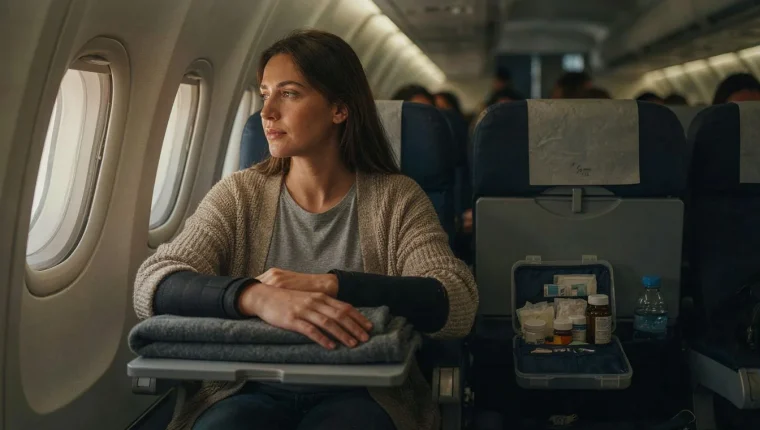
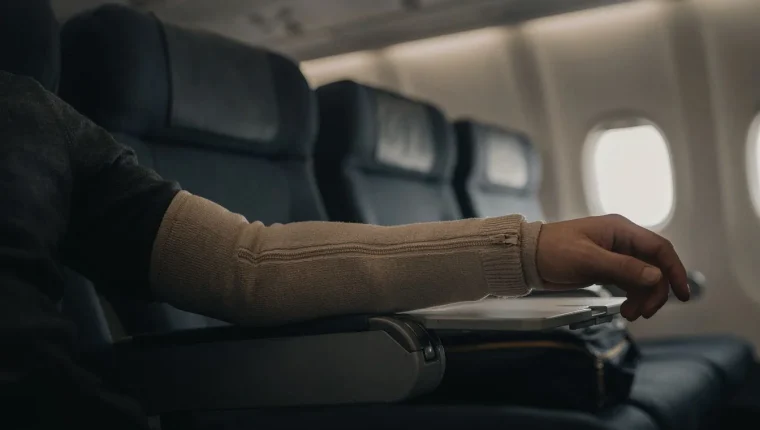
The short answer is that most patients are cleared to fly between day seven and day ten after brachioplasty, once the surgeon has confirmed that swelling, drainage output, and incision healing are all moving in the right direction. Anything earlier is considered a calculated risk, especially on long-haul flights where cabin pressure and prolonged immobility can aggravate fresh surgical sites.
Before signing off, your surgeon will usually check for three things: that any drains have been removed or are producing minimal fluid, that there are no signs of opening along the incision, and that you can comfortably lift your arms enough to manage luggage and boarding. Many clinics also ask that you wait until pain is controlled with oral medication only, without needing stronger support.
If you had a combined procedure, such as a body lift or extensive liposuction, your safe travel window may shift closer to the two-week mark. Likewise, patients traveling from very far destinations sometimes choose to add a buffer day or two in a hotel, just in case the final check needs a small follow-up before they head to the airport.
Factors That Can Extend Your Stay in Turkey
Even a well-planned trip can run longer than the standard week or so, and understanding why helps you build a realistic buffer into your schedule. Some variables are clinical and visible on the day of surgery; others depend on how your body actually responds once the anesthesia wears off. Planning for these possibilities ahead of time keeps you from feeling rushed if your surgeon decides an extra visit is warranted.
The most common reasons patients need to remain in Turkey past the usual discharge window include:
- Seroma or hematoma formation: fluid or blood collecting beneath the incision may require in-clinic drainage, sometimes more than once.
- Slower-than-expected drain output: surgeons usually want drains out before flying, and stubborn output can delay that step.
- Wound-healing concerns: minor opening at the incision edges or delayed closure may call for daily dressing changes rather than a single check.
- Combined procedures: adding liposuction to the arms lengthens both the surgery and the monitored recovery.
- Pre-existing health factors: diabetes, anemia, or smoking history can slow recovery and prompt a more conservative clearance timeline.
Because the decision is made case by case, build in at least two extra recovery days beyond the planned return date. This cushion covers a delayed drain removal or one additional follow-up without forcing you to rebook flights in a hurry. Keeping your surgeon reachable by message during this buffer also lets them flag any concern early, so the extension feels planned rather than pressured.
Monitoring Drains, Stitches, and Follow-Up Visits Before Departure
Before your surgeon signs off on your final clearance visit, three practical checkpoints deserve your full attention: drains, stitches, and the follow-up appointments themselves. Each one ties directly into how soon you can realistically board a plane without risking a complication mid-flight.
By day three or four, your drains are usually evaluated for output volume and color. If fluid collection is dropping steadily and remains clear rather than bright red or cloudy, removal is typically scheduled between day five and seven. You won’t feel pressured either way; the surgeon waits until the numbers make sense. When drains stay in longer than expected, it’s almost always tied to slower-than-expected drain output rather than anything you did wrong.
Stitches or surgical glue are reviewed around day six or seven, when the incision line shows enough stability to tolerate minor manipulation. This is also when your surgeon checks for any early signs of wound separation, infection, or delayed healing along the arm’s natural tension lines. A small opening at the T-junction near the armpit isn’t uncommon, and catching it before you fly home saves you a frantic email from a hotel room.
Your final appointment, usually between day eight and ten, confirms that compression garments fit properly, swelling is trending downward, and your drain sites have closed. Bring a written list of questions about scar care, arm elevation during the flight, and when to resume lifting anything heavier than a kettle. That last conversation often gives you more confidence than any timeline you’ve read online.
FAQs
How long should I plan to stay in Turkey after an arm lift surgery?
You should plan to stay in Turkey for about 7 to 10 days after an arm lift surgery. This allows time for the initial recovery, a follow-up appointment with your surgeon to monitor healing and remove any drains or stitches, and clearance for flying home. Your surgeon may adjust this timeframe based on your individual healing progress.
When is it safe to fly back home following arm lift surgery in Turkey?
Most surgeons recommend waiting at least 7 to 10 days before flying after an arm lift in Turkey, though many patients prefer to stay closer to two weeks to allow for initial swelling reduction and a follow-up visit. Your surgeon will clear you for travel once your incisions are healing well, there are no signs of complications, and any drains have been removed. Always confirm the exact timing with your operating surgeon, as individual recovery and flight length can influence the decision.
How many follow-up appointments are needed before leaving Turkey after an arm lift?
Most surgeons schedule two to three follow-up appointments within the first seven to ten days after an arm lift to monitor healing, remove drains or sutures, and check for any complications. After this initial period, many patients are cleared to fly home, though a virtual or local check-in is sometimes recommended once they return.