Loose skin and stubborn fat under the upper arms can remain even when diet and exercise work well elsewhere. A mini arm lift targets the small, sagging area near the armpit with a shorter incision and quicker recovery than a full brachioplasty. The trade-off is more limited results, so it works only for the right type of patient.
What Is a Mini Arm Lift and How Does It Differ from a Full Brachioplasty?
A mini arm lift is essentially a limited-version brachioplasty designed for people whose skin laxity is confined mostly to the upper-inner arm, near the armpit. Instead of running a long incision down the inside of the arm, the surgeon places a short, crescent-shaped or T-shaped excision tucked into the underarm crease. Through that opening, a modest amount of loose skin is trimmed and, when needed, a small volume of stubborn fat is removed with liposuction. Because the work is concentrated and the scar is short, the procedure is often done under local anesthesia with sedation and typically takes under two hours.
The full brachioplasty, by contrast, tackles more extensive sagging that can extend from the armpit all the way to the elbow. It requires a longer incision along the inner arm, more tissue removal, and often a longer operative time. That broader reach is what allows a full lift to dramatically reshape heavier arms, but it also means a more visible scar, a longer recovery, and a higher chance of needing drains.
So the real difference comes down to geography: the mini version addresses a localized pocket of laxity close to the armpit with a discreet scar, while a full brachioplasty is a comprehensive reshaping of the entire upper arm. Understanding where your concerns sit on that spectrum is the first step in deciding which path actually fits your anatomy and your tolerance for downtime.
Key Benefits That Make the Mini Arm Lift a Popular Choice
Practical appeal is what drives most patients toward this shorter-scar technique. Because the incision sits inside the underarm crease rather than running the length of the arm, the trade-off between correction and visible scarring tips in favor of people who want modest tightening without a long, noticeable mark. Smaller scars also mean easier concealment in short sleeves and swimwear, which is often the emotional tipping point that pushes someone to finally book the procedure.
- Limited scar length keeps the incision tucked into the underarm fold, allowing tank tops and fitted sleeves to stay an option in everyday wardrobes.
- Less invasive surgical approach generally means shorter operative time and smaller areas of tissue dissection compared with a full brachioplasty.
- Quicker return to routine typically follows, with many patients resuming desk work and light activities within one to two weeks rather than the longer downtime associated with larger arm lifts.
- Targeted upper-arm contouring addresses mild to moderate skin laxity near the top of the arm, the zone most often photographed and most visible in sleeveless clothing.
- Local anesthesia feasibility is more realistic with smaller incision lines, which can lower overall procedure cost and reduce exposure to general anesthesia for suitable candidates.
- Easier combination with liposuction lets a surgeon fine-tune the area by removing small fat deposits that exercise alone tends to leave behind.
For the right patient, the procedure delivers just enough skin removal to smooth the silhouette where it matters most. That balance between visible improvement and minimal downtime is why the technique has earned a steady following among surgeons and patients alike.
Potential Drawbacks and Risks Worth Considering Before Saying Yes
Even though the technique is marketed as a lighter alternative to a traditional brachioplasty, it is not a risk-free shortcut, and understanding the trade-offs helps set realistic expectations. The most discussed issue is scar quality. Because the incision still sits along the inner arm, any tendency toward poor healing, hyperpigmentation, or thick scarring will be visible, especially when the arm is raised. Some patients also notice temporary numbness or tingling near the elbow or upper forearm where small sensory nerves travel close to the surgical field; this usually fades over weeks but can linger.
Another point worth weighing is the degree of correction. A mini arm lift only addresses mild to moderate laxity. If skin elasticity is poor or the surplus tissue extends past the elbow toward the forearm, the result may look under-corrected, and a secondary or more extensive procedure could become necessary later on. Swelling, bruising, and a few weeks of restricted lifting are also part of the recovery, even though downtime is shorter than with a full brachioplasty.
Finally, realistic outcome expectations are essential. The procedure refines the contour but does not stop future aging, weight fluctuations, or loss of skin tone, so maintaining a stable lifestyle plays a big role in how long the result actually lasts.
Who Makes an Ideal Candidate for This Procedure?

Pinning down who actually thrives with a mini arm lift matters more than people realize. Because the procedure trims tissue rather than resecting large sheets of skin, it tends to suit patients whose upper-arm laxity sits close to the elbow or high on the inner arm, not someone whose skin drapes from shoulder to elbow after major weight loss. Mild to moderate skin laxity concentrated in a limited zone is usually the deciding factor.
Good candidates also tend to share a few practical traits: a stable weight they’ve held for several months, no plans for future bariatric surgery, and enough skin elasticity that the small incision will heal cleanly. Non-smokers recover more predictably, and anyone combining the lift with liposuction needs enough pinchable fat for the cannula to do its job without distorting the result.
Realistically, if your main concern is the look of the arm in a sleeveless top rather than heavy folds hanging at rest, you’re closer to the profile surgeons look for. Significant redundancy, stretch marks across the entire arm, or substantial volume loss after gastric bypass usually pushes someone toward a full brachioplasty instead.
How the Surgery Is Performed and What Recovery Looks Like
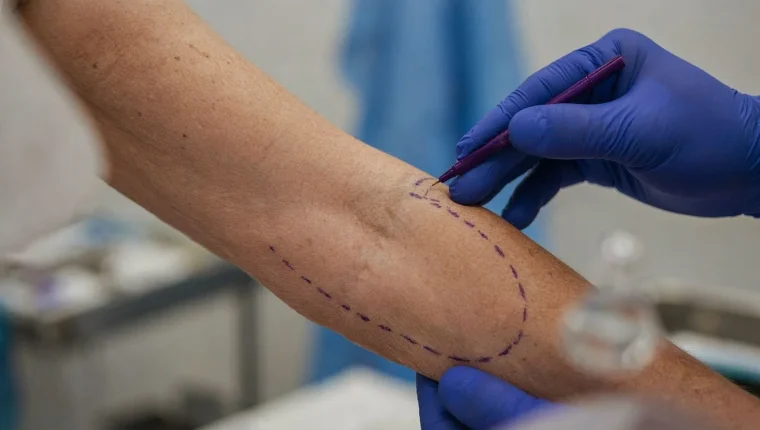
The procedure starts with marking the limited incision line along the inner upper arm, where any future scar will sit within the natural shadow of the biceps. Most surgeons then place the patient under local anesthesia with oral or IV sedation, which keeps the experience calm without the grogginess of full general anesthesia. Through the small incision, excess skin is trimmed, underlying tissue is tightened with internal sutures, and a fine cannula may be used for simultaneous liposuction. The whole visit typically runs 60 to 90 minutes, and most people head home the same afternoon.
- Drains and dressings: A light compression sleeve is applied right away to control swelling, and a small drain is rarely needed.
- First week: Arms stay wrapped, lifting is limited to a few pounds, and pain is usually managed with over-the-counter medication.
- Weeks two to three: Stitches come out, swelling drops noticeably, and light daily tasks feel normal again.
- Weeks four to six: Most patients return to full workouts, including push-ups and resistance training, once the surgeon clears them.
- Scar care: Silicone strips and sun protection begin early so the short incision stays as faint as possible.
Because the surgery is shorter and the incision area smaller than a full brachioplasty, bruising tends to fade faster and downtime feels more like a long weekend than a medical leave. Following the compression schedule faithfully and attending follow-up visits are what really shape how smooth the healing arc feels day to day. By the one-month mark, the arms typically look close to their final shape, and the only remaining sign of the procedure is a fine line that continues to soften for several more months.
Comparing Long-Term Results to Other Arm Contouring Options

The honest way to evaluate this procedure is to place it alongside the alternatives people most often weigh it against: a full brachioplasty, upper-arm liposuction alone, and non-surgical skin-tightening treatments. Each option follows a different trajectory once the initial swelling settles and the scars begin to mature.
A full brachioplasty delivers the most dramatic change for patients with significant excess skin, but the trade-off is a long incision from elbow to armpit, a scar that takes twelve to eighteen months to fully fade, and a recovery that can stretch past six weeks. A mini arm lift produces a noticeably smaller scar hidden near the axilla and a softer, more limited reshaping, which makes sense for someone whose laxity sits in the upper third of the arm rather than extending toward the elbow.
Liposuction alone works beautifully when skin elasticity is excellent, but it cannot tighten redundant tissue. If laxity is already present, fat removal can even make the skin appear looser over time. Non-surgical devices such as radiofrequency or ultrasound tightening offer modest improvement with no downtime, yet the results rarely match what surgery can achieve, especially after weight loss or aging has stretched the dermal support.
Long term, the mini arm lift tends to hold its contour well for patients who maintain a stable weight, and the short scar ages more favorably than the longer brachioplasty incision. Knowing where it sits on that spectrum helps set realistic expectations and confirms whether this targeted approach truly matches the degree of correction needed.
FAQs
Is a mini arm lift suitable for people with mild to moderate loose skin?
Yes, a mini arm lift is generally well-suited for people with mild to moderate loose skin, since it targets small areas of sagging rather than extensive tissue laxity. The shorter incision and limited dissection allow for effective tightening when skin elasticity is still partially preserved. If the laxity is more significant, however, a traditional arm lift may produce a better contour.
How long does recovery typically take compared to a full arm lift?
Mini arm lift recovery is generally quicker than a full arm lift because the procedure involves smaller incisions and less tissue removal. Most patients return to light activities within one to two weeks, whereas a full arm lift typically requires two to three weeks before resuming normal routines. Swelling and bruising also tend to resolve faster with the mini version. However, individual healing times can vary based on overall health and how closely post-op instructions are followed.
What are the main advantages and disadvantages of choosing a mini arm lift over traditional methods?
The biggest advantage of a mini arm lift is the shorter scar and quicker recovery compared to a traditional brachioplasty, which makes it appealing for patients with mild to moderate skin laxity who want a less invasive option. However, the technique offers limited correction, so it is not suitable for individuals with significant excess skin or poor skin elasticity, and the results may be less dramatic than a full arm lift. Essentially, you trade a more discreet scar and faster healing for a smaller degree of improvement.