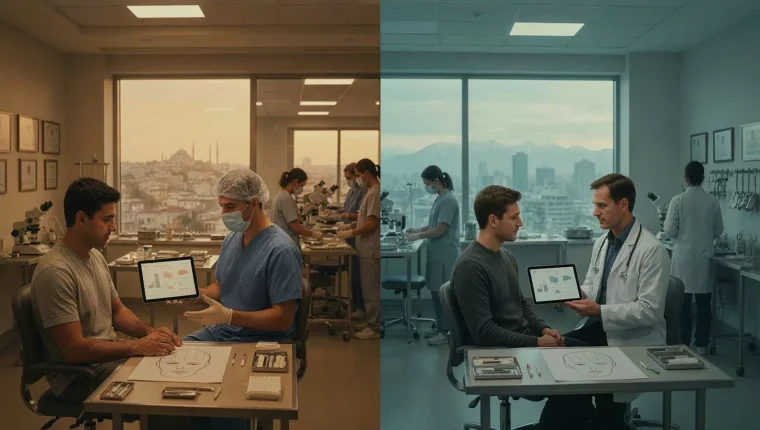
A hair transplant Turkey package can make treatment abroad more convenient by combining the procedure with essential travel and aftercare services. Instead of arranging every detail separately, patients may receive airport transfers, hotel accommodation, clinic transportation, medical consultations, and post-operative support as part of one plan. The exact contents vary between clinics, so the price alone should not determine your choice. A reliable package should clearly explain the surgeon’s role, the transplant technique, the estimated graft number, medications, follow-up care, and any additional costs. Some providers also include translation services and assistance throughout the journey. Understanding what is covered helps you compare clinics fairly, avoid unexpected expenses, and focus on the quality and safety of your treatment rather than logistics.
What Does a Hair Transplant Turkey Package Typically Include?

A typical hair transplant Turkey package is structured around the practical needs of an international patient, from the first clinic appointment to the early recovery period. Instead of covering the surgical fee alone, it often combines medical planning, treatment, travel coordination, and basic post-operative support into one arrangement. The exact contents vary by clinic, procedure, and accommodation level, so patients should request a written breakdown before making a decision.
The medical part usually includes an initial assessment of hair loss, a consultation with the surgeon, and a personalised treatment plan. This may involve reviewing photographs or completing an online evaluation before arrival, followed by an in-person examination in Turkey. The quoted price commonly covers the procedure itself, including the clinical team, local anaesthesia, graft extraction, implantation, and routine surgical supplies. The number of grafts and the selected technique should be clearly stated, since these factors can significantly affect the price and treatment plan.
Many international packages also include airport pickup and transport between the airport, hotel, and clinic. Hotel accommodation is often provided for a set number of nights, although the room category, breakfast, accompanying guest policy, and extra nights may differ. Some clinics include an interpreter or a patient coordinator to help with appointments, paperwork, and communication throughout the stay.
After surgery, the package may provide a washing demonstration, written recovery instructions, prescribed or recommended medication, and a follow-up check before departure. Some providers also offer remote follow-up appointments once the patient returns home. These services can be valuable, but they should not be assumed to be included automatically.
Before paying a deposit, confirm whether the quotation includes blood tests, medication, additional grafts, hotel upgrades, extra nights, private transfers, and treatment for possible complications. A transparent all-inclusive package should explain what is covered, what is excluded, and whether any changes to the treatment plan could create additional charges.
Which Medical Consultations and Assessments Are Covered?
Medical consultations are the part of a hair transplant Turkey package that determines whether the proposed treatment is appropriate, realistic, and safely planned. Before recommending a technique or estimating graft numbers, the clinic should evaluate the cause and pattern of hair loss, the condition of the scalp, and the strength of the donor area. This process helps distinguish suitable candidates from patients who may need further medical investigation or a different treatment approach.
The most valuable assessment is a structured consultation with a qualified hair restoration doctor, supported by a physical examination and a review of the patient’s medical history. Depending on the clinic and the individual’s circumstances, the assessment may take place online before travel and continue in person after arrival. Common components include:
- Hair loss diagnosis: The doctor examines the pattern, progression, and likely cause of thinning to identify whether it is consistent with androgenetic alopecia or another condition.
- Donor area evaluation: The density, hair calibre, and stability of the follicles at the back and sides of the scalp are assessed to estimate how many grafts can be harvested safely.
- Scalp and hair examination: The team checks for inflammation, scarring, active skin disorders, or signs of infection that could affect the procedure or healing process.
- Medical history review: Existing illnesses, previous procedures, allergies, regular medications, and any history of poor wound healing are discussed before surgery is approved.
- Graft planning and expectations: The doctor outlines the proposed hairline, approximate graft requirement, treatment limitations, and the likely development of results over time.
Donor area assessment is particularly important because a transplant redistributes existing follicles rather than creating new ones. A low-cost quotation based only on photographs may overlook limited donor reserves or future hair loss. In-person examination, magnified scalp analysis, or digital imaging can therefore provide a more reliable basis for planning.
Some patients may also be asked to complete blood tests before treatment, especially when their medical history or current medication requires additional confirmation. These tests are not automatically identical at every clinic, so patients should verify whether laboratory screening, doctor consultations, and pre-operative clearance are included in the quoted package or charged separately.
What Is Included in the Hair Transplant Procedure?
The procedure itself is the central medical service in a hair transplant package. Before the operation begins, the surgeon confirms the hairline design, donor zone, graft estimate, and planned implantation areas. This final check ensures that the treatment plan reflects the patient’s anatomy and the expected level of coverage rather than relying on a standard template.
On the day of surgery, the clinical team usually prepares the scalp, administers local anesthesia, and removes follicular units from the donor area. The extraction method may be follicular unit extraction (FUE), direct hair implantation (DHI), or another technique selected according to the patient’s hair characteristics and the surgeon’s recommendation. The harvested grafts are handled carefully and kept in a suitable solution until implantation.
The key technical component is follicular graft extraction and implantation. During implantation, the surgeon or trained medical team places the grafts into recipient sites created in the thinning or balding areas. Angles, direction, spacing, and distribution are adjusted to create a natural appearance and to use the available donor hair efficiently. Hairline grafts generally require particularly precise placement because their orientation strongly affects the final result.
Package details can differ in terms of who performs each stage. Some clinics state that the surgeon completes the extraction and implantation, while others use a doctor-led team for selected steps. Patients should therefore ask who is responsible for designing the hairline, extracting grafts, opening recipient channels, and placing the follicles. This information is more meaningful than a package label alone when comparing providers.
The procedure may take several hours, depending on the number of grafts, the technique, and the complexity of the case. Patients are normally monitored throughout the operation, and the scalp is checked before discharge. Instructions about protecting the newly implanted grafts, sleeping position, washing, and activity restrictions are typically provided immediately after the procedure, while detailed medication and longer-term aftercare should be confirmed separately in the package terms.
Are Accommodation and Airport Transfers Part of the Package?
Accommodation and airport transfers are commonly included in an all-inclusive hair transplant trip, but they are not guaranteed in every clinic’s offer. These services usually form part of the travel arrangement rather than the medical procedure, so their exact terms should be confirmed before booking.
When accommodation is included, the package often covers a hotel stay for several nights around the operation. The number of nights may depend on the clinic’s schedule, the technique used, and whether a follow-up visit is planned. Some providers offer a standard partner hotel, while others allow patients to choose from different options at an additional cost. It is important to check whether breakfast, local taxes, internet access, and a private room are included.
Airport transfers may cover transportation from the arrival airport to the hotel, from the hotel to the clinic, and back to the airport for departure. In some arrangements, the driver also handles transfers between the clinic and hotel on consultation or treatment days. Patients should clarify whether the service is private or shared, whether it operates at all arrival times, and what happens if a flight is delayed.
Airport and hotel arrangements are package inclusions that must be confirmed in writing. A quotation may use broad wording such as “VIP transfer” or “hotel accommodation” without specifying the number of nights, vehicle type, or transfer route. Asking for a detailed itinerary prevents misunderstandings and makes it easier to compare clinics on a like-for-like basis.
Travelers should also ask whether the package starts at a particular airport, as transfers from a different city or a remote airport may cost extra. Additional nights, upgraded rooms, companion accommodation, and transport for sightseeing are often excluded. If a patient arrives early or stays longer for personal reasons, those expenses are normally billed separately.
Before paying a deposit, request the hotel name or category, the precise number of included nights, transfer coverage, cancellation terms, and support available during travel. This information helps distinguish a genuinely comprehensive arrangement from a low headline price that excludes essential logistics.
What Aftercare and Medications Are Provided?
Aftercare determines how comfortably the scalp heals and how well patients can follow the recovery plan after leaving the clinic. A reputable provider should explain the first-day precautions, washing schedule, sleeping position, activity limits, and warning signs before discharge. These instructions should be specific to the extraction and implantation technique used, rather than presented as generic advice.
Medication and take-home supplies are usually selected to control discomfort, protect the recipient area, and reduce the risk of avoidable irritation or infection. The exact contents vary according to the clinic, the patient’s medical history, and the surgeon’s protocol, so patients should request a written list before confirming their treatment.
- Pain relief: Clinics commonly provide or prescribe an appropriate analgesic for short-term soreness. Patients should confirm the dose and whether any usual medication must be avoided.
- Antibiotics: Some surgeons prescribe a short course when clinically appropriate, while others use a different infection-prevention protocol. Antibiotics should never be started, stopped, or shared without medical direction.
- Anti-inflammatory treatment: A prescribed anti-inflammatory medicine may help limit swelling around the forehead and eyes during the first few days. The clinic should explain timing, duration, and possible side effects.
- Scalp-care products: A gentle shampoo, saline spray, or cleansing solution may be supplied to keep the grafts hydrated and support careful washing. Instructions should clarify when each product can be used.
- Written aftercare guidance: Patients should receive clear information about sleeping with the head elevated, avoiding pressure on newly implanted grafts, restricting strenuous exercise, and protecting the scalp from direct sun.
The most important part of recovery is postoperative aftercare, because even suitable medication cannot replace careful handling of the grafts. Mild redness, tightness, crusting, and swelling can occur during normal healing, but worsening pain, heavy bleeding, fever, pus, or rapidly increasing redness requires prompt contact with the clinic. Patients should also know who remains available after returning home and whether remote follow-up is included.
Before travelling, ask whether medications are included in the quoted price or must be purchased separately, how long each one should be taken, and what to do if a dose is missed. This prevents confusion once the patient is away from the treating medical team.
What Additional Costs Should Patients Expect?

The advertised price may cover the main procedure and planned travel arrangements, but patients should also budget for expenses that depend on their individual treatment and travel needs. Understanding these potential charges in advance makes it easier to compare clinics and avoid unexpected payments after arrival.
One possible extra is an additional night of accommodation. This may be necessary if the consultation, procedure, or first postoperative check does not fit the standard schedule, or if a patient prefers to remain near the clinic for greater convenience. Extra airport transfers, changes to the agreed itinerary, and transport required outside the clinic’s planned route may also be charged separately.
Medical costs can vary according to the treatment plan. If the initial assessment identifies a need for more extensive surgery, a higher graft number, or an additional session, the clinic may revise the quotation. Patients should ask whether the stated price covers the planned graft range and what happens if the surgeon recommends a different approach on the day of treatment. Extra procedures, such as platelet-rich plasma therapy or complementary treatments, are generally optional and may not form part of the standard package.
Medication and personal supplies are another area to clarify. Although basic pain relief, antibiotics, anti-inflammatory treatment, and scalp-care products may be provided, replacement supplies or medication needed beyond the included period could require separate payment. Patients taking regular medication should also confirm whether their usual prescriptions are available locally or need to be brought from home.
Travel insurance is usually not included and can be particularly important for international patients. It may help with eligible costs related to delayed flights, lost luggage, or unexpected medical and travel complications, subject to the policy terms. Flights, meals outside the stated arrangement, mobile data, currency-exchange fees, and personal spending are also commonly excluded. Before booking, request a written breakdown of included and excluded services, the price of any extra grafts or nights, accepted payment methods, and the clinic’s cancellation policy.
FAQs
What services are typically included in a hair transplant Turkey package?
A hair transplant Turkey package typically includes a consultation, hairline planning, the transplant procedure, local anesthesia, and prescribed medications. Many packages also cover airport transfers, hotel accommodation, clinic transportation, and post-operative follow-up. Exact inclusions vary by provider, so confirm whether flights, additional treatments, and aftercare products are included.
Are airport transfers and hotel accommodation covered in the package price?
Airport transfers and hotel accommodation may or may not be included, depending on the selected package and provider. Check the package details or confirm directly with the provider to verify what the price covers.
Does the package include post-operative care and follow-up support?
Yes, the package typically includes post-operative care and follow-up support, such as routine check-ups, wound monitoring, and guidance during recovery. The exact services and duration may vary by provider, so confirm the details before booking.