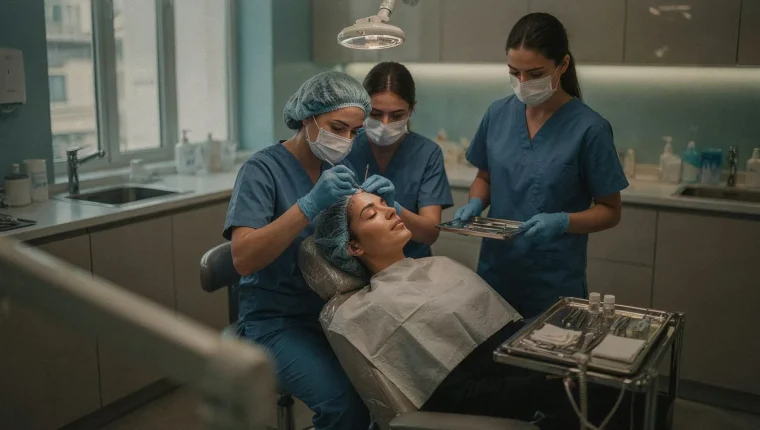
Thinning at the crown can be difficult to address because hair grows in a spiral pattern and the area may need broad coverage. A crown hair transplant requires planning that accounts for the direction of existing hair, the extent of hair loss, and available donor supply. The crown’s appearance can also change as surrounding hair continues to thin, so a treatment plan should consider long-term needs, not just current coverage. Results vary between individuals, and transplanted hair takes time to grow and mature. A consultation with a qualified clinician can help determine whether surgery is appropriate and set expectations based on your specific hair loss and goals.
How Many Grafts Does Crown Hair Loss Require?
Graft planning starts with the size and shape of the thinning area, not a standard number. Crown loss may form a small, defined patch or extend across a broader area, and the natural hair’s spiral pattern can make the region harder to assess than a simple circle. A clinician estimates how much of the crown needs treatment before calculating a possible graft range.
The estimate also depends on the degree of coverage being considered. Placing more grafts into a given area may not be appropriate if the donor supply is limited or if preserving hair for potential future loss is important. The surgeon must assess the available donor hair, including its density and quality, and consider how much can be safely harvested. A larger crown does not automatically mean that every part can or should receive the same allocation.
For this reason, graft planning is individualized: measurements, scalp examination, hair characteristics, donor capacity, and the patient’s longer-term pattern of hair loss all inform the recommendation. Online averages can offer only broad context, not a personalized plan. An in-person assessment is needed to determine a suitable estimate and whether the proposed use of donor hair is realistic for that individual.
Which Techniques Work Best for the Crown?
Crown restoration can use either follicular unit extraction (FUE) or follicular unit transplantation (FUT). These methods differ mainly in how follicles are harvested from the donor area; both can provide grafts for placement in the crown. Neither technique guarantees a denser or more natural-looking result, since suitability also depends on donor characteristics, the pattern of hair loss, and the overall treatment plan.
With FUE, follicles are removed individually, leaving small extraction marks spread across the donor area. It may be worth discussing when avoiding a linear scar is important, though it can involve shaving and requires careful management of the available donor supply. FUT removes a narrow strip of scalp that is divided into grafts, leaving a linear scar; it may suit some patients whose donor area and preferences make strip harvesting appropriate. The trade-offs, including scarring and recovery considerations, should be reviewed with the surgeon.
For the crown, the chosen method must support a placement plan that follows the natural direction and whorl of the hair. A clinician can assess the donor area, hair characteristics, and future loss before recommending an approach; the harvesting technique alone does not determine how well the crown can be covered.
What Results Can You Expect From a Crown Hair Transplant?
A well-planned crown restoration may improve coverage and make thinning less noticeable, but it may not recreate the density of untouched hair. The crown’s circular growth pattern can leave areas of scalp visible even after treatment, particularly in bright light or when the hair is wet or parted. A realistic goal is usually a natural-looking blend with existing hair, not a uniformly dense result.
The appearance depends partly on hair characteristics. Coarser strands or greater contrast between hair and scalp can affect how much coverage the transplanted hair seems to provide. The direction and distribution of grafts also matter: placement that follows the crown’s natural swirl can support a more cohesive look. Even careful planning cannot ensure that every person achieves the same density or degree of coverage.
Existing hair loss is another consideration. Transplanted follicles may continue to grow, while surrounding native hair can thin over time. This can change the overall pattern and may affect how balanced the result looks later. An individual assessment can help set expectations based on the crown’s condition, hair characteristics, and likely progression of hair loss. Discussing these factors with a qualified surgeon can clarify what improvement may be realistic for you.
How Does the Crown Heal After Surgery?
In the first days after surgery, the crown may feel tender or tight, and small scabs can form around the transplanted follicles. Mild redness, swelling, or itching may also occur as the scalp begins to recover. These effects vary, so your clinic’s instructions should guide how you wash, sleep, and handle the treated area.
Postoperative aftercare helps protect the scalp while it heals. Follow your surgical team’s directions for cleansing and any prescribed products, and avoid rubbing, picking scabs, or resuming strenuous activity before they advise you to do so. Do not assume that general online guidance applies to your specific procedure.
As healing progresses, scabs typically loosen and the skin settles, though the pace differs from person to person. Contact your clinic if symptoms are worsening, unusually severe, or concerning—particularly increasing pain, spreading redness, discharge, or fever. Your surgical team can assess whether these changes need attention and clarify when it is appropriate to return to normal routines.
When Will Crown Hair Transplant Results Become Visible?
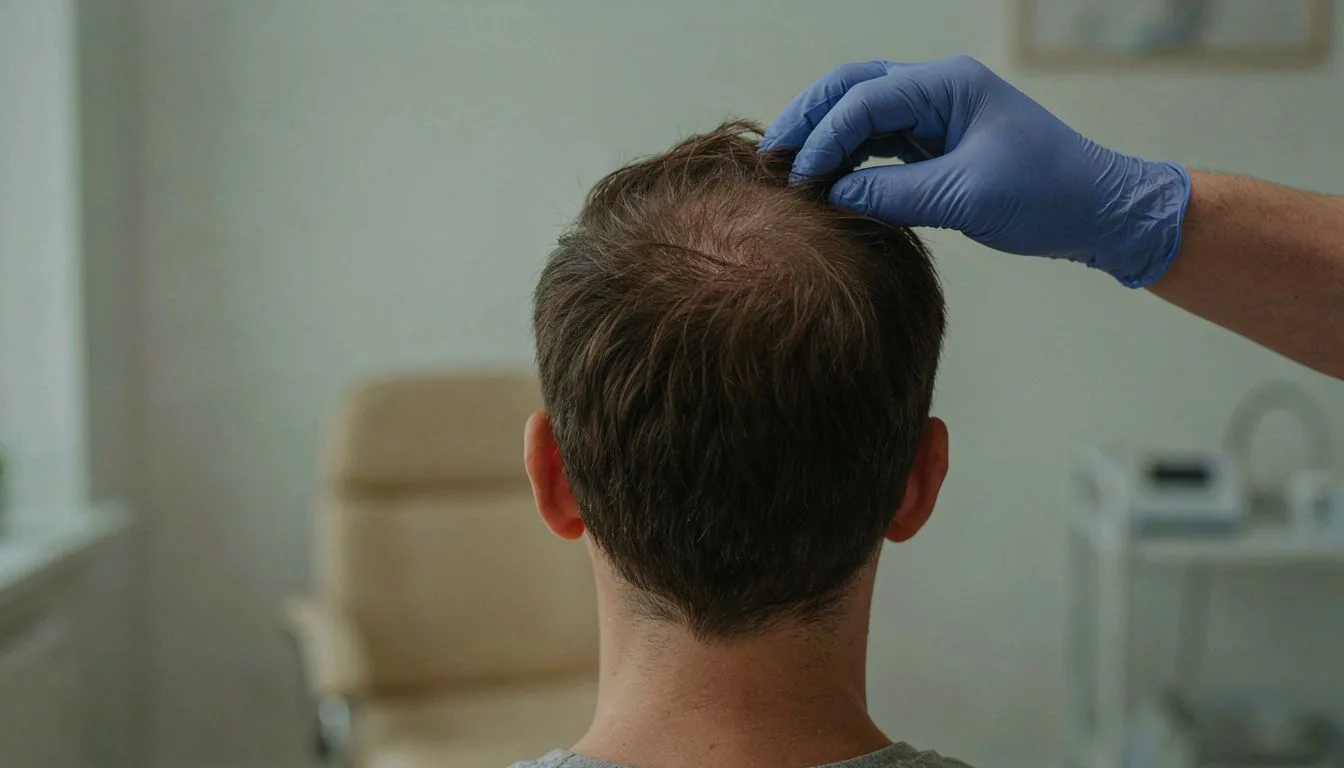
The crown often takes longer to look different because transplanted follicles need time to settle into a new growth cycle. During the first few weeks, newly placed hairs may shed; this is a common early change and does not, by itself, mean the grafts have failed. The scalp’s healing and the later growth of new hairs are separate stages.
For the first several months, visible change may be limited, and early growth can look fine or uneven. Hair typically emerges gradually rather than all at once, so the crown may appear patchy while follicles develop at different rates. Visible growth is gradual, and the timing and pace vary between individuals.
As the months pass, new hairs may become easier to see and add coverage, but they can continue to mature in texture and appearance. A more settled result generally takes longer than the initial healing period, so judging the outcome too early can be misleading. Your clinic can explain what is expected at each stage based on your procedure and follow-up assessments.
If you are concerned about changes that seem unusual, or are unsure whether your progress fits the expected course, contact your surgical team for individualized guidance rather than relying on a general timeline.
FAQs
How many grafts are typically needed for a crown hair transplant?
A crown hair transplant typically requires 1,000 to 2,500 grafts, depending on the size of the thinning area, hair characteristics, and desired density. A surgeon assesses the crown and plans the graft count to achieve natural-looking coverage while preserving the donor supply.
When can you expect to see the final results?
You can usually expect to see the final results of a crown hair transplant about 12 to 18 months after the procedure. Crown growth may take longer because this area often develops gradually, and results vary depending on healing and individual hair growth.
What is recovery like after a crown hair transplant?
Most people can return to light activities within a few days, though redness, mild swelling, tenderness, and scabbing around the crown may persist for one to two weeks. Follow your surgeon’s washing and activity instructions, and avoid strenuous exercise until cleared. Crown growth is gradual, with visible results typically developing over 9–12 months.