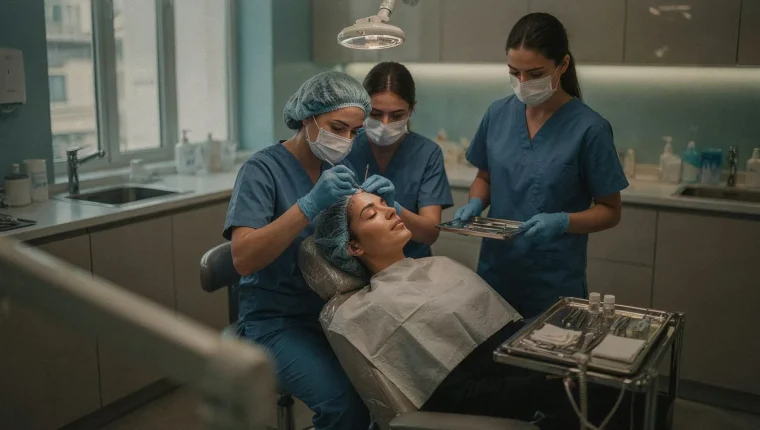
For people considering an Afro hair transplant, curl pattern can affect assessment and planning. Curved follicles may require particular care during extraction and placement, but texture alone does not determine whether someone is a suitable candidate or what result is achievable. Hair-loss pattern, donor-area supply, scalp health, and individual goals also matter. Recovery and visible growth take time, and outcomes vary from person to person. A careful decision depends on an assessment of the person’s hair characteristics and circumstances, rather than a general promise. Understanding these factors can help readers decide whether surgery fits their needs and what questions to raise with a qualified surgeon before proceeding.
How Afro-Textured Hair Affects Transplant Planning
Afro-textured hair can appear tightly curled above the scalp while following a curved path beneath it. This difference means the visible curl pattern does not fully reveal the direction or shape of the follicle below the skin. During assessment, a surgeon must consider both features rather than treating the hair as if it grows in a straight line.
The curve of the follicle can affect how grafts are estimated and handled: a follicle may extend or bend in a way that is not obvious from the surface. Planning therefore depends on careful evaluation of the donor area and an approach that accounts for the hair’s natural structure. The subcutaneous follicle curvature is a key anatomical consideration, though its extent varies from person to person.
Placement planning also needs to reflect the direction, density, and curl pattern of the surrounding hair so transplanted strands can blend naturally as they grow. These characteristics inform the overall design and expected coverage; they do not, on their own, determine how many grafts someone needs or whether they are a suitable candidate.
Which Hair Transplant Techniques Suit Curly Follicles?

Choosing a transplant method for curly follicles is less about selecting a universally superior technique and more about limiting follicle damage during removal and placement. Because a follicle may curve beneath the skin, its direction can differ from the angle suggested by the visible hair. The team’s ability to account for that anatomy is central to planning.
With follicular unit extraction (FUE), individual follicular units are removed using a small punch. Curvature can make extraction technically demanding: a punch advanced along the wrong path may transect or injure a follicle. Careful assessment of hair direction, suitable punch selection, and controlled technique can help reduce this risk. FUE avoids removing a linear strip of scalp, but it is not automatically the best choice for every curly-haired patient.
Follicular unit transplantation (FUT) removes a narrow strip of scalp, from which grafts are dissected under magnification. This may allow the surgical team to examine and prepare curved follicles outside the scalp, though careful dissection remains essential to protect them. In either approach, follicle transection risk depends on anatomy, technique, and the experience of the team performing the procedure.
Implantation also requires attention to the direction and angle of natural hair growth so grafts sit appropriately and the result looks cohesive. A qualified surgeon should explain how the proposed extraction and placement methods address curly follicles in the individual case, rather than treating one technique as a standard solution.
Assessing Candidacy and Donor-Area Limitations
Candidacy depends partly on whether hair loss has stabilized and whether its pattern can be assessed with reasonable confidence. Ongoing or rapidly changing loss may make it difficult to plan a lasting distribution of grafts, since further thinning can affect the appearance of transplanted areas. A consultation should consider the cause, extent, and progression of hair loss, along with the person’s age, medical history, and expectations for coverage.
The donor area must also be examined for density, usable scalp, and signs of thinning. Curly hair may provide visual coverage with fewer follicles in some areas, but appearance alone does not establish how many grafts can be safely harvested. The clinician needs to estimate an appropriate extraction limit while preserving the donor area’s appearance and avoiding excessive depletion. Donor capacity therefore sets a practical boundary on how much coverage a procedure can provide.
These factors are considered together: the amount of hair likely to remain in the donor area, the size and pattern of the recipient area, and the possibility of future loss all shape a realistic plan. If available grafts are limited, priorities may need to be adjusted rather than promising dense coverage everywhere. An individualized assessment can clarify whether surgery is appropriate and what degree of improvement is achievable.
What to Expect During Recovery and Growth
Recovery begins with a short healing period in which the scalp may be tender, swollen, or crusted around the treated areas. Follow the clinic’s instructions for washing, sleeping, medication, and activity, and avoid rubbing or picking at the grafts. The care team can explain which changes are expected for your procedure and when follow-up is needed.
In the weeks after treatment, transplanted hairs commonly shed as the follicles adjust; this does not necessarily mean the grafts have failed. New growth develops gradually, and early hairs may appear fine or uneven before becoming more noticeable. The pace and density of visible change vary, so progress is best judged over time with your clinician rather than by day-to-day comparison.
Gradual growth is a normal part of recovery, but worsening pain, spreading redness, fever, unusual discharge, or bleeding that does not settle should prompt contact with the care team. Seek guidance as well if you are unsure whether a symptom is expected or how to manage aftercare.
How to Choose a Surgeon Experienced in Afro Hair Transplants
Choosing a surgeon requires more than confirming that they perform hair restoration. Look for direct experience treating tightly curled follicles and ask how that experience informs their assessment and surgical plan. A surgeon should explain how they evaluate your hair and scalp rather than relying on broad claims about results.
Use the consultation to check whether the surgeon can discuss relevant experience, individual variation, and procedural risks with clarity. Before deciding, ask for information that helps you judge the quality and transparency of their approach:
- Comparable cases: Ask to see before-and-after examples involving patients with similar curl patterns and hair-loss concerns. Confirm that the images represent the surgeon’s own work and were taken at a stated stage of growth.
- Assessment process: Ask how the surgeon evaluates curl pattern and follicle characteristics when planning extraction and placement.
- Donor-area limits: Ask how the proposed plan accounts for your available donor hair and what alternatives may be considered if expectations exceed it.
- Risk management: Ask which complications or limitations are relevant to your case, how they may be reduced, and what follow-up care is available.
A useful consultation leaves room for questions and gives specific, balanced answers—not guarantees of a particular density or outcome. The surgeon should explain why the recommended plan fits your circumstances and be willing to revise it if the assessment identifies concerns. If important details remain unclear, consider seeking another qualified opinion before committing.
FAQs
What makes an afro hair transplant different from other hair transplant procedures?
Afro hair transplants require techniques tailored to tightly curled hair follicles, which may curve beneath the scalp as well as above it. Surgeons must account for this shape during extraction and implantation to reduce follicle damage and create a natural-looking hairline and growth pattern.
Which transplant techniques are best suited to tightly curled hair?
FUE and FUT can both work for tightly curled hair, but the surgeon must account for the curved shape of the follicles beneath the scalp. FUE with a specialized punch may reduce visible scarring, while FUT can be suitable when many grafts are needed; the best option depends on follicle anatomy, hair density, and the surgeon’s experience with Afro-textured hair.
How can patients reduce the risk of scarring after an afro hair transplant?
Patients can reduce scarring after an afro hair transplant by choosing an experienced surgeon who understands tightly curled hair and selecting a technique suited to their scalp and hair characteristics. Following aftercare instructions, keeping the scalp clean, avoiding scratching or strenuous activity during healing, and attending follow-up visits can also help; scars may still occur, and healing varies from person to person.