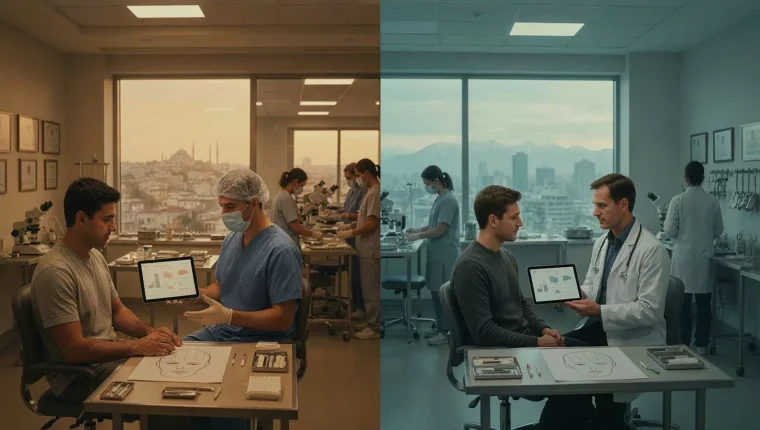
Choosing a hair transplant in Turkey as an American patient involves more than comparing advertised prices. The right decision depends on whether the clinic can accurately assess your hair loss pattern, recommend a suitable technique, and provide qualified medical care throughout. Travel distance also matters: you will need to coordinate consultations, procedure timing, accommodation, transportation, and recovery after returning home. A well-planned hair transplant Turkey package for Americans should make these practical details easier, but it should never distract from the quality of the surgeon or the suitability of the treatment. Before booking, look beyond the headline offer and consider the full patient journey—from the initial evaluation and treatment plan to post-operative guidance and long-term follow-up. Clear communication, realistic expectations, and verified clinical standards are essential for making an informed choice across borders.
Why Americans Choose Turkey for Hair Transplants

Turkey attracts many American hair transplant patients because it has developed a strong international treatment model around hair restoration. Dedicated clinics often serve overseas visitors with English-speaking coordinators, remote consultations, airport transfers, and appointment planning designed for patients traveling from abroad. This structure can make the process easier to organize than arranging each part of the journey independently.
Access to experienced surgeons is another consideration. Turkey has a large hair restoration sector, giving patients the opportunity to compare physicians, techniques, treatment plans, and levels of clinical involvement. However, convenience should not be judged separately from medical quality. Surgeon expertise, communication, facility standards, travel distance, recovery arrangements, and the quality of follow-up care all matter when deciding whether treatment abroad is appropriate.
Cost is often part of the comparison, but it should be approached carefully. Prices can vary according to graft numbers, technique, surgeon participation, accommodation, and aftercare. American patients should request current quotes and compare equivalent treatment scopes rather than relying on an advertised headline price. A lower estimate may exclude services another clinic includes, so understanding what is—and is not—covered is essential before making a decision.
What a Hair Transplant Turkey Package for Americans Includes
A package should be evaluated as a coordinated treatment plan, not simply as a quoted procedure price. Turkish clinics structure their offers differently, so American patients should examine exactly which medical services and practical arrangements are included, which are optional, and which remain their responsibility. Comparing these details in advance can help patients understand the overall value of the offer, avoid unexpected charges, and determine whether the package provides appropriate medical support throughout the treatment journey.
- Consultation and assessment: The package may include a remote consultation, scalp examination, hairline planning, graft estimation, and review of medical history. Ask whether the assessment is performed by the surgeon or by a coordinator.
- Procedure and clinical care: Confirm the planned technique, estimated graft range, local anesthesia, clinic fees, and whether the named surgeon performs the extraction, implantation, or other key stages.
- Transfers and accommodation: Many offers include airport, hotel, and clinic transfers, along with a specified number of hotel nights. Verify the hotel category, transportation schedule, and whether arrangements apply only to the patient.
- Medications and supplies: Some packages provide postoperative medication, shampoo, dressings, or a recovery kit, while others charge separately for these items. Request an itemized list before payment.
- Coordination and follow-up: An English-speaking coordinator may organize appointments and communication, but this does not necessarily mean the surgeon provides direct aftercare. Confirm how follow-up is delivered after returning to the United States.
Several costs commonly sit outside the headline quote. International airfare, travel insurance, meals, companion expenses, additional grafts, laboratory tests, and treatment for unexpected medical findings may require separate payment. Written confirmation is especially important if the initial assessment suggests a different graft count or if the clinic recommends extra testing. Patients should also clarify whether any changes to the treatment plan could affect the final price or require additional time in Turkey.
Before booking, request a written treatment plan showing the surgeon’s name, included services, exclusions, cancellation terms, and follow-up arrangements. This makes it easier to compare packages fairly and to identify whether the advertised convenience reflects genuine clinical coordination or mainly travel assistance. A clear agreement also gives American patients a more reliable basis for planning their travel, budgeting for the procedure, and arranging continued communication with the clinic after returning to the United States.
Comparing FUE, DHI, and Sapphire Techniques
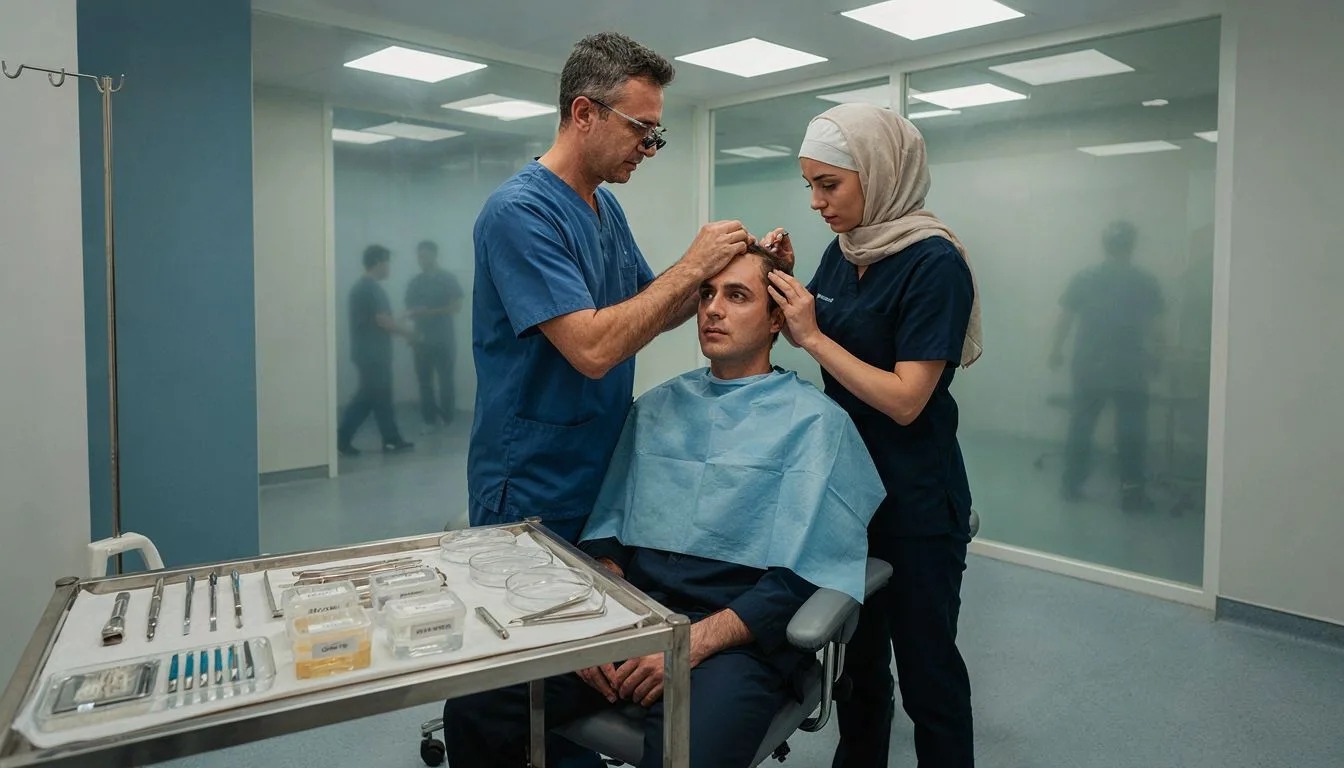
FUE, DHI, and sapphire are commonly discussed as separate hair transplant options, but they describe different parts of the surgical process rather than three universally distinct outcomes. The right choice depends on the number of grafts required, the condition of the donor area, hair characteristics, and the surgeon’s assessment of the recipient region.
With FUE, individual follicular units are extracted from the donor area using a small punch and then prepared for placement. Implantation may be performed with forceps or an implanter, depending on the clinic’s protocol. This approach can be suitable for a range of graft requirements, but the extraction pattern and handling of follicles are important to protect donor density.
DHI generally refers to implantation with a specialized pen-like device. Grafts are loaded into the implanter and placed directly into the recipient area, allowing the clinician to control the angle, direction, and depth during insertion. DHI may be considered when precise placement or work in areas between existing hairs is important, although it is not automatically better for every patient or graft volume.
Sapphire typically describes the material of the blade used to create recipient channels during an FUE-based procedure. A sapphire blade may provide a refined channel-making tool, but the label alone does not determine the quality of the result. Surgeon-led planning remains more significant than the technique name because design, graft distribution, and handling decisions shape the procedure.
When comparing options, ask which tool will be used for extraction and implantation, who performs each stage, how many grafts are recommended, and why that number is appropriate. Donor density, hair caliber, curl pattern, and the existing hairline should guide the discussion. A well-planned technique with reliable clinical support is generally more meaningful than choosing a package based on a promotional label.
How to Choose a Reliable Turkish Hair Clinic
Choosing a clinic should begin with medical accountability, not a polished package page or an attractive before-and-after gallery. American patients should be able to identify who is responsible for the treatment, where it will take place, and how clearly the clinic answers questions before any deposit is paid. A trustworthy provider makes the evaluation process feel specific to the patient rather than relying on a standard sales script. Comparing these details carefully can help patients distinguish genuine clinical standards from marketing claims and make a more informed decision before traveling.
- Verify the surgeon’s identity and role. Ask for the surgeon’s full name, qualifications, professional registration, and exact involvement in planning, extraction, implantation, and follow-up. Confirm whether the advertised doctor will personally perform the key stages or whether much of the work is delegated to technicians.
- Check the facility information. Request the clinic or hospital name, location, licensing details, and information about infection-control standards. A credible provider should explain where the procedure occurs instead of describing only a hotel-based or “VIP” experience.
- Review relevant clinical evidence. Look for consistent, clearly dated case examples showing comparable hair loss patterns and realistic progress. Be cautious with heavily edited images, identical angles, unusually dense results, or testimonials that provide no verifiable context.
- Assess the consultation quality. The consultation should address donor-area limits, hair-loss progression, medical history, and realistic density goals. Pressure to book quickly, promises of guaranteed results, or a fixed graft number without examination are important warning signs.
- Request complete written documents. Before payment, obtain itemized financial terms, consent forms, cancellation conditions, complication procedures, and any revision policy. The clinic should also provide a dependable contact method for questions before travel.
Communication quality is part of clinical safety. Patients should understand the treatment plan, who can make medical decisions, and what happens if the procedure must be adjusted. Written answers are especially valuable when arranging care across borders because they create a clear record of what was discussed rather than leaving important expectations to informal messages.
Patients should also consider how the clinic supports them after returning home. Clear aftercare instructions, scheduled follow-up, accessible medical contact, and a defined response to complications can be just as important as the procedure itself. A provider that offers transparent information, realistic expectations, and consistent communication is more likely to deliver a responsible experience from the initial consultation through recovery.
Travel Planning, Accommodation, and Procedure Logistics
Build your itinerary around the clinic’s medical schedule rather than treating the procedure as a short sightseeing trip. Confirm how much time is needed for the initial consultation, hair transplant, first wash, and any review appointment before booking flights. Allow flexibility for schedule changes, especially if the surgeon needs to reassess your scalp or adjust the treatment plan after an in-person examination.
Hotel location can affect comfort more than its star rating. A nearby property may reduce transfer time and make it easier to attend appointments, rest between visits, and manage early mobility needs. Ask whether transfers are private or shared, whether the vehicle can accommodate luggage, and who to contact if a driver is delayed. A companion can also be useful for navigation, translation, practical assistance, and returning to the hotel after the procedure, although the need depends on your personal circumstances.
Before departure, check that your passport remains valid for the required period and keep digital and printed copies of clinic documents, payment receipts, flight details, and emergency contacts. Confirm accepted payment methods, possible card fees, and the clinic’s communication channel for use abroad. Travel insurance may not cover elective treatment or related complications, so review exclusions carefully and ask what medical support is available locally if an unexpected concern arises.
Schedule flexibility is particularly valuable for American patients coordinating international flights with clinical appointments. Avoid planning an immediate return after the final visit, and obtain clear written instructions about when flying is considered appropriate for your itinerary. Keep the clinic’s address, surgeon’s contact details, hotel information, and local emergency numbers accessible throughout the trip.
Aftercare, Recovery, and Long-Term Results
After the procedure, follow the clinic’s written instructions closely because early care protects the grafts and supports comfortable healing. Washing should begin only when advised, using the recommended technique and water pressure. Sleep with your head elevated if instructed, avoid rubbing or scratching the recipient area, and postpone strenuous exercise until the medical team considers it safe. Take prescribed medications exactly as directed, and protect the scalp from direct sun exposure with the clinic-approved method rather than applying unapproved products.
Some redness, swelling, tightness, crusting, and temporary sensitivity can occur during early recovery. Contact the clinic promptly if symptoms become severe, worsen unexpectedly, or include significant bleeding, fever, spreading redness, pus, or uncontrolled pain. Before returning to the United States, ask who handles urgent questions, which communication channel to use, and whether an American time-zone contact is available.
Hair growth is gradual. Transplanted hairs may shed temporarily before new growth appears, and visible improvement commonly develops over several months. Density and the final appearance can vary with donor supply, hair characteristics, healing, and the progression of hair loss. Realistic expectations are therefore essential: the final assessment should be made only after the clinic’s recommended timeline, not during the early shedding phase.
Arrange remote follow-up before leaving Turkey, including the timing and format of progress photographs or video consultations. Keep copies of your operative notes, medication instructions, and contact details, and report concerns early rather than waiting until dissatisfaction becomes difficult to address.
FAQs
What does a hair transplant Turkey package for Americans usually include?
A hair transplant Turkey package for Americans usually includes a medical consultation, hairline planning, the transplant procedure, medications, post-operative instructions, and follow-up support. Many packages also cover airport transfers, hotel accommodation, and an interpreter, while flights and personal expenses are typically excluded. Inclusions vary by clinic, so confirm the exact services, surgeon’s credentials, graft estimate, and aftercare before booking.
How much does a hair transplant in Turkey cost for American patients?
Hair transplants in Turkey typically cost American patients about $2,000–$5,000, depending on the clinic, procedure type, number of grafts, and whether the package includes accommodation and airport transfers. Advanced techniques or larger sessions may cost more, while travel, medications, and follow-up care may add to the total.
Is traveling to Turkey for a hair transplant safe and medically regulated?
Traveling to Turkey for a hair transplant is generally considered safe when you choose a licensed clinic and a qualified, experienced surgeon. Medical facilities must comply with Turkish health regulations, but standards can vary, so verify the clinic’s authorization, the surgeon’s credentials, infection-control practices, and aftercare arrangements before booking.