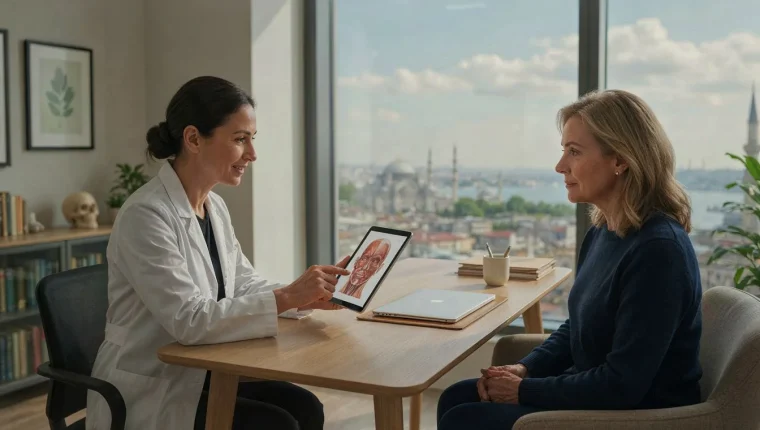
Considering a facelift abroad but unsure what you’re paying for? You’re not alone. A facelift Turkey package covers more than the surgery itself — from hotel accommodation and private transfers to aftercare medications and follow-up appointments. The details vary between clinics, and knowing what’s included and what isn’t can help you avoid unexpected costs or surprises. This guide breaks down typical package components, explains which services are standard or optional, and highlights red flags when comparing offers. Whether you’re in the early research stage or already comparing quotes, understanding what sits behind that single price tag is the first step toward a confident decision. Let’s get into the specifics.
What Does a Facelift Package in Turkey Typically Include?

A typical Turkish facelift package is built as an all-in-one bundle that takes you from the first consultation to your final follow-up. Instead of paying separately for each appointment, test, and service, you receive a single price that covers the clinical work, the hospital experience, and the logistics around your trip. That bundled structure is the main reason many patients find the total cost noticeably lower than in the UK or Western Europe.
At its core, the package almost always includes the surgeon’s fee, anesthesia, and the operating room costs. It also covers standard pre-operative testing — blood work, ECG, and a general health screening — so your surgical team can confirm you are fit for the procedure. For patients with chronic conditions or a complex medical history, an all-inclusive medical package typically extends to additional specialist clearances and extended monitoring during your stay.
Beyond the surgery itself, most providers bundle the hospital stay (usually one night for a facelift), prescribed medications, compression garments or facial bandages, and scheduled post-operative check-ups. Follow-up appointments are an important detail to confirm, because reputable clinics include several reviews in the first ten to fourteen days, when swelling and bruising are being managed most actively.
Packages also typically account for the practical side of medical travel: private airport transfers, transportation between your hotel and the clinic, and accommodation for a set number of nights, often including a companion. Many clinics add an interpreter or English-speaking patient coordinator so that nothing gets lost between you and your surgical team.
Finally, expect written aftercare instructions and access to the clinic after you return home, usually through video calls or messaging with your coordinator. The exact contents vary between providers — some include premium hotels and extended aftercare, while others keep the bundle leaner and price the surgery accordingly — so reviewing the itemized list before you commit is the single most useful step in comparing offers.
Surgical Procedures Covered in the Package
At the heart of every facelift package lies the surgery itself, and Turkish clinics are usually quite transparent about what their surgeons will actually perform. The core of the treatment is the facelift procedure, which addresses sagging in the lower face and jowls by repositioning deeper tissue rather than simply pulling the skin. Most packages are built around this operation, but the exact technique — a deep plane lift, SMAS lift, or a mini facelift — is decided after the surgeon reviews your photos and facial anatomy.
It is worth understanding that a package covers the specific procedures agreed upon before you travel. Surgeons in Turkey typically include several complementary operations in one surgical session, since combining treatments reduces overall recovery time and often improves the final result. The most common inclusions are:
- Full facelift with SMAS or deep plane technique — the primary operation that lifts the cheeks, jawline, and jowls for a natural, refreshed contour rather than a tight, windblown look.
- Neck lift — frequently performed alongside the facelift to remove banding and excess fat under the chin, as treating the face without the neck often leaves an uneven result.
- Blepharoplasty (eyelid surgery) — upper or lower eyelid correction is commonly added when hooded lids or under-eye bags would otherwise make the facelift look incomplete.
- Fat grafting or fat transfer — harvested fat is reinjected into the cheeks or temples to restore volume loss, which many surgeons consider essential for a youthful result.
- Brow lift — included when forehead sagging contributes to the overall aged appearance, though it is more often listed as an optional add-on.
Revision surgery is a detail many patients overlook when comparing offers. Reputable clinics state in writing that corrective touch-ups within a defined period — often the first year — are covered or heavily discounted. Before you commit, ask whether additional procedures found necessary during surgery, such as extended neck work, would involve extra fees, and request a detailed surgical plan so you know exactly which techniques you are paying for.
Pre-Operative Tests and Medical Assessments
Before any surgical plan is confirmed, a quality Turkish clinic will run a series of pre-operative medical assessments to make sure you are genuinely fit for anesthesia and surgery. These tests are almost always included in the package price, and they typically happen within a day or two of your arrival in Istanbul or another Turkish city.
The standard panel usually includes blood work — a complete blood count, clotting and bleeding times, kidney and liver function tests — plus blood sugar screening for patients at risk of diabetes. You can also expect a chest X-ray or ECG, depending on your age and medical history, along with an anesthesia consultation where the anesthesiologist reviews your results and discusses any medications you currently take.
Most clinics will ask you to complete a detailed health questionnaire before you fly. Be honest here: conditions like high blood pressure, smoking, previous blood clots, or regular use of blood thinners all influence both your safety and your surgical plan. If something in your history raises a flag, the surgeon may request additional tests or, in rare cases, ask you to obtain clearance from your own physician before traveling.
One important detail to check when comparing providers is whether the assessments are performed by the hospital itself or outsourced to a nearby lab. Hospital-based testing is generally preferable, because your surgeon and anesthesiologist receive the results directly and can act on them immediately. Reputable JCI-accredited hospitals follow international protocols, so the tests you undergo in Turkey will look very similar to what you would experience at home.
Patients over a certain age — commonly 45 to 50 — or those with chronic conditions should expect a slightly more thorough workup, which is normal and should never be rushed or skipped. If a clinic offers to operate without seeing your test results or booking a proper consultation with the anesthesiologist, treat that as a serious warning sign. A thorough evaluation protects you, and it is a core part of what you are paying for.
Hospital Stay and Aftercare Services
Once your surgery is complete, the quality of your hospital stay and follow-up care becomes just as important as the operation itself. Most Turkish clinics include one overnight stay in an accredited private hospital, where a nurse monitors your blood pressure, drains, and facial dressings throughout the night. This supervised post-operative recovery period allows the surgical team to manage any discomfort promptly and confirm there are no immediate complications before you are discharged.
Discharge usually happens the morning after surgery, once your surgeon has checked the incision sites and replaced the initial dressings. You will leave with detailed written instructions covering how to sleep (typically with your head elevated), when to apply cold compresses, and which movements to avoid during the first weeks.
Aftercare in a comprehensive package generally continues well beyond the hospital doors:
- Medication pack: Antibiotics, painkillers, and sometimes anti-nausea medication are provided or prescribed, usually at no extra cost.
- Follow-up appointments: In-person check-ups with your surgeon at set intervals before you fly home, typically on day 2 or 3 and again just before departure.
- Wound care and dressing changes: Performed at the clinic by nursing staff during your stay.
- Garments and supplies: A facial compression garment or chin strap, plus any necessary bandages, are commonly included.
- Remote follow-up: Many clinics offer WhatsApp or video consultations for several months after you return, and may ask you to send photos so your surgeon can track healing.
It is worth asking in advance exactly how many in-person reviews are covered, as this varies between providers. Stitches are usually dissolvable, so a separate removal appointment is rarely needed. Most surgeons also recommend staying in the country for roughly 7 to 10 days after a facelift, which allows your team to spot and treat early issues such as fluid collection or infection before you travel. This extended local presence is one of the practical advantages of choosing a package that bundles surgery and aftercare together, rather than arranging each service separately once you arrive.
Accommodation, Transfers, and Interpreter Support
Beyond the operating theatre, the logistical side of medical travel is often what patients worry about most — and understandably so. Landing in a foreign country, finding your hotel, and navigating hospital corridors without speaking the language can feel overwhelming. This is precisely why reputable Turkish clinics treat the non-medical elements of your journey as carefully as the surgery itself, building interpreter support and full travel coordination into the standard arrangement rather than offering them as costly extras.
The logistics portion of a typical package usually covers:
- Hotel accommodation for you (and often a companion) in a carefully selected hotel near the clinic or hospital, with the number of nights matched to your recovery timeline so you are never rushed out before your follow-up appointments are complete.
- Airport transfers in private, comfortable vehicles, with a driver who knows your arrival details and takes you directly to your hotel or the hospital — no taxis, no navigation apps, no stress.
- All clinic and hospital transportation throughout your stay, including journeys between the hotel, pre-operative tests, surgery, and every scheduled check-up.
- A dedicated patient interpreter or coordinator who accompanies you to consultations, translates conversations with your surgeon, and helps with paperwork, prescriptions, and everyday practicalities.
- 24/7 patient support, so that if a question or concern arises at any hour — particularly during your post-operative recovery — there is always someone reachable who speaks your language.
One detail worth clarifying before you book: the standard of accommodation varies meaningfully between providers. Budget packages may place you in a basic hotel some distance from the clinic, while premium arrangements typically offer 4- or 5-star stays within minutes of your medical team. Asking for the hotel name in advance is a completely reasonable request, and a transparent provider will answer it without hesitation.
Language assistance deserves special attention as well. In consultations with your surgeon, subtle nuances matter — understanding the planned technique, realistic expectations, and recovery instructions depends on accurate, patient-specific translation. A professional coordinator who stays with you from the first consultation through your final check-up is not a luxury; it is a core safety feature of a well-constructed package, and one that directly shapes the quality of your entire experience in Turkey.
What Costs Are Not Included in the Package

Even the most generously designed packages have boundaries, and knowing them before you travel protects you from awkward surprises. While your facelift Turkey package covers the surgery, hospital care, medications, and logistics, there are certain expenses that almost always fall outside the agreement — and reputable clinics will state these openly in your quotation.
The most common exclusion is the flight ticket. International airfare to and from Turkey is nearly always booked and paid by the patient, as clinics cannot control your departure city, travel dates, or airline preferences. Similarly, visa fees, if applicable to your nationality, remain your own responsibility.
Additional nights beyond the included hotel stay are another frequent extra. If you choose to extend your recovery in Turkey — which many patients happily do — the extra accommodation is billed separately, though clinics can usually arrange discounted rates at their partner hotels. Companions who travel with you may also incur costs, since some packages include accommodation for one guest only.
A few medical variables can also affect the final price. If your pre-operative assessments reveal a condition requiring specialist clearance, or if you opt for additional procedures beyond the agreed surgical plan, these are quoted as supplements. Revision surgery, should it ever be needed after you return home, is typically evaluated on a case-by-case basis; many clinics cover the surgeon’s fee but not the travel costs of returning to Turkey.
Personal spending naturally sits outside the package too — meals outside the hotel, shopping, tourism, and travel insurance are all yours to arrange. It is worth purchasing comprehensive travel and medical insurance independently, as standard policies rarely cover elective cosmetic procedures abroad.
The best advice is simple: request a written, itemized quotation before paying any deposit. A transparent clinic will list exactly what is included and what is not, leaving no room for hidden fees. When everything is confirmed in writing, you can budget with complete confidence and focus entirely on your results.
FAQs
What does a facelift Turkey package typically include?
A facelift Turkey package typically includes the surgical procedure itself, anesthesia, hospital fees, pre-operative tests, and post-operative medications. Most packages also cover airport transfers, accommodation at a hotel, and interpretation services. The surgeon's fee, follow-up appointments, and sometimes compression garments are included as well. Patients should confirm the exact contents with each clinic, as inclusions vary between providers.
Are hotel stays and airport transfers covered in the cost?
Whether hotel stays and airport transfers are included depends on the specific medical travel package you choose, as most hospitals and facilitators offer these services separately or as add-ons rather than in the base treatment price. Always request an itemized quote before booking so you can see exactly what is covered. Some all-inclusive medical tourism packages do bundle accommodation and transfers, so ask your provider directly to confirm.
How long should I stay in Turkey after my facelift surgery?
Plan to stay in Turkey for at least 10 to 14 days after your facelift surgery. This allows time for your initial recovery, suture removal, and follow-up check-ups with your surgeon before flying home. Your surgeon will confirm the exact timeline based on how well you are healing. Most clinics arrange post-operative appointments within this period to clear you for travel safely.