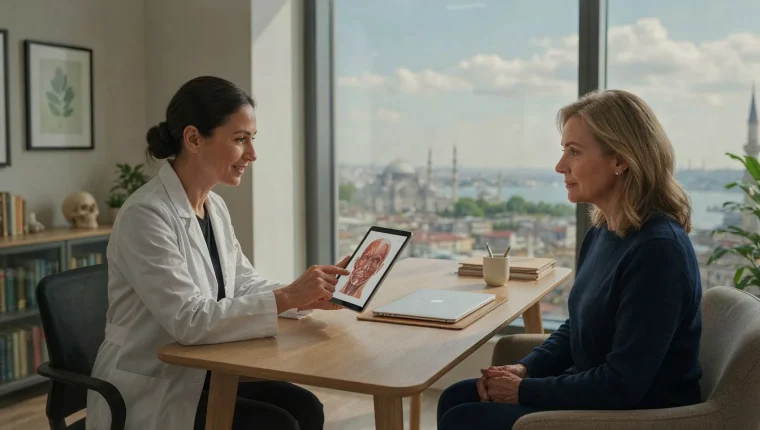
Facelift surgery is one of the most demanding cosmetic procedures a surgeon can perform, and the difference between a good and an average result is immediately visible. That’s why more people are looking beyond their home countries to consider a facelift surgeon in Turkey, where experienced specialists, modern clinics, and significantly lower costs have made the country a leading destination for facial rejuvenation. But how do you separate a truly skilled surgeon from clever marketing? What credentials actually matter, and which red flags should make you walk away? This guide covers what you need to know before booking: verifying board certifications, reviewing before-and-after results realistically, understanding what a fair price includes, and preparing the right questions for your consultation. Make sure your decision is based on facts, not promises.
Why Choose Turkey for Your Facelift Procedure
Turkey has become one of the world’s most sought-after destinations for facial rejuvenation, and the reasons go far beyond attractive pricing. Every year, tens of thousands of international patients travel to Istanbul, Ankara, and Izmir for cosmetic surgery, creating a medical ecosystem that is unusually experienced in treating foreign patients from start to finish.
The foundation of this reputation is surgical expertise. Turkish plastic surgeons complete rigorous training in plastic, reconstructive, and aesthetic surgery, and many pursue international fellowships in Europe and the United States. High patient volumes mean a skilled facelift surgeon in Turkey may perform more facial procedures in a year than some counterparts elsewhere do in several, and that repetition directly translates into refined technique and consistent, natural-looking results.
Cost efficiency is another genuine advantage, not a compromise. Facelift procedures in Turkey typically cost 50 to 70 percent less than in the UK, US, or Western Europe, even when you factor in flights and accommodation. This is largely due to lower operational costs and favorable exchange rates rather than inferior standards. Many clinics operate in JCI-accredited hospitals with modern operating theatres and internationally comparable safety protocols.
The patient experience itself is structured for medical travelers. Most reputable clinics offer all-inclusive packages covering surgery, hospital stay, medications, airport transfers, and often interpreter services. Recovery hotels and dedicated aftercare teams are standard, which removes much of the logistical stress of having surgery abroad.
Geography works in your favor, too. Short flight times from Europe, the Middle East, and increasingly from the Americas make Turkey accessible, and a stay of ten to fourteen days is usually sufficient for surgery and initial recovery before flying home.
Turkey’s popularity means quality varies considerably between clinics, and choosing carefully matters more than choosing quickly. Understanding what separates an exceptional surgeon from a merely marketed one is the essential next step, and that is exactly what the following sections will help you evaluate.
What Qualifications Define a Top Facelift Surgeon Turkey

When you start comparing surgeons in Turkey, the first thing to understand is that the country has two distinct categories of practitioners performing facial cosmetic surgery: fully trained plastic surgeons and other doctors who may have limited surgical training. The difference between them matters enormously for your safety and your final result. A genuinely qualified board-certified plastic surgeon has completed six years of medical school followed by a recognized residency in plastic, reconstructive and aesthetic surgery, and this is the baseline you should never compromise on.
Beyond certification, certain markers separate the leading surgeons from the merely average. As you evaluate your options, look for the following:
- Specialization in facial surgery: A surgeon who performs facelifts weekly will have far sharper judgment than one who treats them as an occasional addition to a breast or body practice. Ask directly how many facelift procedures they carry out each year.
- Membership in national and international societies: Affiliation with organizations such as the Turkish Society of Plastic, Reconstructive and Aesthetic Surgeons, or international bodies like ISAPS, signals peer accountability and ongoing education.
- Verifiable before-and-after results: Genuine patient photos, ideally showing results at one year post-op rather than only a few weeks, reveal how the surgeon’s work actually settles over time.
- Hospital operating privileges: A top surgeon operates in fully accredited hospitals with proper anesthesia teams, not just in minimally equipped clinics, and this affects how complications would be handled.
- Clear, individualized consultation: The best surgeons assess your skin quality, bone structure and aging pattern before recommending a technique, rather than offering the same operation to everyone.
It is also worth remembering that qualifications are not only about diplomas on a wall. Communication plays a practical role here: a surgeon or clinic that provides a fluent English-speaking coordinator makes pre-operative planning, consent and aftercare dramatically easier when you are recovering far from home. During your research, note how willingly each clinic discloses the surgeon’s exact credentials, since reputable providers share this information openly while vague or evasive answers are a warning sign in themselves. These qualification markers give you a concrete checklist, and the next section shows exactly where and how to verify each one independently.
How to Verify a Surgeon's Credentials and Experience

Once you know what qualifications to look for, the next step is confirming that they’re real. This is where many patients rush — and where a few minutes of due diligence can protect both your results and your safety. In Turkey, as anywhere else, legitimate credentials are always publicly verifiable, so treat any reluctance to share documentation as a clear warning sign.
Start with the surgeon’s medical license and specialty certification. Turkish plastic surgeons should be registered with the Turkish Medical Association (TTB) and hold a specialist degree in plastic, reconstructive, and aesthetic surgery. You can ask the clinic directly for the surgeon’s diploma number and specialty certificate, then cross-check through official channels or by requesting copies of the documents themselves.
Next, verify hospital operating privileges. A qualified facelift surgeon should have the right to perform surgery in an accredited hospital, not just a private clinic. Hospital privileges require independent credentialing, which adds a meaningful layer of accountability. Ask which hospitals the surgeon operates in and whether you can have your procedure in a full-service hospital facility.
Experience is just as important as certification. Ask directly:
How many facelift procedures does the surgeon perform each year? Facial surgery demands high annual volume to maintain skill.
How many years have they practiced specifically in facial aesthetic surgery?
Can they show before-and-after photos of their own patients, with consistent lighting and angles?
Do they hold membership in recognized societies such as ISAPS or the Turkish Society of Aesthetic Plastic Surgery?
Membership lists are usually published on the societies’ official websites, so take two minutes to confirm the name yourself rather than relying on a logo displayed on a clinic’s homepage.
Finally, pay attention to how the surgeon communicates during this verification stage. Reputable professionals answer credential questions willingly and in detail. Vague answers, pressure to book quickly, or claims that “all our surgeons are certified” without naming individuals should prompt you to keep searching. A surgeon confident in their record will have nothing to hide — and that transparency at this stage usually reflects the honesty you’ll experience throughout your care.
Key Questions to Ask Before Your Consultation
A consultation is where all of your research either comes together or falls apart, so treat it as a two-way conversation rather than an interview. When you speak with a facelift surgeon in Turkey—whether by video call before you fly or in person once you arrive—your goal is to confirm that the qualifications you verified on paper translate into a surgeon who understands your face, your goals, and your safety.
Start by asking who will actually perform the operation. In some clinics, the doctor you meet online is not the one who operates on the day of surgery, so confirm in writing that the named surgeon you consulted is the same one performing your facelift, and that they will be present throughout the entire procedure. Then ask how many facelifts they perform per year, how often they use the specific technique recommended for you, and what percentage of their practice is dedicated to facial surgery rather than scattered across many procedure types.
Next, move to your individual case. A strong candidate for surgery will want to examine your skin quality, bone structure, and medical history before quoting results or timelines, so be wary of anyone who promises an outcome without a proper evaluation. Useful questions include: What technique do you recommend for my anatomy, and why? What results can I realistically expect, and how long will they last? Will you show me before-and-after photos of patients with faces similar to mine?
You should also clarify the practical details that protect you if something goes wrong. Ask what is included in the quoted price, which hospital the surgery will take place in, who handles complications and revision surgery, and how long you must remain in Turkey for follow-up checks. A reputable surgeon will answer these directly and document them.
Finally, pay attention to how the conversation feels. A surgeon who welcomes detailed questions, explains risks honestly, and discourages procedures you do not need is showing you exactly the judgment you are paying for.
Understanding Facelift Techniques and Costs in Turkey
Once you have shortlisted a qualified facelift surgeon, the next practical step is understanding what you are actually paying for. Facelift surgery is not a single procedure but a family of techniques, and the right one for you depends on your anatomy, the degree of skin laxity, and how deep the surgeon needs to work. This is also where pricing in Turkey becomes easier to interpret: most quoted prices bundle the technique, anesthesia, hospital fees, and aftercare into one package, so knowing the technique behind the number tells you whether the offer is genuinely fair or simply a stripped-down version of surgery.
Surgeons in Turkey commonly offer several approaches, and a good consultation should end with a clear explanation of why one was recommended over the others:
- SMAS facelift: The gold standard for most patients, this technique lifts and repositions the superficial muscular aponeurotic system beneath the skin, producing results that typically last eight to ten years rather than pulling skin alone.
- Deep plane facelift: A more advanced dissection that releases deeper facial ligaments, offering the most natural movement of the midface and jawline. It demands a highly experienced surgeon and is usually priced at the top of the range.
- Mini facelift: Shorter incisions and less dissection make this suitable for younger patients with early sagging. Recovery is faster, but results are more modest and shorter-lived.
- Thread lift: Not a surgical facelift at all, but often marketed alongside it. It costs far less and involves minimal downtime, yet results fade within one to two years — a useful option, but one you should choose knowingly.
- Combined procedures: Many Turkish clinics pair a facelift with a neck lift, blepharoplasty, or fat grafting. Bundling can be cost-effective, but confirm the combined operating time is safe.
On cost, expect comprehensive packages in Turkey to range roughly between $3,500 and $8,000, with deep plane work and luxury clinics at the higher end. Compare what is included — pre-operative testing, compression garments, medications, hotel stays, transfers, and follow-up appointments — rather than the headline figure alone. A quote that seems remarkably cheap often excludes anesthesia or post-operative visits, so request an itemized breakdown in writing before you commit to anything.
Planning Your Recovery and Aftercare Abroad
Recovery is where your planning matters just as much as the surgery itself. Most facelift patients need around 10 to 14 days before they look presentable in public, and your surgeon in Turkey will typically recommend staying in the country for at least that initial period so your healing can be monitored in person rather than from a distance.
Before you fly home, make sure you have a clear written plan covering your aftercare schedule: when dressings come off, when stitches are removed, when follow-up checks happen, and who to contact if something concerns you. Reputable clinics provide a dedicated patient coordinator who communicates in English, plus detailed instructions on sleeping with your head elevated, managing swelling, and when you can safely resume light activity.
Think carefully about your return flight, too. Pressurized cabins and long periods of sitting are not ideal in the first days after surgery, so many patients choose to fly business class, schedule a hotel stay for a few extra days, or delay their return until their surgeon confirms it is safe. Ask your clinic whether they arrange airport transfers and accommodate a companion, since having someone help you during the first 48 hours genuinely improves comfort and safety.
It is also wise to arrange aftercare on your end before you travel. A local doctor or nurse who can remove stitches or check incisions gives you peace of mind, and most Turkish surgeons are happy to send your medical records, operative notes, and post-operative instructions directly to your home physician. Clarify this in advance, because not every clinic includes it by default.
Finally, remember that a facelift reveals its full result over months, not weeks. Swelling and numbness fade gradually, and final refinement can take six months or more. Choosing a surgeon who offers long-term remote follow-up, not just a quick check before your flight, is one of the most reliable signs that your result will be supported well beyond the day you leave Turkey.
FAQs
How much does a facelift cost in Turkey compared to the UK or US?
A facelift in Turkey typically costs between $3,000 and $6,000, compared to roughly $10,000–$15,000 in the UK and $12,000–$20,000 in the US. This means patients can save around 50–70% by choosing Turkey, even after adding flights and accommodation. The lower prices reflect reduced operational and labor costs rather than lower standards, as many Turkish clinics are internationally accredited and surgeons perform high annual procedure volumes.
What qualifications should I check before booking with a facelift surgeon Turkey?
Before booking with a facelift surgeon in Turkey, verify that they are board-certified in plastic, reconstructive, and aesthetic surgery and registered with the Turkish Medical Association. Check their hospital or clinic accreditation, the number of facelift procedures they perform annually, and before-and-after photos of their actual patients. It is also wise to confirm they operate in a fully licensed, JCI-accredited facility with ICU access and to request a video consultation beforehand to assess communication and realistic expectations.
Is it safe to travel home soon after surgery, or should I stay longer for follow-up care?
In most cases, you can travel home within a few days to two weeks after surgery, once your surgeon confirms you are stable, mobile enough for the journey, and free of complications like infections or blood clots. Getting the all-clear at a post-operative check-up before flying is important, since long flights increase the risk of deep vein thrombosis, and your doctor may prescribe blood thinners or compression stockings for the trip. Minor procedures often allow travel within days, while major surgeries such as cardiac or joint replacement may require one to three weeks of local recovery and follow-up. Plan to stay accessible for follow-up care by arranging telehealth consultations with your surgeon and identifying a doctor near home who can manage wound checks and remove stitches.