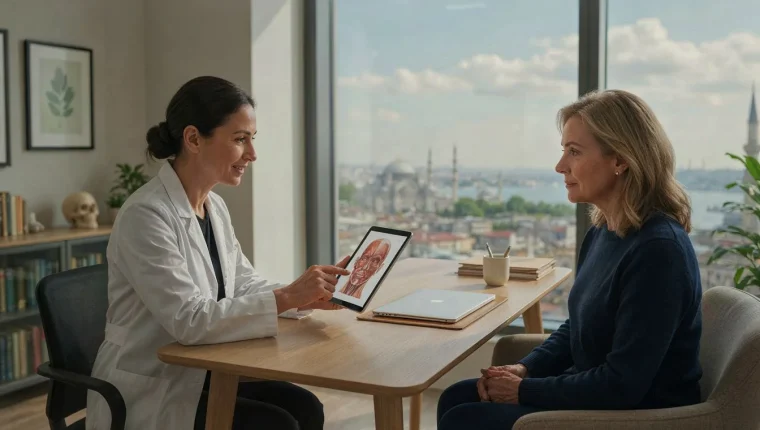
Every year, thousands of Americans fly across the Atlantic for a facelift, and Turkey has become the number one destination for it. The same procedure can cost $15,000–$25,000 in the US but often costs a fraction of that price in Istanbul and is usually bundled into an all-inclusive facelift Turkey package for Americans covering surgery, hotel stays, transfers, and aftercare. But what exactly do these packages include? How do you separate world-class surgeons from clever marketing? Are the savings really worth the flight? This guide covers what a typical package looks like, what it should contain, realistic pricing, and the questions to ask before you book. By the end, you’ll know whether Turkey is the right choice for your facelift and how to do it safely.
Why Americans Choose Turkey for Facelift Surgery
Cost is the most obvious driver, but it is rarely the only one. A facelift performed by an experienced, board-certified surgeon in Turkey typically costs a fraction of what the same procedure runs in the United States—often 50 to 70 percent less—even after adding international flights and a hotel stay. That gap exists because of lower operating costs, favorable exchange rates, and the sheer volume of procedures Turkish clinics perform, not because of shortcuts in quality.
Volume matters more than most patients realize. Turkey is one of the busiest medical tourism destinations in the world, and its top facial surgeons perform deep plane and SMAS facelifts far more frequently than many of their American counterparts. High case volume translates into refined surgical judgment, particularly with the technique that defines a modern result: the deep plane facelift, which repositions deeper facial tissues rather than simply tightening skin.
There are practical reasons, too. Direct flights connect major US cities to Istanbul in around ten to twelve hours, and the time zone difference is mild compared to Asia. Most American patients can complete the entire journey—consultation, surgery, and initial recovery—within a two-week window, which fits far more easily into American work and family schedules than a longer, multi-trip arrangement.
Language and service expectations also play a role. Leading clinics that cater to international patients employ English-speaking coordinators, arrange hotel-to-hospital transfers, and assign a case manager who stays in contact from the first video consultation through the final follow-up. For many Americans, this level of hand-holding actually exceeds what they experience at home, where insurance-driven healthcare often leaves cosmetic patients navigating logistics on their own.
Finally, reputation has become self-reinforcing. Reviews, before-and-after galleries, and word-of-mouth referrals from other US patients have built a level of trust that would have been unthinkable a decade ago—turning what was once a niche decision into a mainstream option for facial rejuvenation abroad.
What Is Included in a Facelift Turkey Package for Americans
When American patients request a quote from a Turkish clinic, the number they receive is almost never just the surgeon’s fee. It is a bundled price designed to remove the logistical friction of having surgery abroad, and understanding exactly what sits inside that bundle is the difference between a smooth medical trip and a stressful one. A typical all-inclusive facelift package covers far more than the operating room, and reputable clinics put their inclusions in writing before you pay a deposit.
While inclusions vary slightly between providers, most established clinics in Istanbul and Ankara structure their packages around the same core components:
- Surgical fees and hospital costs — the surgeon’s fee, anesthesia, operating room, and typically a one-night hospital stay with nursing supervision after your deep plane or SMAS facelift.
- Luxury hotel accommodation — usually 5 to 10 nights in a 4- or 5-star hotel near the clinic, because initial recovery requires daily dressing checks and comfortable rest away from the surgical facility.
- Private VIP transfers — a dedicated driver meets you at Istanbul or Antalya airport and handles every trip between the airport, hotel, hospital, and follow-up appointments, so you never navigate a foreign city alone after surgery.
- Pre-operative testing and consultations — blood work, ECG, and the surgeon’s in-person evaluation on arrival, plus video consultations beforehand to confirm you are a suitable candidate before you fly.
- Medications, compression garments, and aftercare supplies — antibiotics, pain management, and any facial garments or lymphatic drainage sessions your surgeon prescribes.
- A dedicated patient coordinator — an English-speaking contact who manages your schedule, interprets during medical appointments, and remains reachable throughout your stay.
What most packages deliberately exclude is your international flight and visa fee, which are handled by you directly and covered in the planning stage. You should also confirm whether revision or touch-up policies are included in writing, as well-run clinics typically cover minor corrections within the first year while excluding procedures unrelated to your original surgery. Before committing, ask the clinic for an itemized contract rather than a single lump figure, because transparency at the quoting stage is one of the most reliable signals of a clinic’s overall professionalism.
How Much Does a Facelift in Turkey Cost Compared to the US

Numbers tell the story best here. In the United States, a full facelift typically runs between $12,000 and $25,000 — and that figure usually covers only the surgeon’s fee, anesthesia, and facility costs. In Turkey, the same procedure performed by board-certified surgeons generally costs between $4,500 and $8,500, a difference of roughly 60 to 70 percent. The key term to understand when comparing quotes is the total package price, because Turkish clinics bundle nearly everything into one figure while American practices bill each component separately.
This gap isn’t a reflection of lower quality. Turkish surgeons often perform a higher annual volume of facial procedures, and the overall cost of running a clinic — staff salaries, rent, malpractice insurance — is simply lower in Istanbul or Antalya than in Beverly Hills or Manhattan. When you request an itemized breakdown from a US surgeon, you’ll quickly see how quickly the numbers climb once anesthesia and operating room fees are added.
Consider what your money actually buys in each country. For around $6,000 in Turkey, a typical package includes the surgery itself, hospital stay, medications, hotel accommodation, VIP transfers, and follow-up care. That same $6,000 in the US might not even cover the surgeon’s fee alone, leaving you to budget separately for the anesthesiologist, the surgical facility, compression garments, and post-operative appointments.
A few practical points matter when comparing quotes. First, confirm whether the quoted price covers a deep plane technique or a more superficial approach, as complexity affects cost in both countries. Second, ask what happens if you need a revision — some Turkish clinics include discounted or free touch-ups within a set period, while US surgeons bill revisions as entirely new procedures. Third, remember to add flights and any extra travel nights to the Turkish total; even with these, most patients still save $8,000 to $15,000 overall. For many Americans, that difference is what makes the procedure financially possible at all — or leaves room to combine it with another treatment in a single trip.
Planning Your Medical Travel: Flights, Visas, and Accommodation
Once you’ve chosen a clinic and agreed on a total package price, the logistics become your next priority—and the good news is that most facelift Turkey package for Americans already cover the hardest parts. Nearly every reputable clinic books your private VIP transfers between the airport, hotel, and hospital, so you never have to navigate an unfamiliar city on your own after landing.
For flights, most American patients connect through major European hubs such as Istanbul’s new airport, which offers direct routes from New York, Chicago, Washington D.C., Miami, and Los Angeles. Plan to arrive one to two days before your surgery date. This buffer allows for your pre-operative testing and consultations, gives you time to rest after a long flight, and protects you if delays occur. Book a return flight roughly 10 to 14 days out, since your surgeon will want to monitor early healing before clearing you to fly.
Visa requirements are refreshingly simple. US citizens can obtain an e-Visa online through Turkey’s official government portal for around $50, typically approved within minutes. Apply at least a few days before departure, print a copy, and keep it with your passport. Standard tourist visas allow stays of up to 90 days, so there’s no special medical visa needed.
Accommodation deserves careful thought because you’ll spend more time recovering in your hotel than in the hospital. Most all-inclusive facelift packages include five to ten nights in a luxury hotel, often within walking distance of the clinic. Before you travel, confirm with your patient coordinator that your room has a refrigerator for medications, easy elevator access, and meal service—many clinics arrange for patients to have appropriate soft foods delivered during the first days of recovery. If a traveling companion is joining you, ask whether the package covers a double room; most do, but it’s worth confirming in writing so your entire trip is locked in before you board the plane.
Recovery Timeline and Aftercare Support for International Patients
Recovery from a facelift follows a predictable pattern, but recovering in a foreign country raises practical questions that patients back home never have to think about. The good news is that most Turkish clinics serving American patients build their aftercare protocols specifically around international travel, with your dedicated patient coordinator checking in daily and follow-up appointments scheduled before you even board your flight home.
Here’s what a typical recovery timeline looks like:
- Days 1–3: You’ll rest at your hotel with prescribed medications, cold compresses, and drainage management. Most clinics require a follow-up visit on day two or three to remove drains and check incision sites.
- Days 4–7: Bruising and swelling peak early in this window, then begin fading noticeably. Stitches are typically removed around day seven, often just before your departure.
- Weeks 2–4: Once home, you can usually resume light work and social activities. Clinics typically request photos via WhatsApp or email to monitor your healing remotely.
- Months 2–6: Residual swelling settles and final contours emerge. Reputable surgeons remain available for questions during this entire period, often for life.
Flying home is generally safe after your surgeon clears you — usually around day seven to ten, once swelling has stabilized and drains are out. Your clinic should advise on cabin pressure precautions, hydration, and gentle movement during the flight to support circulation. Always get written clearance before booking your return leg, and build a buffer day or two into your itinerary in case your surgeon wants one extra check-up.
Long-distance aftercare is where clinic quality really shows. Before choosing a package, ask exactly how complications are handled once you’re back in the US: whether the clinic covers revision costs, how quickly the surgical team responds to messages, and whether they can coordinate with a local physician if needed. The strongest clinics answer these questions without hesitation and put their aftercare commitments in writing as part of your total package agreement — not as vague verbal reassurances.
How to Verify Surgeon Credentials and Clinic Accreditation in Turkey

Before you commit to any clinic, spend an evening doing what Turkish surgeons themselves would tell you to do: verify everything. Turkey has world-class plastic surgeons, but it also has a fast-growing medical tourism market where marketing sometimes outpaces qualifications. Checking credentials is straightforward once you know where to look.
Start with the surgeon’s official registration. Every licensed physician in Turkey is listed by the Turkish Medical Association, and specialists must hold certification from the Turkish Board of Plastic, Reconstructive and Aesthetic Surgery. Ask the clinic for the surgeon’s full name, medical diploma number, and specialization diploma. A legitimate clinic will provide these without hesitation. If you receive vague answers or a sales pitch instead of documents, consider that your answer.
Next, look for international recognition. Membership in organizations such as ISAPS (International Society of Aesthetic Plastic Surgery) or IPRAS signals that the surgeon meets global training and ethics standards and has agreed to independent oversight. Many of Turkey’s leading facelift surgeons hold these memberships precisely because their patient base is international.
Accreditation at the clinic level matters just as much as the surgeon’s CV. The strongest signal is JCI accreditation (Joint Commission International), the same body that certifies top hospitals in the United States. Hospitals like Acıbadem, Memorial, and several private facilities in Istanbul carry this seal, which covers surgical safety protocols, infection control, and staff qualifications. If your chosen clinic is not JCI-accredited, ask whether they follow TÜV or TEMOS standards, both of which also involve independent auditing.
Finally, do three quick checks: request before-and-after photos of full facelift cases (not just mini lifts) performed by your specific surgeon, ask for two or three references from American patients, and confirm in writing which hospital your surgery will take place in and what happens in the event of a complication after you fly home. A transparent clinic will answer all three in a single email — and that responsiveness is itself a credential worth weighing.
FAQs
How much does a facelift in Turkey cost compared to the United States?
A facelift in Turkey typically costs between $3,000 and $6,000, while the same procedure in the United States generally ranges from $9,000 to $15,000 or more. This means patients can save roughly 50% to 70% by choosing Turkey, even after covering travel and accommodation expenses. The lower price reflects reduced operational and labor costs rather than a difference in quality, as many Turkish clinics are internationally accredited and perform high volumes of cosmetic surgeries.
Is a facelift Turkey package for Americans all-inclusive, covering flights, hotel, and aftercare?
Most facelift packages in Turkey aimed at international patients are designed to be all-inclusive, typically covering the surgery, hospital fees, anesthesia, hotel accommodation, airport transfers, medications, and post-operative follow-up care. Flights, however, are usually excluded, so American patients generally book and pay for their own airfare. Some clinics do offer packages that include flights, but this is less common. Always confirm exactly what is and isn't covered with the specific clinic before booking, as inclusions vary between providers.
How long should American patients stay in Turkey after their facelift surgery?
American patients should typically stay in Turkey for 10 to 14 days after facelift surgery. This allows time for the initial recovery, suture removal around day 7 to 10, and a follow-up examination with the surgeon before flying. Staying at least 10 days is especially important because the pressure changes during air travel can affect swelling and healing in the early postoperative period. Some surgeons may clear patients to fly sooner if recovery is progressing well, but two weeks is the safest standard recommendation.