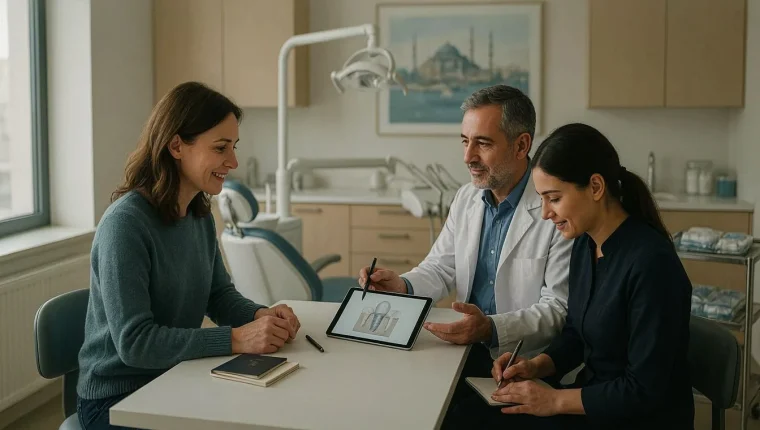
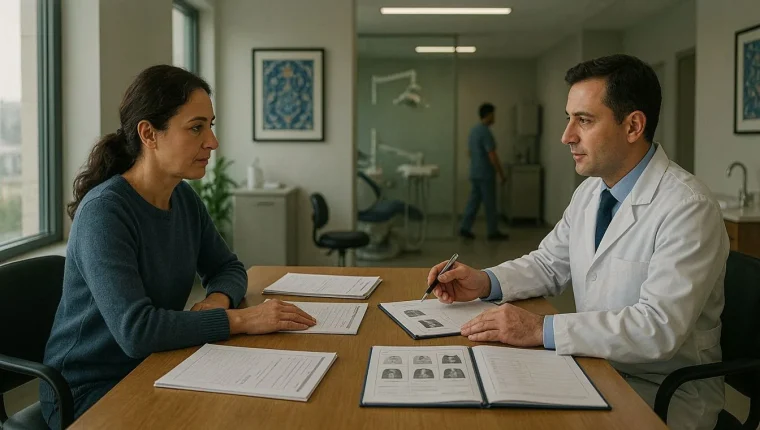
Planning how long to stay in Turkey after dental implants requires allowing your mouth to recover, attending essential follow-up appointments, and travelling only when your dentist considers it safe. The right timeframe depends on the procedure you receive, whether bone grafting or extractions are involved, and how your healing progresses after surgery. Some patients need only a short stay for implant placement and an initial check, but complex treatment may require more appointments before departure. Your clinic should provide a clear schedule and confirm that your condition is stable for travel. Building in a little flexibility is sensible, especially when several implants or extensive restorative work are planned. A carefully coordinated stay can make treatment abroad more comfortable and reduce avoidable travel complications.
How Long Should You Stay in Turkey After Dental Implants?
For many international patients, a practical starting point is to allow several days in Turkey after implant surgery before considering departure. This gives the dental team time to review the surgical sites, manage early swelling or discomfort, and confirm that healing is progressing as expected. A short stay may be suitable for straightforward treatment, while more complex care can require additional appointments and closer observation.
The immediate post-operative stay should be planned separately from any later visit for permanent crowns, bridges, or other restorations. Dental implants often need time to integrate with the jawbone, so the final restoration may be scheduled months after surgery rather than during the same trip. Your clinic should explain whether your treatment plan includes temporary teeth, staged procedures, or a later return to Turkey.
The key decision is clinical clearance for travel, not simply the number of nights booked. Your dentist must examine the implant sites, review your symptoms, and confirm that no urgent adjustment or treatment is needed before you leave. Build flexibility into your itinerary, avoid scheduling an immediate return after surgery, and follow the clinic’s individualized advice if healing is slower than anticipated.
What Determines Your Ideal Recovery Stay?
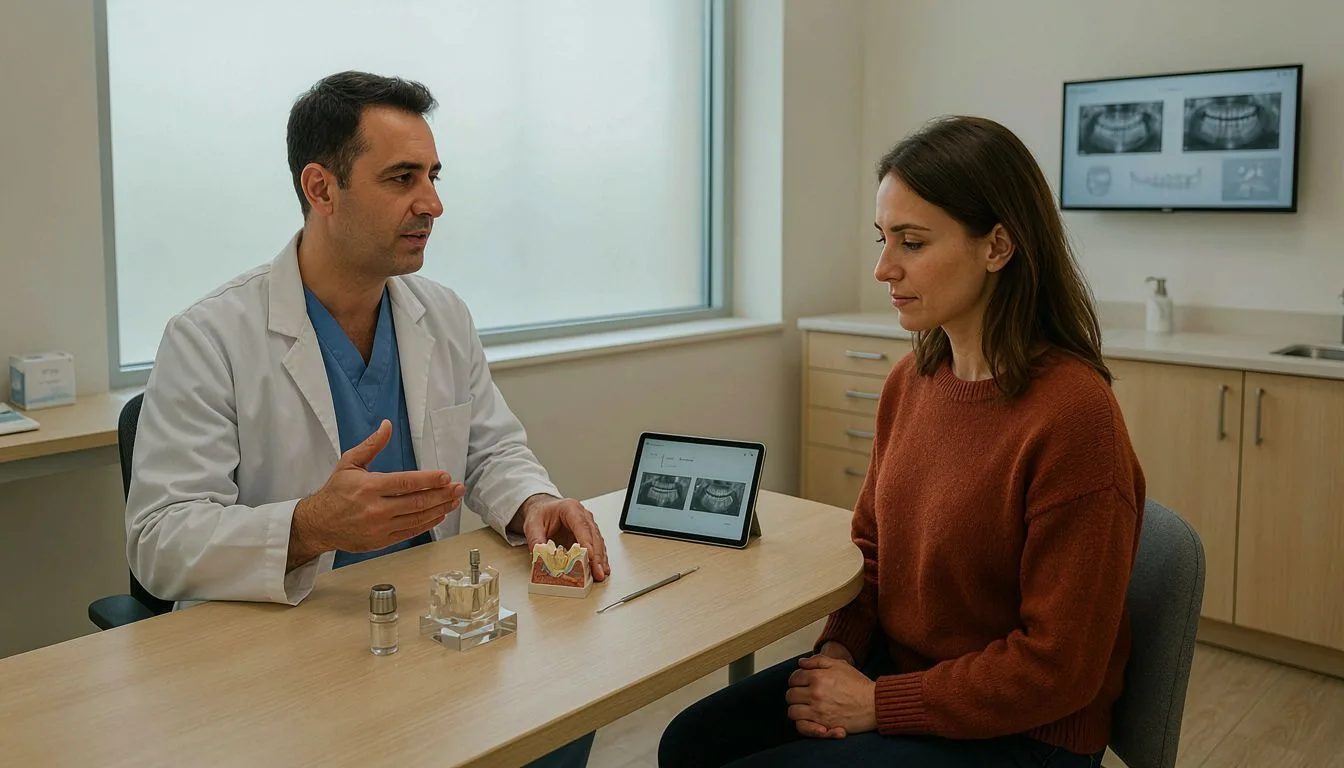
Your ideal recovery stay depends first on the scope of treatment. Replacing one tooth is usually easier to schedule than placing several implants, while a full-mouth rehabilitation may require more appointments, adjustments, and observation before travel. The number and position of implants can also affect how comfortably you eat, speak, and manage swelling during the first few days.
Additional procedures may extend the timeline. Bone grafting and sinus procedures often require separate healing considerations, particularly when they are completed alongside implant placement. An active infection may need treatment before surgery, and an unexpectedly slow healing response can make an earlier flight unsuitable. These factors require assessment by your implant clinician rather than relying on a standard package schedule.
Staged treatment also changes appointment planning. Your dentist may place implants during one visit and arrange temporary restorations later, or use temporary teeth while the implants integrate. Ask exactly which procedures will happen on each day and whether any temporary restoration needs adjustment before you leave.
Your medical history matters as well. Conditions such as diabetes, immune problems, bleeding disorders, and previous difficulties with healing should be discussed in advance. Provide a complete medication list, including blood thinners and supplements, so your clinician can assess surgical and travel considerations safely. The dentist’s evaluation, imaging, and response to treatment should determine your timetable; hotel availability and flight prices should come second.
During consultation, ask how your individual healing response could affect the planned stay. A flexible booking and an extra recovery day may be sensible when treatment is extensive or several procedures are combined.
Typical Timelines for Single and Full-Mouth Implants
A single implant usually follows a more limited treatment pathway than full-mouth rehabilitation. After the implant is placed, the clinic may arrange a temporary tooth or provisional solution, then schedule an appointment to check the fit, appearance, and bite before you leave Turkey. Because fewer areas are involved, coordination is often simpler, although bone grafting, infection, or other preparatory treatment can add appointments.
Multiple implants require more careful planning, particularly when they support bridges, an overdenture, or a fixed full-arch restoration. The dentist may need to assess several surgical sites, verify the bite repeatedly, and adjust temporary teeth as swelling changes. In these cases, staged appointments are common: surgery may be followed by a review, temporary restoration fitting, and further checks before the provisional teeth are considered satisfactory.
It is also important to distinguish the initial treatment visit from completion of the final restoration. Implants generally need a healing and integration phase before permanent crowns, bridges, or full-arch teeth can be fitted. This often means returning for a separate visit, although some cases use an immediate or early-loading approach when clinically appropriate. Before booking flights, ask the clinic for a written schedule covering surgery, temporary teeth, review appointments, and the expected timing of the final restoration. Your treatment plan, rather than the number of days advertised in a package, should determine the length of your stay.
When Is It Safe to Fly After Implant Surgery?
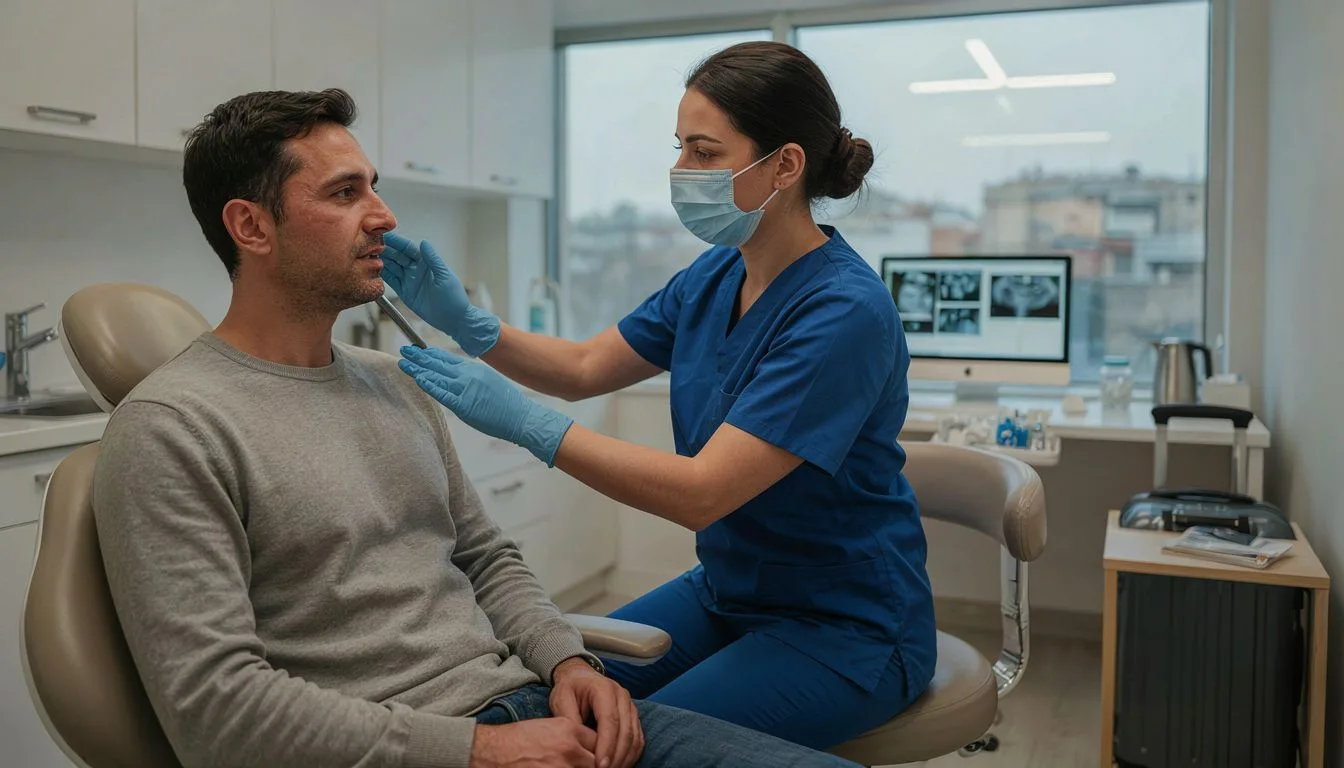
Flying after implant surgery should be planned around your actual recovery, not a fixed number of days. Before departure, swelling should be stable or improving, active bleeding must be controlled, and pain should be manageable with the medication plan provided by your dental team. You should also feel well enough to travel, eat, drink, and follow your post-operative instructions without difficulty.
Extra caution is needed after sinus-related procedures, such as a sinus lift, because changes in cabin pressure may increase discomfort or affect healing. Extensive surgery involving multiple implant sites may also require a longer observation period than a straightforward procedure. In these situations, the treating clinician should assess your mouth and confirm that travel is appropriate.
Ask for explicit clinical clearance for flying before booking or taking your return flight. Keep prescribed medication in your hand luggage, carry the clinic’s contact details, and make sure you can access follow-up advice after returning home. A flexible ticket can be helpful if your recovery changes unexpectedly.
Follow-Up Care and Warning Signs Before Departure
Before leaving Turkey, arrange a final review with the implant team so they can assess the wound, swelling, bleeding, and any temporary restoration. Confirm that you understand the cleaning routine, eating restrictions, medication schedule, and symptoms that require urgent contact. Make sure prescriptions are filled and that you have the clinic’s emergency telephone number, including an after-hours contact if available.
Report increasing pain, spreading swelling, persistent bleeding, fever, pus, a loose temporary component, or difficulty swallowing or breathing before departure. These symptoms may indicate infection, a healing complication, or another issue that should be assessed locally rather than managed remotely.
Ask how follow-up will be coordinated with your dentist at home and when the next review is due. Keep copies of your treatment plan, implant details, X-rays or scans, operative notes, prescriptions, and discharge instructions. Clear documentation supports continuity of care and gives your local dentist the information needed for safe monitoring after you return.
FAQs
How long should I stay in Turkey after getting dental implants?
Most patients should stay in Turkey for about 5–7 days after dental implant surgery, allowing time for healing and a follow-up appointment. Your dentist may recommend a longer stay if you need bone grafting, multiple implants, or additional treatment. Avoid flying until your dentist confirms that travel is safe.
Can I fly home shortly after dental implant surgery in Turkey?
You can usually fly home shortly after dental implant surgery in Turkey, often within 24–48 hours, if your dentist confirms that recovery is stable. Avoid flying if you have significant bleeding, swelling, severe pain, or other complications, and follow your surgeon’s specific advice.
Do I need to return to Turkey for the final dental implant restoration?
In most cases, you do not need to return to Turkey for the final dental implant restoration. A qualified dentist near you can place the abutment and permanent crown, provided they receive your implant details and treatment records. Your Turkish clinic should confirm the implant system, healing progress, and recommended restoration timeline before you proceed.