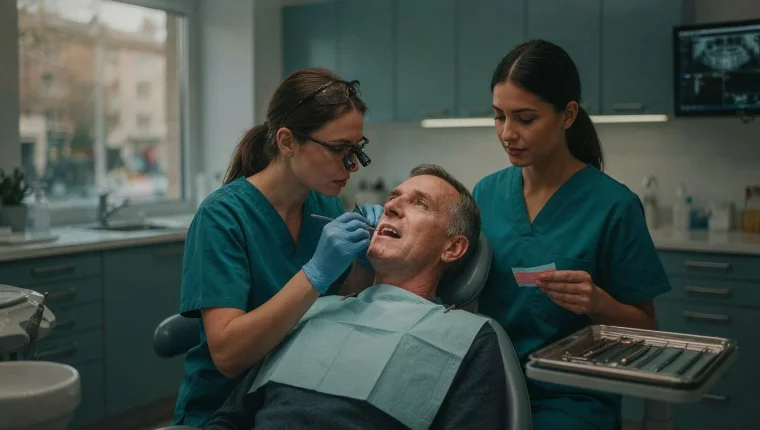
Getting a dental crown is rarely the hard part. The uncertainty comes afterward, as you check the mirror and wonder whether slight pressure on that tooth is normal or a sign something is off. Most people want a single number, but dental crowns results timeline is better understood as a series of stages, not one fixed date. Some patients feel settled within days; others need a couple of weeks before the crown no longer feels like a foreign object in their mouth.
Several factors shift that timing. How much tooth structure was removed, the material chosen, and how your bite adjusts all play a role. A temporary crown and a permanent one also behave differently in the first few days.
What surprises many patients is that mild tenderness and temperature sensitivity are common early on. That does not automatically mean the crown is failing. Knowing which sensations are part of normal adaptation, and which deserve a call to your dentist, is what turns an anxious wait into a manageable one.
What the Dental Crowns Results Timeline Actually Measures
When patients ask how long a crown takes to “work,” they are usually bundling several separate outcomes into one question. It helps to pull them apart. What people actually track after crown placement falls into four distinct categories: how the crown fits against the tooth and neighboring teeth, how comfortable it feels when biting or drinking, how it looks in the mirror, and how well it functions during chewing. These are not the same result, and they do not arrive on the same schedule.
Fit is the most immediate. A crown either seats fully at the margins or it does not, and that is largely determined at the placement visit itself. Comfort follows a different curve. Mild tenderness and temperature sensitivity can linger while the periodontal ligament and surrounding tissues adapt to a new surface, and this often fades over days to a few weeks rather than hours. Appearance settles more slowly still, because gum tissue needs time to recover from preparation and the crown’s shade reads differently once the tissue is no longer inflamed.
This is why the results timeline is not a single finishing line. Function may feel normal almost immediately while the gum line is still maturing, and a crown can look slightly conspicuous before it looks invisible. Judging your own progress means asking which of these four areas you are actually evaluating, rather than expecting everything to resolve at once.
The Immediate Fit and Bite Check After Crown Placement
At the placement appointment, the dentist seats the crown and then verifies it against the prepared tooth and the surrounding teeth. The first check is the bite: you’ll be asked to close gently while the dentist slides a thin strip of articulating paper between the crown and the opposing tooth. Colored marks show where contact is heavier than it should be, and those spots get ground down with a fine bur. This is normal, not a sign that something went wrong.
Next comes the margin and contact point. The dentist runs a probe along the edge where the crown meets the tooth to confirm it sits flush, then checks that the crown touches its neighbors tightly enough to keep food from packing in but loosely enough to let floss pass through. A margin that catches the probe or a contact that feels too open usually means the crown gets reseated or reshaped before you leave.
What does “high” or “tight” actually feel like for you? A high bite often shows up as a sharp awareness of the crown when you tap your teeth together, or a dull ache on the opposite arch after a few minutes of clenching. A tight contact may feel like floss shreds or snaps instead of gliding. Both are fixable in the chair, and most dentists expect to make at least one small adjustment at this stage.
Same-day refinement is the norm rather than the exception. If the bite still feels uneven after the first pass, speak up before the anesthetic wears off, since your sense of pressure is most accurate while the tissue is still numb.
Early Changes in Comfort and Sensitivity During the First Week
Once the anesthetic wears off, most people notice a dull, bruised feeling around the prepared tooth rather than sharp pain. This mild tenderness is the soft tissue and ligament reacting to the work of the appointment, and it typically fades over two to four days. Over-the-counter pain relief is usually enough, and the sensation should shrink a little each day rather than hold steady.
Temperature sensitivity is the other common companion. Cold drinks may produce a quick, fleeting twinge that disappears within seconds of swallowing. This happens because the nerve inside the tooth is still calming down after being reshaped, and it should steadily decrease across the first week. Warm foods are less often a trigger, but if heat lingers rather than flashes, that pattern deserves a mention at your follow-up.
Adjusting to a new bite surface takes its own quiet time. Your tongue and jaw have memorized the old shape, so the crown can feel slightly foreign even when the fit is correct. Most people stop noticing this within several days as chewing patterns re-learn the surface. If a specific spot feels high or you catch yourself avoiding one side, that is a fit issue rather than normal adaptation and should be checked.
Sensitivity that intensifies instead of easing, or that lasts well beyond the first week, is not part of the expected arc. Persistent throbbing, pain when biting down, or a sensation that wakes you at night are signals to call your dentist rather than wait it out.
How Tooth Preparation and Material Choice Shape Your Timeline
Two crowns placed on the same day can settle at completely different speeds, and the biggest reason usually comes down to how much natural tooth structure was removed during preparation. A crown that sits over a lightly reduced tooth often feels stable and calm within days, while a tooth that needed heavy reduction to make room for the restoration may stay tender longer because the underlying dentin and pulp have more recovering to do. More reduction also means the nerve sits closer to the surface, so temperature signals travel more easily until the tooth adapts.
Material choice shapes the timeline just as much. Zirconia and dense ceramic crowns are strong and wear-resistant, but they can feel firmer against the opposing teeth at first, and some patients notice a brief adjustment period while the bite redistributes. Metal and porcelain-fused-to-metal crowns tend to feel familiar quickly, though the metal edge may show over time. All-ceramic options usually blend in fastest cosmetically, which matters more in the appearance phase than in the comfort phase.
The temporary crown phase also sets expectations. While you wear the temporary, the tooth and gum are still calming down, so any sensitivity you feel then is not a preview of the permanent result. Individual healing speed, bite force, and how well your bite was balanced at placement all influence how quickly the permanent crown starts to feel like your own tooth.
When Gum Tissue Settles and the Crown Starts Looking Natural
Gum tissue around a new crown does not simply sit still and accept the restoration. It responds. If the margin sits slightly below the gumline, the tissue may appear mildly inflamed or darker for a short period, then gradually tighten and regain a healthy pink tone as it adapts to the new surface. This settling usually becomes noticeable within a few weeks, though the exact pace depends on how much the gums were manipulated during preparation and placement.
Shade matching follows a similar curve. A crown that looks slightly brighter or more opaque on the first day often blends more convincingly once the surrounding tissue calms down and the surface picks up subtle staining from daily wear. Under different lighting, the perceived match can shift, which is why many patients notice the crown looking more natural in daylight than under certain indoor lamps.
The gum tissue response and shade perception are the two signals that tell you the appearance is settling. If the tissue remains red, swollen, or receded after several weeks, or if the crown continues to stand out sharply against neighboring teeth, that is worth mentioning at your next visit rather than assuming it will resolve on its own.
Signs Your Crown Is Healing Well Versus Warning Signs to Watch

Healthy healing follows a predictable direction: it keeps getting better. In the first days after placement, mild tenderness when biting and sensitivity to cold drinks should gradually fade rather than intensify. By the end of the second week, most people notice they are thinking about the crown less, chewing on that side without flinching, and seeing gum tissue that looks pink and calm instead of puffy or dark at the margin. That steady, quiet improvement is the clearest signal that the tooth and surrounding tissue are accepting the restoration.
Warning signs move the opposite way. Pain that stays sharp, throbs at night, or worsens after the first week is not normal adaptation. A crown that feels loose, shifts when you press it, or catches food repeatedly may point to a failing margin or cement seal. Chipping at the edge, gum swelling that persists or bleeds when brushing, and a bite that feels high one day and fine the next all deserve a call to the dentist rather than a wait-and-see approach.
Recurring bite discomfort is easy to dismiss because it comes and goes. If your teeth meet unevenly on that side more than a few times, the crown is likely sitting slightly high, and the opposing tooth can become sore or worn over time. A quick adjustment usually resolves it, which is why persistent or returning bite problems should be checked rather than tolerated.
Milestones for Long-Term Wear and When to Schedule Follow-Ups

A crown that fits well and is cared for properly can serve for many years, but it does not stay pristine forever. Over time, normal wear shows up as slight flattening of the chewing surface, small polish marks, and gradual loss of the original gloss. These changes are expected and usually harmless. What matters more is the pace and pattern of that wear, along with the health of the surrounding structures.
Certain habits clearly shorten a crown’s working life. Clenching or grinding at night, chewing ice, biting fingernails, or opening packaging with the teeth all concentrate force on the crown and can chip porcelain or loosen the cement seal. A night guard, if your dentist recommends one, is a simple way to protect the investment.
For follow-ups, most dentists suggest a check about six months after placement, then routine visits every six to twelve months. At those appointments, they reassess the crown’s margins, the bite relationship, the condition of the gum tissue, and the health of the underlying tooth. If you notice anything between visits — a sharp edge, a loose feeling, or new sensitivity — book sooner rather than waiting for the next scheduled cleaning.
FAQs
How soon after getting a dental crown can you eat and speak normally again?
You can usually speak normally right away once the numbness wears off, which takes about two to three hours after the anesthetic. Eating is a bit different: wait until the numbness fades so you don't bite your cheek or tongue, then stick to soft foods and avoid chewing on the crowned tooth for the first 24 hours. If your dentist used permanent cement, you can typically eat normally within a day or two, but if you received a temporary crown, keep avoiding sticky or hard foods until the permanent one is placed.
What does the typical dental crowns results timeline look like from placement to full adjustment?
You will typically wear temporary crowns for about two to three weeks while the permanent ones are made in a lab. Once the permanent crowns are cemented, most people need only a day or two to adapt to the new bite and feel, though mild sensitivity can linger for a week or two. A follow-up visit around two to four weeks later lets your dentist fine-tune the fit and bite, after which the crowns should feel fully natural and require no further adjustment.
Can the appearance or fit of a dental crown change over time, and when would you notice it?
Yes, a dental crown can change in appearance or fit over time, usually because the cement seal gradually wears down, the underlying tooth or gum recedes, or the crown itself stains and wears. You would typically notice this as a loose or rocking sensation, food catching around the edges, a change in your bite, or a visible dark line near the gum. Because these shifts can let bacteria reach the tooth underneath, it's worth having your dentist check any crown that feels different rather than waiting.