Choosing the right hair transplant surgeon in Turkey can affect whether you achieve a natural, lasting result or face disappointing growth and corrective treatment. Price matters, but it should not be the main deciding factor. A qualified surgeon should assess your hair loss pattern, donor area, scalp condition, and long-term expectations before recommending a procedure. Check the surgeon’s medical credentials, experience with your specific type of hair loss, and verified before-and-after results. Confirm who performs each stage of the treatment, from planning and extraction to implantation. A trustworthy clinic will clearly explain the technique, possible risks, recovery process, and realistic outcome without promising an unrealistic hairline or guaranteed density.
Why Choosing the Right Surgeon Matters for Hair Transplant Results
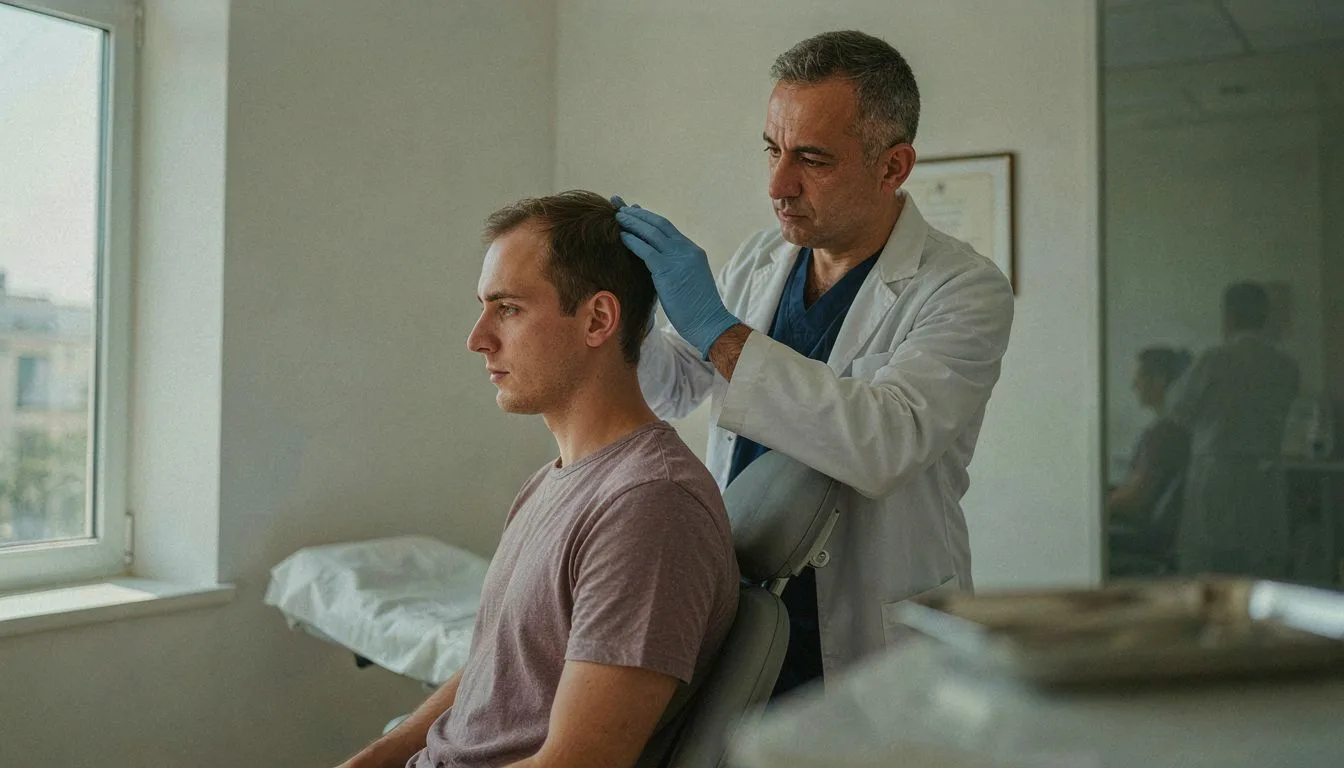
The surgeon’s judgment affects every stage of a hair transplant, from deciding whether you are a suitable candidate to designing the hairline and managing the donor area. A technically successful extraction can still produce an unnatural result if grafts are placed at the wrong angle, too close together, or without considering future hair loss.
One of the most important factors is hairline design. An experienced surgeon creates a hairline that matches your age, facial proportions, hair characteristics, and likely long-term pattern of loss. Lowering the hairline too aggressively may look appealing initially but can consume limited donor grafts and appear unnatural as surrounding hair continues to thin.
The surgeon also determines how safely the available donor hair can be used. Grafts are a finite resource, so excessive extraction can cause visible thinning in the donor area and leave too little hair for future procedures. Careful planning considers graft distribution, density goals, scalp characteristics, and the possibility that medical treatment may be needed to stabilize ongoing hair loss.
Placement technique matters just as much as extraction. Follicular units must be positioned according to the natural direction and angle of existing hair. The transition zone at the front usually requires irregular spacing and finer grafts, while stronger multi-hair grafts may be more appropriate behind it. These details help create coverage that blends with your original hair rather than looking artificially uniform.
A qualified surgeon should also recognize when a transplant is not the best immediate option. Active scalp conditions, insufficient donor density, unrealistic expectations, or unstable hair loss may affect the timing and likely outcome. A responsible consultation includes an honest assessment rather than a promise of maximum density for every patient.
When comparing a hair transplant surgeon in Turkey, focus on who personally evaluates you, designs the treatment plan, performs the critical surgical steps, and remains involved in follow-up care. The clinic’s location or package price cannot compensate for poor clinical judgment, weak planning, or inadequate supervision during the procedure.
How to Verify a Hair Transplant Surgeon’s Credentials in Turkey
Before comparing clinics, confirm that the person responsible for your procedure is legally qualified to perform hair restoration surgery in Turkey. A polished website or international marketing profile does not prove surgical competence. The safest approach is to check official records, identify the operating surgeon by name, and confirm that the clinic’s claims match independently verifiable information.
Start with the surgeon’s professional identity rather than the clinic’s brand. Ask for the doctor’s full name, medical degree, specialty, and current registration details. In Turkey, a physician should be registered with the relevant national health authorities and permitted to practise medicine. You can also ask whether the doctor has formal training or documented experience in dermatology, plastic surgery, or hair restoration. Professional registration is the essential first check because it establishes whether the surgeon is authorised to provide medical treatment.
- Verify the medical licence: Request the surgeon’s full legal name and licence information, then check it through the appropriate Turkish health authority or professional registry. Make sure the details correspond to the doctor who will actually perform your procedure.
- Confirm surgical responsibility: Ask who will design the hairline, extract grafts, create recipient sites, and supervise implantation. A clinic should clearly distinguish the surgeon’s role from that of technicians or assistants.
- Check the facility’s authorisation: Confirm that the operation will take place in a properly licensed medical facility with suitable surgical equipment, emergency procedures, and qualified medical staff.
- Review relevant experience: Ask how frequently the surgeon performs hair transplants and how long they have offered the specific procedure being recommended. Experience should be supported by consistent, identifiable patient documentation rather than general advertising claims.
- Investigate disciplinary concerns: Search reputable medical sources and request clarification about any unresolved complaints, legal restrictions, or previous professional sanctions. Treat evasive answers as a reason to pause.
Be especially cautious when a clinic advertises a named doctor but does not allow direct communication before booking. A legitimate consultation should explain diagnosis, donor-area limitations, expected density, risks, and who will provide follow-up care. The surgeon should also review your medical history and examine your scalp personally, whether in person or through a structured remote consultation.
Finally, compare the information across the clinic’s website, consultation documents, consent forms, and public registry records. Differences in the surgeon’s name, title, location, or responsibilities should be resolved in writing before you pay a deposit or arrange travel.
Which Hair Restoration Techniques Does the Surgeon Specialize In?

A surgeon’s preferred hair restoration technique should match your pattern of loss, donor-area capacity, hair characteristics, and long-term goals. During your consultation, ask which procedures the surgeon personally performs and why one method is more appropriate for your case. A clinic may advertise several options, but the quality of the medical assessment matters more than the number of techniques listed on its website.
Follicular unit extraction (FUE) is widely used because individual follicular units are removed from the donor area and implanted into thinning or balding regions. It can avoid a linear scar and may suit patients who prefer shorter hairstyles. However, outcomes depend heavily on extraction planning, graft handling, incision design, and protection of the remaining donor hair. Ask whether the surgeon uses manual, motorised, or specialised FUE instruments and how this choice affects your treatment.
Follicular unit transplantation (FUT), also called strip harvesting, removes a narrow strip of donor skin before the follicular units are separated under magnification. It can provide a substantial number of grafts in selected patients, particularly when donor resources need to be used efficiently. The trade-off is a linear scar, so the surgeon should explain how closure technique, hair direction, and your usual hairstyle may affect its visibility.
Some surgeons also specialise in advanced approaches such as sapphire-incision FUE, direct hair implantation, or beard and body hair transplantation. These labels do not automatically indicate better results. The important questions are whether the technique has a clear indication, whether the surgeon performs the critical steps, and how graft survival and donor preservation are monitored. A reputable hair transplant surgeon in Turkey should be able to explain the advantages and limitations of each option without presenting one method as suitable for everyone.
Also clarify who designs the recipient sites, makes the incisions, extracts the grafts, and implants them. Technician involvement varies between clinics, and the surgeon’s level of responsibility should be clearly defined before you book. If the recommended method appears unusually aggressive, ask how many grafts are planned, how future hair loss will be managed, and whether medication or staged treatment could protect your long-term result.
How to Evaluate Before-and-After Results and Patient Reviews
Before-and-after photographs are among the most useful ways to assess a surgeon’s work, but they should be examined as clinical evidence rather than promotional images. Look for cases with a similar degree of hair loss, hair texture, donor density, age, and treatment goal. A result that appears impressive on a younger patient with mild thinning may not reflect what is realistic for someone with advanced loss or limited donor supply.
Study each case from several angles and, where possible, at different stages after surgery. The images should show the hairline, temples, crown, donor area, and overall density under consistent lighting. Be cautious when photographs use different hairstyles, wet hair, strong shadows, filters, or tightly cropped views. These details can make coverage appear greater than it is. Ask whether the images are the clinic’s own patients and how many months after the procedure the final photographs were taken.
The most important technical point is long-term photographic consistency. Reliable comparisons use similar camera distance, lighting, hair length, and positioning before and after treatment. Results should also be judged for natural hairline design, appropriate graft placement, density distribution, and the condition of the donor area—not simply for the amount of visible hair in one image.
Patient reviews can add useful context, particularly when several independent patients describe similar experiences. Examine comments about consultation accuracy, communication, surgical involvement, pain management, follow-up, and how the clinic handled questions after the procedure. Reviews hosted solely on a clinic’s website may be selectively presented, so compare them with established third-party platforms and recent discussion forums. Give greater weight to detailed accounts than to brief ratings without supporting information.
Read negative reviews carefully rather than dismissing them automatically. A complaint about delayed communication may indicate an administrative weakness, while concerns about unclear pricing, unexpected changes in the surgical team, or inadequate aftercare deserve closer attention. At the same time, isolated dissatisfaction does not prove poor medical care; consider whether the reviewer’s expectations, timeline, and clinical circumstances were clearly explained.
Ask the clinic to provide comparable cases and explain what the photographs demonstrate. A credible hair transplant surgeon in Turkey should discuss limitations honestly, including the possibility that density may remain moderate or that future hair loss could affect the appearance. Consistent evidence and transparent explanations are more valuable than a gallery filled only with exceptional outcomes.
What Should You Ask During the Consultation?
A consultation should give you enough information to judge the surgeon’s plan, not simply reassure you that the clinic is reputable. Use the meeting to understand how your pattern of hair loss, donor supply, age, and future progression will affect the proposed treatment. A good surgeon should be able to explain the reasoning behind the recommendation in language you can understand.
Prepare questions in advance and ask for specific answers rather than general promises. The discussion should cover both the immediate procedure and the years that follow, because a visually successful transplant depends on preserving donor hair and planning for possible further loss.
- Diagnosis and suitability: Ask what is causing your hair loss, whether additional assessment is needed, and why you are or are not a suitable candidate for surgery.
- Personalised treatment plan: Ask how many grafts may be required, how the hairline design will be selected, and which areas should be treated first.
- Surgeon’s role: Confirm who will perform each important stage, including extraction, recipient-site creation, and graft placement, rather than assuming every task is carried out by the named surgeon.
- Expected outcome: Ask what density and coverage are realistically achievable, when visible growth should begin, and what limitations your donor area may impose.
- Future planning: Ask how the plan accounts for continued hair loss and whether medical treatment or another procedure could be recommended later.
Pay attention to how the surgeon handles difficult questions. Responsible advice may include declining to lower the hairline, recommending a smaller procedure, or suggesting that you wait. Be cautious if you are promised a guaranteed result, a fixed number of grafts without an examination, or a dramatic transformation that does not match the available donor hair.
Ask for written details after the consultation, including the proposed technique, estimated graft range, medication instructions, risks, and follow-up arrangements. Clarify whom to contact if healing problems occur and whether the surgeon will personally review your progress. These answers help you compare treatment plans accurately and reveal whether the consultation is centred on sound medical judgement or on selling a package.
How to Compare Safety Standards, Costs, and Aftercare Support
Comparing clinics requires more than placing package prices side by side. A reliable assessment should examine how safety is managed, what the quoted fee includes, and who remains responsible for you once the procedure is complete. These factors often explain why two apparently similar hair transplant offers differ substantially in quality and value.
Start with the facility rather than the marketing package. Confirm that the procedure takes place in an authorised medical setting with appropriate infection-control procedures, emergency equipment, and qualified clinical staff. Ask who administers anaesthesia, how the patient is monitored, and what happens if a complication occurs. The surgeon should explain the relevant risks, obtain informed consent, and be available for decisions during the operation—not merely lend their name to a clinic.
Cost comparisons should be based on the complete treatment plan. Request an itemised quotation covering consultation, blood tests where required, medications, the procedure itself, accommodation, transfers, and follow-up appointments. Clarify whether the price changes if more grafts are needed or if the surgeon recommends staged treatment. Very low prices may reflect limited surgeon involvement, high-volume scheduling, or important services being excluded, so a cheaper quote is not automatically better value.
Aftercare deserves equal attention. Ask whether instructions are provided in writing, when the first review takes place, and how you can contact the clinical team from abroad. Find out who evaluates swelling, bleeding, infection concerns, or unexpected shedding, and whether remote follow-up is available after you return home. A dependable clinic should explain washing, sleeping, exercise, medication, and travel restrictions in clear terms.
The most useful comparison point is continuity of care: the same accountable medical team should support you before surgery, during the procedure, and throughout recovery. Check whether follow-up is handled by the surgeon or delegated entirely to sales staff. Also ask how long the clinic retains records and photographs, since meaningful assessment of growth may require reviews over many months. This approach helps you compare genuine clinical support rather than promotional extras.
FAQs
What qualifications should a hair transplant surgeon Turkey have?
A qualified hair transplant surgeon in Turkey should hold recognized medical credentials, specialist training in hair restoration or plastic surgery, and substantial experience with procedures such as FUE or DHI. Verify their professional registration, clinic accreditation, before-and-after results, and evidence of ongoing training. They should also provide a clear consultation, explain risks and expected outcomes, and create a treatment plan based on your individual needs.
How can I verify a surgeon’s experience and previous hair transplant results?
Check the surgeon’s qualifications, specialist training, licensing, and experience with the specific hair transplant technique you are considering. Request to see verified before-and-after photos taken under consistent lighting and angles, and ask whether you can speak with former patients. Independent reviews, professional disciplinary records, and a detailed consultation can further help confirm the surgeon’s skill and transparency.
What questions should I ask before choosing a hair transplant surgeon in Turkey?
Ask about the surgeon’s qualifications, experience with your hair type, and how many procedures they personally perform each year. Confirm who will carry out each stage, which clinic and medical facilities are used, and whether the quoted price includes medication, follow-up care, and treatment for complications. Request unbiased before-and-after results and a clear explanation of the recommended technique, risks, expected growth, and long-term plan.