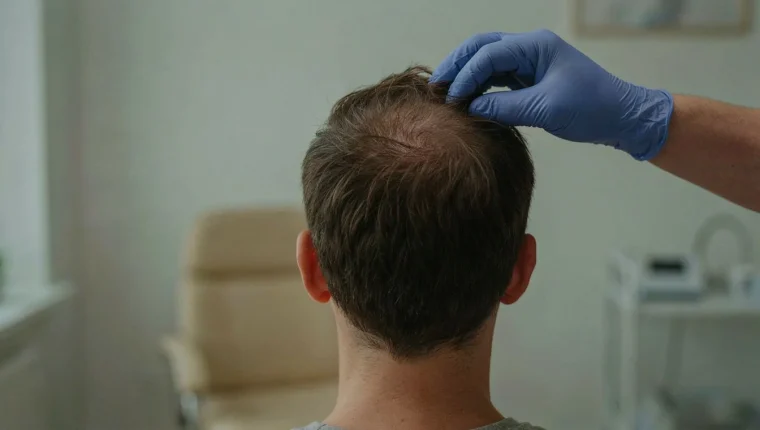
Choosing between hair transplant Istanbul vs. Washington is not simply a choice between two locations. The right option depends on the clinic’s medical oversight, the surgeon’s experience, the proposed technique, and whether the plan suits your hair loss pattern and donor area. You should also consider the full cost, travel requirements, recovery arrangements, and access to follow-up care—not only the advertised procedure price. Results and risks can vary between patients, so a personal consultation and careful clinic review are essential. This comparison examines the practical factors that can help you decide which destination better matches your expectations, circumstances, and long-term hair restoration needs.
Hair Transplant Istanbul vs Washington: Key Differences at a Glance
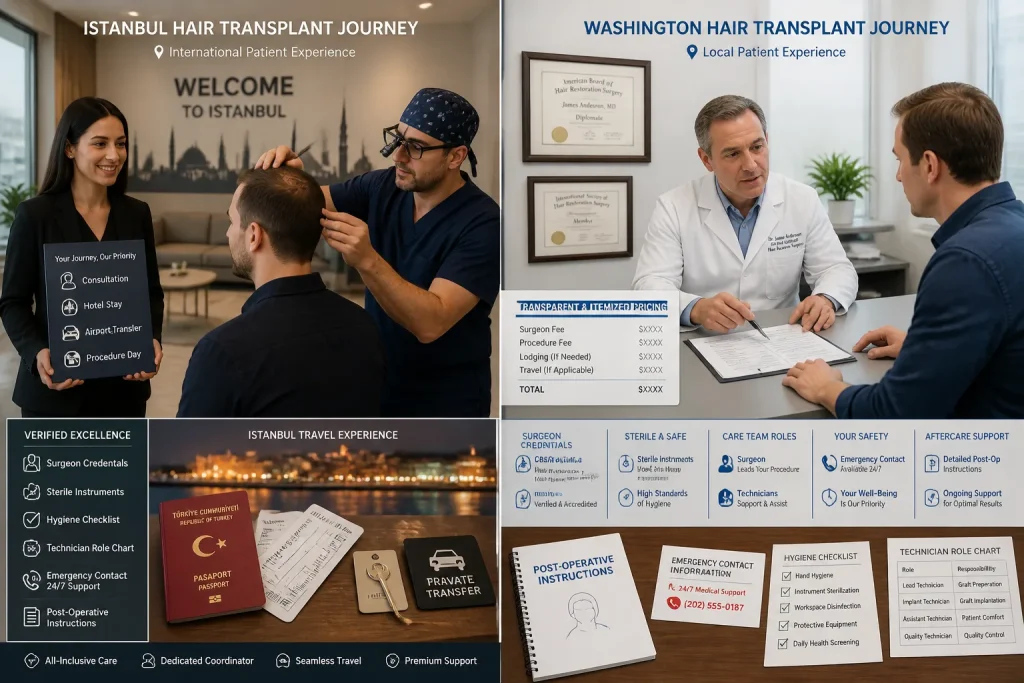
The initial comparison should focus on how each destination structures the patient journey, rather than on location alone. In Istanbul, clinics commonly market bundled hair restoration packages that may include consultation, accommodation, transfers, and the procedure. Washington providers more often separate medical fees from travel and lodging, making the quotation less packaged but potentially easier to itemize.
Surgeon involvement is a key point to verify in both settings. Ask who evaluates the donor area, designs the hairline, extracts follicles, and supervises implantation. Clinic credentials, hygiene protocols, technician roles, and emergency arrangements also deserve independent review instead of being inferred from advertising.
Travel distance creates another practical distinction. International patients visiting Istanbul must plan flights, communication, and recovery away from home, while Washington may offer simpler access for U.S.-based patients and easier in-person review. Compare written treatment plans, what the quoted fee includes, likely follow-up arrangements, and how concerns will be handled after the procedure before creating a shortlist.
How Surgeon Experience and Clinic Standards Compare
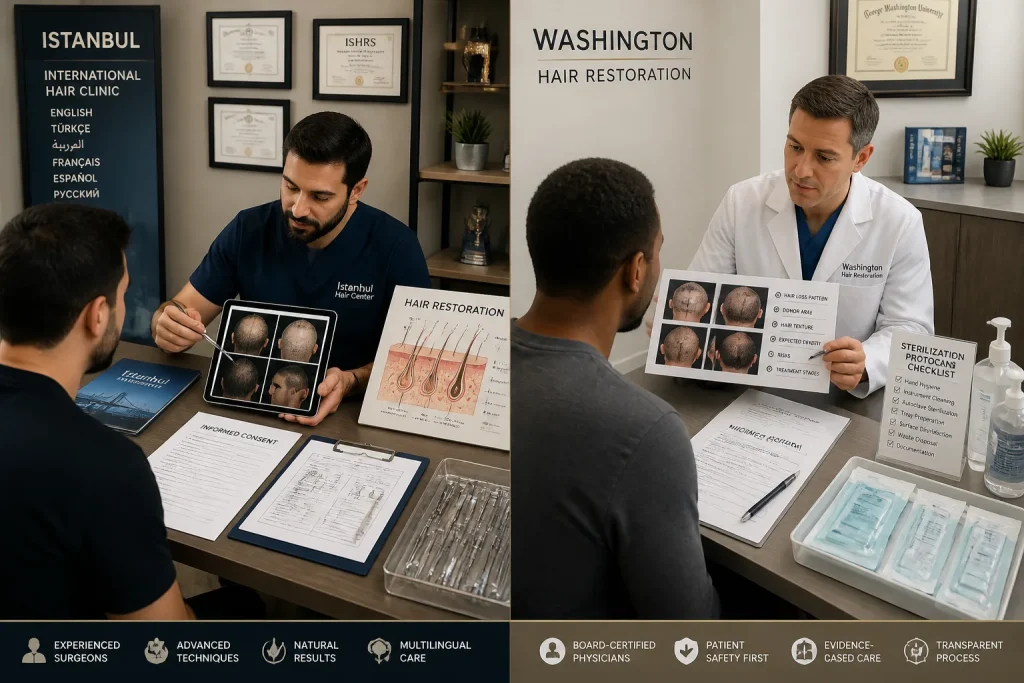
Surgeon experience is best judged by the relevance and transparency of that experience, not by a clinic’s marketing claims. Review the doctor’s medical training, hair-restoration credentials, years performing procedures, and experience with cases similar to yours, including comparable hair loss patterns, hair texture, and donor-area limitations. The surgeon should explain the diagnosis, expected density, possible limitations, and who will perform each important stage.
Clinic standards also deserve close attention. Ask whether the facility follows documented sterilization and infection-control procedures, uses appropriately trained staff, and provides a private medical consultation before requesting a deposit. A credible provider should obtain informed consent, explain potential risks, and allow time for questions rather than presenting surgery as a routine package. The consultation should feel individualized, whether the clinic is in Istanbul or Washington.
Before-and-after photographs can support your assessment, but they require careful scrutiny. Look for patients with similar hair loss, consistent lighting and angles, clearly identified time intervals, and evidence of results after adequate growth time. Ask whether the images represent the surgeon’s own work and whether longer-term follow-up is available. Photographs showing only early progress may not reflect the final outcome.
Warning signs include pressure to book quickly, unusually precise promises, vague graft estimates, or reluctance to identify the operating surgeon. Be especially cautious if technicians appear to control most of the procedure without a clear explanation of the doctor’s supervision and responsibilities. Transparent communication about surgeon accountability is one of the strongest indicators of a credible hair-restoration practice.
FUE, DHI, Grafts, and Treatment Planning Options

FUE and DHI are technique labels, but they describe different parts of the transplant process rather than guaranteeing a particular result. In FUE, follicles are extracted individually from the donor area and placed into prepared recipient sites. DHI typically uses a specialized implanter to insert extracted follicles directly, although the extraction process may still resemble FUE. The appropriate approach depends on the diagnosis, hair characteristics, donor supply, and the surgeon’s treatment plan.
Graft planning should account for more than the number quoted in a package. A graft may contain one or several hairs, and the estimate should reflect the size of the thinning area, existing hair density, hair calibre, curl pattern, and the long-term stability of the donor area. A responsible plan preserves enough donor follicles for possible future hair loss rather than pursuing maximum density in a single session.
Ask how the proposed hairline will be designed, where extraction will occur, whether shaving is required, and how the donor area will be protected from overharvesting. The plan should also explain how follicles are sorted, stored, and implanted, as well as which areas are prioritized if the available supply is limited. Technique names alone do not establish suitability, quality, or expected growth; the reasoning behind the plan is more meaningful than the label.
Comparing Total Costs, Travel, and Recovery Arrangements
A realistic comparison starts with the total treatment cost, not the advertised surgical fee. Ask whether the quotation includes the consultation, blood tests, medications, post-operative supplies, airport transfers, local transportation, and accommodation. In Washington, these items may be arranged separately, while an Istanbul package may combine several of them. A lower headline price can therefore change substantially once every required expense is added.
International patients should also budget for flights, travel insurance, meals, currency conversion fees, and, if applicable, a companion’s accommodation and transport. Before paying a deposit, request a written breakdown of inclusions, exclusions, taxes, cancellation rules, payment stages, and charges for unexpected treatment or extra nights. The proposal should clearly state what happens if the clinical plan changes after an in-person assessment.
Travel timing affects recovery as well as cost. Patients may need to remain nearby for an initial assessment or clinic review, and jet lag can make the first days more tiring. Confirm passport or visa requirements, airport procedures, luggage needs, and restrictions on strenuous activity or tightly scheduled return flights. Flying home too soon may be inconvenient if swelling, discomfort, or questions about the healing donor area develop.
Recovery in Washington may offer easier access to the treating team, while travelling from Istanbul requires a practical plan for care after returning home. Arrange transportation, a clean resting space, medication access, and a way to obtain prompt medical advice if concerns arise. These logistics should be weighed alongside the quoted fee when deciding which location is genuinely affordable and manageable.
Aftercare, Follow-Up, and Choosing the Right Location
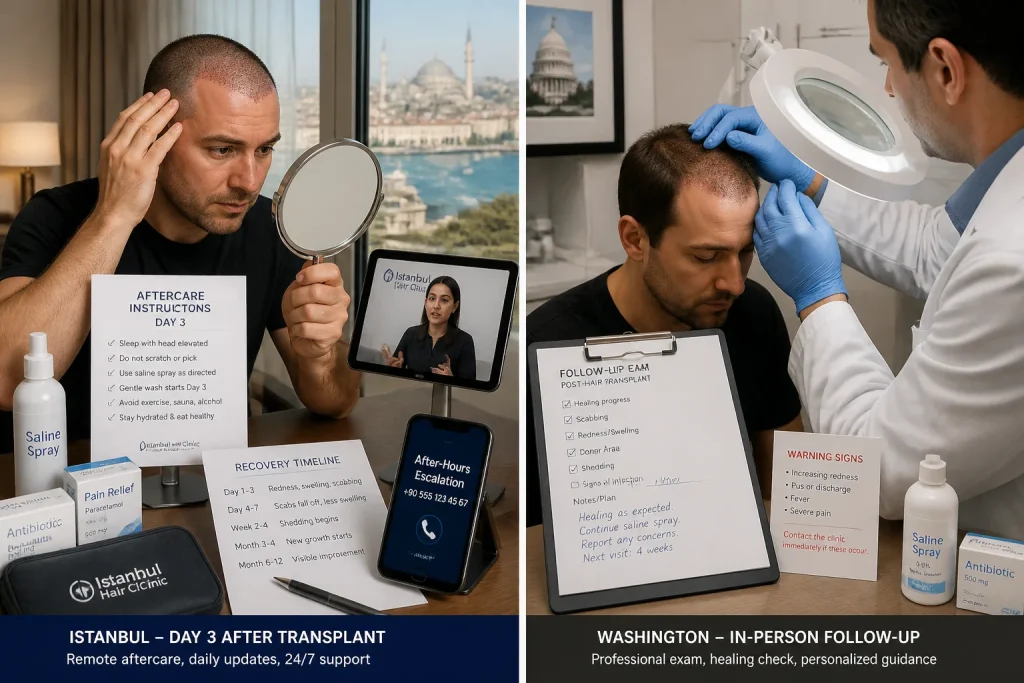
After surgery, the quality of support can affect how confidently and safely you manage recovery. Early healing may involve redness, swelling, scabbing, and temporary shedding before new hair growth becomes visible. Density develops gradually, and the timeline varies according to the patient, graft characteristics, and healing response.
Ask who provides aftercare instructions, how scheduled reviews are arranged, and which clinician responds if you notice unusual pain, bleeding, infection symptoms, or delayed healing. A remote coordinator may be helpful, but locally accessible medical care can offer reassurance if an examination becomes necessary. Clarify the clinic’s escalation procedure before booking, including whom to contact outside office hours.
The final decision should reflect continuity of care as well as medical suitability, trust in the treatment plan, travel tolerance, budget, and long-term support. The better location is the one whose follow-up arrangements you can realistically use throughout recovery, not simply the destination offering the lowest quoted price.
FAQs
Is a hair transplant cheaper in Istanbul or Washington?
A hair transplant is generally cheaper in Istanbul than in Washington, often because Turkish clinics have lower operating and staffing costs. However, the total price also depends on the number of grafts, the FUE or DHI technique, surgeon expertise, clinic standards, travel, accommodation, and aftercare. Compare the surgeon’s qualifications, facility accreditation, treatment plan, and follow-up support rather than choosing solely on price.
How should I compare hair transplant clinics in both locations?
Compare clinics based on surgeon qualifications, accreditation, experience with your hair type, and whether the doctor performs the key stages of the procedure. Review verified before-and-after results, the proposed graft count, FUE or DHI technique, donor-area assessment, total costs, included services, recovery support, and aftercare in each location. Also check consultation quality, transparency about risks, and how easily you can contact the clinic if complications or concerns arise after returning home.
Can I travel home soon after a hair transplant in Istanbul?
Most patients can travel home from Istanbul within 2–3 days after a hair transplant, including FUE or DHI, provided their surgeon approves it. Avoid rushing, protect the grafts from pressure and sun exposure, and follow the clinic’s washing, medication, and aftercare instructions during the journey. Your clinic may recommend staying longer if you experience significant swelling, bleeding, or other concerns.