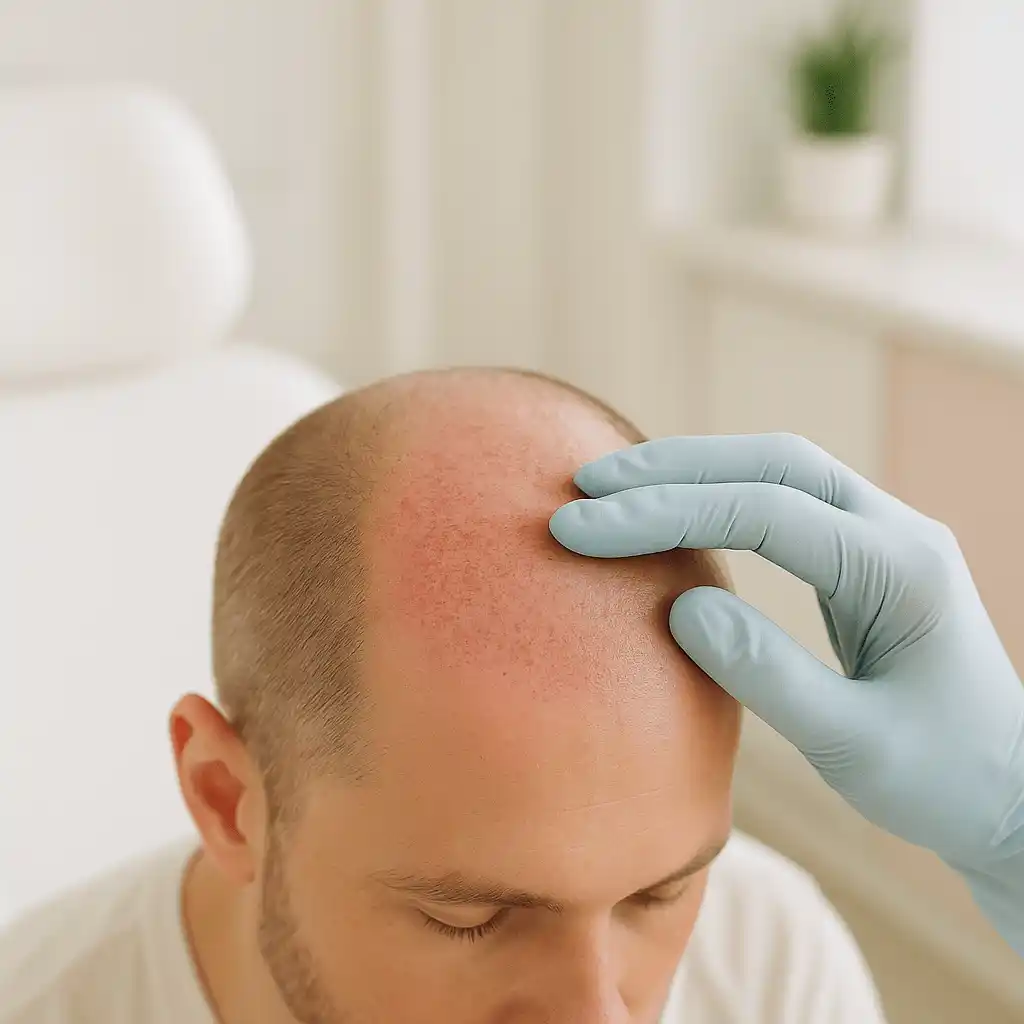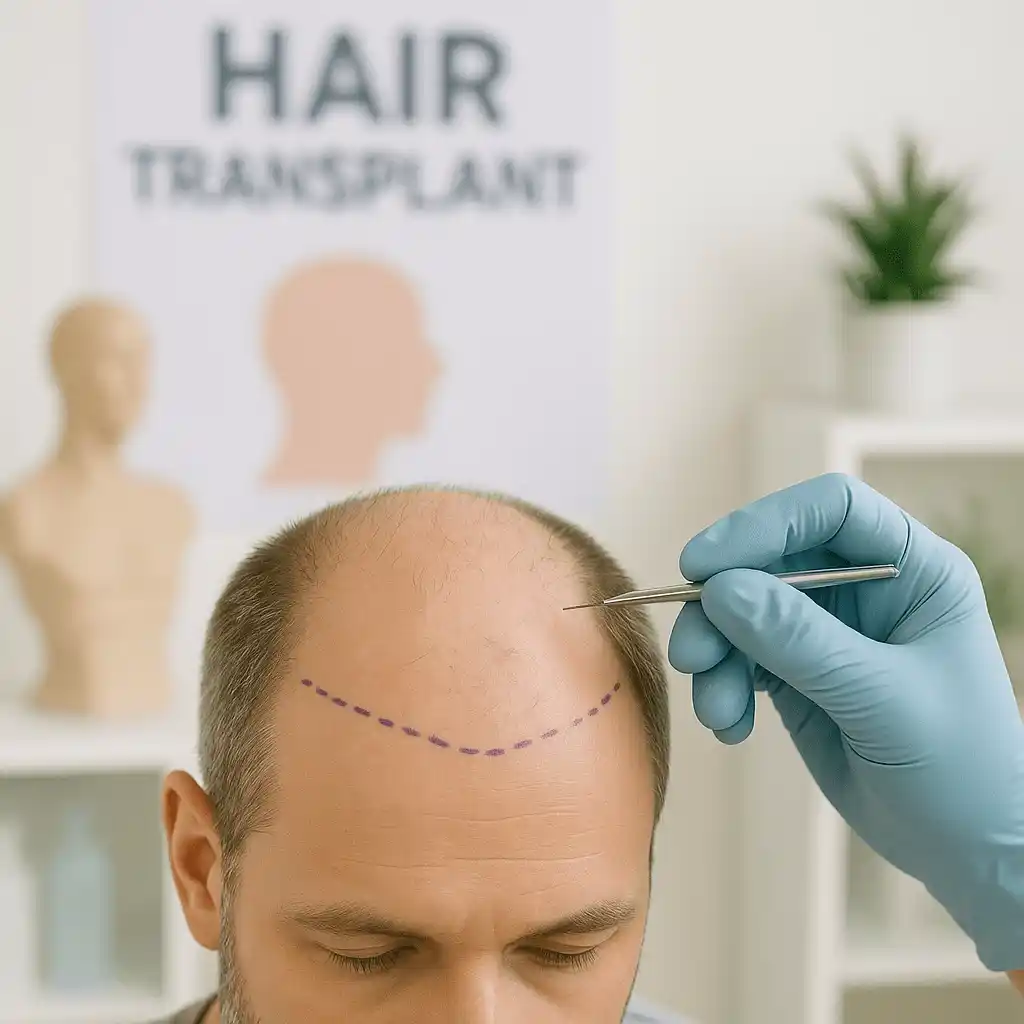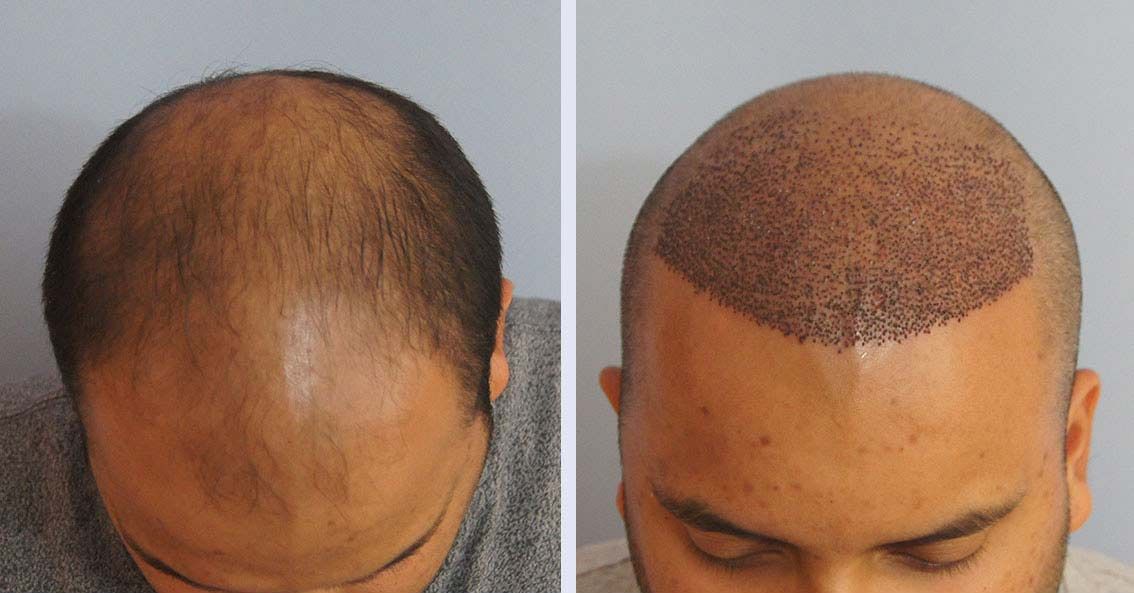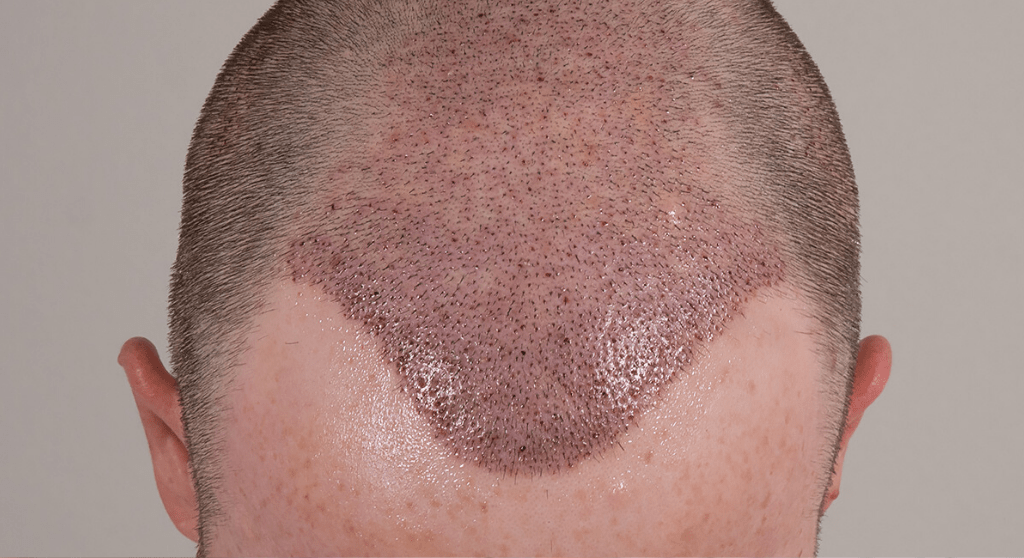
Flying after a hair transplant is often possible, but the safest time depends on more than the flight itself. Your procedure type, healing progress, graft placement, donor area, and surgeon’s instructions all influence when travel is appropriate. Early in recovery, airport travel, cabin conditions, and limited access to your clinic may require extra planning. This guide explains air travel after FUE or DHI, what to prepare before leaving, and how to protect transplanted follicles during the journey. It also highlights recovery changes to discuss with your clinic before you board.
How Soon Can You Start Flying After a Hair Transplant?
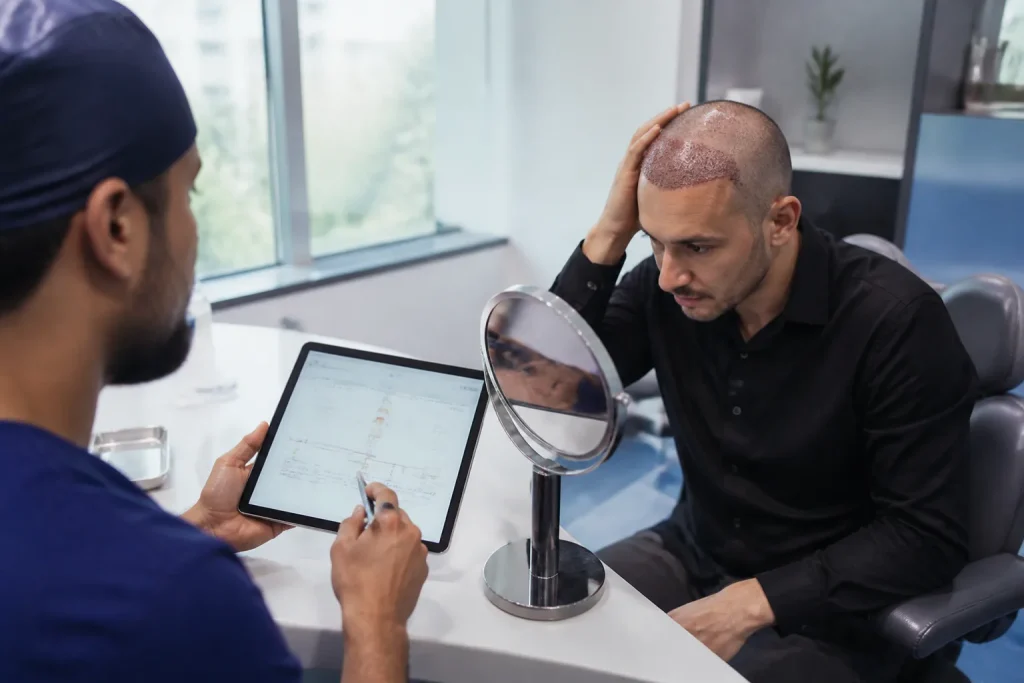
There is no universal flight date that suits everyone after hair transplant surgery. The decision depends on how the scalp is healing, whether the grafts appear secure, and whether swelling, bleeding, or discomfort has settled. A short journey may be reasonable at a different point from a long-haul flight, so timing should be assessed rather than chosen from a fixed online rule.
During the first stage of recovery, the recipient area remains delicate and the donor area may still be tender. The procedure itself also matters: FUE, DHI, the number of grafts placed, and the size of the treated area can all affect how quickly you feel ready to travel. Your surgeon may recommend a different timeframe based on the condition of your scalp and the specific aftercare routine prescribed.
For this reason, individual clinical clearance should take priority over general advice about flying after a hair transplant. Ask your clinic when they consider air travel appropriate, particularly if your flight is soon after surgery or involves several hours of sitting. Their answer may depend on your latest examination, the stability of the grafts, and whether your recovery is progressing as expected.
As healing advances and the scalp becomes more settled, travel is generally easier to manage. However, feeling well enough to board does not automatically mean the grafts are ready for every journey. Follow the post-operative instructions provided by your transplant team and seek their approval before confirming an early flight.
What Risks Can Air Travel Pose During Early Recovery?

Air travel can add practical strain to the early healing period, even when the journey itself does not directly affect the transplant result. Cabin air is typically dry, which may make the scalp feel tight, itchy, or more irritated. Long periods of sitting can also increase general discomfort, while headrests, seatbacks, or accidental contact from bags may place unwanted pressure near the recipient area.
Changes in cabin pressure are often a concern for patients, but they should be discussed accurately with the transplant clinic. Routine cabin pressure does not automatically mean that healthy grafts will be dislodged. The greater concern is usually accidental rubbing, scratching, or pressure on healing skin, particularly before the clinic’s handling instructions have been completed.
Airports and aircraft also create hygiene challenges. Crowded terminals, shared surfaces, and limited opportunities to wash your hands can increase exposure to infection-causing germs. Touching the scalp after handling luggage or adjusting a seat may be especially unhelpful during recovery. Following the clinic’s wound-care guidance and avoiding unnecessary contact are sensible precautions.
Mild tenderness, tightness, itching, or limited swelling may occur after surgery and can become more noticeable during a tiring journey. However, rapidly increasing swelling, persistent bleeding, worsening pain, fever, pus-like discharge, or spreading redness is not something to dismiss as ordinary travel discomfort. These changes warrant prompt advice from the transplant clinic, and travelling may need to be reconsidered until a clinician confirms that it is appropriate.
How Should You Prepare for Flying After Hair Transplant Surgery?
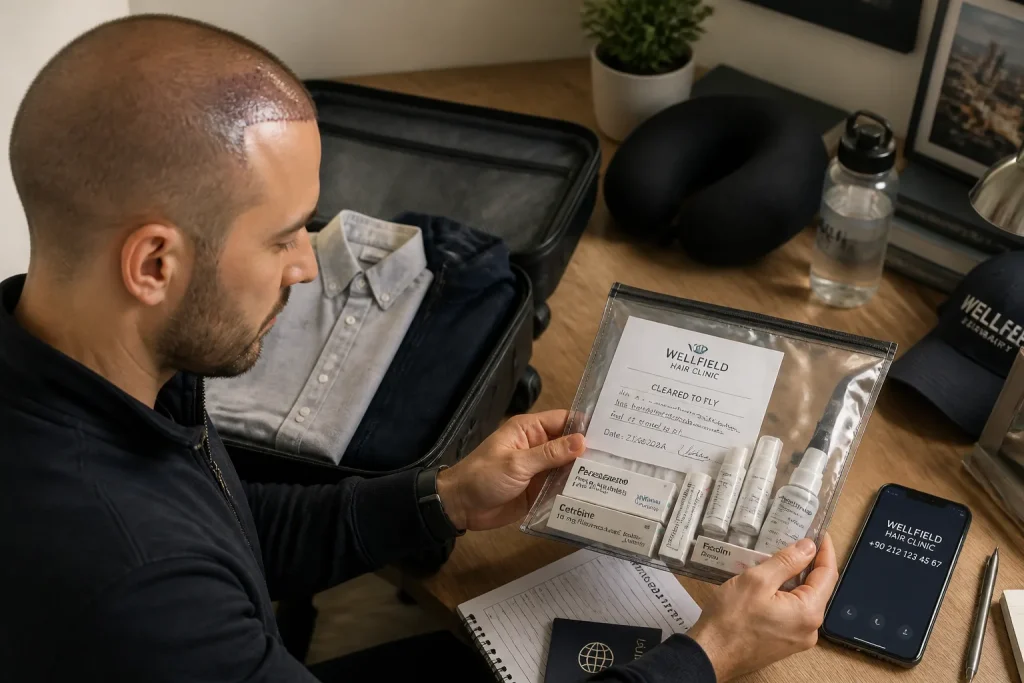
Good preparation can make post-operative travel more manageable and reduce avoidable pressure on the healing areas. Before booking or confirming a flight, arrange clinical clearance with your transplant team, particularly if the journey is soon after FUE, DHI, or another hair restoration procedure. Ask whether your planned date is suitable, how to obtain help while away, and which clinic number to use if questions arise. Planning these details in advance can help you travel with greater confidence while protecting the newly treated areas.
- Confirm medication requirements: Check that prescribed medicines, pain relief, and approved aftercare products can be carried in your hand luggage, and keep them in their original packaging where possible.
- Choose practical clothing: Wear a loose, front-opening shirt or zip-up top so clothing does not rub against the recipient area when dressing or undressing.
- Plan hydration and seating: Carry water after airport security and select a seat that allows comfortable movement without repeatedly pressing the scalp against a headrest.
- Protect your luggage: Avoid lifting heavy bags into overhead compartments; ask for assistance so straining or accidental contact with the donor area is less likely.
- Prepare for delays: Pack enough approved supplies and medication for unexpected schedule changes, while keeping the clinic’s instructions accessible on your phone or in writing.
Allow extra time at the airport rather than rushing through check-in and boarding. A hat should be worn only if the surgeon has approved it and explained how to put it on without touching or compressing fresh grafts. If travel involves a long journey or a connection, confirm in advance where you can access suitable aftercare supplies and medical support. These precautions can reduce unnecessary strain and make it easier to follow your recovery instructions throughout the journey.
What Should You Do About Grafts and Aftercare While Travelling?
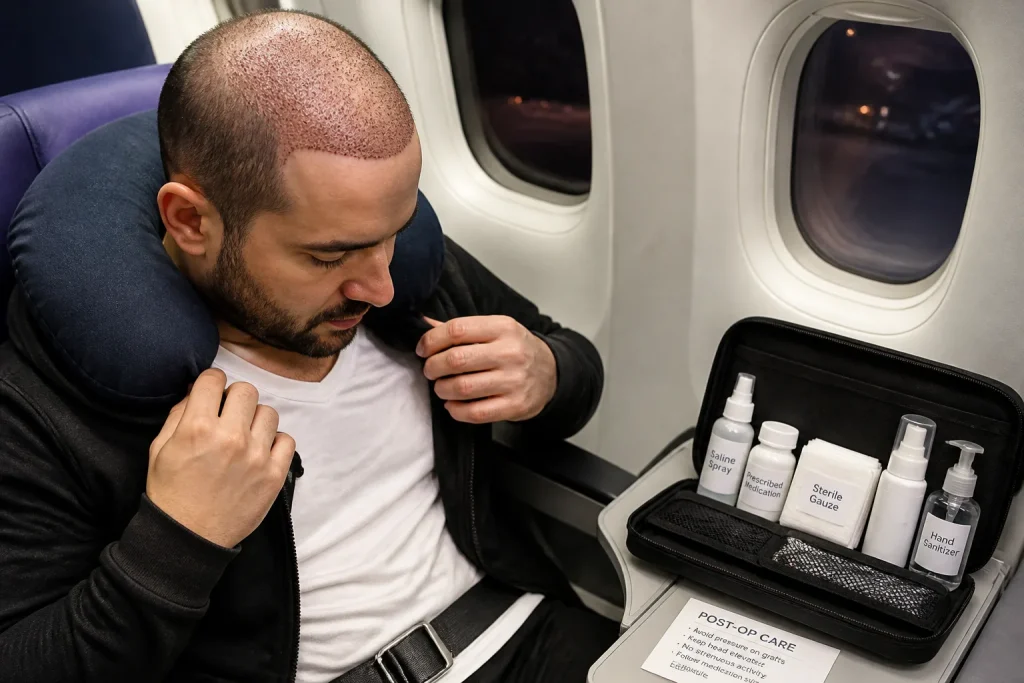
Protecting the recipient area during travel requires careful control of contact and pressure. Avoid touching, rubbing, scratching, or resting anything directly on newly placed grafts, even if the scalp feels tight or itchy. Keep seat belts, clothing, coat collars, and travel pillows away from the transplanted area, and handle overhead bags carefully so they do not strike your scalp.
Continue washing, saline sprays, prescribed medicines, and other aftercare measures exactly as your clinic instructed. Do not introduce a new shampoo, antiseptic, cream, or hair product while travelling unless your medical team approves it. Keep essential supplies in an accessible hand luggage compartment rather than buried in a suitcase, particularly during stopovers or overnight journeys. Basic hand hygiene is also helpful before touching any item that may come near the scalp.
Sleeping arrangements deserve attention at your destination. Follow the recommended position, usually keeping the head elevated and avoiding pressure on the recipient area, while using clean pillow covers and stable head support. Take care when changing clothes or lifting luggage, as sleeves, straps, and zippers can catch on the donor or recipient area. If a dressing becomes wet, displaced, or contaminated, follow the clinic’s instructions rather than improvising care. Protect the grafts from friction and pressure throughout the journey, and contact the transplant clinic if you are uncertain about any aftercare step.
When Should You Delay Your Flight and Contact Your Clinic?
Postpone your journey and contact your transplant clinic if recovery is changing rather than steadily settling. Worsening pain, persistent bleeding, marked swelling, fever, fluid discharge, or unusual changes in the scalp should receive prompt medical advice before you travel.
Sudden or severe symptoms should not be assumed to reflect normal healing, even if they appear shortly before departure. Seek appropriate medical assessment rather than trying to manage the problem during a flight. Contact the clinic in advance if your instructions are unclear, you have missed a planned follow-up, or you are unsure whether you will have enough prescribed medication. Your surgeon can advise whether travel remains suitable or should be delayed.
FAQs
Can I fly home the day after a hair transplant?
Flying home the day after a hair transplant is often possible, especially after FUE or DHI, but you should confirm it with your surgeon. Protect the grafts from pressure, touching, sweat, and accidental impact during the journey, and follow all prescribed aftercare instructions. Your clinic may recommend waiting longer if you have significant swelling, bleeding, medical conditions, or a long flight.
Does cabin pressure affect newly implanted grafts?
Normal cabin pressure during a commercial flight does not usually harm newly implanted hair grafts, because the grafts are secured in the recipient area before travel. However, flying too soon after FUE or DHI may increase swelling, dryness, or infection risk, and travel can interfere with proper aftercare. Follow your surgeon’s recommended waiting period and contact the clinic before flying, especially after extensive hair restoration or if complications develop.
Can I wear a hat on the plane after hair restoration?
Usually, you should avoid wearing a hat for the first few days after hair restoration because it may rub against newly implanted grafts in the recipient area. Your surgeon may allow a loose, clean, adjustable hat once the grafts are secure, often after several days, but the timing varies by procedure such as FUE or DHI. Follow your clinic’s aftercare instructions and never wear tight headwear without medical approval.