Vitamin B6 for hair is often discussed in relation to hair strength, shedding, and follicle health. Because this vitamin supports several normal processes in the body, a deficiency may affect more than general wellbeing. However, B6 is not a guaranteed hair-growth treatment, and increased intake will not address every cause of thinning or hair loss. This article explains how vitamin B6 may relate to normal hair follicle function, which foods provide it, and when low levels could be worth discussing with a healthcare professional. It also clarifies the limits of supplements, so you can separate sensible nutritional support from unsupported hair restoration claims.
How Vitamin B6 Supports Hair Follicle Function
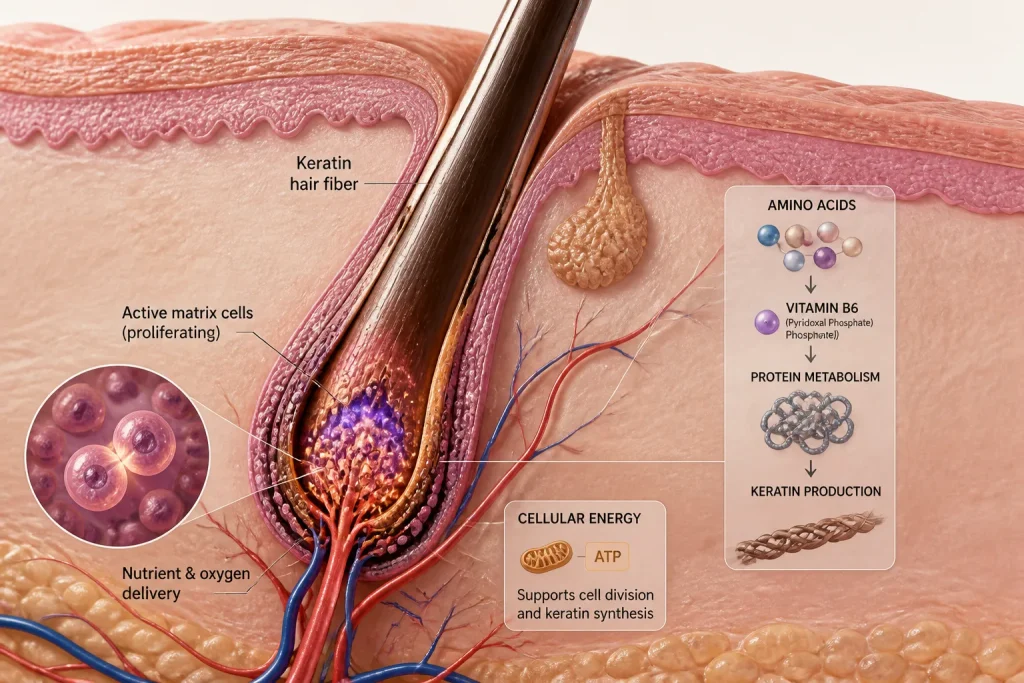
Vitamin B6 helps hair follicles by supporting the basic cellular work required to produce and maintain hair fibers. It participates in protein metabolism, allowing the body to process amino acids that contribute to keratin production. Because hair is largely made of keratin, adequate B6 availability may help support the normal activity of rapidly dividing cells within the follicle.
The nutrient also contributes to several enzyme reactions involved in energy use, red blood cell formation, and neurotransmitter production. These functions do not make B6 a direct hair-growth stimulant, but they help maintain the internal conditions that hair-producing tissue needs. A follicle cannot operate normally if the body is consistently short of essential nutrients.
Normal follicle function depends on more than one vitamin, however. Iron, zinc, protein, vitamin D, thyroid hormones, genetics, circulation, and scalp health can all influence the hair growth cycle. Adequate B6 may therefore be supportive when intake is insufficient, but increasing it beyond normal needs does not automatically trigger regrowth or increase hair density.
For this reason, nutrition should be viewed as one part of hair care rather than a standalone treatment. Persistent thinning, sudden shedding, or changes in follicle activity may reflect an underlying medical or scalp-related issue that requires a broader evaluation.
Vitamin B6 for Hair: Potential Benefits and Limitations

For someone with an inadequate intake, vitamin B6 may support hair health by helping maintain normal protein metabolism, red blood cell production, and cellular activity. These functions matter because hair follicles depend on a steady supply of nutrients during the growth cycle. Correcting a genuine deficiency could therefore remove one nutritional obstacle to normal growth and reduce shedding linked to poor overall nutrition.
That potential benefit should not be confused with a proven hair-regrowth effect. People who already obtain enough vitamin B6 are unlikely to gain extra density simply by taking more. General nutrient functions also cannot be used to promise thicker strands, faster growth, or successful hair restoration. Hair density is influenced by genetics, hormones, age, illness, medications, and scalp conditions, so a supplement may have little relevance when another cause is responsible.
Correcting a deficiency is the most realistic role of B6 in a hair-loss discussion. Persistent thinning, widening of the part, or ongoing shedding deserves broader evaluation rather than self-treatment alone. A clinician may consider diet, medical history, scalp changes, and other possible contributors before recommending testing or treatment. This is especially relevant if hair loss continues despite adequate nutrition or appears suddenly, since nutritional support cannot replace diagnosis of an underlying condition.
Signs of Vitamin B6 Deficiency Linked to Hair Shedding
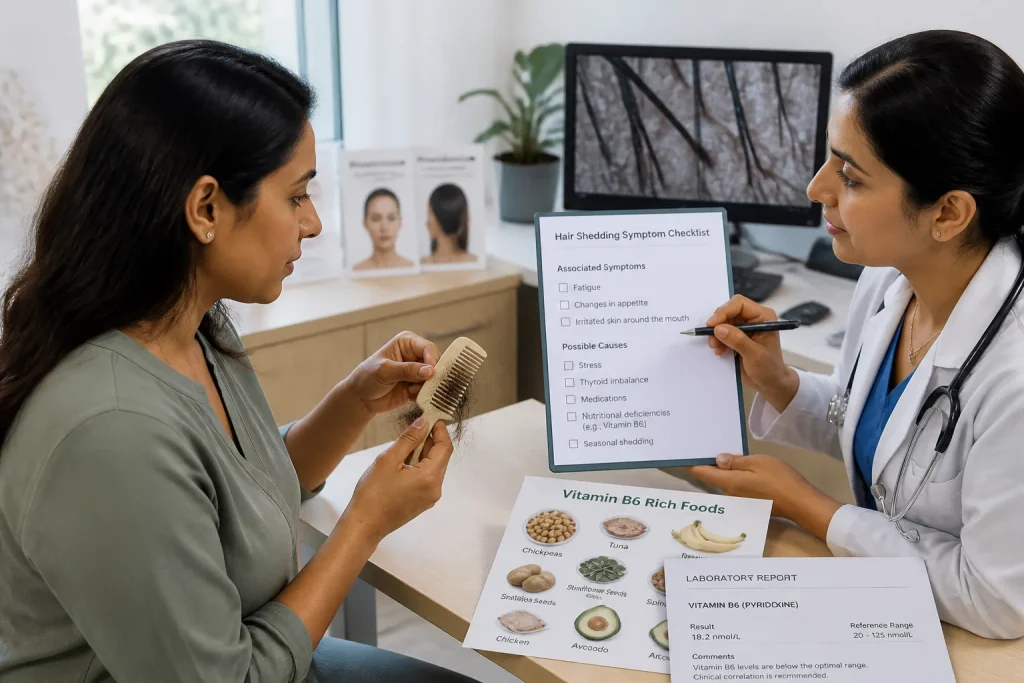
Hair shedding by itself does not specifically indicate low vitamin B6. Seasonal changes, stress, illness, hormonal shifts, thyroid disorders, medication effects, scalp conditions, and other nutritional concerns can all affect the hair growth cycle. A reduced B6 intake may be one contributing factor, but it should not be assumed to be the cause without considering the wider pattern.
Possible signs of inadequate vitamin B6 can include fatigue, irritability, reduced appetite, cracked or inflamed areas around the mouth, a sore tongue, or skin changes such as dermatitis. Numbness or tingling may also occur in some cases. These symptoms are not diagnostic, and many can result from other health conditions or deficiencies. Hair changes may involve increased daily shedding or reduced density rather than a clearly defined bald patch.
Hair shedding is a nonspecific symptom, so a clinical history is more useful than judging the cause from appearance alone. A healthcare professional may consider diet, recent illness, menstrual or hormonal changes, medications, scalp symptoms, family history, and the timing of shedding before recommending appropriate blood tests. Trying a B6 supplement as a personal test can obscure the real cause and may create unnecessary risks, making proper assessment more reliable than self-diagnosis.
Food Sources That Provide Vitamin B6 Naturally

Building vitamin B6 intake through everyday meals is a practical way to support overall nutritional adequacy. A varied eating pattern is more useful than relying on one food marketed for hair growth, because hair health also depends on sufficient protein, energy, iron, zinc, and other nutrients.
- Animal foods: Poultry, fish, beef, and eggs can contribute vitamin B6 along with complete protein and other nutrients.
- Legumes: Chickpeas, lentils, and beans provide plant-based B6 and can be included in soups, salads, or main meals.
- Starchy vegetables: Potatoes and similar vegetables offer B6 while adding carbohydrate and fiber to the diet.
- Fruit: Bananas and other fruits can provide smaller amounts that complement meals throughout the day.
- Nuts, seeds, and grains: Sunflower seeds, pistachios, and fortified or whole-grain products may help broaden dietary sources.
Actual intake depends on portion size, food choices, preparation methods, and individual nutritional needs. Excessive processing or cooking in water may reduce some water-soluble vitamins, so using varied preparation methods and eating a range of foods is sensible. People following vegan, vegetarian, restrictive, or medically prescribed diets may need more careful planning to maintain adequate intake.
Safe Supplement Use and When to Seek Medical Advice
Vitamin B6 supplements should not be treated as automatically safer or more effective than food sources. They may be useful when a confirmed deficiency, restricted diet, absorption problem, or another clinical reason makes supplementation appropriate, but taking more does not reliably improve hair growth.
Excessive or prolonged vitamin B6 intake can cause nerve-related problems, including numbness, tingling, burning sensations, or difficulty with coordination. Check the amount provided by multivitamins, B-complex products, and standalone supplements, and follow the product directions or advice from a qualified healthcare professional. The key safety principle is avoiding excessive long-term B6 intake.
Medical advice is appropriate if shedding continues, becomes more noticeable, or occurs alongside fatigue, skin changes, digestive problems, neurological symptoms, or other health concerns. A clinician can review diet, medications, medical history, and possible causes before recommending blood tests or treatment.
People who take regular medication, are pregnant, have kidney or digestive disorders, or suspect poor nutrient absorption should seek individualized guidance before supplementing. Evaluating the cause of hair loss is more reliable than trying to correct it through self-directed B6 use, particularly when thinning may involve hormonal, inflammatory, genetic, or scalp-related factors.
FAQs
Can low vitamin B6 contribute to thinning hair?
Yes, vitamin B6 deficiency may contribute to hair thinning or increased shedding because it can affect red blood cell production, protein metabolism, and normal hair follicle function. However, it is an uncommon cause, and factors such as iron deficiency, thyroid problems, hormonal changes, stress, or genetics are more frequent. A healthcare professional can confirm a deficiency with blood tests before recommending supplements.
Which foods contain the most vitamin B6?
Rich sources of vitamin B6 include poultry, tuna, salmon, beef liver, chickpeas, potatoes, bananas, fortified breakfast cereals, and pistachios. Chicken breast and fish provide particularly concentrated amounts, while chickpeas and fortified cereals are useful plant-based options. A varied diet usually supplies enough vitamin B6 for most adults.
Can taking too much vitamin B6 harm hair or health?
Yes. Excessive or prolonged vitamin B6 intake can cause nerve damage, leading to numbness, tingling, weakness, or difficulty walking, and it may contribute to hair loss or increased shedding in some cases. Most people get enough B6 from food, so avoid high-dose supplements unless a healthcare professional recommends them.