Large, heavy breasts often cause more than aesthetic concerns: chronic neck pain, shoulder grooves from bra straps, skin rashes under the fold, and difficulty finding clothes that fit can take over daily life. When liposuction alone cannot address size or shape, vertical breast reduction is one of the most common surgical options. The technique uses a lollipop-shaped incision to remove excess tissue, reshape the breast, and reposition the nipple, often creating a more lifted, natural result than older scar patterns. Still, the shorter scar comes with trade-offs, and not every patient is an ideal match for this method.
What Is a Vertical Breast Reduction and How Does the Technique Work
A vertical breast reduction is a surgical technique designed to remove excess breast tissue, fat, and skin while reshaping the breast with a distinct incision pattern. Instead of the traditional anchor-shaped scar, the surgeon makes two key cuts: one around the areola and a single vertical line running from the bottom of the areola down to the natural crease beneath the breast.
During the procedure, the surgeon repositions the nipple to a higher, more youthful location, lifts the underlying breast tissue, and trims away the surplus that causes heaviness. The vertical incision allows the lower breast skin to gather and reshape itself naturally around the new contour, producing a rounder, perkier profile without the long horizontal scar that older methods leave behind.
This approach works especially well for women who need a moderate reduction and some lift at the same time. Because the tissue is reshaped from the inside, the result tends to hold its shape better as swelling fades, and the scar typically blends into the natural shadow beneath the breast over time.
Key Advantages of Choosing the Vertical Approach
Many patients weighing their surgical options care most about how natural the breast will look afterward, how long the healing will take, and whether scars will fade into the background. The vertical technique tends to score well on all three points, and that combination explains why so many surgeons reach for it when the case allows. Compared with traditional anchor-shaped reductions, this approach reshapes the breast through a single vertical line plus a small incision around the areola, which changes how the tissue settles and how the skin redrapes over time.
What this means in practice is a set of benefits that matter on the operating table and in the mirror months later:
- Improved breast shape and projection: The vertical pillar of tissue supports the breast from below, giving a rounder, more lifted contour that holds its shape better than flatter, anchor-style results.
- Shorter incision and less visible scarring: Because there is no long horizontal cut along the crease, the main scar runs vertically down the lower breast, where it is easier to hide under a bra or bikini.
- Better long-term nipple sensitivity: Preserving more of the central breast pedicle helps maintain nerve pathways, so many patients keep or recover normal sensation in the nipple-areola complex.
- More predictable healing: Less skin undermining means less post-operative swelling and a lower chance of the puckering, or “dog-ear,” deformity that sometimes appears at the ends of an anchor incision.
- Quicker return to daily life: Most patients return to light activities within one to two weeks, with full exercise typically resuming around the four- to six-week mark.
Surgeons also appreciate that the technique gives them precise control over how much tissue is removed and where the new nipple sits, so the outcome can be tailored to the patient’s frame rather than dictated by the incision pattern. For someone whose main goal is a natural slope rather than the smallest possible breast, that fine-tuning is often the deciding factor.
Potential Risks and Limitations Worth Considering
Even with all the appealing benefits of the vertical approach, no surgical technique is entirely free from potential drawbacks. Understanding the limitations in advance helps you set realistic expectations and prepare for every stage of the journey.
One concern some patients mention is the visible vertical scar that runs from the areola down to the breast crease. While this incision is shorter than the traditional anchor pattern and typically fades well, it can occasionally heal thicker or become more noticeable in darker skin tones or in smokers. Another limitation is that the vertical technique is not always the best fit for extremely large reductions; when a very significant amount of tissue needs to be removed, surgeons sometimes recommend an alternative pattern to avoid excess skin at the lower pole. A temporary or, very rarely, permanent change in breast sensation around the nipple can also occur, because nerves are manipulated during reshaping.
Other risks common to most breast surgeries include asymmetry, delayed wound healing, and the small chance of revisional surgery if the final shape does not settle exactly as planned. Choosing a board-certified plastic surgeon who frequently performs this technique is the most effective way to keep these risks low.
Who Makes an Ideal Candidate for This Procedure

Not every woman who dreams of smaller, lighter breasts is automatically suited for this particular technique, and understanding the profile of a good candidate helps set realistic expectations before the first consultation. Surgeons generally look for patients whose breast size is moderate rather than extremely large, because the vertical approach delivers the cleanest lift and shaping when there is enough existing tissue to work with but not so much weight that a longer anchor incision becomes necessary.
Good physical health, stable weight, and a non-smoking status matter just as much as breast anatomy. Skin quality plays a surprisingly important role too; women with reasonably elastic skin tend to see the technique’s contouring benefits settle more predictably. Emotional readiness is often overlooked, yet it shapes the entire journey, from the recovery period through the long-term satisfaction with the new silhouette.
Age is rarely a deciding factor on its own. What truly guides candidacy is the combination of breast proportions, skin condition, lifestyle, and a clear understanding of what vertical breast reduction can realistically achieve for the individual body in front of the surgeon.
How Vertical Reduction Compares to Other Surgical Methods
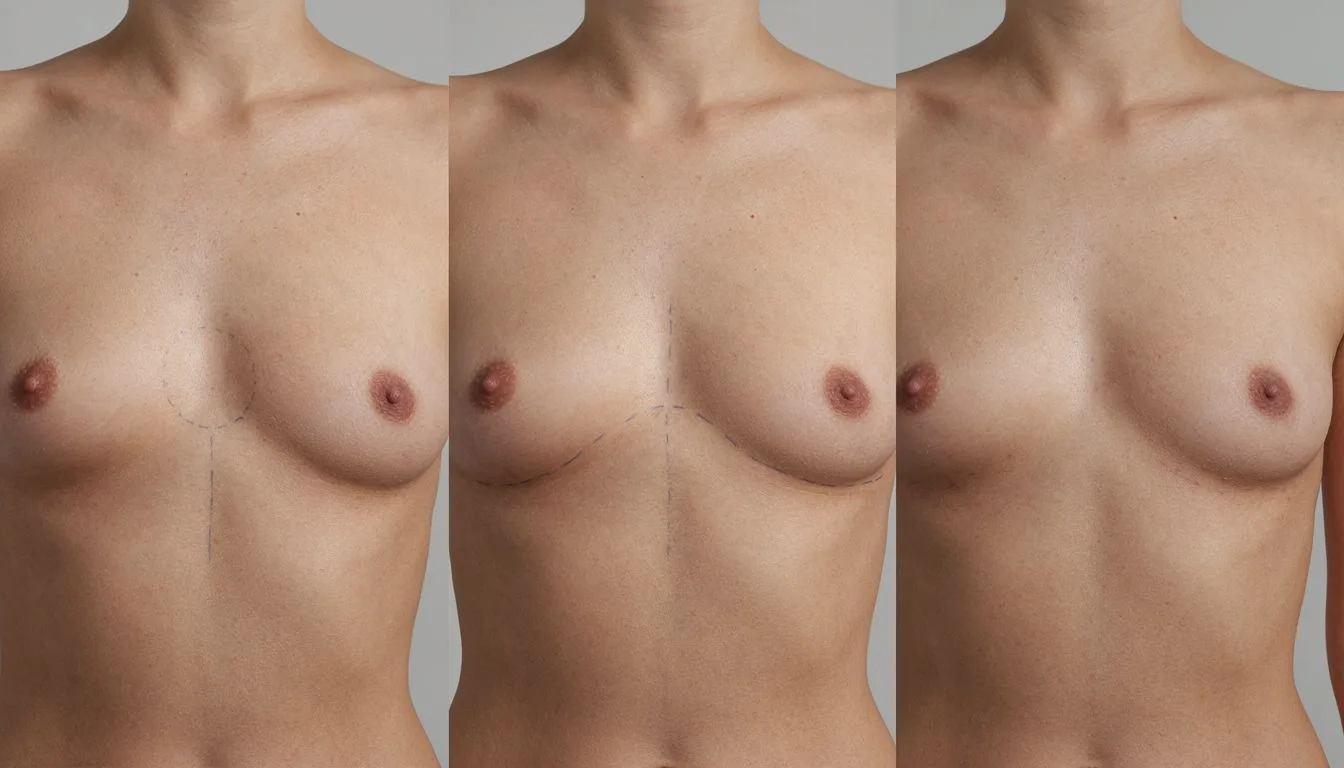
Breast surgery is not a single lane. Several techniques exist, and each one solves a different set of problems. Looking at how the vertical method lines up against the alternatives helps clarify why surgeons reach for it so often, and why sometimes they don’t.
Most patients end up comparing the vertical approach to the three other options they usually hear about during a consultation.
- Anchor (inverted-T) reduction remains the traditional choice for very large reductions. It removes more tissue and provides strong reshaping power, but it adds a horizontal scar along the crease and a longer healing curve.
- Liposuction-only reduction suits patients whose main concern is volume rather than shape. It leaves almost no visible scarring, yet it cannot lift the breast or refine projection the way a vertical lift can.
- Wise-pattern or short-scar techniques blend elements of older and newer methods, aiming to balance scar length with shaping control, though outcomes still depend heavily on the surgeon’s specific training and preference.
- Circumvertical and horizontal-only approaches address unique cases, such as tuberous breasts or revisions, where the standard patterns would not sit well on the existing anatomy.
The real difference comes down to the trade-off between scar length and shaping control. The vertical method sits in a comfortable middle ground, offering strong projection with fewer incisions, while alternatives either remove tissue more aggressively or leave shape concerns largely untouched. For most patients weighing breast surgery choices, that middle ground is exactly what makes the vertical technique such a practical first conversation to have with a board-certified plastic surgeon.
Recovery Timeline and Long-Term Results to Expect
Healing after a vertical breast reduction usually follows a fairly steady arc. Most patients return to desk work within ten to fourteen days, while anything that raises the heart rate or strains the chest — running, heavy lifting, high-impact exercise — is generally paused for four to six weeks. Swelling and tightness ease gradually, and the final contour typically settles somewhere around the three-month mark, with subtle refinements continuing for up to a year.
Scarring follows a predictable course as well. The vertical incision line looks pink and slightly raised at first, then softens and flattens over time. By six to twelve months, most patients find that the scar has matured into a thin, pale line that is easy to conceal under a bra or swimsuit.
The long-term outcome is what draws many people to the procedure in the first place. With a stable weight and good support, results can last for many years, and many patients describe lasting relief from neck pain, shoulder grooving, and skin irritation. Breasts may still shift slightly with age, pregnancy, or hormonal changes, but the overall improvement in shape, projection, and comfort tends to hold up well over time.
FAQs
What are the main advantages of vertical breast reduction compared to other techniques?
The vertical technique offers a more lifted, shapely result with longer-lasting projection and a smaller scar footprint than traditional anchor-shaped reductions. It also tends to preserve nipple sensation and breastfeeding ability better in many patients because less tissue is disrupted around the gland. Recovery is often a bit smoother too, since the approach avoids the long horizontal crease incision that can take extra time to settle.
Who is considered an ideal candidate for vertical breast reduction surgery?
Ideal candidates for vertical breast reduction are women in good overall health who experience physical discomfort such as back, neck, or shoulder pain due to overly large breasts but desire significant reshaping with minimal scarring. This technique is especially well-suited for those with moderate breast size and noticeable ptosis (sagging) who want a more lifted, youthful contour while maintaining good nipple sensation and breastfeeding ability. Patients who understand the trade-off between a slightly longer recovery and more aesthetically pleasing, lasting results tend to be the most satisfied.
What are the potential downsides and risks specific to the vertical incision approach?
The vertical incision approach can leave a visible scar that extends from the areola down to the breast crease, which some patients find less cosmetically appealing than the horizontal scar pattern. It may also be less effective for women with extremely large breasts or significant sagging, as the technique has a more limited ability to remove large amounts of tissue and reshape very pendulous breasts. In some cases, the resulting breast shape may appear slightly conical or uneven, requiring revision surgery to achieve a smoother contour.